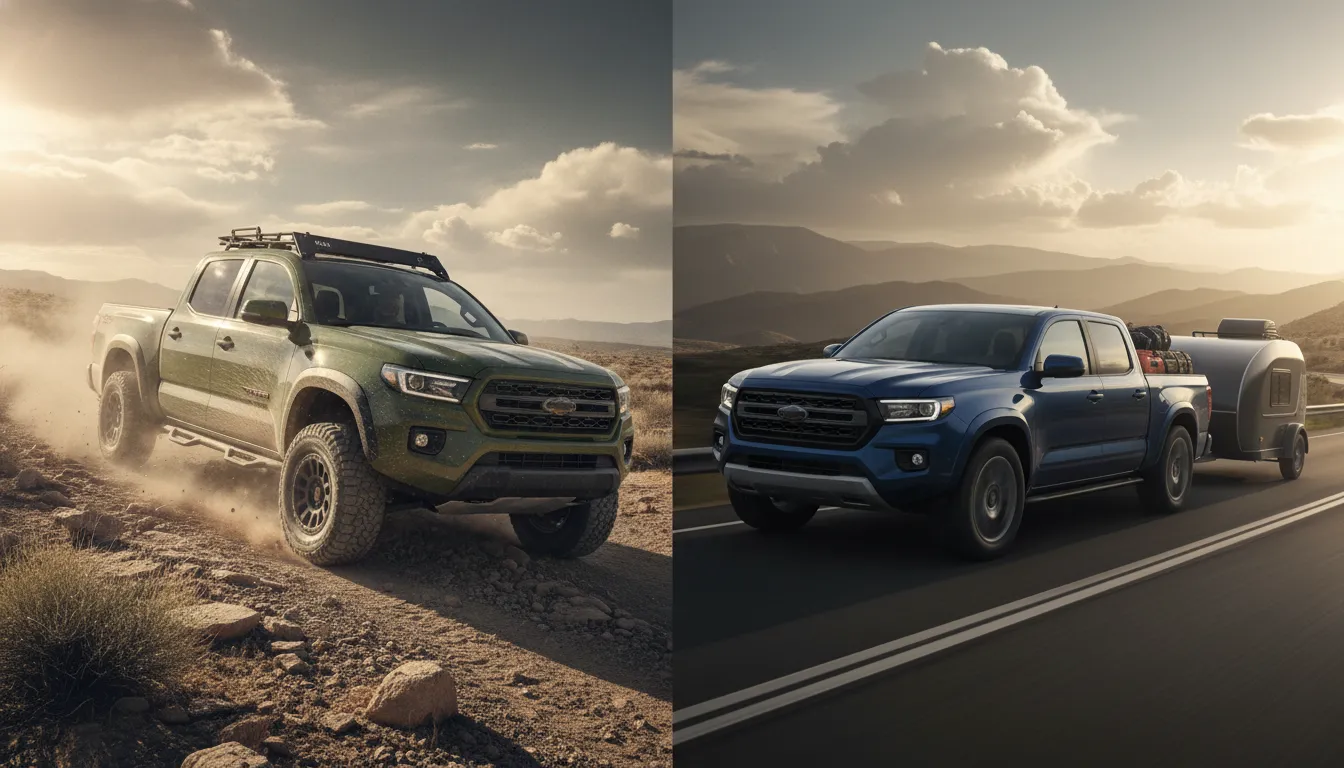
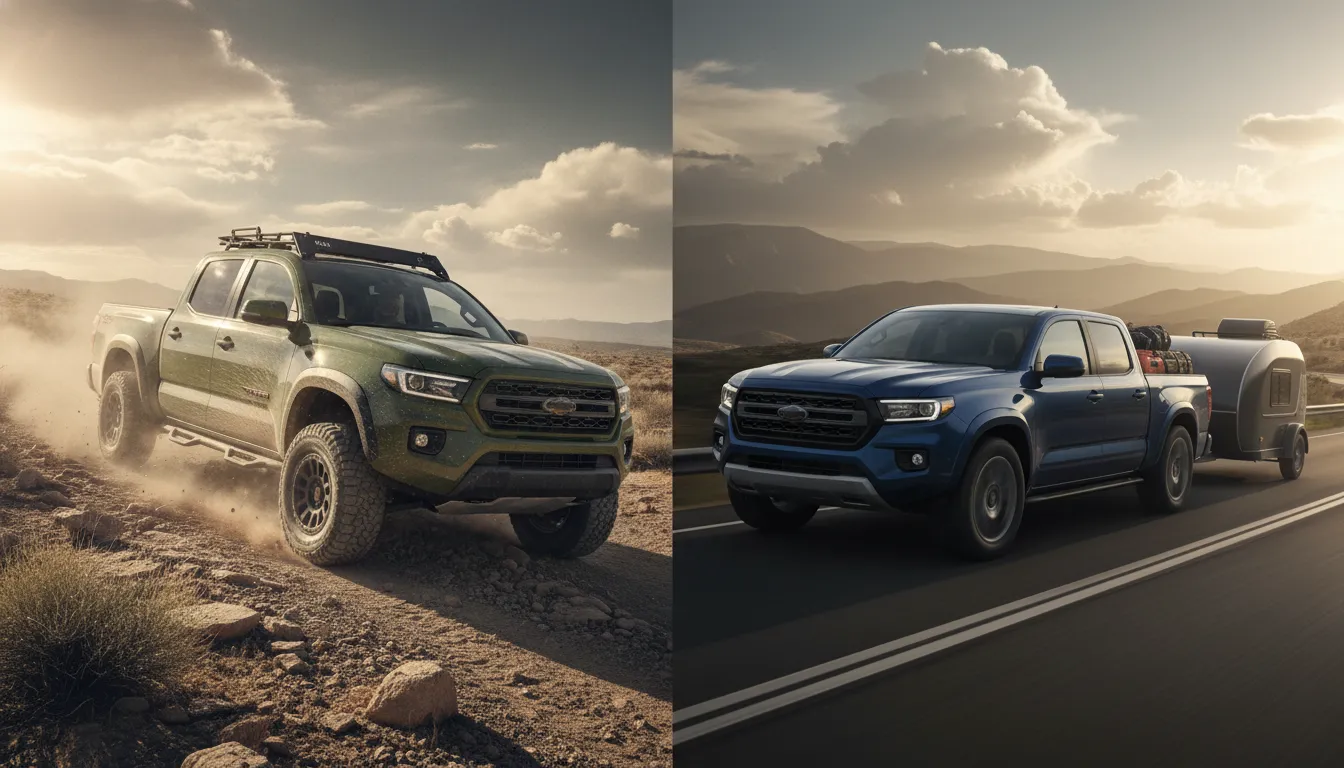
The mid-size pickup market always feels personal. Brand loyalty, resale value, and off-road cred collide with practical questions about towing, payload, and how well the interior holds up to daily life. Here I compare the 2026 Toyota Tacoma TRD Off-Road to the 2026 Chevrolet Colorado Z71 across the things that matter: engines, capability, features, comfort, and long-term ownership.
🚗 Quick specs: what’s under the hood
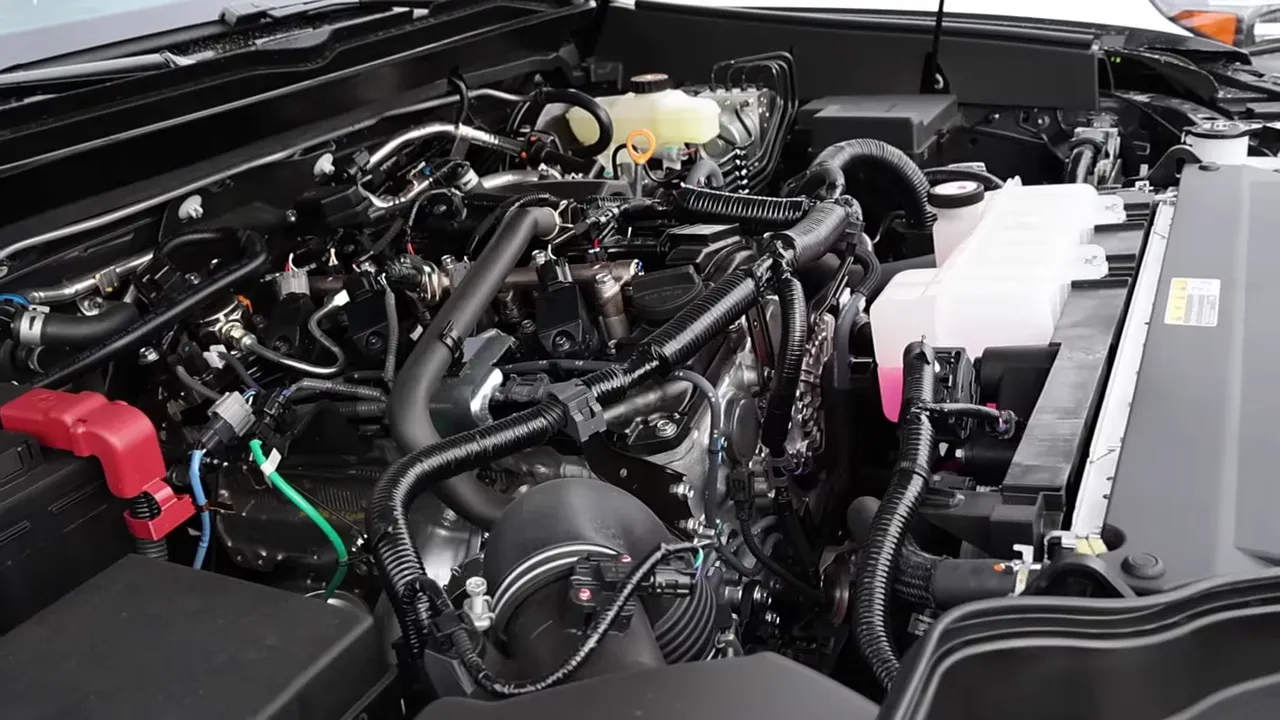
Chevrolet Colorado Z71: turbocharged 2.7 liter 4-cylinder paired to an 8-speed automatic. EPA estimates around 17 mpg city / 22 mpg highway. Output: 310 hp and 430 lb-ft of torque.
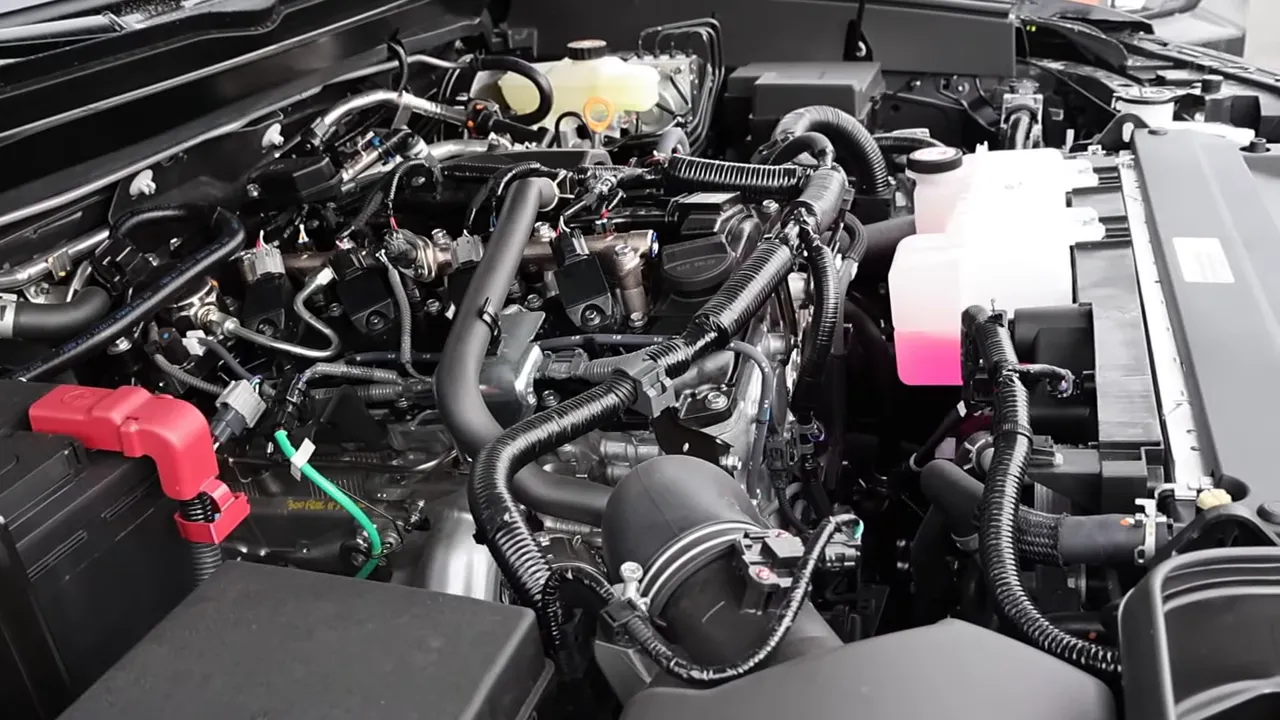
Toyota Tacoma TRD Off-Road: turbocharged 2.4 liter 4-cylinder with an 8-speed automatic. EPA estimates about 19 mpg city / 23 mpg highway. Output: 278 hp and 317 lb-ft of torque.
🛻 Exterior and off-road hardware
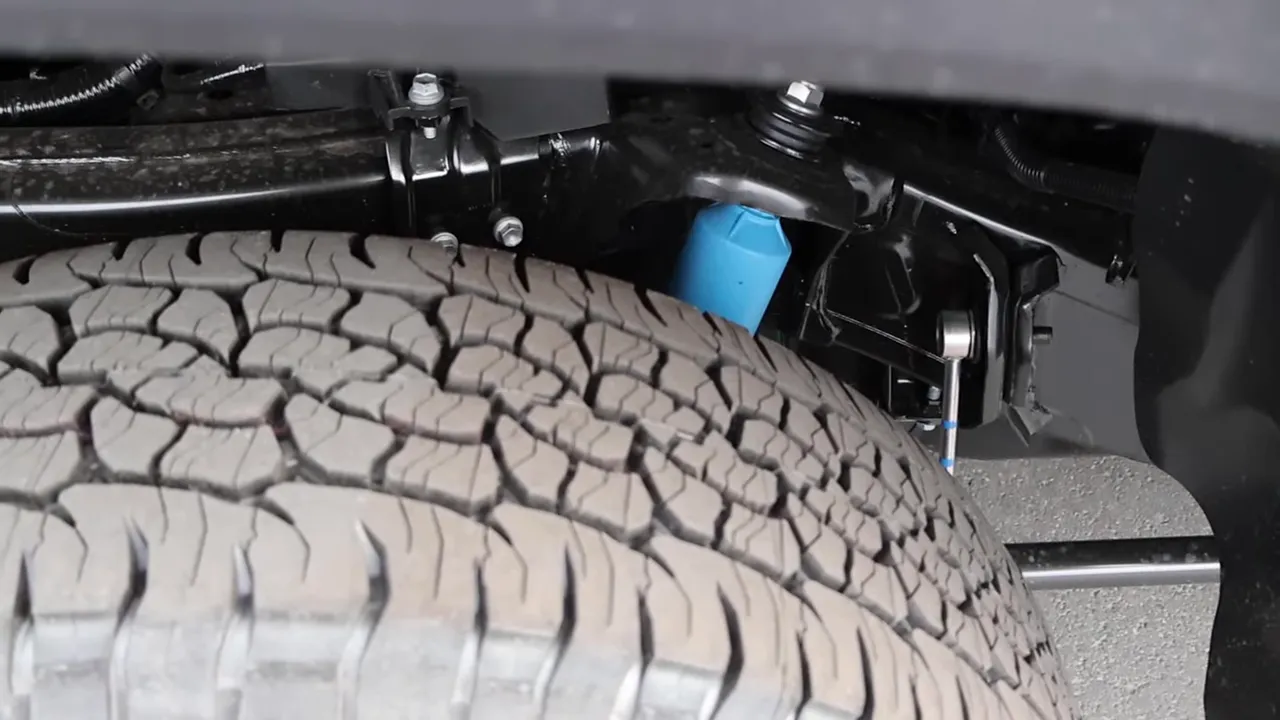
Both trucks come ready to look the part. The Colorado Z71 sports fog lights, painted recovery points, a pronounced air dam, and a sportier face overall. The Tacoma TRD Off-Road brings beefy fender flares and Bilstein shocks on the tested build.
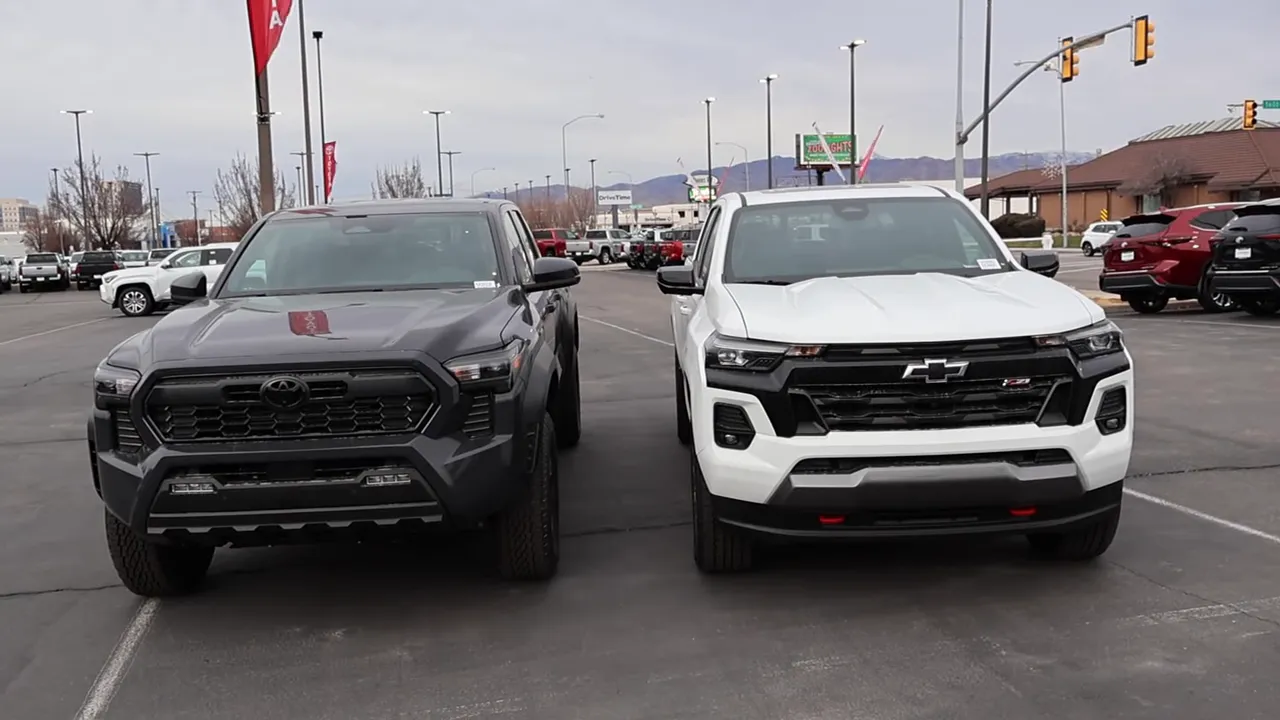
Tire choice and suspension layout push the Tacoma toward serious off-road duty: the tested Tacoma rolled on 265/70-17 all-terrain tires and a coil-sprung rear. The Colorado tested on 255/55-20 tires—more of a street-oriented size while still wearing all-terrain rubber—and uses traditional leaf springs in the rear.
📦 Bed, tailgate, and practicality
Both beds are functional with outlets and LED bed lights. The Tacoma uses a composite bed surface while the Colorado in this configuration had a bed liner. Tailgate effort differs—one felt noticeably lighter to operate—so small ergonomics can matter if you load and unload often.
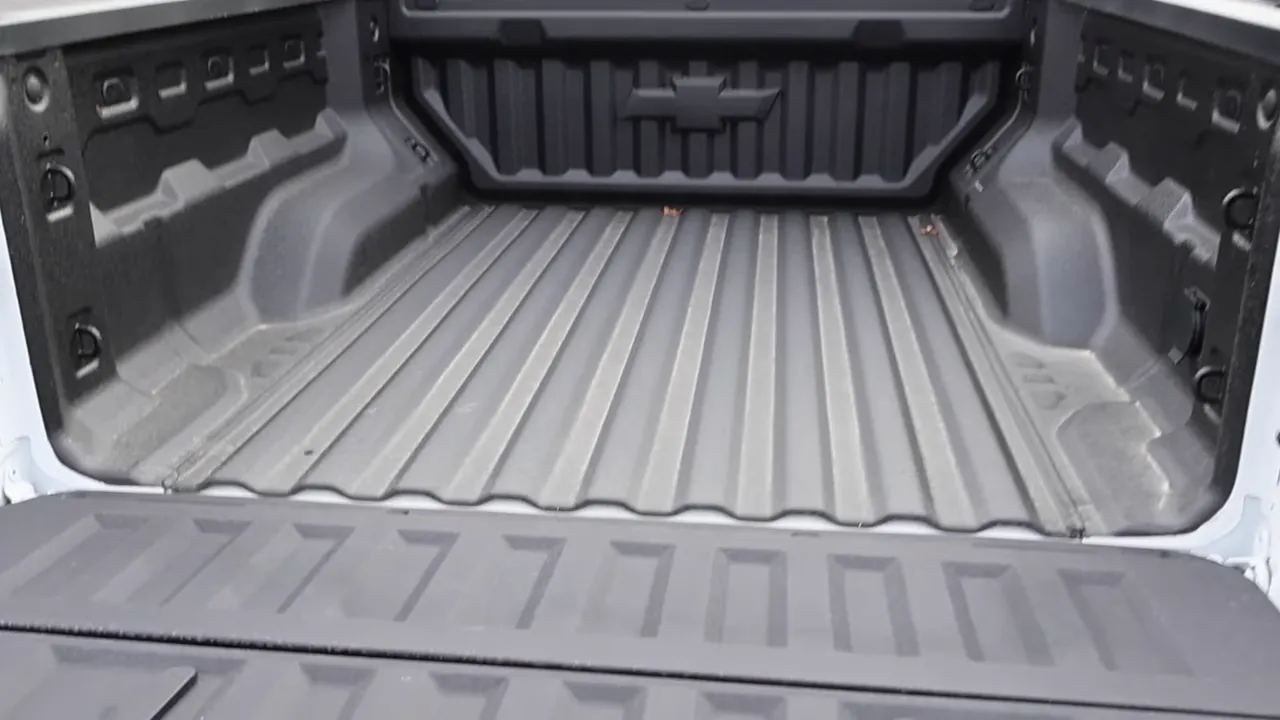
Rear bumpers and usable features diverge slightly: the Colorado includes integrated bumper steps that make bed access easier. Bed volume and spacing are similar between the two, but the materials and finish differ.
🪑 Interior, tech, and creature comforts
The new Tacoma interior has come a long way: full digital gauges, adaptive cruise with lane centering, heated seats, heated steering wheel, and Toyota’s multi-terrain drive setup including crawl control and a rear locker. The tested Tacoma had a smaller infotainment screen for its price point but the system was responsive.
The Colorado Z71 brings more content at a similar price point: 360-degree camera, cooled seats, heated and ventilated seats, dual-zone climate, memory seats, and even a sunroof on this build. The Colorado also offers a 4-wheel-auto mode in addition to part-time 4WD and low-range for off-road situations.
Payload: the Colorado had a higher payload figure (about 1,466 pounds) versus the Tacoma’s roughly 1,200 pounds. That’s meaningful if you regularly carry heavy gear.
🏁 Driving impressions: where they shine
Both engines aim to provide low-end punch and diesel-like torque delivery. The Tacoma’s 2.4-liter has a very pleasant, torquey character and pairs with a well-behaved 8-speed that avoids gear hunting. It’s comfortable, quiet, and the Bilsteins help tame rough terrain.
The Colorado’s 2.7-liter turbo is noticeably stronger in straight-line performance. It produces big low-RPM torque and feels quicker in everyday driving, giving the truck excellent off-the-line grunt and easy passing power on highways.
It’s very diesel-like. I love it.
💸 Value, pricing, and long-term ownership
On sticker the Colorado tested for around $51,000 while the Tacoma was near $50,000. The Colorado generally offers more features for a similar or slightly higher price, making it an objectively stronger value for buyers focused on content per dollar.
That said, Toyota’s reputation for long-term durability and resale strength remains a big part of why many buyers still opt for Tacoma. In my experience, some Toyota interiors and materials show less wear over time compared with GM products, which can exhibit quicker visible patina in high-contact areas.
⚠️ Known issues and caveats
- Powertrain trade-offs: both brands moved to smaller turbocharged engines. These offer torque and efficiency but come with known short-term growing pains in the segment—some owners have reported carbon buildup or transmission quirks across various new turbo setups.
- Material durability: GM interiors often look and feel great initially, but some materials might not hold up as well to heavy use long-term compared with Toyota.
- Off-road traction: Toyota’s traction systems and off-road suites remain class-leading in some situations. Chevy’s system on the Colorado is capable but tuned differently.
🔍 Bottom line: which one should you pick?
If you prioritize raw torque, modern tech, and the best value for features at the price point, the Colorado Z71 is hard to beat. Its engine delivers strong low-end grunt, the feature list is generous, and payload numbers are competitive.
If you prioritize long-term reputation, resale value, and a slightly more conservative but proven off-road system, the Tacoma TRD Off-Road still makes a compelling case—especially for buyers who plan to keep a truck for many years.
Both are solid mid-size pickups. The decision comes down to whether you want more features today or the perceived long-term stability and cachet of the Toyota badge.
❓ Frequently asked questions
Which truck has more power and torque?
Which truck is better off-road?
Which truck offers better value for money?
Are there any reliability concerns with the new turbo engines?
Which truck should I buy if I plan to keep it for a decade?





Leave a Reply