KINGULL G9 Drone Review
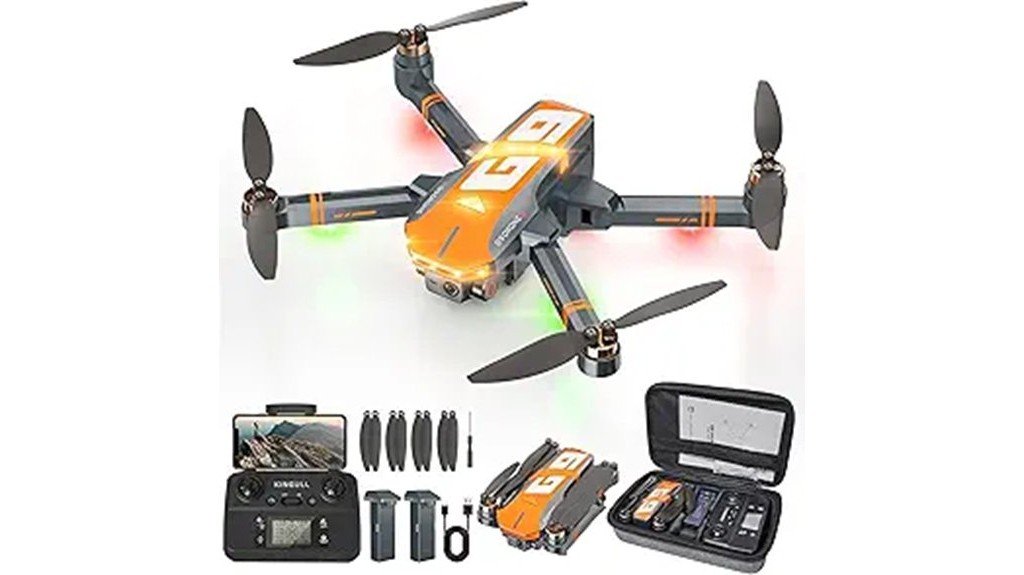
Beginner drones can look impressive on a product page, but camera stability, flight control, and accurate weight information matter more than a long feature list. The KINGULL G9 is presented as a foldable GPS drone with a 4K tilt camera, optical-flow support, beginner flight modes, and two batteries. Its strongest points are convenience and simple controls, while its biggest concerns are the lack of listed obstacle avoidance, no confirmed 3-axis gimbal, and conflicting weight data. This review helps you decide whether those tradeoffs fit casual practice flights and basic daylight video.
Quick Verdict
Rating: 7/10, recommended with caveats
Best For: New pilots who want GPS-assisted hovering, simple flight modes, and a portable two-battery kit
Bottom Line: The KINGULL G9 offers a useful beginner feature set for calm-weather practice and simple daylight clips. You should not buy it expecting gimbal-smooth footage, obstacle avoidance, or fully verified under-250 g status.
Key Specifications
| Specification | Detail |
|---|---|
| Brand | KINGULL |
| Model / ASIN | G9 / B0DJQDPTC1 |
| Product type | Foldable GPS camera drone |
| Camera | Listed as 4K with adjustable tilt; a mechanical 3-axis gimbal is not confirmed |
| Positioning | GPS and optical-flow positioning are referenced in the supplied product details |
| Flight controls | One-key start and landing, headless mode, return-to-home, waypoints, Follow Me, and circle/orbit are listed |
| Motors and shell | Brushless motors and a plastic body are referenced |
| Batteries | Two lithium-ion flight batteries are listed |
| Claimed flight time | Up to 45 minutes combined across both batteries, based on the supplied article; real time varies by wind and flight style |
| Storage support | microSD support up to 64 GB is referenced but should be confirmed in the current manual or listing |
| Weight | Not reliably verified. Supplied details conflict between an under-250 g claim and 1.06 lb / 480 g |
| Dimensions | Not reliably verified; the supplied 1 × 0.99 × 1 in figure appears inconsistent with a folding camera drone |
| Included accessories | Carrying case and two batteries are referenced; confirm the complete package before ordering |
| Color | Dark grey |
| Warranty | Not confirmed in the supplied article |
Product details, package contents, price, and availability can change. Confirm the current Amazon listing and manual before buying.
Before You Buy: Do not rely on the advertised weight class until you confirm the actual takeoff weight shown in the current listing, manual, or on the aircraft label. The supplied details contain a major conflict that may affect registration and operating requirements.
What Is the KINGULL G9?
The KINGULL G9 is a compact, folding quadcopter aimed at beginners and casual camera-drone users. The supplied details describe GPS positioning, optical-flow support, return-to-home, brushless motors, a 4K adjustable-tilt camera, and several automated flight modes.
The package is positioned as a portable starter kit rather than a professional aerial camera system. Two listed batteries and a carrying case improve convenience, but no confirmed 3-axis gimbal or obstacle-avoidance system appears in the supplied information. That difference matters because software flight modes cannot replace physical camera stabilization or collision sensors.
Who Should Buy It?
Best For
- First-time pilots who want GPS-assisted hovering and one-key controls
- Travelers who value a folding body, carrying case, and two-battery setup
- Casual creators who mainly record slow, daylight footage in open areas
Skip If
- You need gimbal-stabilized video for polished cinematic work
- You expect obstacle avoidance around trees, buildings, or people
- You need confirmed weight, dimensions, warranty, and compliance details before purchase
Feature-by-Feature Review
Camera Quality and Stabilization
The G9 is listed with a 4K camera and adjustable tilt. Remote tilt can help you change the framing without landing, which is useful for simple landscape shots and overhead views.
The important limitation is stabilization. Adjustable tilt does not confirm a mechanical 3-axis gimbal, so the camera may record visible shake when the drone changes direction or flies in wind. Slow inputs, wide turns, and calm weather should produce better results than fast sport-style flying.
GPS and Optical-Flow Positioning
GPS can help the drone maintain its outdoor position and support return-to-home functions. Optical flow is designed to assist low-altitude stability by reading surface movement below the aircraft when lighting and ground texture allow it.
Both systems can reduce workload for a new pilot, but neither makes the drone automatic or crash-proof. Optical flow may struggle over water, reflective surfaces, low-contrast floors, or poor light, while GPS performance depends on a clear satellite connection.
Beginner Controls and Automated Modes
The supplied details reference one-key takeoff and landing, headless mode, waypoints, Follow Me, circle/orbit, and return-to-home. These features can simplify early flights and help you create repeatable movements without advanced stick control.
Use automated modes only in a large, clear area. A route or tracking function can still guide the drone toward a tree, wall, wire, or other obstacle when no avoidance sensors are present.
Battery Setup and Flight Time
Two batteries are listed, with up to 45 minutes of combined flight time. Treat that number as an ideal total rather than a guaranteed result. Wind, speed, repeated climbing, cold temperatures, camera use, and return-to-home reserves can reduce usable time.
The two-battery format is still practical because you can fly a second session after the first pack cools. You should land before the battery reaches a critical level instead of trying to use every advertised minute.
Foldable Design and Travel Storage
Folding arms and an included carrying case make the G9 easier to store than a fixed-frame drone. The case can keep the aircraft, controller, batteries, and small accessories together during car trips or short walks to a flying area.
Compact construction also has a tradeoff. Small drones are usually more sensitive to wind, and folding hinges need regular inspection for looseness, grit, or damage before takeoff.
How It Performs in Real Use
For First Practice Flights
GPS hold, one-key takeoff, and headless mode can make basic orientation less stressful. Start in a wide field, keep the drone close, and practice hovering, gentle turns, and manual landing before trying automated routes.
For Daylight Photos and Video
The adjustable camera angle gives you more framing control than a fixed lens. For smoother clips, fly slowly, avoid sudden yaw movements, and record when wind is light. Without a confirmed 3-axis gimbal, the G9 is better suited to casual clips than professional-looking footage.
For Travel and Park Use
The folding body, case, and two-battery package suit short outings where portability matters. Before traveling, confirm local flight restrictions, battery transport rules, and the drone’s actual weight instead of relying on an unverified listing label.
For Breezy Conditions
This is the least suitable scenario. A lightweight folding drone may need more power to hold position in wind, which can shorten flight time and increase video shake. Keep flights conservative and land when the aircraft begins drifting or struggling to return.
Setup Tips Before Your First Flight
- Confirm the package: Check that both batteries, the controller, charging accessories, propellers, and case match the current listing.
- Read the manual: Use the manufacturer’s instructions for charging, pairing, calibration, app setup, and firmware steps.
- Inspect the aircraft: Look for cracked propellers, loose arms, debris near the motors, or battery damage before each flight.
- Wait for stable positioning: Do not launch until the controller or app shows the required GPS status for the flight mode you plan to use.
- Set return-to-home carefully: Choose an altitude that clears nearby obstacles, and confirm the recorded home point before flying away.
- Test close to the ground: Verify steering, camera tilt, and return controls at low altitude in an open area.
Pro Tip: Use the first battery for setup and short control checks. Save the second battery for filming after you know the GPS lock, camera tilt, and return-to-home settings work as expected.
Compatibility and Safety
No obstacle-avoidance sensors are confirmed, so you remain responsible for maintaining clearance from people, animals, trees, buildings, vehicles, and power lines. Keep the aircraft within sight and avoid flying over crowds or near restricted airspace.
Battery safety also matters. Do not use a swollen, punctured, wet, or unusually hot battery. Let a battery cool before recharging, use the recommended charging equipment, and follow the manual for storage and disposal.
Registration, Remote ID, and operating rules depend on your location, the aircraft’s actual takeoff weight, and how you use it. Verify the current rules with the relevant aviation authority before flying.
Pros and Cons
Pros
- GPS and optical-flow features can support steadier beginner flights
- One-key controls and automated modes reduce the early learning burden
- Adjustable camera tilt offers more framing control than a fixed camera
- Two listed batteries extend total flying time across separate sessions
- Foldable arms and a carrying case improve storage and portability
Cons
- No confirmed obstacle-avoidance system, so automated modes need open space
- No confirmed 3-axis gimbal, which limits video smoothness in wind or quick movement
- Conflicting weight and dimension information makes compliance and portability harder to judge
Is It Worth the Price?
The KINGULL G9 is worth considering when you want a starter kit with GPS support, several beginner modes, two batteries, and a carrying case. Those features can provide practical value for learning basic control and recording occasional outdoor clips.
Its value depends heavily on the current selling price and whether the live package matches the supplied details. It is not the best fit if you need reliable product documentation, gimbal-stabilized footage, obstacle sensing, or a confirmed weight class.
How It Compares to Alternatives
The Holy Stone HS175D, Ruko U11MINI 4K, and DJI Mini series are reasonable alternatives to compare before you decide. Check each current model for the camera system, controls, support, and package details that matter to you.
Compare the current specifications rather than the product names alone. Focus on verified takeoff weight, gimbal type, flight time per battery, obstacle sensing, transmission range, replacement-battery availability, warranty support, and the exact accessories included.
Frequently Asked Questions
Does the KINGULL G9 require registration?
That depends on the actual takeoff weight, your location, and how you fly. The supplied details conflict on weight, so confirm the aircraft’s real weight and check the current rules before your first outdoor flight.
Does it need Remote ID?
Remote ID requirements vary with registration status, flight purpose, and local regulations. Do not rely on an unverified product-page claim; check the current aviation rules and confirm whether this model has built-in Remote ID support.
Is the 4K camera stabilized by a mechanical gimbal?
A true 3-axis mechanical gimbal is not confirmed in the supplied information. The camera is described as adjustable tilt, so expect smoother results from slow flying in calm weather rather than active stabilization.
How long do the batteries last?
The supplied article references two batteries and up to 45 minutes of combined flight time. Real flight time can be lower because of wind, temperature, speed, climbing, camera use, and the battery reserve needed for a safe landing.
Does the KINGULL G9 have obstacle avoidance?
No obstacle-avoidance sensors are confirmed in the supplied details. Fly in open areas, keep direct visual contact, and do not assume Follow Me, waypoints, or orbit mode will detect objects in the flight path.
Does it support a microSD card?
The supplied article references microSD support up to 64 GB. Confirm the supported card type, capacity, and formatting requirements in the current manual or listing before buying a card.
What comes in the box?
A carrying case and two lithium-ion batteries are referenced in the supplied product details. Seller bundles can change, so confirm the controller, charging accessories, spare propellers, guards, cables, and manual on the live listing.
Who should skip this drone?
Skip it if you need professional camera stabilization, obstacle avoidance, strong wind performance, or fully verified specifications before purchase. It is better suited to cautious beginners and casual daylight use in open spaces.
The Bottom Line
The KINGULL G9 is a reasonable starter option for new pilots who value GPS-assisted controls, a folding case-friendly design, and two listed batteries. Its main weakness is uncertainty: the weight and dimensions conflict, while a mechanical gimbal, obstacle avoidance, and warranty coverage remain unconfirmed. Buy it only after the current listing answers those points; skip it when verified compliance data or polished video quality is essential.
Ready to Buy?
Check the latest price, package contents, weight, and product details before you decide.