Choosing a stroller for trail walks is less about finding the most features and more about matching the stroller to the terrain you actually use. Larger wheels, effective suspension, secure harnesses, dependable brakes, and a stable frame matter when you move from smooth sidewalks onto packed dirt, gravel, park paths, or other uneven surfaces.
The three strollers below suit different types of outdoor use. The Delta Children Apollo is the most trail-focused option, the Bombi Bēbee V2 balances lighter carrying weight with all-wheel suspension, and the Chicco Bravo is a practical travel-system stroller for maintained uneven paths. None should be treated as a substitute for specialized equipment on steep, rocky, muddy, snowy, or highly technical trails.
Affiliate disclosure: This roundup is reader-supported. When you click through Amazon links, we may earn a referral commission on qualifying purchases at no extra cost to you.
Quick Verdict
Best Overall for Trail-Focused Use: Delta Children Apollo Jogging Stroller — the strongest choice here for outdoor paths thanks to its 12-inch front wheel, 16-inch rear wheels, shock-absorbing design, puncture-proof tires, lockable front wheel, and jogging safety tether.
Best Lightweight Option for Easy Trails: Bombi Bēbee V2 — a better fit when you want an 18-pound stroller with all-wheel suspension, large never-flat wheels, and a compact fold for gravel paths, cobblestones, parks, and everyday travel.
Best Travel-System Option for Uneven Paths: Chicco Bravo Quick-Fold — a full-size everyday stroller with treaded wheels, all-wheel suspension, a one-hand fold, and click-in compatibility with Chicco infant car seats.
Quick Comparison
| Stroller | Best For | Trail-Relevant Features | Main Limitation |
|---|---|---|---|
| Delta Children Apollo | Trail-focused walks and jogging | 12″ front wheel, 16″ rear wheels, shock absorption, puncture-proof tires, locking front wheel | Bulkier than lightweight travel strollers |
| Bombi Bēbee V2 | Easy gravel paths, parks, travel | Large never-flat wheels, all-wheel suspension, 18-lb frame | Not a dedicated jogging or technical-trail stroller |
| Chicco Bravo Quick-Fold | Maintained uneven paths and travel-system use | Treaded wheels, all-wheel suspension, 7.5″ front and 10.3″ rear wheels | Full-size design is heavier than the Bombi |
Delta Children Apollo Jogging Stroller (Car Seat Compatible)
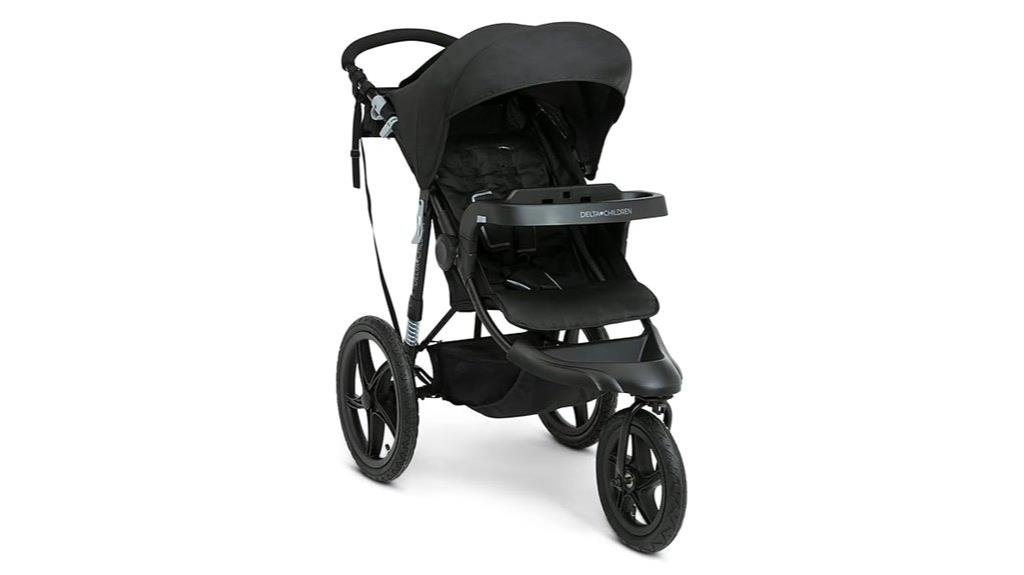
Best Overall for Trail-Focused Use: The Delta Children Apollo is the strongest match in this group if your outdoor routine includes packed dirt, gravel, park paths, or jogging routes. Its three-wheel jogger layout combines a 12-inch front wheel, 16-inch rear wheels, puncture-proof tires, and visible shock absorption to help the stroller roll more confidently over uneven surfaces than a typical compact travel stroller.
The front wheel can swivel for easier walking maneuverability or lock for added straight-line stability when jogging. The stroller also includes a safety tether, rear brakes, an extendable water-resistant UPF 50+ canopy with a peek-a-boo window, a multi-position reclining seat, a 5-point harness with reflective piping, a parent organizer, and a large storage basket.
Car-seat compatibility adds useful flexibility for everyday strolling. The included adapter supports specified Graco SnugRide Click Connect and Evenflo infant seats, while compatible Britax B-Safe 35 and Chicco KeyFit 30 setups require the appropriate separately sold Delta adapter. Always follow the stroller and car-seat manuals for approved combinations and activity restrictions.
Best For: Active parents who want the most trail-oriented stroller in this group for maintained outdoor paths, jogging routes, gravel, and mixed everyday use.
Why You’ll Like It:
- Large 12-inch front and 16-inch rear wheels are better suited to uneven outdoor surfaces than small travel-stroller wheels.
- Shock absorption, puncture-proof tires, a lockable front wheel, and a jogging tether provide useful features for active outdoor use.
- UPF 50+ canopy, reclining seat, parent organizer, child tray, and large basket make it practical beyond trail outings.
Keep in Mind:
- This is a full-size jogging stroller, so it takes more cargo space than a compact lightweight model.
- The stroller is intended for one child, and age or activity restrictions can differ depending on whether you are strolling, jogging, or using an infant car seat.
- Large wheels and suspension improve capability, but they do not make steep, rocky, icy, deeply muddy, or technical trails automatically safe.
Bombi Bēbee V2 Lightweight Baby Stroller (Sand)
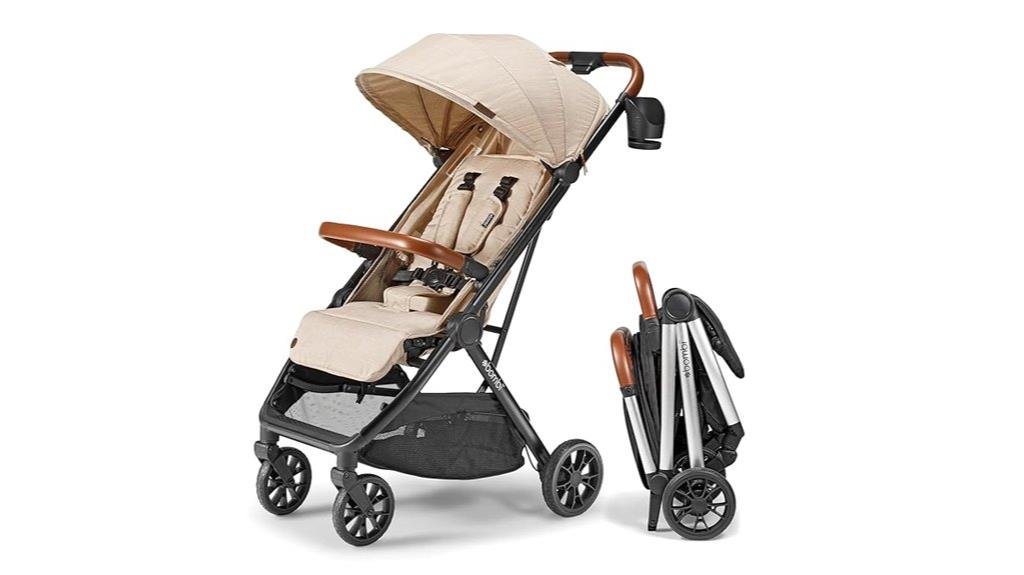
Best Lightweight Option for Easy Trails: The Bombi Bēbee V2 makes sense when you want more uneven-surface capability than a basic umbrella stroller without moving to a large jogging stroller. It weighs about 18 pounds and combines an aircraft-grade aluminum frame with large never-flat wheels and all-wheel suspension.
Bombi positions the Bēbee V2 for everyday surfaces including sidewalks, gravel paths, and cobblestones. That makes it useful for maintained park trails and easy outdoor routes where portability matters, but it should not be confused with a three-wheel jogging stroller designed for more demanding running or trail use.
The stroller is designed for children from about 6 months up to 50 pounds in standard stroller mode. It also includes a multi-position recline, 5-point harness, adjustable footrest, XXL canopy, extra-large storage basket, parent and child storage areas, cup holder, and compact one-hand folding design. Earlier use requires the appropriate Bombi car-seat adapter accessory and a compatible infant car seat.
Best For: Families who want a lighter stroller for travel, parks, maintained gravel paths, cobblestones, and mixed everyday surfaces.
Why You’ll Like It:
- At about 18 pounds, it is substantially easier to lift and transport than many full-size outdoor strollers.
- Large never-flat wheels and all-wheel suspension help smooth common uneven surfaces without air-tire maintenance.
- Compact folding, generous storage, reclining seat, canopy coverage, and an aluminum frame make it practical for both travel and daily use.
Keep in Mind:
- It is not a dedicated jogging stroller and does not have the oversized three-wheel setup of the Delta Apollo.
- Easy gravel and maintained paths are a better match than steep, rocky, root-heavy, muddy, or technical hiking trails.
- Children younger than the standard stroller age should only use an approved compatible car-seat setup exactly as directed by the manufacturer.
Chicco Bravo Quick-Fold Stroller – Black | Black
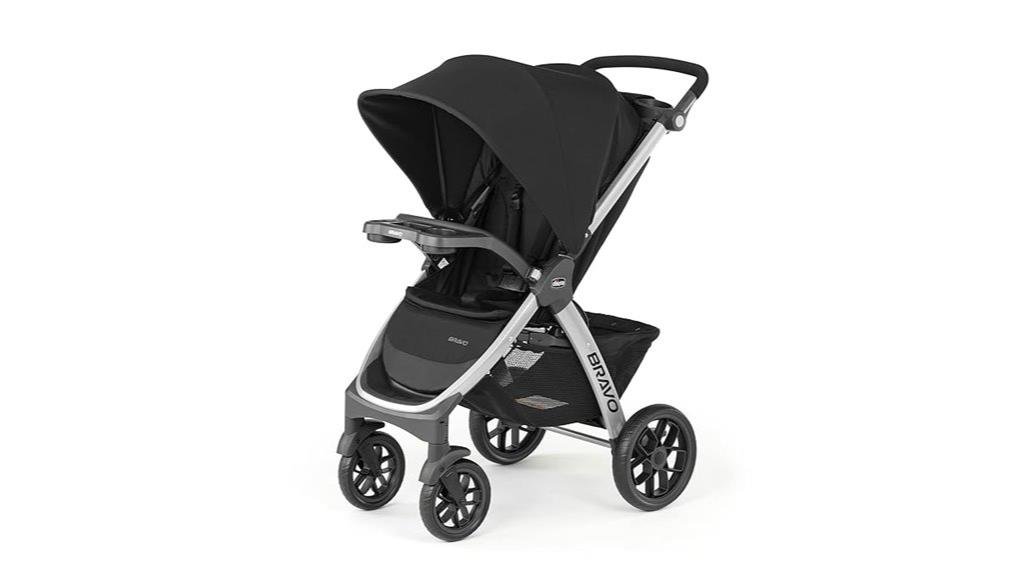
Best Travel-System Option for Uneven Paths: The Chicco Bravo Quick-Fold is a good choice when your priority is everyday versatility with enough wheel and suspension capability for maintained uneven surfaces. Its 7.5-inch front wheels, 10.3-inch rear wheels, treaded tires, and all-wheel suspension are better suited to cracked pavement, parks, and smoother gravel paths than a basic small-wheel umbrella stroller.
The Bravo is also especially convenient for families already using a Chicco infant car seat. All Chicco infant car seats can click into the stroller using the included child tray without an additional adapter. Removing the toddler seat and canopy also lets the frame function as a lighter infant car-seat carrier.
The full stroller weighs about 24.9 pounds and supports a child up to 50 pounds. Other useful features include a UPF 50+ adjustable canopy with mesh peek-a-boo window, multi-position reclining seat, linked rear parking brakes, adjustable push handle, parent tray, large storage basket, and a compact self-standing one-hand fold.
Best For: Parents who want a full-size everyday stroller and Chicco travel-system compatibility while still having treaded wheels and suspension for maintained uneven paths.
Why You’ll Like It:
- All-wheel suspension and treaded wheels improve comfort on common uneven surfaces.
- Compatible Chicco infant car seats click in through the included child tray without an additional adapter.
- The self-standing one-hand fold, adjustable handle, large basket, and full-size seat work well for everyday family use.
Keep in Mind:
- At about 24.9 pounds, it is heavier to lift than the Bombi Bēbee V2.
- The smaller wheel sizes make it better suited to maintained paths than rough trail sections.
- It is an everyday full-size stroller rather than a dedicated jogging or technical-trail model.
Factors to Consider When Choosing a Stroller for Hikes
A stroller can feel excellent on one trail and frustrating on another, so start with the surface you use most often. Paved greenways, packed dirt, fine gravel, maintained park paths, and rocky singletrack place very different demands on wheels, suspension, brakes, and handling. Always stay within the terrain, age, weight, and activity limits in the manufacturer’s instructions.
Terrain and Wheel Type
Wheel size has a major effect on how easily a stroller moves across uneven ground. Larger wheels generally roll over small bumps, cracks, gravel, and shallow ruts more easily than small umbrella-stroller wheels. For more active trail use, a three-wheel jogging layout with a front wheel that can lock straight can also improve tracking.
For maintained paths, treaded or larger never-flat wheels may provide enough capability without the size of a full jogger. For rougher terrain, prioritize a stroller specifically designed and approved for that use rather than relying on marketing terms such as “all terrain” alone.
Suspension and Shock Absorption
All-wheel suspension or a dedicated shock-absorbing system can reduce how much vibration and impact reaches the stroller frame and seat. It can also help the wheels stay composed when the surface changes from pavement to packed dirt or gravel.
Suspension does not make every route appropriate, however. Deep holes, exposed roots, steep side slopes, loose rock, ice, deep sand, or heavy mud can still create rollover, loss-of-control, or sudden-stop risks.
Weight and Portability
A lighter stroller is easier to lift into a vehicle and carry when you reach stairs or other obstacles, but lower stroller weight should not be confused with better trail capability. A compact 18-pound model may be easier to transport, while a larger jogger can offer bigger wheels and more trail-oriented hardware.
Also check the actual folded dimensions instead of relying only on labels such as “compact.” If cargo space is tight, measure your trunk or storage area before buying.
Capacity and Size Limits
Check the manufacturer’s child weight limit, recommended age, seating capacity, and approved car-seat combinations. A higher child weight rating does not automatically mean the stroller is better on rough terrain; wheel design, frame geometry, brakes, suspension, and intended use matter too.
If you plan to use an infant car seat, make sure the exact car-seat model and adapter combination is approved by the stroller manufacturer. Car-seat compatibility for strolling should not be interpreted as permission to jog or use rough trails with a young infant.
Canopy and Weather Protection
An extendable canopy is valuable on exposed paths. Look for verified UPF-rated materials where possible, enough coverage for the child’s seating position, and a viewing or ventilation panel if included.
Water-resistant fabric can help with light moisture, but it should not be treated as full rain or severe-weather protection unless the manufacturer specifically says so. Check conditions before heading out and avoid routes where heat, storms, ice, or poor visibility could make stroller use unsafe.
Storage and Accessibility
Trail outings often require more gear than a short neighborhood walk. A useful basket can hold diapers, snacks, water, extra clothing, and other essentials, while parent pockets or organizers keep smaller items accessible.
Do not overload the handlebar or attach heavy bags in ways the manufacturer does not approve, because extra weight high on the stroller can affect stability. Follow the basket and accessory weight limits in the product manual.
Brakes, Harness, and Control
Use the stroller’s harness according to the manual every time, even on easy paths. Check that parking brakes engage properly before placing or removing a child, adjusting the seat, or stopping on a level surface.
For a jogging stroller, follow the manufacturer’s instructions for locking or unlocking the front wheel and using the safety tether. Never assume the walking configuration is also the recommended running configuration.
Before You Buy
- Identify whether your usual route is paved, packed dirt, gravel, or genuinely rough trail.
- Confirm the child’s age and weight fit the stroller’s stated limits.
- Check wheel size, suspension, braking, and front-wheel locking features.
- Verify the exact infant car-seat and adapter combination if you plan to use one.
- Measure your vehicle cargo space and compare it with the stroller’s folded dimensions.
- Read the manufacturer’s instructions for jogging, trail use, accessories, cleaning, and maintenance.
Frequently Asked Questions
Can Strollers Be Used for Winter or Snow Hiking?
Only use a stroller in snow or winter conditions when the manufacturer considers the stroller and any accessories suitable for those conditions. Do not improvise with unapproved tires or accessories. Packed, level surfaces are very different from ice, deep snow, steep slopes, or hidden trail hazards, so choose a safer route or another transportation method when traction and control are uncertain.
Should a Toddler Nap While the Stroller Is on a Steep Trail Section?
A steep or unstable trail is not the place to rely on seat recline for safety. Keep the child properly secured according to the stroller instructions and stop on a stable, level area before making major seat adjustments, parking for a longer rest, or attending to the child. Avoid routes where you cannot maintain secure control of the stroller.
Can These Strollers Be Attached to a Bicycle?
Do not attach any of these strollers to a bicycle unless the manufacturer specifically provides and approves a bicycle-trailer conversion system for that exact model. Universal or improvised adapters can change stability and load forces in ways the stroller was not designed to handle.
Do Strollers Work Differently at High Altitude?
Altitude itself does not turn an appropriate stroller into an inappropriate one, but mountain routes can combine steeper grades, rougher surfaces, faster-changing weather, stronger sun exposure, and greater physical demands on the caregiver. Choose the route based on the stroller’s intended terrain and your family’s ability to handle the conditions rather than assuming a stroller is suitable simply because its wheels roll well.
Can These Strollers Carry More Than One Child?
No. The three strollers reviewed here are single-child models. Do not place a second child on the frame, basket, footrest, handle area, or another location not approved for seating. Families who need two-child seating should choose a stroller specifically designed and rated for that purpose.
Which Stroller Is Best for Gravel Trails?
For more trail-focused use, the Delta Children Apollo has the strongest hardware in this group because of its larger 12-inch front and 16-inch rear wheels, shock absorption, and jogging-oriented three-wheel design. The Bombi Bēbee V2 is the more portable choice for easier gravel paths, while the Chicco Bravo fits maintained uneven paths where travel-system convenience matters more than maximum wheel size.
Is a Jogging Stroller Better for Hiking?
A jogging stroller can be better for many maintained trails because larger wheels, a stable three-wheel layout, suspension, and a lockable front wheel can improve rolling and tracking. That still does not make every hiking trail stroller-friendly. Steep, rocky, narrow, muddy, or highly technical routes may be unsuitable regardless of stroller type.
Conclusion
If trail capability is your first priority, the Delta Children Apollo is the strongest option here because its large wheels, shock-absorbing design, lockable front wheel, and jogging-oriented layout are the best match for maintained outdoor routes.
If you want something easier to lift and travel with, the Bombi Bēbee V2 gives you an 18-pound frame, large never-flat wheels, and all-wheel suspension for parks, gravel paths, cobblestones, and everyday outings. If you already use a Chicco infant car seat or want a versatile full-size stroller, the Chicco Bravo Quick-Fold combines travel-system convenience with treaded wheels and all-wheel suspension for smoother maintained paths.
The right choice depends on the trail, not just the stroller. Match the wheel size, suspension, brakes, child limits, and manufacturer-approved use to the surfaces you actually plan to travel, and avoid treating an everyday all-terrain label as permission to take a stroller onto steep or technical terrain.