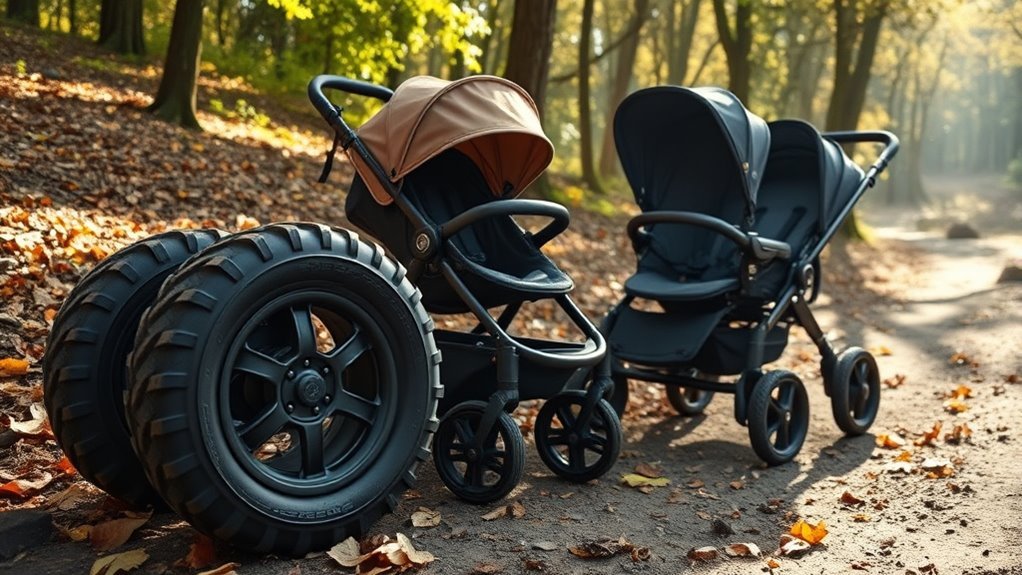
Not every outdoor stroller is built for the same passenger or the same terrain. This guide compares three very different options: a lightweight child travel stroller for paved and packed paths, a pet stroller for medium-to-large dogs on maintained outdoor routes, and a true child jogging stroller for rougher paths and active outings.
The key is to match the stroller to the passenger first and the terrain second. If you regularly encounter roots, rocks, loose gravel, or jogging speeds, wheel size and stability matter far more than compact folding. If your priority is airports, parks, sidewalks, or easy packed paths, portability may matter more.
Disclosure: As an Amazon Associate, we may earn from qualifying purchases made through links on this page, at no extra cost to you.
Quick Comparison
| Product | Passenger | Best Terrain | Capacity | Main Strength | Main Limitation |
|---|---|---|---|---|---|
| Graco Ready2Jet Compact | Child | Sidewalks, airports, parks, smooth packed paths | Up to 50 lb | 13.2 lb weight and automatic one-hand fold | Not designed as a rough-trail jogger |
| Zoosky Medium Dog Stroller | Pet only | Pavement, grass, parks, maintained paths | Pets up to 66 lb | Roomy pet cabin, adjustable handle and ventilation | Not a child stroller and not ideal for very rough loose terrain |
| Jeep Cross-Country Sport Plus | Child | Jogging, uneven paths and rougher outdoor surfaces | Child under 50 lb | Large air-filled wheels and locking front wheel | Heavier and bulkier than a compact travel stroller |
Graco Ready2Jet Compact Travel Stroller
Best for Travel & Smooth Paths
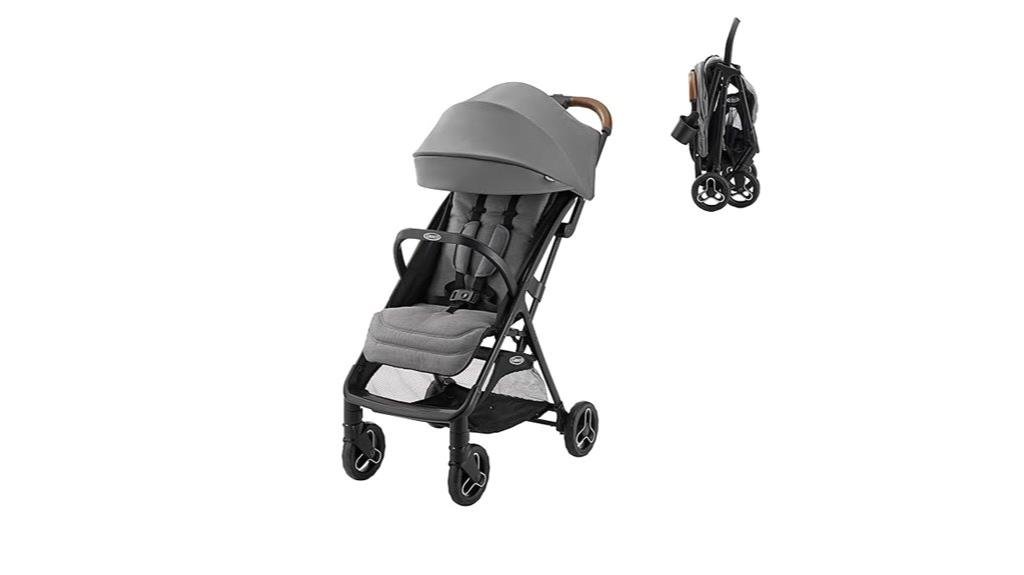
If portability matters more than serious off-road capability, the Graco Ready2Jet Compact is the easiest stroller here to carry, fold, and store. Its automatic one-hand fold, self-standing design, and 13.2 lb frame make it especially useful for airports, city trips, parks, paved greenways, and well-packed paths.
Graco equips it with all-wheel suspension, a multi-position reclining seat, adjustable calf support, a convertible 3-/5-point harness, and a UV 50 canopy. It also accepts Graco SnugRide infant car seats and supports a child up to 50 lb. The suspension can make ordinary bumps more comfortable, but this is still a compact travel stroller rather than a jogging stroller with large air-filled wheels.
Who Should Buy This: Parents who want a very light stroller for travel, daily errands, parks, sidewalks, and relatively smooth outdoor paths.
Who Should Avoid This: Parents who regularly jog or push over rocks, large roots, deep gravel, sand, or demanding off-road trails.
Pros:
- Automatic one-hand fold and self-standing compact design simplify travel and storage.
- Very light 13.2 lb frame is easier to lift into a vehicle or carry through airports.
- All-wheel suspension, reclining seat, adjustable calf support, harness, and UV 50 canopy improve everyday comfort.
- Accepts Graco SnugRide infant car seats for compatible travel-system use.
Cons:
- Small travel-stroller wheels are not intended for the same rough terrain as a dedicated jogger.
- May feel less supportive than a larger full-size stroller for bigger toddlers or long rough-surface outings.
- Graco describes it as overhead-friendly, but airline carry-on rules vary, so confirm dimensions and policies before flying.
Zoosky Medium Dog Stroller for Large Dogs (Up to 66 lbs)
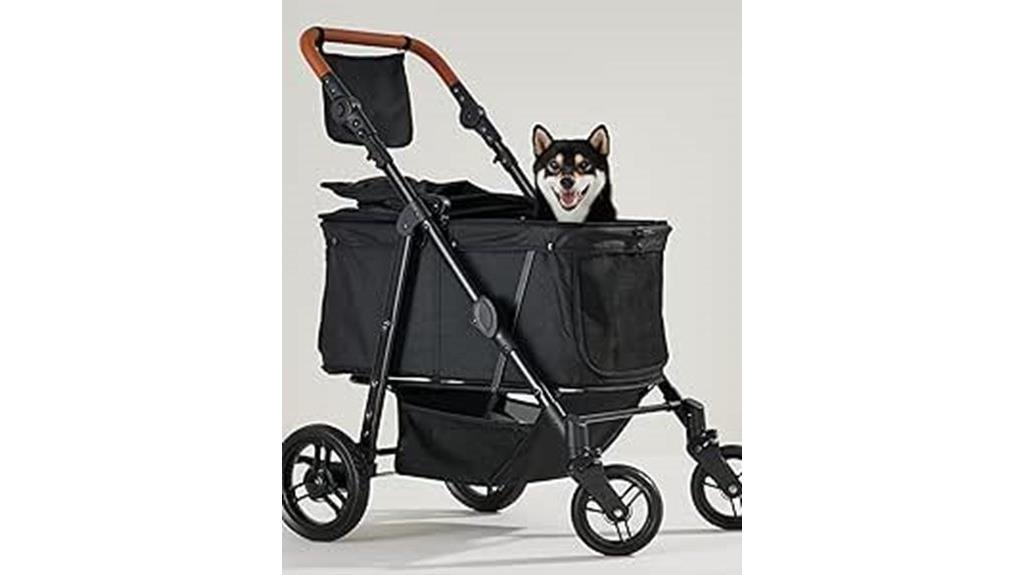
Best for Medium-to-Large Dogs on Maintained Paths
The Zoosky Medium Dog Stroller is the pet-specific option in this guide. It supports pets up to 66 lb and is designed for owners who want to take a medium or larger dog through parks, paved routes, grass, and maintained outdoor paths when the dog cannot comfortably walk the full distance.
Its features include a 180-degree convertible canopy with breathable mesh and sun shades, an adjustable handle, larger rear wheels, swiveling front wheels with spring suspension, a zippered mesh entry, waterproof Oxford material, and storage. The low-entry design can also reduce how far a heavier or older pet needs to be lifted.
This stroller is marketed for outdoor use, but wheel size and front-wheel design mean it should not be treated like a heavy-duty jogging stroller on loose rock, deep gravel, or highly technical trails.
Who Should Buy This: Dog owners who need a roomy stroller for a medium-to-large pet on neighborhood walks, parks, grass, and reasonably maintained trails.
Who Should Avoid This: Anyone shopping for a child stroller, or pet owners who need a stroller for very rocky, steep, loose, or technical terrain.
Pros:
- Supports pets up to 66 lb, making it suitable for many medium and larger dogs.
- 180-degree convertible canopy, breathable mesh, and sun shades provide ventilation and adjustable coverage.
- Adjustable handle helps accommodate users of different heights.
- Water-resistant Oxford material, removable pad, entry door, and storage make routine pet outings easier.
Cons:
- This is a pet stroller and must not be used as a substitute for a child stroller or child safety restraint.
- Loose gravel, rocks, abrupt elevation changes, and demanding trails can be harder for its smaller front wheels.
- A 66 lb maximum still excludes very large dogs or combinations of pets that exceed the stated limit.
- Warranty and replacement-part terms should be confirmed directly with the seller or manufacturer before purchase.
Jeep Cross-Country Sport Plus Jogging Stroller by Delta Children, Charcoal Galaxy
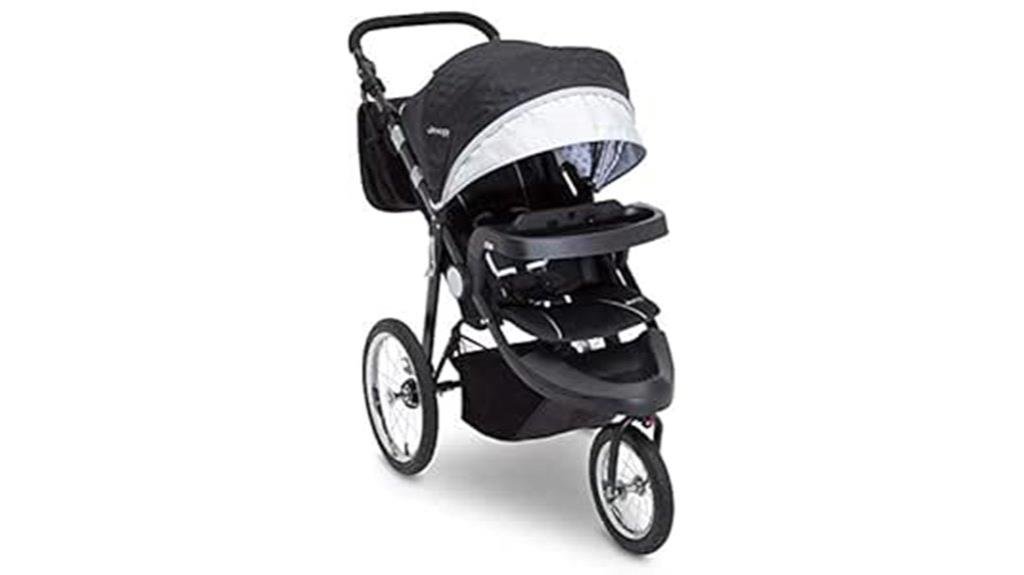
Best for Jogging & Rougher Child Outings
If you actually need a child stroller designed around jogging and uneven outdoor surfaces, the Jeep Cross-Country Sport Plus is the strongest match of these three. Its 16-inch rear and 12-inch front air-filled wheels, locking front wheel, shock-absorbing frame, and safety tether provide the larger rolling platform you want when surfaces become rougher.
The stroller also uses a durable steel frame, multi-position reclining seat, padded five-point harness, extendable canopy with peek-a-boo window, parent organizer, child tray, and generous undercarriage storage. Delta lists the stroller for children under 50 lb and currently lists the product weight at approximately 33 lb.
It is JPMA certified and meets or exceeds applicable ASTM and CPSC requirements. Delta also lists compatibility with selected Graco, Evenflo, Chicco, and Britax infant car seats. Because adapters and compatibility can vary by car-seat model, confirm your exact seat against Delta’s current compatibility instructions before relying on travel-system use.
Who Should Buy This: Active parents who prioritize larger air-filled tires, jogging capability, and better handling on uneven outdoor paths over ultra-light portability.
Who Should Avoid This: Travelers who mainly want the lightest possible stroller for airports, small trunks, frequent stairs, or compact indoor storage.
Pros:
- Large 16-inch rear and 12-inch front air-filled wheels are better suited to uneven outdoor surfaces than compact travel-stroller wheels.
- Locking front wheel, shock-absorbing frame, and safety tether support controlled jogging and straight-line stability.
- Multi-position reclining seat, padded five-point harness, extendable canopy, child tray, and storage improve everyday usability.
- JPMA certified and meets or exceeds applicable ASTM and CPSC standards.
Cons:
- Delta currently lists the stroller at about 33 lb, so it is substantially heavier to lift than the Graco travel stroller.
- Large wheels and a jogging frame take more cargo and storage space even with the quick-release rear wheels.
- Infant-car-seat compatibility varies by exact seat and adapter arrangement, so verify your specific combination before purchase.
Factors to Consider When Choosing an Outdoor Stroller for Paths and Trails
Start by deciding who will ride in the stroller and where you will actually use it. A compact child travel stroller, a pet stroller, and a jogging stroller solve different problems. Compare terrain, wheel type, suspension, weight, passenger capacity, comfort, safety, weather protection, storage, and car-seat compatibility before buying.
Terrain and Wheel Type
Wheel design is one of the biggest differences between a travel stroller and a trail-oriented jogger. Larger air-filled wheels generally roll over cracks, roots, gravel, and uneven ground more easily than small compact wheels. A locking front wheel can also improve straight-line control on rougher surfaces or while jogging.
Smaller wheels are not automatically bad. They make a stroller lighter and more compact, which is useful for airports, sidewalks, paved parks, and smoother packed paths. Choose the wheel system for the terrain you use most rather than assuming every product labeled “all-terrain” will handle the same conditions.
Suspension and Shock Absorption
Suspension helps reduce the amount of vibration and impact transferred through the stroller on uneven ground. A compact stroller with all-wheel suspension can be comfortable on ordinary pavement and mild bumps, while a jogging stroller may combine a shock-absorbing frame with much larger air-filled tires.
Suspension does not make every stroller suitable for rocks, technical trails, or jogging. Wheel diameter, tire construction, frame stability, brakes, front-wheel control, manufacturer instructions, and occupant limits all matter.
Weight and Portability
The lightest stroller is not automatically the best trail stroller. A 13.2 lb travel stroller such as the Graco is much easier to lift, carry, and store, but a larger jogging stroller uses more material and larger wheels to provide a more substantial outdoor platform.
Before buying, check the stroller’s open and folded dimensions, product weight, folding method, wheel-removal requirements, and the cargo space in your vehicle. If you frequently climb stairs or fly, portability may deserve more priority than maximum terrain capability.
Seat Comfort and Recline
For child strollers, look for a supportive seat, appropriate recline positions, an adjustable harness, sun coverage, and any age or weight restrictions specified by the manufacturer. Adjustable calf support can also improve comfort as a child grows.
For pet strollers, focus instead on cabin dimensions, entry height, ventilation, interior padding, tether points, and whether your pet can turn around and lie comfortably without exceeding the stated weight capacity.
Harness and Safety
A child stroller should use the restraint system specified by its manufacturer; a five-point harness is common on full-featured child strollers. Always use parking brakes when stopped and follow the manufacturer’s instructions about front-wheel locking, jogging, minimum age, weight limits, and compatible accessories.
Pet strollers use different containment systems and are not tested or designed as child restraints. Never place a child in the Zoosky pet stroller simply because its numerical weight capacity appears sufficient.
Canopy and Weather Protection
A useful canopy should provide adequate shade without blocking ventilation. For children, features such as UV-rated fabric, an extendable visor, and peek-a-boo window can improve comfort. Pet strollers benefit from large mesh ventilation areas and adjustable shades that let owners balance airflow with sun protection.
No canopy makes a stroller suitable for severe weather by itself. Avoid prolonged exposure to excessive heat, storms, or conditions outside the manufacturer’s intended use.
Storage and Carrying Capacity
Check the size and accessibility of the under-seat basket, parent organizer, cup holder, and other storage areas if you carry water, snacks, diapers, pet supplies, or jackets. Keep heavy items low and evenly distributed so they do not make the stroller awkward to control.
Do not assume the passenger weight limit is also a general cargo allowance. Follow separate basket, accessory, and occupant limits stated by the manufacturer, and never hang heavy bags from the handle unless the stroller instructions specifically allow it.
Compatibility With Car Seats
Car-seat compatibility applies only to appropriate child strollers. Confirm the exact infant car-seat model, stroller model, and required adapter before purchase. Graco states that the Ready2Jet accepts Graco SnugRide infant car seats, while Delta lists several compatible infant seats for the Jeep Cross-Country Sport Plus.
A compatible infant car seat can make transfers between vehicle and stroller more convenient, but it does not automatically mean the stroller is approved for jogging with a newborn or young infant. Follow the stroller and car-seat manufacturers’ age and activity guidance.
Frequently Asked Questions
Can These Strollers Be Used for Infants Under 6 Months?
Only when the manufacturer specifically allows it. Some child strollers can be used with an approved infant car seat for younger babies, but that does not mean jogging or rough-trail use is approved. Check the exact stroller manual, compatible car-seat instructions, minimum-age guidance, and activity restrictions before use. The Zoosky model in this guide is pet-only and should never be used for an infant.
Do Any Models Fold With One Hand?
Yes. The Graco Ready2Jet has an automatic one-hand fold and a self-standing compact design. It is the strongest option here if fast folding and portability matter more than rough-terrain performance.
Are Replacement Parts Widely Available for These Brands?
Availability varies by brand, model, part, and age of the stroller. Graco provides model-specific replacement-parts support, and Delta Children maintains a parts catalog for the Jeep Cross-Country Sport Plus. Pet-stroller parts may be less standardized, so check Zoosky support for wheels, pads, canopies, or other components you may eventually need.
Can I Carry a Pet in a Child Stroller?
We do not recommend using a child stroller for a pet unless the manufacturer explicitly approves that use. Child seats, harnesses, balance requirements, ventilation, and safety testing are designed around children. If you need to transport a dog, use a pet-specific stroller such as the Zoosky and follow its stated size and weight limits.
Do Any of These Strollers Qualify for Airline Carry-On?
The Graco Ready2Jet is marketed as overhead-friendly, making it the most travel-oriented model here. That does not guarantee acceptance on every aircraft or airline. Cabin baggage limits vary by carrier, aircraft, fare, and route, so confirm the current stroller or carry-on rules before departure. Larger jogging and pet strollers are much more likely to require gate-checking or checked transport.
Conclusion
These three strollers make sense only when you compare them by passenger and terrain rather than treating them as interchangeable trail models.
Choose the Graco Ready2Jet if lightweight travel, airports, city use, and smoother outdoor paths are your priorities. Choose the Zoosky Medium Dog Stroller if you need to transport a medium-to-large dog on parks, grass, pavement, or maintained paths. Choose the Jeep Cross-Country Sport Plus if you need a child jogging stroller with large air-filled wheels and better capability on rougher outdoor surfaces.
Before buying, confirm the current passenger limit, dimensions, car-seat compatibility where applicable, and manufacturer instructions for your intended terrain and activity. Choosing the stroller around how you actually use it will give you a safer, more practical setup than simply choosing the model with the strongest “all-terrain” description.