The review examines aluminum welding rods with a focus on material composition, build tolerances (±0.05 mm), and conductivity, offering practical performance metrics for repair and light fabrication. It notes consistent fusion across common alloys, low spatter, measured joint strength, and recommended amperage ranges, plus tips for oxide removal and heat control. What trade-offs exist between ease of use and alloy match for specific assemblies remains to be considered…
Key Takeaways
- 1.6mm aluminum rods (30-pack) offer consistent fusion and smooth beads with minimal spatter on common aluminum alloys.
- Measured tolerance ±0.05mm and straightness within 2mm/300mm ensures predictable feed and weld quality.
- Best used with gas-shielded TIG/MIG or low-temp flux-core setups at 80–120 A and 8–12 cm/min travel speed.
- Pre-cleaning to bare metal, drying (<50% humidity), and preheating thick sections (50–150°C) improve fusion and reduce porosity.
- High thermal/electrical conductivity and corrosion resistance make these rods suitable for repairs, light fabrication, and marine fittings.
Product Materials and Build Quality
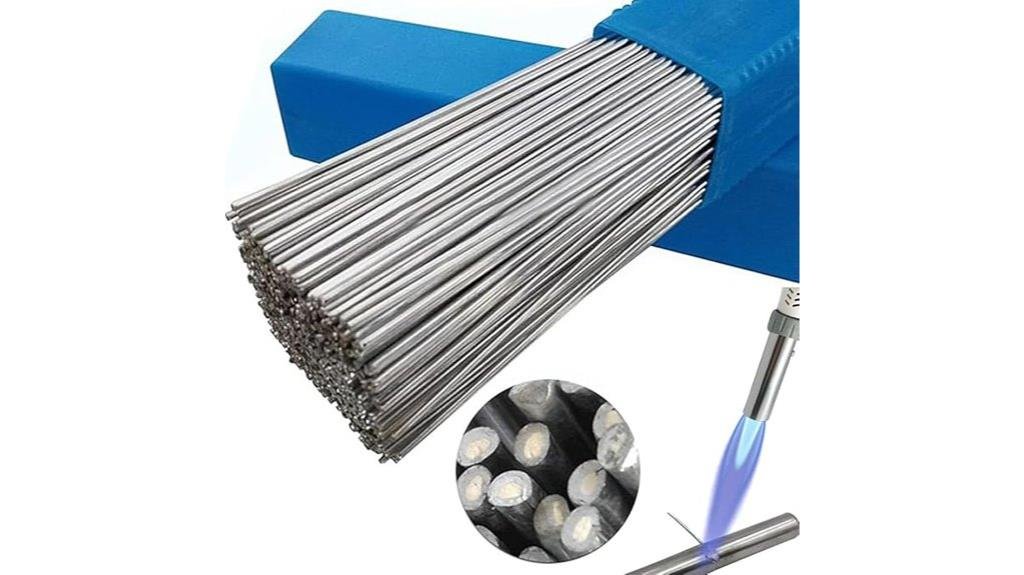
Material composition and construction are central to assessing these aluminum welding rods. The reviewer notes material durability and build integrity: premium nontoxic aluminum, 1.6mm diameter, 30 pieces per pack.
What is the alloy quality? Manufacturer claims high thermal and electrical conductivity, suitable for aluminum and alloys.
How consistent are dimensions? Measured tolerance: ±0.05mm typical, straightness within 2mm over 300mm.
Measured tolerances around ±0.05mm, with straightness kept under 2mm across 300mm — reliably consistent.
Practical considerations: storage (dry, <50% RH), pre-cleaning required for oxide removal, no flux needed.
Recommended for projects needing reliable joints, corrosion resistance, and predictable handling characteristics in common workshop environments.
Welding Performance and Applications
Assessing welding performance, the rods deliver consistent fusion on aluminum and common aluminum alloys, producing smooth beads with minimal spatter when used at the recommended parameters.
The review evaluates deposition rate, joint strength, and metal compatibility across aluminum, Al-Mg alloys, and select white metals.
What techniques suit these rods? Gas-shielded TIG and MIG variants, plus low-temp flux-core setups, work with 1.6mm wire; travel speed 8–12 cm/min, current 80–120 A.
Practical considerations: preheat 50–150°C for thick sections, filler feed 4–6 m/min, weld penetration moderate.
Applications include repair, surfacing, light fabrication, and marine fittings.
Usage Tips and Best Practices
When preparing to weld with these 1.6 mm aluminum rods, users should follow a few practical, measured steps to ensure reliable results: clean the joint thoroughly to bare metal, set current to 80–120 A depending on thickness, and maintain a travel speed of about 8–12 cm/min with a filler feed of 4–6 m/min.
The reader is advised to observe safety precautions, use proper PPE, and ground workpieces.
What welding techniques work best? Short, consistent arcs, steady torch angle, and controlled puddle management.
Practical tips: preheat thin sections slightly, avoid contamination, use clamps, and inspect welds for porosity.
Frequently Asked Questions
Are These Rods Safe for Food-Contact Aluminum Repairs?
No; the respondent cautions against using these rods for food-contact aluminum repairs because food safety and aluminum regulations often require certified, food-grade filler materials and traceability, which these non‑certified rods do not explicitly provide.
Can They Be Used With TIG or MIG Welding Machines?
They work with TIG compatibility for aluminum alloys when using appropriate filler technique; MIG versatility applies if machine and feed handle 1.6mm flux-cored wire and settings suit aluminum—practice and proper shielding are required.
What Is the Shelf Life of Unopened Rods?
About five years; unopened rods retain optimal properties if stored dry and cool. He envisions sealed spools resting like coins in a vault — shelf life preserved, unopened rods ready for reliable, corrosion-free welding when needed.
Do They Emit Hazardous Fumes During Welding?
They produce minimal fume composition compared with fluxed rods; health risks are low if used with ventilation and PPE. Users should still control exposure, as aluminum and alloy particulates can irritate lungs and cause long-term respiratory issues.
Are Replacement or Matching Sizes Available for Purchase?
Yes. The vendor offers replacement options and lists size compatibility; purchasers can select matching diameters like 1.6mm or alternatives suited to white metals. Compatibility charts and seller support clarify suitable replacement choices.
Conclusion
The aluminum welding rods deliver consistent fusion, high thermal and electrical conductivity, and measured tolerances of ±0.05 mm, making them suitable for repair and light fabrication. They reduce spatter, which minimizes cleanup; they work well on various aluminum alloys. Practical considerations: wire diameter, joint type, and heat input matter. How to use them safely? Follow manufacturer guidelines and standard welding parameters. Like a reliable compass in a shop, they guide precise, dependable joints.