RILAND Stick Welder Review
By SellySell Editorial Team | Updated November 6, 2026 | Editorial review based on published product information, not hands-on testing.
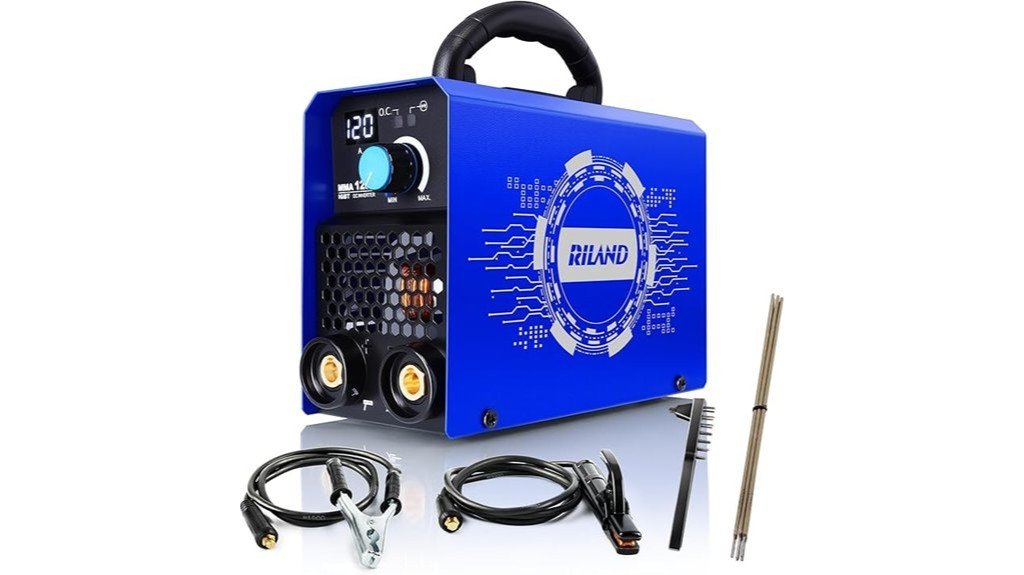
Need a stick welder that you can carry between small repair jobs without taking up much storage space? The RILAND Stick Welder 120A is listed as a 110V MMA machine with a 30A to 120A output range and a claimed 4.4 lb welder weight. Its hot start and arc force features may make basic stick welding easier, but its verified duty cycle and complete electrical requirements remain unclear. This review explains where its specifications make sense, what you need to check, and when a larger machine is the safer choice.
Quick Verdict: Recommended With Caveats
Best For: Hobby welders, homeowners, and DIY users doing occasional, noncritical steel repairs.
Main Strength: Portable 120A-class stick welding with hot start and arc force.
Bottom Line: You get a compact option for small jobs, not a documented heavy-duty workhorse. Confirm the duty cycle, outlet requirements, and exact kit before ordering.
Key Specs at a Glance
| Specification | Detail |
|---|---|
| Brand | RILAND |
| Listed version | Stick Welder 120A (specific factory model number not confirmed) |
| ASIN | B0D6GB2HPT |
| Welding process | Stick / shielded metal arc welding (MMA/SMAW) |
| Listed input voltage | 110V AC; confirm the required circuit and plug details |
| Stated output range | 30A to 120A |
| Listed electrode diameters | 1.6 to 3.2 mm (about 1/16 to 1/8 in.) |
| Claimed welder weight | 4.4 lb; a separate product-data record lists 7.04 lb as item weight, so confirm what is being weighed |
| Control and arc aids | Current adjustment, hot start, arc force, and anti-stick claims |
| Listed protections | Overcurrent, overvoltage, overload, and short-circuit protection |
| Possible work materials | Low-carbon steel, iron, and stainless steel with a suitable electrode and technique |
| Reported kit contents | Electrode holder, work clamp, power cord, manual, brush, basic face shield, and five rods in third-party listing data; verify the current package |
| Not yet confirmed | Duty cycle, input amperage, cable lengths, warranty terms, and certification documents |
Specification note: The stated figures come from the source article and third-party product records for this ASIN. The live Amazon listing could not be checked directly during this update. Some listing fields conflict, especially the weight.
What Is the RILAND Stick Welder 120A?
This RILAND is a compact, electric stick welder. Stick welding uses a coated consumable electrode to create an arc and join metal. Unlike a MIG welder, it does not need a wire-feed unit or shielding-gas bottle for ordinary stick welding.
The listed 30A to 120A output range and 1.6 to 3.2 mm rod support point toward repair work, welding practice, and small steel projects. Its lightweight design is useful when you need to move a machine from a garage bench to a different work area.
The linked ASIN is associated with the 120A version. Other RILAND machines may have different output ratings or welding processes, so compare the exact version rather than relying on the brand name alone.
Who It Is For
Best For
- DIY users repairing small, noncritical steel items around the home.
- Hobby welders who want to practice with common small stick electrodes.
- Workshop users who value a portable backup machine for occasional jobs.
Hot start and arc force are helpful features to look for when learning to strike and hold an arc. They do not replace correct electrode choice, safe setup, or welding practice.
Who Should Skip It
Skip If
- You need long, continuous welds and must know the duty cycle before work begins.
- You regularly weld thick sections, high-demand joints, or safety-critical structures.
- You need a confirmed MIG or TIG process, or verified dual-voltage capability.
Before You Buy: This ASIN is listed as a 110V, 120A stick welder, but its duty cycle and input-current needs are not established here. Check the current label and manual before choosing an outlet, extension cord, electrode size, or job. Do not assume that every 3.2 mm rod can run well at 120A.
Key Features and What They Mean
30A to 120A Output Range
The listed range lets you adjust the welding current to suit different electrodes and steel thicknesses. Lower amperage may help with small rods, while the upper end can support some 3.2 mm rods. The actual usable range depends on electrode type, power supply, and the manufacturer’s operating limits.
A 120A maximum is not a promise that you can weld continuously at 120A. That depends on the duty cycle, which has not been verified for this exact model.
Rod Compatibility: 1.6 to 3.2 mm
The stated diameter range covers several common electrode sizes. It does not confirm that every electrode chemistry or position works equally well. Check the rod package for its recommended current range, polarity, and intended base metal.
For your first practice joints, use an electrode that matches the machine’s available current and follow the rod maker’s guidance. Poorly matched rods can stick, create excess spatter, or fail to make a sound joint.
Arc Force and Anti-Stick
Arc force is designed to change current when the electrode gets too close to the metal. That can help keep the arc alive during short-arc welding. Anti-stick behavior is meant to reduce problems when an electrode touches and clings to the workpiece.
These are advertised aids, not measured performance results from our workshop. Your technique, surface preparation, and electrode condition still matter.
Hot Start
Hot start briefly raises the welding current when you strike an arc. It may help you start a bead with less electrode sticking, especially when you are still learning. It will not fix an incorrect current setting or a poor work-clamp connection.
Portable Size and Simple Controls
The machine is marketed with a 4.4 lb weight figure and a straightforward current adjustment. That makes it appealing if you have limited bench space or move between jobs. However, some product records show a higher item weight, and no single set of external dimensions could be confirmed with confidence for the bare welder.
Plan storage for the machine, power cord, electrode holder, work clamp, rods, and protective equipment. The full kit will take more room than the welder alone.
Built-In Protection Features
Published product descriptions claim overcurrent, overvoltage, overload, and short-circuit protection. These systems are meant to protect the machine during abnormal conditions, but they do not eliminate electric-shock, burn, fume, or fire hazards.
| Listed protection | Intended role |
|---|---|
| Overcurrent | Helps limit damaging excess current |
| Overvoltage | Helps respond to voltage outside an allowed range |
| Overload | May stop operation when the machine is overloaded |
| Short circuit | Helps protect the equipment during a fault |
How It Performs in Real Use
These are use-case assessments based on the listed specifications, not results from hands-on weld testing. Actual results depend on your training, rod choice, joint design, and power supply.
Garage Repairs and Small Steel Brackets
For small, noncritical steel brackets or workshop fixtures, the 120A-class output and adjustable current may be enough. Prepare clean metal, select the correct electrode, and make practice beads before working on the actual part. Do not use a beginner repair on a load-bearing or road-safety component without qualified assessment.
Hobby Fabrication and Welding Practice
You can use the stated 1.6 to 3.2 mm rod range to learn arc starting and bead control. Hot start may make the first contact easier. Thin sheet metal remains tricky with stick welding, even at lower current settings, because burn-through is possible.
Farm Shed or Outdoor Maintenance
The compact design helps when you need to carry the welder to a safe, dry work area. Stick welding can be practical outdoors without shielding gas, but rain, damp ground, unstable power, and nearby combustibles make a site unsuitable. Follow the manual’s electrical requirements rather than assuming any outdoor socket will work.
Longer Workshop Sessions
The main uncertainty is heat management. Without a verified duty-cycle rating, you cannot plan how long the machine can weld at a given current before it needs a cooling period. If you work for hours at high output, compare a machine with a published duty cycle and sufficient electrical capacity.
Setup Tips Before Your First Weld
- Read the manual and machine label. Check the required input voltage, current, plug, ventilation clearance, and allowed electrode sizes.
- Inspect the equipment. Look for damage to the power lead, welding cables, holder, clamp, and terminals before connecting power.
- Prepare the workpiece. Remove paint, oil, rust, and other contamination using a safe method. Never weld sealed containers or unknown coated metals.
- Use the correct electrode. Follow the electrode manufacturer’s amperage and polarity guidance. Secure the work lead to clean metal as directed.
- Practice on scrap first. Start with simple joints of similar metal and thickness, then inspect the weld and adjust your technique.
Pro Tip: Before ordering a box of 3.2 mm electrodes, read the amperage range printed on that exact rod package. Some rods need more current than this welder’s stated 120A ceiling can provide, even though the diameter fits.
Welding Safety, Maintenance, and Storage
Wear a properly rated welding helmet, flame-resistant clothing, welding gloves, and suitable footwear. Provide effective fume control, remove flammable materials, and keep appropriate fire protection nearby. Welding on coated, galvanized, or unknown metal can create especially hazardous fumes.
Never weld in rain or while standing on a wet surface. Do not touch live electrical parts. If you are unsure about the circuit, protective earth, or extension-cord suitability, ask a qualified electrician or welding professional instead of guessing.
After use, let the machine cool as instructed. Keep ventilation openings clear, inspect leads for wear, and store the welder and dry electrodes away from moisture. Claimed electronic safeguards are a backup, not a substitute for safe work habits.
Pros and Cons
Pros
- Marketed as a 4.4 lb portable machine for small work areas
- 30A to 120A stated adjustment range
- 1.6 to 3.2 mm advertised electrode support
- Hot start can make arc ignition easier
- Arc force and anti-stick features may help with common beginner difficulties
Cons
- No dependable duty-cycle or input-amperage figure confirmed for planning longer jobs
- 120A output may not cover the recommended settings of every 3.2 mm electrode
- Weight records conflict, while exact current kit contents and warranty need checking
Is It Worth the Price?
The RILAND 120A makes the most sense as an entry-level, occasional-use stick welder. If you mainly need to practice, repair simple steel items, or move between small work areas, its stated output and portable design give you a useful starting point.
Its value depends on the current price and what arrives in the box. Some third-party product records describe a basic accessory kit, but those items may not replace the protective gear you should buy separately. Confirm the exact package rather than judging value by the welder alone.
If your projects demand long welds, heavier material, or a strict deadline, a machine with confirmed duty-cycle and electrical specifications is a more dependable purchase, even if it costs more.
How It Compares to Alternatives
Compact stick welders from YESWELDER, HONE, and TOOLIOM are reasonable products to compare. Look at the exact model, not just the advertised maximum amperage. Input voltage, duty cycle at a stated temperature, electrode range, warranty, and the quality of included leads matter more than a larger number in a product title.
Choose this RILAND if portability and occasional MMA work are your main needs, and the current listing confirms your required setup. If you want MIG welding, choose a welder that explicitly supports that process instead.
Frequently Asked Questions
Which welding rods fit the RILAND 120A?
The listed diameter range is 1.6 to 3.2 mm. Check the specific electrode’s required current, polarity, and material compatibility before use. Diameter alone does not guarantee suitable performance.
Can it run from a regular household outlet?
Third-party product listings describe 110V AC input. That does not establish the required circuit amperage or safe use with an extension cord. Check the machine label and manual before plugging it in.
Is the RILAND Stick Welder good for beginners?
Its current adjustment, hot start, and arc force features make it reasonable to consider for supervised practice. You still need welding safety knowledge, the right protective gear, and time on scrap metal before making useful repairs.
Can it weld stainless steel or cast iron?
The product descriptions include stainless steel, and some list cast iron. Successful welding depends on a suitable electrode and process, especially for cast iron. Do not assume it will handle every grade or joint without further checking.
Will it work on thin sheet metal?
The 30A lower setting may help when using a suitable small electrode. Stick welding thin sheet can still cause holes or distortion, so test the combination on scrap first. A different welding process may be easier for delicate work.
Can you use it outdoors?
Its portable design makes moving to an outdoor repair area practical. Weld only in safe, dry conditions with a suitable power supply and a clear area around the work. Stop if rain, moisture, or nearby fire hazards make the location unsafe.
What is its duty cycle?
A reliable duty-cycle figure for this exact 120A listing was not confirmed. Ask the seller for the current manual or a clear photograph of the rating plate. Do not borrow a duty-cycle number from another RILAND model.
What comes with the welder, and is the 4.4 lb weight exact?
A mirrored listing describes leads, a manual, a brush, a basic face shield, and five rods. The advertised welder weight is 4.4 lb, but another record lists 7.04 lb as item weight. Confirm the current package and whether the quoted weight includes accessories.
The Bottom Line
The RILAND Stick Welder 120A is worth considering for occasional, noncritical metal repairs where a compact machine matters. Its 30A to 120A range and arc-start aids are appealing, but you should skip it for demanding jobs until the duty cycle, electrical needs, and full kit are confirmed. Recommended with caveats for DIY use, not as a proven professional-duty welder.
Ready to Compare the Current Listing?
Check the 120A version, price, outlet requirements, and included accessories before ordering.