Disclosure: As an Amazon Associate, we earn from qualifying purchases. If you click a link on this page and make a purchase, we may receive a small commission at no extra cost to you.
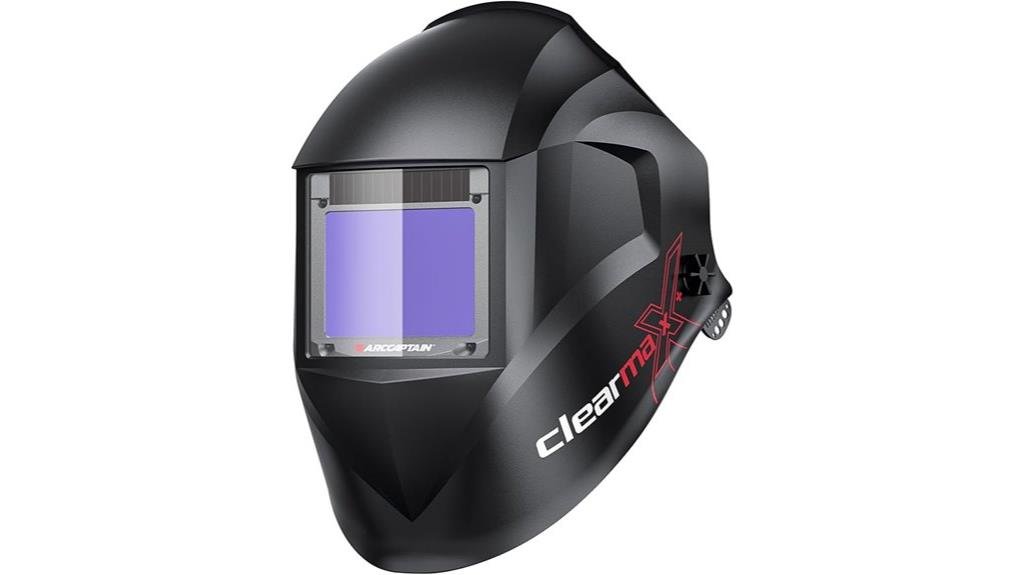
ARCCAPTAIN Internal Control Auto-Darkening Welding Helmet Review
A welding helmet can feel fine in the box yet become frustrating once glare, poor balance, or awkward controls interrupt your work. The ARCCAPTAIN Internal Control Auto-Darkening Welding Helmet addresses those concerns with a true-color lens, four arc sensors, internal adjustment knobs, and a seller-listed 1/25,000-second switching speed. Its main strengths are clear optics and protected settings, while its main limits are the lack of built-in respiratory protection and incomplete public documentation for this exact Amazon ASIN. This review helps you decide whether the feature set fits your MIG, TIG, stick, cutting, and grinding work.
Quick Verdict
Rating: 8.6/10, recommended with caveats
Best For: DIY welders and regular shop users who want true-color optics, four sensors, and internal controls in one versatile helmet.
Bottom Line: The 3.64-inch by 2.87-inch viewing area, 1/1/1/1 optical clarity, and wide shade range make this helmet practical for several processes. You should still confirm current certification markings and seller documentation before using it on a regulated jobsite.
| Specification | Detail |
|---|---|
| Brand | ARCCAPTAIN |
| Product Type | Auto-darkening welding helmet |
| Control Design | Internal adjustment controls with test button and low-battery warning |
| Viewing Area | 3.64 inches x 2.87 inches |
| Optical Clarity | Seller-listed 1/1/1/1 true-color lens |
| Switching Speed | Seller-listed 1/25,000 second from light to dark |
| Arc Sensors | 4 |
| Shade Range | 3/4-8/9-13 |
| Supported Work | STICK, MIG, TIG, cutting, and grinding |
| Shell Material | High-strength PA shell |
| Power | Solar assist plus replaceable CR2450 battery |
| Headgear | Adjustable sizing, tilt, and front-to-back position with removable padding |
| Included Item | The seller listing states that an extra CR2450 battery is included |
| Safety Note | Not a substitute for safety glasses, ventilation, respiratory protection, gloves, or other required PPE |
Key Takeaways
- The seller-listed 1/25,000-second switching speed and four sensors are designed to react quickly when an arc starts.
- The 3.64-inch by 2.87-inch true-color viewing area offers a useful balance between visibility and helmet size.
- The 3/4-8/9-13 shade range supports MIG, TIG, stick, cutting, and grinding when you select settings correctly.
- Internal controls reduce accidental setting changes, but they are slower to adjust while the helmet is down.
- The solar-assisted CR2450 power system, test button, and low-battery warning simplify pre-use checks.
What Is the ARCCAPTAIN Internal Control Auto-Darkening Welding Helmet?
The ARCCAPTAIN Internal Control model is a multi-process welding hood built around a true-color auto-darkening filter. Its seller-listed 3.64-inch by 2.87-inch viewing area is larger than a narrow entry-level window without moving into a panoramic or side-window design.
The defining feature is the control placement. The shade and sensitivity adjustments sit inside the shell, which helps prevent a cable, bench edge, glove, or workpiece from moving a knob by accident. The tradeoff is simple: you may need to raise the helmet when you want to change a setting.
The helmet also combines four arc sensors, solar-assisted battery power, adjustable headgear, removable padding, and a PA shell. That mix is aimed at garage, fabrication, repair, and general shop work rather than specialized respiratory or panoramic protection.
Who Should Buy This Welding Helmet?
Best For
- DIY welders who want one helmet for MIG, TIG, stick, cutting, and grinding.
- Shop users who prefer protected internal controls over exposed external knobs.
- Welders who value true-color optics and a medium-size viewing area more than panoramic side vision.
Skip If
- You need an integrated powered-air respirator or built-in fume protection.
- Your employer requires current certification documents for the exact model before approval.
- You want a panoramic lens, side windows, or external controls for faster adjustments.
Before You Buy: Confirm the physical certification markings, current documentation, included battery, and return terms for the exact ASIN. Do not rely on a product title or seller description alone for regulated workplace compliance.
Auto-Darkening Performance and Optics
The lens is listed with a 1/25,000-second light-to-dark switching time and four arc sensors. Four sensors can improve arc detection when your hands, torch, or workpiece partly block one side of the helmet, although correct sensitivity settings still matter.
The 3.64-inch by 2.87-inch window gives you enough space to follow the puddle, joint edge, and nearby surface without the weight and bulk of a panoramic helmet. It will not provide the same peripheral view as a side-window model, so you may still move your head more during awkward-position work.
The seller lists 1/1/1/1 optical clarity and a true-color view. In practical terms, that specification is intended to reduce distortion, uneven shading, angle-related inconsistency, and heavy color tint. A clearer view can help you judge bead edges and fit-up, but scratched cover lenses will quickly reduce that benefit.
The 3/4-8/9-13 shade range covers grinding, cutting, and common arc-welding tasks. You must still select a shade that matches your process and amperage rather than choosing the lightest setting that feels comfortable.
Controls, Power, and Daily Usability
Internal controls are the main usability difference between this helmet and models with external knobs. They are less exposed to sparks, dust, storage bumps, and accidental contact, which helps your settings stay where you left them.
The drawback appears when you switch between jobs. Moving from grinding to welding or changing shade and sensitivity may require you to lift the hood. External controls are faster for frequent adjustments, while internal controls are better for protecting a stable setup.
The power system combines solar assist with a replaceable CR2450 battery. The test button lets you check the auto-darkening filter before you strike an arc, while the low-battery warning gives you a reason to replace the cell before performance becomes unreliable.
The seller listing states that a spare CR2450 battery is included. Package contents can change, so check the current listing and box contents rather than assuming every seller or bundle includes the same accessory.
Build Quality, Materials, and Safety
The helmet uses a PA shell, which the seller describes as heat-resistant and impact-resistant. The original listing information also claims resistance to temperatures up to 100 °C and protection in a 20-foot drop test. Treat those figures as seller claims unless you can confirm the supporting test method and documentation for the exact model.
Internal controls have a practical durability benefit because they sit behind the shell instead of facing grinding dust and direct contact. You should still inspect the shell, lens frame, cover lenses, battery compartment, and headgear pivots before each work session.
A welding helmet is only one part of your protection. Use appropriate safety glasses with side protection where flying particles are present, select a filter shade suited to the process and current, and use gloves, protective clothing, ventilation, and respiratory protection as your work requires.
This helmet does not contain a respirator or powered-air system. If welding fumes, coatings, confined spaces, or workplace rules create a respiratory hazard, follow your employer’s program and professional safety guidance rather than treating the helmet as complete protection.
Comfort, Fit, and Headgear Adjustment
The headgear provides size, tilt, and front-to-back adjustment, plus removable padding. Those settings help center the viewing area in your natural line of sight and reduce pressure during longer welding sessions.
Start by setting the headband snug enough to remain stable without creating a pressure point. Then adjust the front-to-back position so the shell clears your nose and any approved eyewear while keeping the lens close enough for a useful field of view.
Tilt adjustment affects both comfort and nod-down action. A balanced setup should stay raised when needed, lower predictably, and avoid pulling your neck forward. Fit still varies by head shape, cap, and eyewear, so test the complete setup before starting a long job.
Setup Tips Before First Use
- Inspect the shell and lenses: Do not weld with a cracked shell, loose lens assembly, or deeply scratched cover lens.
- Check the battery: Install the CR2450 correctly, confirm clean contacts, and use the test button before striking an arc.
- Select the correct mode: Make sure the helmet is not left in grinding mode before you begin welding.
- Set shade and sensitivity: Match the shade to your process and amperage, then adjust sensitivity so the lens reacts reliably without false triggering.
- Adjust the headgear: Set size, tilt, and lens distance while wearing the same cap and protective eyewear you will use during the job.
- Follow the manual and workplace rules: Use the product instructions and your employer’s PPE requirements as the final authority.
Pro Tip: Test the auto-darkening response and confirm the selected mode every time you move from grinding back to welding. Leaving a helmet in grinding mode is a common and avoidable setup mistake.
Maintenance, Battery Life, and Storage
Solar assist helps support the filter, but the replaceable CR2450 battery remains a key maintenance item. Replace it when the low-battery warning appears, after extended storage if performance seems inconsistent, or when the test function does not respond normally.
Clean the inner and outer cover lenses with a soft, non-abrasive cloth. Replace a cover lens when scratches, heat damage, spatter, or clouding interferes with your view. Avoid harsh solvents unless the manual specifically approves them.
Remove dust from the headgear, pivots, and battery area, then store the helmet in a dry place where the lens will not face direct impact. Do not place heavy tools on the shell or leave the helmet where excessive heat can damage the filter or padding.
How It Performs in Real Use
For MIG Welding and General Fabrication
The medium-size viewing area gives you a clear look at the joint and puddle without the bulk of a panoramic shell. Four sensors can help maintain detection when your torch hand or workpiece blocks part of the lens, but you still need to set shade and sensitivity for the actual current.
For TIG Welding
TIG work benefits from clear fit-up visibility and sensitivity adjustment, especially around smaller puddles. The true-color lens should make material and tungsten position easier to judge than a heavily green-tinted filter, although low-current performance cannot be confirmed independently for this exact ASIN.
For Stick Welding and Awkward Positions
Internal controls are less likely to get bumped when you work near clamps, cables, or structural members. The lack of side windows means you may turn your head more when welding out of position, and spatter can shorten cover-lens life if you do not replace damaged covers.
For Grinding and Cutting
Grinding and cutting support reduces the need to swap hoods during prep work. The main risk is user error: always confirm the mode before returning to an arc process, and continue wearing suitable impact-rated eye protection under the helmet where required.
Pros and Cons
Pros
- Four arc sensors and seller-listed 1/25,000-second switching support quick arc detection.
- 3.64-inch by 2.87-inch viewing area balances visibility with manageable shell size.
- Seller-listed 1/1/1/1 true-color optics aim to reduce distortion and heavy color tint.
- Internal controls reduce accidental shade and sensitivity changes.
- Replaceable CR2450 battery, test button, and low-battery warning simplify routine checks.
Cons
- Internal controls are less convenient when you change settings often.
- No integrated respirator, powered-air system, or panoramic side windows.
- Certification and durability claims for this exact ASIN need confirmation before regulated jobsite use.
Is It Worth the Price?
This helmet offers strong value for the price when you care most about true-color optics, four sensors, protected controls, and multi-process use. Its feature set sits above a basic narrow-view helmet without adding the cost and bulk of a panoramic or powered-air system.
You get the most value when you keep a stable setup for one process or a small range of jobs. Welders who change modes and shade settings throughout the day may prefer external controls, while industrial users may need a model with easier access to current compliance documents.
It is worth considering for home shops, repair work, and general fabrication, but the final decision should depend on verified certification markings, fit, replacement-lens availability, and the current seller package.
How It Compares to Alternatives
A YESWELDER large-view true-color helmet may be worth comparing when you want a familiar budget option with several screen and control layouts. The Lincoln Electric Viking 3350 is a stronger premium comparison when you value a larger viewing experience, established professional support, and broader jobsite familiarity.
The ARCCAPTAIN Internal Control model makes the most sense when you want internal knobs, four sensors, a medium-size true-color window, and a lower-cost multi-process setup. It is not the strongest choice when panoramic vision, external adjustments, integrated respiratory protection, or readily available compliance paperwork matters most.
Frequently Asked Questions
What welding processes can this ARCCAPTAIN helmet handle?
The seller lists support for MIG, TIG, stick, cutting, and grinding. You must select the correct mode, shade, and sensitivity for the process and current before starting work.
Why do the internal controls matter?
Internal knobs are less likely to move when the helmet touches cables, benches, or workpieces. The tradeoff is slower access because you may need to raise the hood to change shade or sensitivity.
Is the 3.64-inch by 2.87-inch viewing area large enough?
It is a practical medium-size window for tracking the puddle and joint during general welding. It does not provide the peripheral view of a panoramic lens or side-window helmet.
Does this helmet replace safety glasses or a respirator?
No. The helmet does not replace suitable impact-rated eye protection, ventilation, respiratory protection, gloves, or protective clothing required for your work.
Can you wear prescription glasses under it?
The adjustable headgear may leave room for many prescription frames, but fit varies by frame size and head shape. Test the complete setup without disturbing the position of your approved protective eyewear.
What battery does the helmet use?
It uses solar assist with a replaceable CR2450 battery. The seller states that a spare battery is included, but you should confirm the current package contents before ordering.
How can you confirm its safety certification?
Check the markings on the helmet and filter, then request current documentation for the exact model or ASIN from ARCCAPTAIN or the seller. Your employer or safety manager should confirm whether that documentation meets the jobsite requirement.
What common setup mistake should you avoid?
Do not begin welding while the helmet is still in grinding mode. Use the test button, verify the mode, and select a shade appropriate for the process and amperage before every session.
The Bottom Line
The ARCCAPTAIN Internal Control Auto-Darkening Welding Helmet earns an 8.6/10 for its true-color lens, four sensors, protected controls, useful viewing area, and multi-process shade range. It is a strong fit for DIY and general shop welders, but you should skip it if you need panoramic vision, built-in respiratory protection, or verified jobsite paperwork before purchase.
Ready to Buy?
Check the latest price, package contents, certification details, and product information before you decide.