Disclosure: As an Amazon Associate, we earn from qualifying purchases. If you click a link on this page and make a purchase, we may receive a small commission at no extra cost to you.
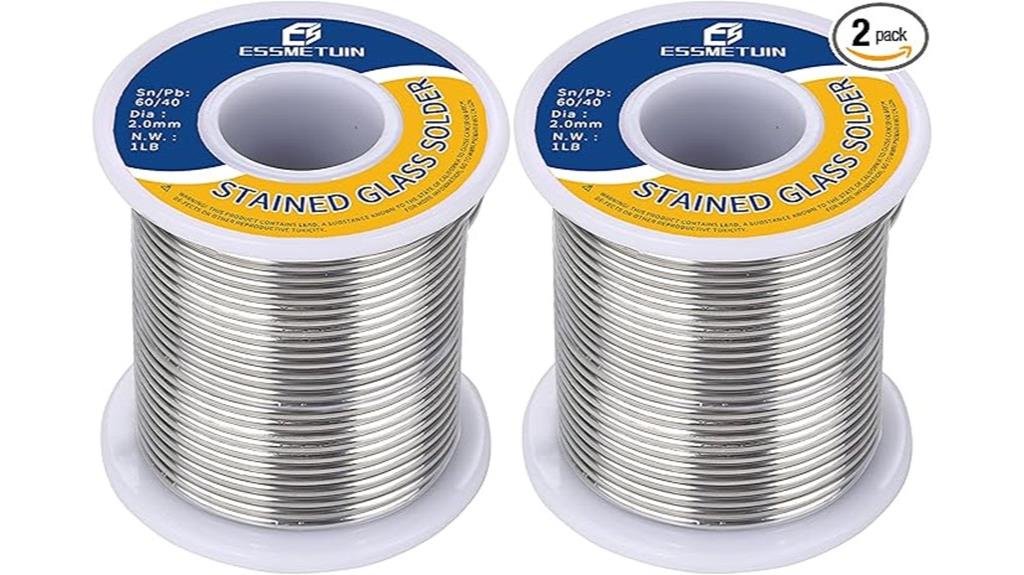
Stained-glass solder must flow well enough to form a neat bead without forcing you to fight the wire or overheat the project. The Essmetuin Tin Lead Solder Wire is a 60% tin and 40% lead solid-core wire with a 2.0 mm diameter, made mainly for stained glass, decorative crafts, and similar bench work. Its narrow melting range and manageable diameter are useful, but you must supply compatible flux and handle the lead content carefully. This review explains where the solder fits, where it does not, and what you should know before using it.
Quick Verdict
Rating: 7.5/10, recommended with safety caveats
Best For: Adult stained-glass hobbyists who need 2.0 mm solid-core 60/40 solder and already use a compatible external flux
Bottom Line: The wire offers a practical balance of flow, bead control, and spool size for decorative glass work. Its 40% lead content, external-flux requirement, and limited suitability for skin-contact or regulated products make it a poor universal choice.
Key Takeaways
- The verified listing identifies the product as Essmetuin solid-core solder with a 60% tin and 40% lead composition.
- The 2.0 mm wire is thinner than many 3.0 or 3.2 mm stained-glass solders, which can make feeding and bead control easier on smaller seams.
- Sn60/Pb40 has a melting range of about 183°C to 190°C (361°F to 374°F), not a single 183°C working point.
- The wire contains no internal flux, so you need a separate flux that matches the metals, project, and cleanup method.
- Because the alloy contains 40% lead, it is not recommended for children’s products, food-contact work, potable-water plumbing, or jewelry intended for regular skin contact.
Key Specifications
| Specification | Detail |
|---|---|
| Brand | Essmetuin |
| Product type | Solid-core soft solder wire |
| Alloy | Sn60/Pb40, 60% tin and 40% lead |
| Wire diameter | 2.0 mm (0.08 inch) |
| Melting range | About 183°C to 190°C (361°F to 374°F) |
| Flux core | None, external flux required |
| Listing variant | 2 lb spool, confirm the selected variant before ordering |
| Best use | Stained glass, copper-foil seams, lead came joints, and non-contact decorative artware |
| Important limitation | Leaded solder requires careful handling and is unsuitable for many consumer, food-contact, plumbing, and compliance-sensitive applications |
What Is the Essmetuin Tin Lead Solder Wire?
This product is a solid wire made from the traditional Sn60/Pb40 soft-solder alloy. The Amazon listing tied to the article’s ASIN describes a 2.0 mm wire without internal rosin or another flux core, so the solder and flux remain separate parts of your setup.
The format suits glass artists who want to choose their own liquid, gel, or paste flux for copper foil or lead came. It is less convenient for small electronics repairs because the wire is fairly thick and does not carry electronics-grade flux inside the core.
Before You Buy: This is 40% lead solder. Do not use it for children’s jewelry, food-contact pieces, drinking-water plumbing, toys, or projects that must meet lead-free or RoHS requirements. Keep it away from children and wash your hands after handling it.
Who Should Buy It?
Best For
- Adult stained-glass makers using copper foil or lead came
- Crafters who prefer solid-core wire and select flux separately
- Users who want a 2.0 mm feed size for smaller seams and controlled application
Skip If
- You need lead-free solder for jewelry, food contact, plumbing, children’s items, or regulated electronics
- You want rosin-core wire for quick circuit-board repairs
- You do not have safe ventilation, a dedicated work surface, and suitable cleanup practices
Alloy and Melting Behavior
Sn60/Pb40 begins to melt at about 183°C and becomes fully liquid near 190°C. That narrow pasty range helps the solder move from solid to flowing metal without the much wider working range found in some lower-tin alloys.
The 183°C figure should not be treated as the correct soldering-iron setting. Your tip must transfer enough heat into the metal, foil, or came, and the needed setting depends on the iron, tip size, joint mass, flux, and working speed. Follow your tool and flux instructions instead of setting the station only from the alloy’s solidus temperature.
2.0 mm Wire Size and Feed Control
The 2.0 mm diameter gives you a smaller feed than common 3.0 or 3.2 mm stained-glass wire. You can add material in smaller increments, which helps when tinning copper foil, filling short seams, or correcting a low spot without flooding the area.
The tradeoff is feed rate. Large panels and long beads may require you to advance more wire than you would with a thicker spool. The smaller diameter is most useful when precision matters more than maximum deposition speed.
External Flux Requirement
This is solid-core wire, so it does not contain rosin or another flux. You must clean the joint and apply a compatible external flux before heating. That extra step gives you more control over flux type and placement, but it also adds setup and cleanup work.
Use flux designed for the material and task. Stained-glass flux and electronics flux are not automatically interchangeable, and plumbing flux can be too aggressive for electronics. Remove residue according to the flux maker’s directions because leftover active flux can discolor surfaces or contribute to corrosion.
Pro Tip: Feed only enough solder to build the bead you need. A clean, properly fluxed seam usually produces a better result than adding extra wire to compensate for poor heat transfer or dirty metal.
Joint Quality and Crafting Use
For stained glass, 60/40 solder is popular because it flows readily and can form a smooth bead across copper-foil seams. The alloy’s tin content supports wetting, while the narrow melting range gives you time to shape the bead before it freezes.
Joint strength still depends on preparation. Solder does not replace sound panel design, proper foil contact, secure came construction, or reinforcement where the project needs it. Dirty metal, insufficient flux, a contaminated tip, or uneven heating can produce weak or lumpy joints even with the correct alloy.
How It Performs in Real Use
For Copper-Foil Stained Glass
The 2.0 mm wire works well when you want to feed solder gradually along narrow copper-foil seams. It can help you avoid oversized beads on small ornaments, sun catchers, and detail-heavy panels, though larger seams may take more passes.
For Lead Came Joints
The alloy can join lead came at intersections when paired with the correct flux and controlled heat. Work quickly enough to avoid overheating the came, and support the panel so the joint is not carrying structural stress before it cools.
For Decorative Artware
You can use the wire on compatible non-contact decorative metalwork when lead exposure is controlled. It is not a good choice for serving pieces, cups, utensils, food containers, or objects likely to be handled or mouthed by children.
For Electronics Repair
Sn60/Pb40 can make electrically conductive joints, but this particular 2.0 mm solid-core format is not ideal for fine circuit boards. A thinner rosin-core electronics solder is easier to meter on small pads, and lead-free solder may be required for compliance-sensitive equipment.
How to Use It Correctly
- Prepare the work area: Use local fume extraction or effective ventilation, protect the bench, and keep food and drinks out of the area.
- Clean the joint: Remove oxidation, oil, and debris from the foil, came, or metal before applying flux.
- Apply the right flux: Use a small, controlled amount that matches your substrate and project type.
- Tin the iron tip: A clean, tinned tip transfers heat more evenly than a dry or oxidized tip.
- Heat the joint, not only the wire: Bring the connected surfaces to soldering temperature, then feed wire into the heated area.
- Let the joint cool naturally: Avoid moving the pieces while the alloy passes through its 183°C to 190°C pasty range.
- Clean the residue: Follow the flux label for neutralizing or removing residue, then wash your hands thoroughly.
Lead Safety and Material Precautions
The wire contains a large amount of lead, so the main exposure concern is contamination transferred from your hands, tools, bench, dust, scraps, or waste. Do not eat, drink, smoke, or apply cosmetics in the work area. Wash your hands and face before touching food, and clean the bench using a method that does not spread contaminated dust.
Ventilation also matters because heated flux can create irritating fumes. Position extraction so fumes move away from your breathing zone. Safety glasses help protect against flux spatter, and heat-resistant handling practices reduce burn risk.
Store the spool in a closed, labeled container away from children, pets, food, and household items. Collect clipped wire and solder waste instead of sweeping it into general work areas, and follow local rules for disposal of lead-containing waste.
Pros and Cons
Pros
- Traditional 60/40 alloy with a narrow 183°C to 190°C melting range
- 2.0 mm diameter supports controlled feeding on smaller seams
- Solid core lets you choose flux for the specific material and task
- Suitable for copper-foil stained glass and compatible lead came work
- Verified listing offers a larger 2 lb spool option for frequent projects
Cons
- Contains 40% lead and needs strict hygiene, storage, and disposal practices
- Requires separate flux, adding another product and cleanup step
- Too thick and inconvenient for many small electronics jobs
Is It Worth the Price?
This Essmetuin spool can offer strong value for regular stained-glass work because the listing combines a 2 lb quantity with a thinner 2.0 mm feed. Buyers who complete many ornaments or panels may prefer a larger spool over repeatedly replacing small rolls.
The value drops if you only make occasional repairs or still need to buy flux, extraction equipment, cleaning supplies, and dedicated storage. It is worth considering when you already have a safe lead-soldering setup and specifically want solid-core 60/40 wire.
How It Compares to Alternatives
Canfield 60/40 and AIM Artist Pure 60/40 are established stained-glass alternatives, commonly sold as thicker solid wire around 3.0 to 3.2 mm. They may suit larger beads and faster feeding, while the Essmetuin 2.0 mm wire gives you finer control on small seams.
A 63/37 tin-lead alloy moves from liquid to solid at one temperature, which can reduce the pasty stage. Lead-free stained-glass solder avoids the 40% lead content but usually needs more heat and may feel less forgiving. Choose based on your project’s safety requirements, iron capability, flux system, and preferred bead size.
Frequently Asked Questions
Does this solder contain flux?
No. It is solid-core wire, so you need to apply a compatible external flux to the cleaned joint. Match the flux to stained glass, electronics, or another specific material instead of assuming one formula works everywhere.
Does Sn60/Pb40 melt at exactly 183°C?
It starts melting at about 183°C and becomes fully liquid near 190°C. Because it is not a eutectic alloy, it passes through a short pasty range between those temperatures.
Can I use it for stained-glass projects?
Yes, stained glass is the product’s main intended use. The wire can join properly prepared copper foil and compatible lead came when you use the correct flux, enough heat, and sound construction methods.
Is it safe for jewelry making?
It is not a good choice for jewelry that touches skin regularly, may be mouthed, or is intended for children. Use an appropriate lead-free jewelry solder and verify that every material in the finished piece meets the relevant safety requirements.
Can I use it for electronics?
The alloy can form conductive electrical joints, but the 2.0 mm solid wire is bulky for fine pads and needs separate electronics-compatible flux. It also does not meet lead-free requirements for many regulated products, so check the repair standard first.
How should I store the spool?
Keep it dry in a sealed, clearly labeled container away from children, pets, food, and clean household storage. Prevent loose wire and scraps from spreading across the bench or floor.
Who should skip this solder?
Skip it when your project requires lead-free compliance, food or drinking-water safety, child-safe materials, or a thin flux-core electronics wire. It is also unsuitable for anyone who cannot maintain a controlled, well-ventilated workspace.
The Bottom Line
The Essmetuin Sn60/Pb40 solder makes sense for adult stained-glass makers who want 2.0 mm solid-core wire, choose flux separately, and already follow lead-safe work practices. Skip it for skin-contact jewelry, children’s products, food or potable-water applications, and compliance-sensitive electronics because its useful flow comes with a serious 40% lead limitation.
Ready to Buy?
Check the selected spool size, current product details, and safety information before you decide.