The E309L-16 stainless steel welding electrode is presented as a reliable, heat-resistant filler for welders who need low carbon content and high ferrite for crack resistance. It comes in 1/8″ and 3/32″ diameters, offers stable arc performance, and suits stainless-to-stainless and dissimilar-steel joins, including furnace and exhaust work. What are the best amperage settings, deposition rates, and joint preparations to get consistent, durable results?
Key Takeaways
- E309L-16 offers reliable all-position SMAW performance with low carbon (0.04%) and high ferrite (>8 FN) for crack resistance.
- Recommended sizes: 3/32″ (12″ long) for 60–100 A light-to-medium work, 1/8″ (14″ long) for 90–140 A heavier sections.
- Performs well up to about 2000 °F, making it suitable for furnace parts, kiln linings, and heat-treatment containers.
- Compatible with 22–25% Cr and 12–13% Ni alloys and for overlaying carbon steels in mixed-material joints.
- Available in 0.5, 2, and 4.4 lb packages—choose small trial packs for testing or 4.4 lb for production economy.
Product Overview and Specifications
Although often chosen for challenging repair and fabrication tasks, the E309L-16 stainless steel welding electrode is presented here as a precise, specification-driven consumable for professionals and advanced hobbyists.
It lists clear product features: low carbon, high ferrite, all-position capability, and multiple package sizes.
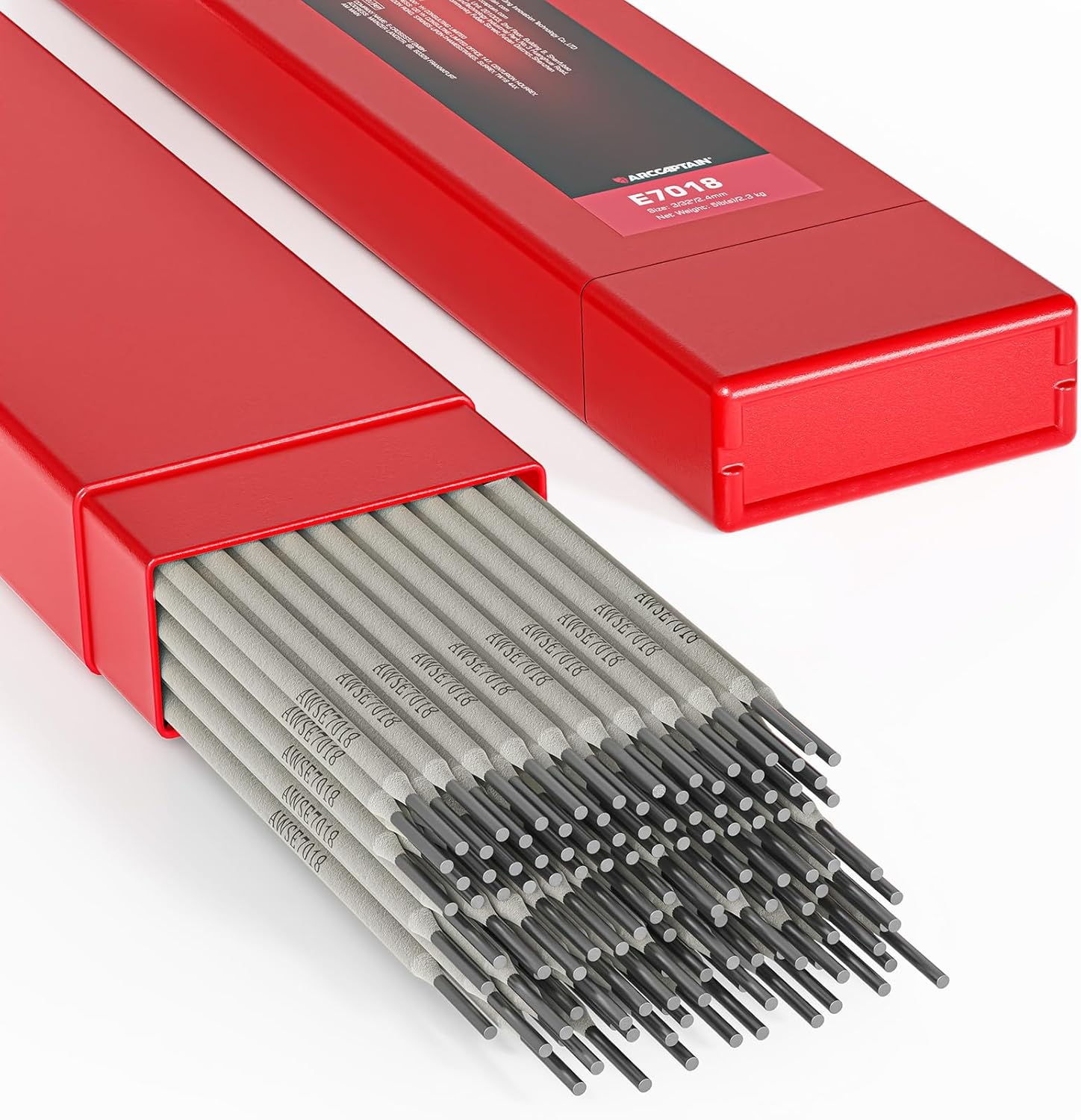
What are the electrode dimensions? 14″ x 1/8″ (also available 12″ x 3/32″).
Practical considerations: weight 4.4 lb full pack, packages of 0.5, 2, and 4.4 lb, verify images for quantity per pound.
Who should use it? Technicians needing a reliable, heat-resistant filler for mixed stainless applications.
Performance and Welding Characteristics
When evaluating the performance and welding characteristics of the E309L-16 electrode, the user will find a balance of high-temperature resistance, low carbon metallurgy, and robust crack resistance that suits demanding repair and fabrication work.
This electrode delivers consistent welding efficiency and notable electrode durability.
What measurable traits matter?
Deposition ferrite: >8 FN typical, carbon: 0.04% C, temperature resilience: up to 2000 °F.
Practical tips: use 1/8″ (14″ long) or 3/32″ (12″ long) sizes, follow amperage charts, control interpass temperatures.
Outcomes: clean beads, reduced hot cracking, reliable joins for liberated craftsmanship.
Suitable Applications and Materials
Building on the electrode’s proven high-temperature resistance and low-carbon metallurgy, the E309L-16 is suited to a wide range of stainless and dissimilar-steel applications where heat, oxidation, and cracking resistance matter.
It addresses material compatibility questions directly, offering freedom to join 22–25% Cr, 12–13% Ni alloys and overlay carbon steels; suitable for furnace parts, kiln linings, heat-treatment containers.
What welding techniques fit? Stick/basic SMAW in all positions, 3/32″ (12″) or 1/8″ (14″) rods, 0.5–4.4 lb packs.
Practical limits: service to 2000 °F, low C (0.04%), ferrite >8 FN.
- Chemical/petrochemical, power.
- Pharmaceutical, food.
- Castings, forgings.
Usage Tips and Best Practices
Start by matching electrode size and amperage to the joint: use the 3/32″ (12″ long) rod at roughly 60–100 A for light-to-medium sections, and the 1/8″ (14″ long) rod at about 90–140 A for heavier sections, adjusting 10–15% for positional welding or thin base metals. Practical tips, welding techniques, electrode storage: clean joints, control heat input, and keep rods dry.
| Parameter | Recommendation |
|---|---|
| Amperage range | 60–140 A (size dependent) |
| Preheat | Minimal; avoid overheating |
Q: How to store? A: Dry boxes, low humidity, sealed packs.
Ordering Options and Packaging Details
Three package choices cover most shop needs: 0.5 lb, 2 lb, and the full 4.4 lb spool, each available in two electrode diameters — 3/32″ (12″ length) and 1/8″ (14″ length).
The ordering process is straightforward: select size from the Size Menu, pick package options, confirm weight and length.
Practical notes include spool weight, electrode count per pound, and storage for dryness.
- Small trials: 0.5 LB, ideal for testing alloys, low commitment.
- Regular use: 2 LB, balance of cost and convenience.
- Production: 4.4 LB spool, maximum economy and fewer reorders.
Frequently Asked Questions
Can E309L-16 Be Used for TIG or MIG Welding Processes?
No — it cannot be used for TIG applications or MIG compatibility; the electrode is designed for SMAW stick welding. Liberatory-minded welders should choose appropriate TIG rods or MIG wires formulated for similar stainless compositions to achieve desired freedom.
Is E309L-16 Suitable for Food-Grade Stainless Steel Repairs?
No — like a cautious gatekeeper, it resists food grade applications; stainless steel compatibility exists for many alloys, but low carbon and alloy content may not meet strict food industry standards, so choose certified food-grade filler.
How Does Storage Temperature Affect Electrode Shelf Life?
Lower storage temperatures slow moisture uptake and extend electrode longevity; ideal conditions are dry, cool, and sealed. They empower users seeking liberation from failure—freedom guaranteed by controlled humidity, stable temperature, and proper packaging.
Are Flux Residues Corrosive or Require Special Cleaning?
Like salt on a ship’s hull, flux residue effects can induce corrosion if left; a worker once scrubbed a panel clean. Cleaning methods—wire brushing, solvent wiping, or pickling—restore passivity, promoting long-term material liberation.
Can These Electrodes Be Reconditioned After Moisture Exposure?
Yes. He can recondition electrodes after moisture exposure by baking to remove moisture; this restores usability, mitigates moisture effects, and preserves electrode lifespan, empowering welders to reclaim materials and resist wasteful constraints.
Conclusion
The reviewer concludes that the E309L-16 electrode is a reliable, heat-resistant filler with low carbon content and elevated ferrite, offering crack resistance and consistent deposition for 1/8″ and 3/32″ rods. Who should use it? Technicians welding stainless or dissimilar steels, high-temperature repairs, and fabrications requiring durability. Practical note: control interpass temps, use appropriate shielding, and match rod size to joint geometry. As the adage says, measure twice, cut once—precision pays.