Disclosure: As an Amazon Associate, we earn from qualifying purchases. If you click a link on this page and make a purchase, we may receive a small commission at no extra cost to you.
ALLECIN No Clean Soldering Flux 558 Review
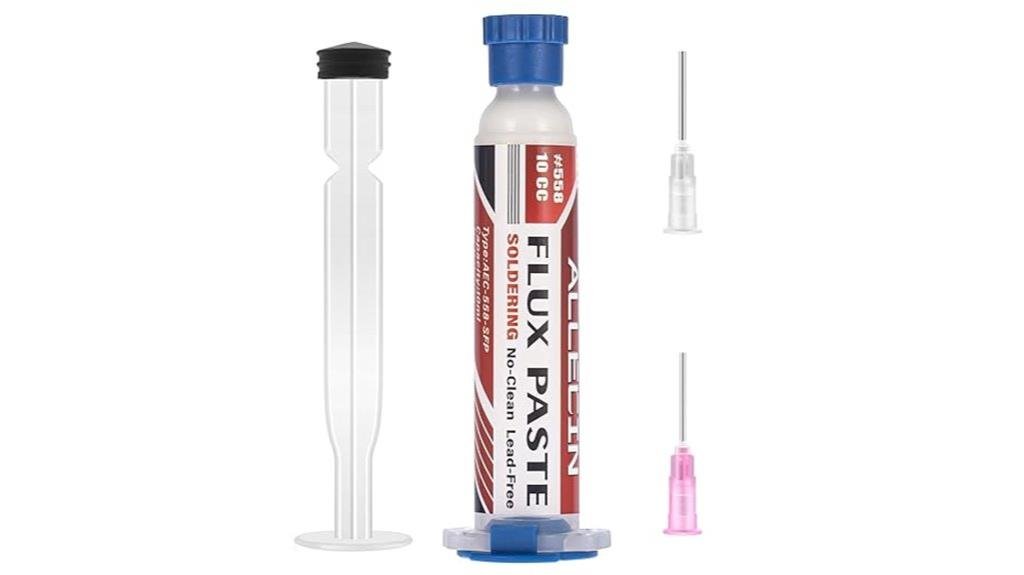
Messy flux can slow you down when you work on small PCB pads, fine-pitch parts, or tight repair spots. ALLECIN No Clean Soldering Flux 558 aims to solve that problem with a 10 mL syringe, low-smoke rosin paste, and two needle tips for controlled application.
This review checks how the ALLECIN 558 flux fits electronics soldering, SMD rework, through-hole touch-ups, and hobby repair. You’ll see where it works well, where it has limits, and whether it deserves a place on your soldering bench.
Our Verdict
Rating: 8/10
Best For: Electronics hobbyists, repair technicians, and PCB users who need precise flux placement with less smoke.
Bottom Line: ALLECIN 558 gives you a 10 mL syringe, rosin-based paste, red and white needle tips, and controlled dispensing for detailed electronics work. You get easy application and low residue, but heavy users may want a larger bottle or jar for frequent bench work.
| Specification | Detail |
|---|---|
| Brand | ALLECIN |
| Model | No Clean Soldering Flux 558 |
| Volume | 10CC / 10 mL |
| Format | Syringe-type soldering flux paste |
| Formula | Rosin synthetic resin flux paste |
| Color | Opaque white paste |
| Lead Status | Lead-free |
| Residue | No-clean, non-corrosive, non-conductive residue |
| Applicator | Syringe with plunger and two needle sizes |
| Included Accessories | Plunger, red needle tip, and white needle tip |
| Compatibility | Lead-free and leaded soldering systems for electronics repair |
| Storage | Keep sealed, dry, and stored at 5–25°C |
What Is the ALLECIN No Clean Soldering Flux 558?
The ALLECIN No Clean Soldering Flux 558 is a 10 mL rosin-based flux paste made for solder repair work on electronic equipment. It comes in a syringe, so you can place flux on small pads, SMD parts, connectors, and through-hole joints without spreading paste across the board.
The main strength is controlled application. The red and white needle tips let you choose a finer or broader bead, while the plunger gives you better pressure control than a jar or squeeze tube. That matters when you work near fine-pitch IC legs, small capacitors, or board areas where extra residue creates cleanup work.
The paste uses a lead-free, low-smoke formula with non-corrosive and non-conductive residue. It’s a customer favorite because the 10 mL syringe is easy to store, easy to carry, and practical for small electronics repair jobs.
Key Takeaways
- ALLECIN No Clean Flux 558 is a 10 mL rosin-based, lead-free syringe paste made for precision electronics soldering.
- The syringe includes a plunger and two needle sizes, so you get smooth, controlled dispensing with low waste.
- It supports fast wetting, reliable solder flow, and less smoke than many traditional flux pastes.
- The no-clean residue is designed to stay non-corrosive and non-conductive, but you can still clean sticky residue when a board needs a cleaner finish.
- Store it sealed at 5–25°C in a dry place. Use gloves, keep airflow moving, and test it on scrap PCB before important assemblies.
Who It’s For and Who Should Skip It
Who It’s For
- Electronics hobbyists who need a 10 mL syringe for small PCB repairs, connector work, and lead-free soldering.
- Repair technicians who want red and white needle tips for controlled flux placement on fine-pitch SMD parts.
- DIY users who prefer no-clean, low-smoke rosin paste for through-hole touch-ups and board-level maintenance.
Who Should Skip It
- High-volume bench users who go through flux quickly and need a larger jar or bottle for daily production work.
- Plumbing, jewelry, or mechanical soldering users who need a flux made for non-electronic metals and higher-volume metal work.
- Beginners who want a full soldering kit with solder wire, wick, cleaning tools, and printed instructions in one package.
Product Overview and Key Features
The ALLECIN No Clean Soldering Flux 558 is a 10CC / 10 mL syringe of rosin-based flux built for precise, low-residue soldering and repair on electronic equipment. It suits PCB touch-ups, SMD rework, drag soldering, connector repair, and small through-hole joints.
The flux is an opaque white lead-free paste with low volatility, low smoke, and no irritant smell listed among its main advantages. The residue is designed to stay non-corrosive and non-conductive, so you rarely need heavy cleanup for routine PCB work.
Key features include a 10 mL syringe, a plunger, two needle sizes, a less-smoke rosin formula, and moisture-proof storage. The syringe format helps you avoid the mess that often comes with open flux jars.
- 10 mL syringe: Gives you a compact amount for repair work, hobby projects, and small bench tasks.
- Two needle sizes: Red and white tips help you place fine or wider beads of flux.
- Plunger included: Lets you push paste smoothly instead of squeezing unevenly by hand.
- Less-smoke rosin formula: Helps keep the work area clearer during short soldering sessions.
- Moisture-proof storage: Supports stable paste condition when you keep the syringe sealed and dry.
ALLECIN 558 fits soldering techniques and flux types that need controlled placement. It works best for fine-detail repair and board-level rework where excess flux can spread under parts or around nearby pads.
Design and Dispensing
The syringe design is the biggest practical advantage of ALLECIN 558. The 10 mL tube gives you enough paste for repeated small repairs, while the plunger helps you apply pressure in a controlled way.
The red and white needle tips make the flux easier to place around small pads, connector pins, and component legs. You can use a fine bead for SMD work or a slightly larger bead for through-hole touch-ups.
This format also keeps the paste cleaner than an open jar. You don’t need to dip a brush into the container, so you reduce the chance of dust, solder particles, or bench debris getting mixed into the flux.
Formula and Residue
ALLECIN describes this flux as a rosin synthetic resin paste. Rosin flux is common in electronics soldering because it helps remove oxidation from metal surfaces and helps solder flow across pads and leads.
The no-clean design means the residue is intended to stay non-corrosive and non-conductive after normal soldering. That helps when you repair small boards and don’t want to scrub every joint after every touch-up.
Still, no-clean doesn’t always mean invisible. If the paste leaves a sticky film near fine-pitch components, clean the area with the correct electronics-safe solvent and a soft brush before final inspection.
Performance and Application Experience
The ALLECIN No Clean Soldering Flux 558 dispenses smoothly from the 10 mL syringe. You can lay fine beads through either the red or white needle tip for controlled application on small pads and board areas.
You get reliable wetting on clean solder pads, faster solder flow, and minimal residue compared with messier paste formats. The low-smoke formula also helps you see the joint more clearly while the iron tip heats the solder.
Fine-pitch rework, through-hole touch-up, and drag soldering benefit most from this type of syringe flux. You can place flux exactly where you need it before you touch the joint with solder or wick.
Compared with other fluxes, ALLECIN 558 stands out for low volatility, a handy 10 mL size, and non-corrosive residue. Practical metrics include good bead control, quick wetting, and low cleanup needs on routine PCB work.
How It Performs in Real Use
For Fine-Pitch SMD Rework
On fine-pitch parts, the syringe and needle tips help you control exactly how much flux reaches the pins. That matters because too much paste can bridge nearby leads and make inspection harder.
The rosin paste helps solder flow across small metal surfaces once you heat the joint. For drag soldering, a thin bead can improve flow while keeping residue near the part instead of across the wider board.
For Through-Hole Touch-Ups
Through-hole joints often need a small amount of flux to refresh dull solder or help new solder bond to the pad. ALLECIN 558 works well here because the needle can place paste around the lead without coating nearby components.
The 10 mL size also makes sense for repairs where you only use a few drops at a time. You won’t need a large container unless you work on many boards every day.
For Bench Repair and Hobby Projects
For hobby benches, this flux is easy to store with a soldering iron, solder wire, tweezers, and wick. The plunger and needles keep the setup simple, especially when you only solder a few joints per project.
The low-smoke formula helps during short indoor soldering sessions, but you should still use ventilation. Flux fumes can irritate your eyes or throat even when a product produces less smoke than older pastes.
Practical Considerations and Buying Tips
The flux performs well on boards with smooth syringe dispensing, fine-bead application, low smoke, and reliable wetting. Before you buy, focus on your repair volume, solder type, storage habits, and cleanup preference.
Think about value per 10 mL, the two needle tip sizes, and how the paste pairs with lead-free and leaded soldering systems. The compact syringe is practical for repair work, but a larger container may suit you better for daily production use.
Store the syringe sealed at 5–25°C and keep it away from moisture. A sealed, dry storage place helps the paste stay usable and reduces the chance of clogging at the needle tip.
Use gloves, work in a ventilated area, and avoid ingestion or skin contact. Test the flux on scrap PCB before critical work, especially when you work on expensive boards or sensitive electronics.
Pros and Cons
Pros
- 10 mL syringe gives you controlled placement for PCB pads, SMD parts, and through-hole joints.
- Red and white needle tips let you adjust bead size for fine or broader application.
- Lead-free rosin paste works with lead-free and leaded soldering systems.
- Low-smoke formula helps you see the joint better during short soldering sessions.
- Non-corrosive and non-conductive residue reduces cleanup work on routine electronics repairs.
Cons
- The 10 mL size may feel small if you solder or rework boards every day.
- No-clean residue can still look sticky, so inspection-grade work may need solvent cleanup.
- The syringe tip can clog if you leave paste exposed or store it without sealing it well.
Is It Worth the Price?
ALLECIN 558 offers strong value for the price if you need a precise flux applicator for electronics repair. You get the flux paste, plunger, and two needle sizes in one compact package, so you don’t need to buy a separate applicator for basic work.
The value is strongest for hobbyists, phone repair users, PCB repair work, and small bench tasks. You pay for convenience, control, and low mess rather than bulk volume.
For high-volume soldering, a larger flux container may cost less per use. For careful repair work, this syringe is a smart buy because it helps you avoid over-applying flux around sensitive components.
How It Compares to Alternatives
If you want a well-known no-clean gel option, MG Chemicals 8341 offers a popular alternative for electronics work. If you prefer a pen-style applicator for quick touch-ups, Kester 951 flux pens may feel cleaner and faster for small joints.
ALLECIN 558 remains the better choice when you want rosin paste in a syringe with two needle tips. It gives you more placement control than a pen and less mess than dipping into a jar.
Frequently Asked Questions
Is the ALLECIN 558 Flux Made for Electronics Repair?
Yes. ALLECIN 558 is listed for solder repair work on electronic equipment. It fits PCB repair, SMD rework, through-hole touch-ups, and small bench soldering tasks.
Does ALLECIN 558 Work With Lead-Free Solder?
Yes. The product is described as lead-free and compatible with lead-free soldering systems. You can also use it with leaded solder when your repair process allows that material.
Do You Need to Clean ALLECIN 558 After Soldering?
Usually, you don’t need heavy cleanup because the residue is designed to be no-clean, non-corrosive, and non-conductive. Clean the board anyway if the residue looks sticky, traps dust, or affects visual inspection.
Can the Syringe Needles Be Replaced With Finer Tips?
Yes, finer replacement tips can work when the thread and hub size match the syringe. Check fit before using the flux on an important board.
Is This Flux Safe for Jewelry or Plumbing Work?
This product is best treated as an electronics soldering flux. For jewelry, plumbing, or mechanical metal work, choose a flux made for that specific metal and use temperature range.
How Should You Store ALLECIN 558 Flux?
Keep the syringe sealed, dry, and stored at 5–25°C. Wipe the needle tip after use and cap it tightly to reduce drying or clogging.
The Bottom Line
ALLECIN No Clean Soldering Flux 558 earns an 8/10 because it gives you controlled syringe dispensing, a 10 mL rosin paste format, red and white needle tips, and low-smoke performance for electronics soldering. You should buy it if you need precise flux for PCB repair, SMD work, and through-hole touch-ups. You should skip it if you need a large-volume flux supply or a product made for non-electronic metal work.
Ready to Buy?