Disclosure: As an Amazon Associate, we earn from qualifying purchases. If you click a link on this page and make a purchase, we may receive a small commission at no extra cost to you.
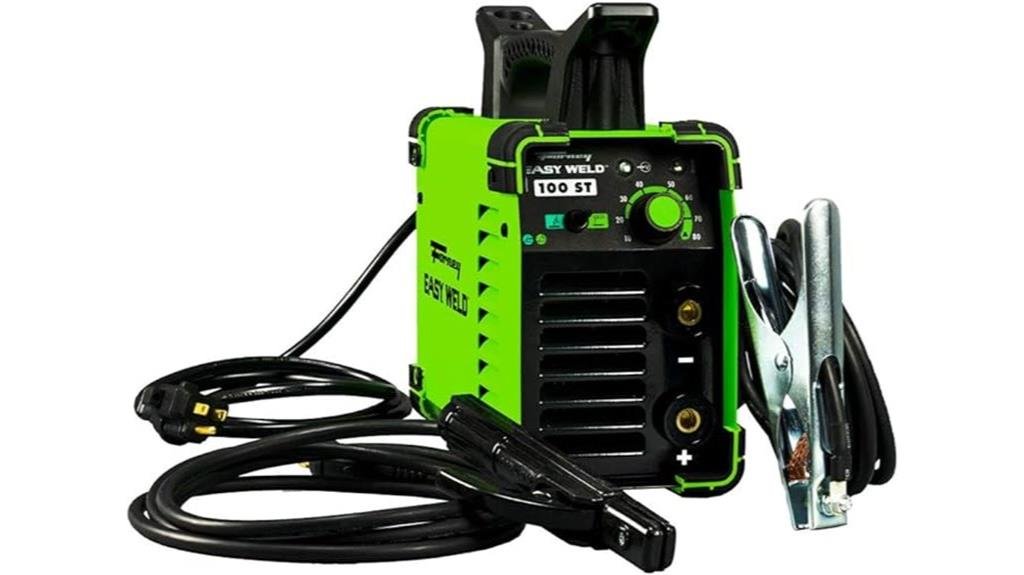
Small welding repairs become harder when your machine is heavy, difficult to power, or more complex than the job requires. The Forney 298 Easy Weld 100ST is a compact 120V welder aimed at DIY repairs, hobby projects, maintenance work, and beginner practice. It combines stick welding with TIG capability, offers up to 90 amps of output, and uses an all-metal case that is easy to move around a garage or small shop. This review explains what that light-duty design does well, where its limits matter, and what you should confirm before buying.
Quick Verdict
Rating: 8/10, recommended with caveats
Best For: DIY users, beginners, hobby welders, and light repair work that can be handled on 120V power.
Bottom Line: The Forney 298 Easy Weld 100ST gives you portable stick welding and basic TIG flexibility in a simple package. Its 90 amp ceiling limits thick material, long high-output runs, and production work.
Key Takeaways
- The Forney 298 Easy Weld 100ST runs on 120V input and provides up to 90 amps of output.
- It supports stick welding and TIG capability, but you should confirm which TIG accessories are included in the current package.
- The article lists a 12.5 lb all-metal chassis, an 8 ft electrode holder, and an 8 ft ground clamp.
- It makes the most sense for small repairs, hobby fabrication, metal art, maintenance, and beginner practice.
- Outlet capacity, duty cycle, electrode size, joint preparation, and material thickness can limit real-world performance.
| Specification | Detail |
|---|---|
| Brand | Forney |
| Model | 298 Easy Weld 100ST |
| Product type | Compact stick welder with TIG capability |
| Input power | 120V |
| Maximum output | Up to 90 amps |
| Welding modes | Stick welding and TIG capability |
| Listed weight | 12.5 lb |
| Case | All-metal case |
| Included leads listed | 8 ft electrode holder and 8 ft ground clamp |
| Electrode support listed | Electrodes up to 3/32 in. |
| Best use | DIY repairs, hobby welding, metal art, maintenance, and light fabrication |
| Main limitation | Not intended for heavy fabrication, thick plate, or long high-output welding runs |
What Is the Forney 298 Easy Weld 100ST?
The Forney 298 Easy Weld 100ST is a small 120V welding machine for repairs and light fabrication. Its compact format suits a home garage, farm maintenance area, hobby bench, or small shop where portability matters more than maximum amperage.
The main selling point is its simple two-process approach. You can use stick welding for common repair work, while TIG capability gives you another option for suitable light projects. The 90 amp output keeps the machine approachable, but it also defines the jobs you should avoid.
Power, Portability, and Included Leads
Running on 120V power makes the 100ST easier to use in a typical garage than a larger machine that needs a 240V circuit. You still need a sound circuit with enough capacity, and weak extension cords can cause voltage drop, poor starts, or inconsistent performance.
The article lists the machine at 12.5 lb with an all-metal case. That combination helps when you need to lift it onto a bench, carry it between work areas, or store it on a shelf after a short repair.
An 8 ft electrode holder and 8 ft ground clamp support close-range work. Those leads are practical around a bench or small project, but they may require you to move the machine when working around a gate, trailer, or larger assembly.
Before You Buy: Match your expectations to a 90 amp, 120V machine. It is designed for short light-duty jobs, not thick plate, production welding, structural work without qualified oversight, or long high-amperage sessions.
Who Should Buy It?
Best For
- DIY users who need a compact welder for brackets, repairs, and small fabrication.
- Beginners who want a simple machine for practicing starts, bead control, and electrode angle.
- Garage or light-shop users who value 120V convenience and easy storage.
Skip If
- You need higher output for thick steel, repeated long welds, or production work.
- You expect a complete professional TIG setup without checking the included accessories.
- You need long leads or enough power headroom for large structural projects.
Stick Welding Performance
The 100ST is best judged as a light-duty stick welder. Its 90 amp maximum output can suit short repairs, brackets, metal art, mower parts, and other small mild-steel jobs when the joint is clean and the electrode matches the material.
Performance depends on more than the amperage setting. Paint, rust, oil, poor fit-up, a weak ground connection, or the wrong electrode can make starts difficult and increase spatter. Clean preparation matters more on a small machine because you have less power available to overcome a poor setup.
The article positions the machine for mild steel around 1/8 inch under suitable conditions. Treat that figure as a practical upper-use reference, not a promise for every joint, electrode, position, or operator.
TIG Capability and Package Expectations
TIG capability adds flexibility for buyers who want more control on suitable light projects. It does not turn the 100ST into a high-output dedicated TIG system, and the current package may not include every torch, regulator, gas, or accessory needed for the process.
Before buying for TIG work, check the current listing and manual for the exact accessories, polarity requirements, and setup method. That step prevents you from assuming the box contains a complete TIG workstation when the machine may only be TIG-capable.
Controls and Ease of Use
The simple layout is one reason this model can work for beginners. A compact welder with a straightforward amperage control lets you focus on surface preparation, electrode angle, travel speed, and puddle control instead of navigating advanced menus.
That simplicity does not remove the learning curve. New users should practice on scrap of similar thickness, test settings before touching the final part, and stop when the machine reaches its duty-cycle limit.
Design and Build Quality
The all-metal case gives the unit a more durable exterior than a plastic-heavy housing. It is still a portable electrical tool, so you should protect it from rain, grinding dust, impact, and metal debris around the vents.
The compact body is useful when storage space is limited. You can keep it on a shelf or cart, then move it close to the work because the included leads are relatively short.
Arc Starts, Grounding, and Weld Control
A clean ground connection can have a noticeable effect on how a small stick welder starts and runs. Clamp to bare metal close to the weld area, and remove rust, paint, scale, oil, and dirt before striking an arc.
Heat control becomes more important near the top of the machine’s output range. Use steady travel, correct fit-up, and the right electrode for the material. If the joint needs repeated heavy passes or deeper penetration than the machine can provide, move to a more powerful welder instead of forcing the 100ST beyond its intended role.
Pro Tip: Practice your amperage setting and travel speed on scrap from the same material before welding the actual part. This gives you a safer way to check arc starts, penetration, and heat input.
How It Performs in Real Use
For Garage Repairs
In a home garage, 120V input and a compact body make setup easier than with a larger shop machine. It is suited to short repairs and small parts, provided the circuit is adequate and the metal is prepared correctly.
For Hobby Welding and Metal Art
The small footprint works well for hobby benches and metal-art projects. You can set it up for short beads, tack pieces together, and store it without dedicating a permanent area to a full-size welder.
For Farm or Property Maintenance
Portability helps with light maintenance tasks near a garage, shed, or accessible power source. The short leads and 120V power requirements still mean you need to plan machine placement and avoid undersized extension cords.
For Beginner Practice
The simple controls and limited output range give beginners a manageable place to practice. It is not a substitute for instruction, especially when a weld affects a vehicle, load-bearing part, pressure vessel, or other safety-critical item.
Setup Tips Before First Use
- Check the circuit: Confirm that the 120V outlet and breaker can support the welder under load.
- Avoid weak extension cords: Use the manual’s cord guidance, and keep the run as short as practical.
- Prepare the joint: Remove paint, rust, oil, scale, and dirt from the weld and ground areas.
- Match the electrode: Stay within the supported electrode size and choose a type suited to the base metal and position.
- Practice first: Test settings on similar scrap before welding the final part.
- Respect the duty cycle: Stop and let the machine cool when required instead of forcing continuous high-output use.
Compatibility and Safety
Use a welding helmet with the correct shade, flame-resistant clothing, welding gloves, safety footwear, and suitable eye and hearing protection. Keep the work area ventilated, remove flammable materials, and protect nearby people from arc flash and sparks.
Follow the current product manual for input power, electrode sizes, polarity, TIG setup, duty cycle, and extension-cord requirements. Get qualified help for structural parts, vehicle components, pressure items, overhead work, or any weld whose failure could cause injury or property damage.
Pros and Cons
Pros
- Compact design is easier to carry and store than a full-size shop welder.
- 120V input suits many home garages and light work areas.
- Stick welding plus TIG capability provides more flexibility than a stick-only unit.
- All-metal case supports regular DIY and maintenance use.
- Simple controls can help beginners focus on basic welding technique.
Cons
- The 90 amp output limits thick material and heavy fabrication.
- Duty-cycle limits matter during repeated or high-output welding.
- The 8 ft leads may feel short around larger projects.
- TIG accessories and package contents should be confirmed before purchase.
- A 120V outlet does not guarantee every household circuit is suitable under load.
Is It Worth the Price?
The 100ST offers the clearest value when you need a portable 120V machine for occasional stick repairs and want TIG capability as an extra option. Its usefulness comes from convenience and compact storage, not from competing with a high-amperage fabrication welder.
Compare the current price with other 120V stick welders, then check what each package includes. A lower machine price can be less attractive if you must add leads, TIG equipment, protective gear, or power accessories before starting.
How It Compares to Alternatives
A larger 240V stick welder is a better match for thicker steel, longer welds, and more output headroom. A dedicated TIG machine may provide better control and a more complete TIG-focused setup, while a multiprocess welder can add MIG capability for users who want one machine to cover more processes.
The Forney 298 Easy Weld 100ST makes the most sense when you value low weight, 120V convenience, simple stick controls, and light-duty versatility over maximum power or a fully equipped professional setup.
Frequently Asked Questions
What type of power does the Forney 298 Easy Weld 100ST need?
It uses 120V input, but you still need a circuit with enough capacity for welding. Check the manual and avoid undersized or excessively long extension cords.
Does it include everything needed for TIG welding?
The machine is described as TIG-capable, but the source article does not confirm a complete TIG accessory package. Check the current listing for the torch, regulator, gas requirements, and any parts sold separately.
What electrode size does it support?
The article lists support for electrodes up to 3/32 inch. Confirm the exact electrode types, polarity, and amperage ranges in the current manual before use.
How thick of metal can it weld?
The article positions it for light mild-steel work around 1/8 inch under suitable conditions. Joint design, electrode choice, welding position, preparation, and operator skill can change the practical limit.
Are the included leads long enough?
The article lists an 8 ft electrode holder and an 8 ft ground clamp. That length works for close-range bench jobs, but larger projects may require more machine repositioning.
Is it suitable for a complete beginner?
Its simple controls and compact size can suit beginner practice. New welders should train on scrap, use full protective gear, follow the manual, and avoid safety-critical projects without qualified guidance.
Who should skip this welder?
Skip it if you need thick-material capacity, long high-output runs, production speed, or a complete professional TIG system. A larger stick, TIG, or multiprocess welder will provide more headroom.
The Bottom Line
The Forney 298 Easy Weld 100ST is recommended with caveats for DIY repairs, hobby projects, beginner practice, and light maintenance on 120V power. Its compact all-metal design and stick/TIG flexibility are useful, but the 90 amp ceiling, duty-cycle limits, short leads, and uncertain TIG package contents make it a poor fit for heavy fabrication or production work.
Ready to Buy?
Check the latest price, package contents, and product details before you decide.