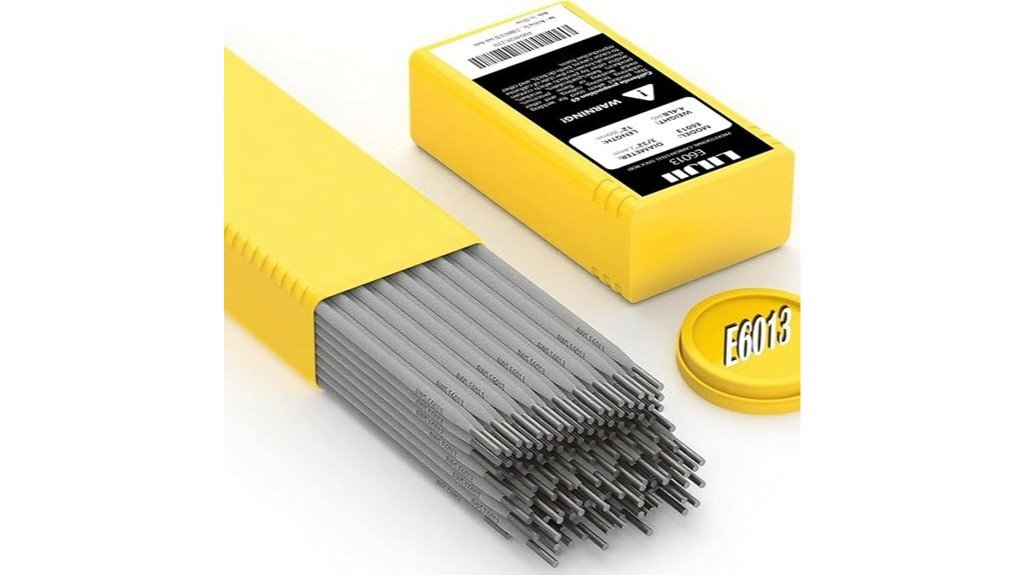
TIG welding tungsten electrodes are reviewed here with practical focus and measured detail. The overview covers types—pure (WP), thoriated (WT20), ceriated (WC20), lanthanated (WL15/WL20), and zirconated—material compatibility, diameters (0.020–1/8 inch, common: 1/16, 3/32, 1/8 in), and grind angles (15°–30° for AC, 20°–60° for DC). What performs best on aluminum or magnesium? How do arc starts, life, and safety trade off against cost and available current?
Key Takeaways
- Match electrode alloy (pure, thoriated, lanthanated, ceriated) to metal and power type for optimal arc stability and starts.
- Choose diameter and tip grind based on required amperage, weld thickness, and heat control.
- Lanthanated and ceriated offer versatile AC/DC performance and easier starts versus pure tungsten.
- Pure tungsten is best for thin aluminum/magnesium but has harder starts and shorter life.
- Prevent contamination, store sealed, dress tips regularly, and replace worn electrodes to maintain weld quality and safety.
Types of Tungsten Electrodes and Their Uses
Overview: Tungsten electrodes come in several alloy types, each engineered for particular welding tasks and operating parameters.
Overview: Tungsten electrodes exist in multiple alloy types, each tailored for specific welding tasks and operating conditions.
The reader learns distinctions, practical uses, and how choices affect electrode durability and welding techniques.
What are common types?
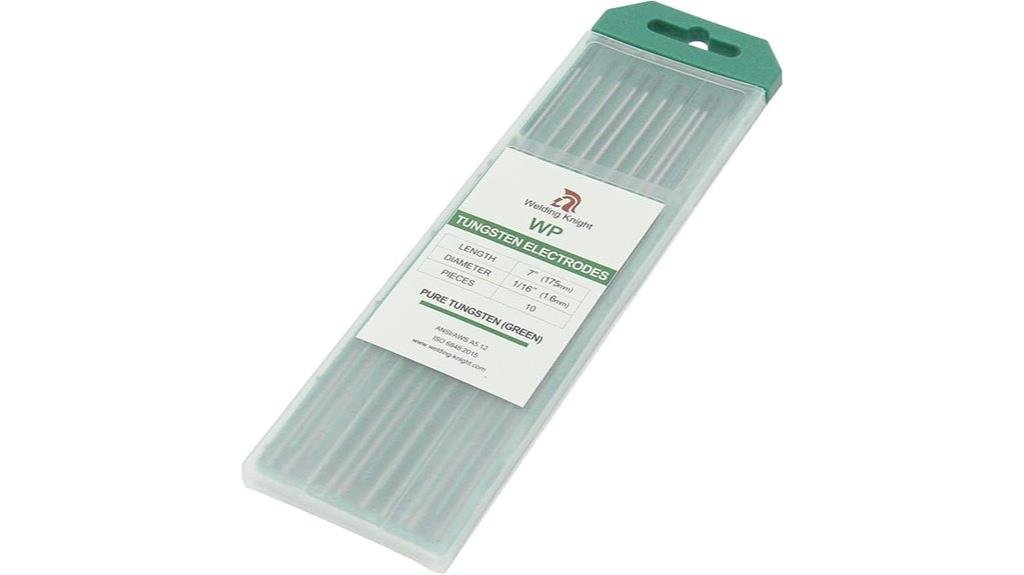
- Pure Tungsten (EW-P/Green): 7″ length, 1/16″ diameter, vacuum-packed 10 pack; best for aluminum, magnesium, high work function.
- Thoriated (EW-Th2/Red): 2.0% thorium, easier arc starts.
- Lanthanated (EW-La2/Blue): 2.0% lanthanum, stable arc.
- Ceriated (EW-Ce2/Gray): 2.0% cerium, low current starts.
Consider current, material, and desired service life when selecting electrodes.
Performance and Safety Considerations
Having compared the common alloy types and their typical uses, attention turns to how electrode composition and handling affect both welding performance and operator safety.
The reviewer asks: what performance challenges arise with pure tungsten (EW-P/Green) 1/16″ x 7″ rods, vacuum packed, 10 pack?
Answer: high work function makes arc starting harder, shorter service life due to combustion rate; consider current settings, torch angle, and regular dressing.
Safety standards: ANSI/AWS A5.12M/A5 ISO 6848:2015 MOD compliance noted.
Practical tips: store sealed, use appropriate PPE, monitor contamination, replace after visible wear, document amperage and arc time.
Choosing the Right Electrode for Aluminum and Magnesium
When welding aluminum or magnesium, choosing the correct tungsten electrode affects arc stability, contamination risk, and overall weld quality; factors to weigh include electrode composition, diameter, and tip preparation. The reader learns electrode selection criteria, compares pure tungsten (EW-P/Green) versus alloys, notes 1/16″ (1.6 mm) diameter specifics, and applies aluminum welding techniques for liberation from weak joints.
| Electrode Type | Typical Use |
|---|---|
| Pure (Green) | Magnesium, thin aluminum, short runs |
| Lanthanated/Ceriated | AC/DC, easier starts, longer life |
Questions: Which to pick? Choose lanthanated for consistency; use proper tip grind, 7″ length.
Frequently Asked Questions
How Long Do Vacuum-Packed Tungsten Electrodes Stay Usable After Opening?
About one to two years once opened; shelf life depends on contamination and storage, so electrode lifespan shortens if exposed to moisture or oils. Freedom-minded users should reseal promptly to preserve performance and extend usable life.
Can I Sharpen Pure Tungsten With a Grinder at Home?
Yes; he can sharpen pure tungsten with a grinder at home, using tungsten sharpening techniques and strict home grinding safety: wear PPE, use fine-grade wheels, avoid overheating, and maintain pointed geometry to resist arc instability and short service life.
Are These Electrodes Compatible With AC TIG Machines Only?
No — they suit AC TIG welding and other AC-capable setups; electrode compatibility depends on machine output and material. The liberated welder chooses freely, matching pure tungsten’s AC preference to desired aluminum and magnesium freedom.
Do Green (Pure) Electrodes Affect Weld Bead Appearance?
Yes. Like a stubborn gatekeeper, green electrode color can hinder arc stability; pure tungsten often worsens weld quality, making bead appearance rougher and harder to control, so liberated welders may prefer alloyed alternatives for smoother results.
What Storage Conditions Prevent Tungsten Contamination?
Store electrodes in sealed, vacuum-packed containers; control humidity and prevent contact with oils, grease, or other metals. This respects tungsten properties and offers storage solutions fostering freedom from contamination, enabling confident, liberated welding practice.
Conclusion
The review concludes that selecting the correct tungsten—1/16″ pure for thin aluminum, 2% lanthanated for stable AC/DC arcs, or thoriated/zirconiated where specified—directly affects weld quality, arc stability, and electrode life. Practical care—sharp, clean tip geometry, proper grind angle, and correct amperage ranges (e.g., 40–120 A for 1/16″ sizes)—reduces porosity and contamination. Readers are advised to balance material compatibility, safety, and duty cycle when choosing electrodes, treating preparation as equally important as selection.