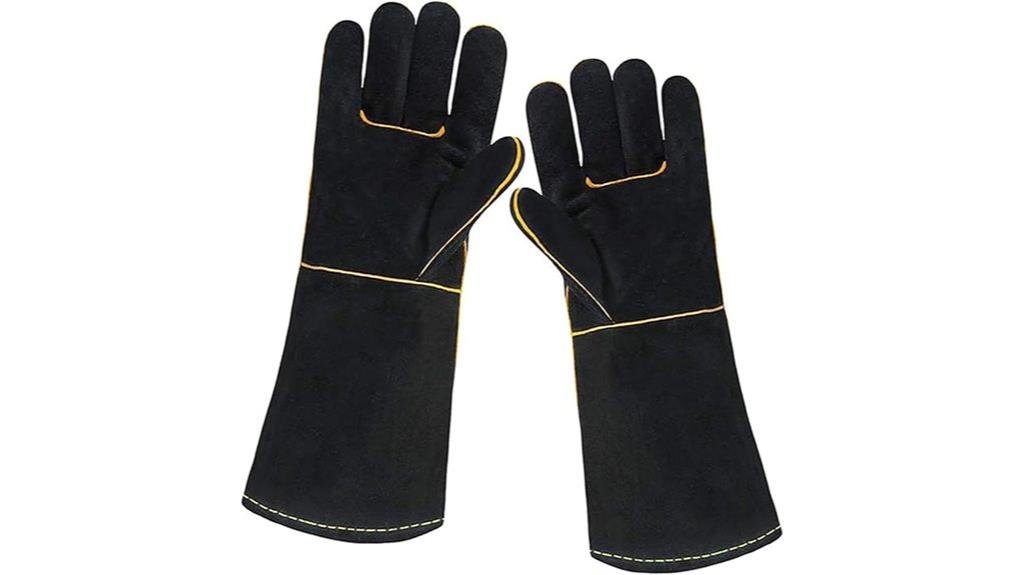
Heat resistant gloves are evaluated for protection, fit, and task suitability in both home and professional settings. The reviewer notes materials like Kevlar, Nomex, leather, and silicone; temperature ratings from 250°F to 2,000°F; cuff lengths 4–18 inches; and features such as reinforced palms, insulated liners, and dexterity zones. Who needs heavy-duty welding gloves versus flexible grilling mitts? Practical trade-offs—comfort, maintenance, certification—follow next.
Key Takeaways
- Choose materials like fire-resistant leather or Kevlar-lined fabric for reliable protection against contact, radiant heat, sparks, and steam.
- Look for certified temperature ratings with a 50–100°F safety margin for real-world tasks like grilling or welding.
- Prefer gloves with reinforced palms, ergonomic seams, and 12–16″ sleeves for forearm protection during heavy-duty work.
- Ensure proper fit by measuring palm circumference and hand length, allowing 1/4–1/2″ clearance for dexterity and control.
- Maintain gloves by brushing debris, spot cleaning, air drying, and conditioning leather to preserve safety and longevity.
Why Heat Resistant Gloves Are Essential for Home and Professional Use
When handling high temperatures at home or in a workshop, using proper hand protection is not optional; it is a practical safety standard.
Heat resistant gloves deliver home safety and professional protection for tasks from grilling to welding.
Who needs them? Anyone exposed to open flames, hot coals, steam, or sparks.
Anyone working near open flames, hot coals, steam, or flying sparks should wear heat-resistant gloves for protection.
What to evaluate: length—8–16 inches for forearm coverage, heat tolerance—up to 500°F, reinforced palms, Kevlar stitching for durability.
Practical tradeoffs include dexterity versus insulation, and cleaning constraints for leather.
Use them consistently, inspect for wear, replace after visible damage, and store away from direct sunlight.
Key Features to Look For: Materials, Design, and Temperature Ratings
After establishing why heat resistant gloves are a must for both home cooks and tradespeople, attention shifts to the concrete features that determine real-world performance: materials, construction, and temperature ratings.
The reader learns a materials comparison: fire‑resistant leather, Kevlar stitching, and insulated liners, rated to about 500°F.
What design innovations matter? Extra‑long sleeves (12–16 inches), reinforced palms, and ergonomic seams for dexterity.
How to interpret ratings? Look for tested contact and radiant heat limits, stated in °F, and safety margins of 50–100°F.
Practical checklist: material type, sleeve length, palm reinforcement, stitch type, and certified temperature ratings for confident selection.
Choosing the Right Pair: Use Cases, Fit, and Maintenance
Why choose one style of heat resistant glove over another? The reader evaluates use case scenarios: grilling, oven work, welding, or handling coals determine choice.
Fit matters — measure palm circumference and hand length, aim for 1/4–1/2 inch clearance for dexterity.
Consider sleeve length: 6″, 10″, or 14″ for forearm protection.
Materials: fire‑resistant leather, Kevlar stitching, reinforced palms.
Maintenance routines: brush off debris, spot clean with mild soap, air dry, condition leather periodically to preserve flexibility.
Questions answered: which style for welding? heavy-duty leather with 10–14″ sleeves.
Which for baking? thin long‑mitts for tactile control.
Frequently Asked Questions
Are These Gloves Food-Safe and Easy to Clean After Cooking?
Yes. They are food safe when using leather gloves kept free of contaminants; cleaning methods include wiping with damp cloth, mild soap spot-cleaning, and airing to dry. Users seeking liberation value low-maintenance, hygienic protection.
Can I Use Them for Handling Live Coals or Embers?
Yes — they can handle live coals or embers. Like armor for liberated hands, they enable confident handling hot materials around the fire pit; reinforced leather, Kevlar stitching, and long sleeves enhance fire pit safety and heat protection.
Do the Gloves Interfere With Tactile Sensitivity or Grip?
They mostly preserve tactile feedback while slightly reducing fine sensitivity; grip strength remains strong thanks to reinforced palms and Kevlar stitching, enabling confident, liberated handling of hot items without sacrificing protective assurance or maneuvering freedom.
Are Replacement Parts (Liners or Sleeves) Available?
Yes — like a steam-age rebel, the brand offers replacement options: detachable liners and extra sleeves. Liner materials vary (cotton blends, Kevlar-knit) so freedom-seeking users can customize warmth, fit, and protection.
Do They Comply With Any Safety Certifications or Standards?
They comply with common safety certifications and industry standards where specified; manufacturers often cite heat‑resistant ratings, ASTM or EN tests, and CE markings. Users seeking liberation should verify specific certification claims per model and seller.
Conclusion
In conclusion, heat resistant gloves transform routine tasks into controlled operations, protecting hands from temperatures up to 500°F (260°C) or higher when properly rated, while preserving dexterity with reinforced palms, Kevlar or aluminized layers, and insulated liners. Which pair fits best? Measure palm circumference and sleeve length, match temperature ratings to use—grilling, foundry work, or welding—and follow care: spot clean, air dry, condition leather. Proper selection and maintenance extend service life and guarantee safety.