Disclosure: As an Amazon Associate, we earn from qualifying purchases. If you click a link on this page and make a purchase, we may receive a small commission at no extra cost to you.
Your paint can look clean after a wash and still face UV exposure, mineral spots, road film, bird residue, and daily grime. Chemical Guys JetSeal gives you a wipe-on synthetic sealant when you want more protection than a basic wax without taking on a full ceramic-coating installation. It is easy to spread by hand or machine and leaves a glossy, water-repelling finish. The trade-off is that its advertised durability depends heavily on paint preparation, storage, weather, and wash habits.
Quick Verdict
Rating: 8/10
Best For: You want a glossy synthetic paint sealant that is easier to apply and refresh than a true ceramic coating.
Bottom Line: JetSeal is a practical choice for DIY detailers who value slickness, shine, and easier maintenance washing. Its main limitation is durability, because the manufacturer’s up-to-one-year claim should be treated as a best-case ceiling rather than a guaranteed service interval.
| Specification | Detail |
|---|---|
| Brand | Chemical Guys |
| Product Name | Jet Seal Sealant & Paint Protectant |
| SKU | WAC_118_16 |
| ASIN | B001TFE38A |
| Product Type | Synthetic polymer paint sealant |
| Size | 16 fl oz |
| Manufacturer-Listed Finishes | Paintwork and glass |
| Application Method | Thin coat by hand or with a foam applicator pad |
| Dry Time Before Buffing | 20 minutes |
| Finish | High-gloss, hydrophobic surface |
| Durability Claim | Up to one year under favorable conditions |
| Package Note | Standard listing is for one 16 oz bottle; applicator and towels should be confirmed separately |
What Is Chemical Guys JetSeal?
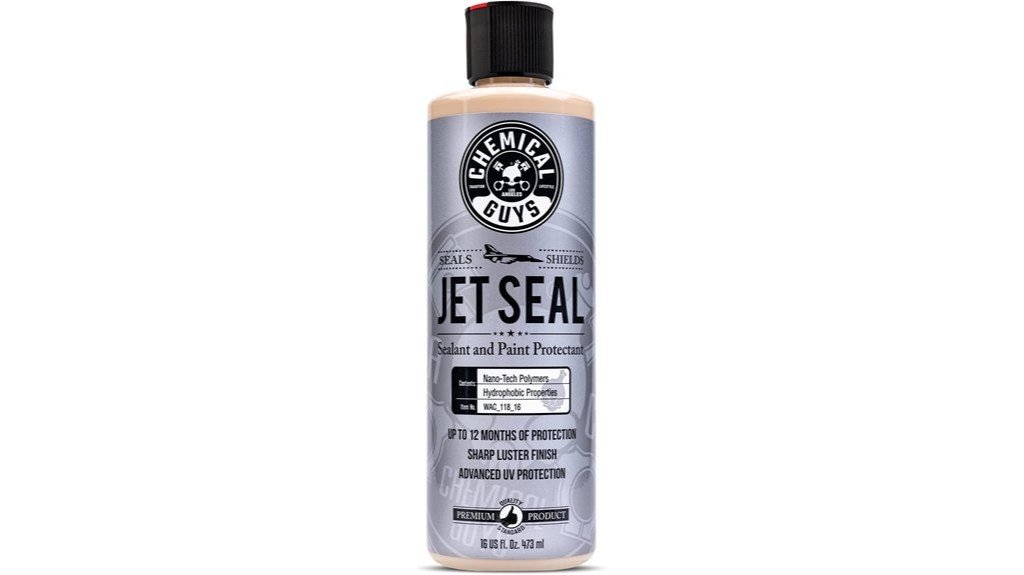
Chemical Guys JetSeal is a synthetic polymer sealant for glossy automotive paintwork and glass. It creates a temporary protective film that adds shine, promotes water beading, and helps reduce how strongly road grime and contamination cling to the surface.
JetSeal sits between a traditional wax and a true ceramic coating. It asks for more preparation and buffing than a quick spray sealant, but it is less demanding than a coating that requires careful panel preparation, controlled curing, and more difficult removal.
The 16 oz product uses Chemical Guys SKU WAC_118_16. The manufacturer describes a nano-tech polymer formula, a high-gloss finish, hydrophobic behavior, UV protection, and durability of up to one year. That final figure is a maximum claim, not a promise for every outdoor vehicle.
Key Takeaways
- JetSeal is a synthetic polymer sealant, not a ceramic coating.
- The verified manufacturer product is a 16 oz bottle with SKU WAC_118_16.
- Chemical Guys lists paintwork and glass as the applicable finishes.
- A thin coat and a 20-minute dry period make removal easier.
- Its up-to-one-year protection claim depends on preparation, storage, weather, and washing.
Who Should Buy It?
Best For
- DIY detailers who want a wipe-on sealant with more process than a spray but less commitment than a coating.
- Owners who want stronger gloss, water beading, and easier maintenance washing on clean paint.
- Drivers who are willing to wash, decontaminate, apply thinly, and buff after the stated dry time.
Skip If
- You want multi-year protection and stronger chemical resistance from a properly installed ceramic coating.
- You need a fast spray-on product that takes only a few minutes after each wash.
- Your vehicle has matte, satin, textured, porous, or otherwise unusual finishes that are not listed by the manufacturer.
Before You Buy: Chemical Guys currently lists paintwork and glass as the applicable finishes. Do not assume the same result on matte paint, satin wraps, textured plastic, rubber, fabric, or porous trim. Test a hidden spot and follow the product label.
Best Prep Steps Before Applying JetSeal
Preparation controls how evenly JetSeal spreads and how well it can bond. Start with a thorough wash using an automotive shampoo, rinse away loose contamination, and dry the vehicle completely. Working over leftover dirt or water can create streaks and trap contamination under the sealant.
If the paint still feels rough after washing, use a clay bar or synthetic clay towel with proper lubrication. Claying removes bonded material that normal shampoo may leave behind. Paint correction is optional, but polishing first can improve the final reflection because JetSeal adds gloss without removing swirls, scratches, oxidation, or etched water spots.
After polishing, remove residue and oils according to the polish maker’s directions. The surface should be cool, clean, dry, and free of loose residue before you begin.
Step-by-Step Application Guide
- Wash and dry the vehicle. Remove grit before an applicator touches the paint.
- Decontaminate when needed. Clay rough paint so the sealant goes onto a smoother surface.
- Work on cool panels. Shade helps prevent premature drying and uneven removal.
- Apply a thin coat. Spread a small amount by hand with a clean foam applicator, or use a suitable finishing pad if you prefer machine application.
- Wait 20 minutes. Follow the manufacturer’s stated drying time before removal.
- Buff with clean microfiber. Turn the towel often and replace it when residue begins to smear.
- Inspect under good light. Look across the paint from several angles for missed residue or high spots.
A dual action polisher can speed up coverage on large panels, but the goal is spreading, not paint correction. Use a soft finishing pad, low speed, and light pressure. Heavy product does not create a stronger layer and usually makes buffing harder.
Pro Tip: Prime a clean applicator with a small amount, then use only enough product to leave a thin, even film. If the layer looks creamy or opaque, you are probably applying too much.
Feature and Performance Highlights
Gloss and Surface Slickness
JetSeal is designed to leave a bright, glassy finish. The visual improvement is easiest to see on paint that has already been washed, decontaminated, and polished. On neglected paint, the sealant can improve gloss, but it will not hide deep scratches, restore failed clear coat, or repair oxidation.
Slickness also has a practical role. A smoother sealed surface can make light grime easier to release during a safe maintenance wash. It does not make the vehicle self-cleaning, and you still need proper wash media and drying towels.
Hydrophobic Protection
The polymer layer encourages water to bead and move off the surface. Strong beading usually appears soon after application, then weakens as the sealant collects contamination or wears. Beading alone does not prove that full protection remains, so also watch for reduced slickness and harder cleaning.
A hydrophobic sealant cannot stop mineral spotting when hard water dries on hot paint. Dry the vehicle after washing and avoid letting sprinklers or rinse water bake onto the surface.
Durability Trade-Offs
Chemical Guys advertises up to one year of protection. You are more likely to approach the upper end when the paint is well prepared, the vehicle is stored indoors, and washing is gentle. Outdoor parking, strong sun, winter salt, aggressive detergents, and frequent automatic washes can shorten the useful interval.
Instead of relying only on a calendar, inspect the surface after washing. When water behavior weakens, the paint feels less slick, and grime becomes harder to remove, clean the surface and decide whether it needs decontamination or a fresh application.
Paint and Glass Compatibility
The manufacturer lists paintwork and glass. On paint, apply a thin film and buff until no residue remains. On exterior glass, use very little product and inspect carefully for smears that could affect visibility, especially on the windshield.
Do not extend that compatibility claim to every exterior material. Matte paint, satin vinyl, unpainted plastic, rubber, fabric tops, and textured trim can react differently or show unwanted shine.
Compatibility and Surface Safety
JetSeal is a surface protectant, not a cleaner, scratch remover, rust repair, or substitute for damaged clear coat. Never seal over grit, sap, bird residue, or abrasive contamination. Doing so can lock residue against the finish and increase the chance of marring during application.
Use the product in a ventilated area, avoid eye or prolonged skin contact, and follow the current label and safety information. Keep detailing chemicals away from children and pets. If your vehicle has repainted panels, fresh paint, specialty wraps, or unusual coatings, ask the installer or paint supplier about cure time and product compatibility before application.
How It Performs in Real Use
On an Outdoor Daily Driver
JetSeal can make routine washing easier by reducing how firmly road film and light grime cling to clean paint. The protection may wear faster outdoors because sunlight, rain, contamination, and frequent washing continually stress the film. Check performance after each wash rather than assuming the maximum claim applies.
On a Garage-Kept Weekend Car
A vehicle that spends more time indoors avoids much of the UV, detergent, and road exposure that reduces sealant life. In this setting, the glossy finish and slick feel can remain noticeable longer, especially when you use gentle wash products and clean microfiber towels.
On Recently Polished Paint
Freshly corrected paint gives JetSeal the best visual foundation. The sealant can deepen the reflective look and protect the polished surface from routine contamination. It will not preserve perfection indefinitely, so careful washing still matters.
On Neglected or Rough Paint
JetSeal cannot replace decontamination or correction. If the paint feels rough, looks chalky, or has etched defects, sealing it immediately may produce limited visual improvement and uneven removal. Clean and correct the underlying condition first when it is safe to do so.
Common Application Mistakes to Avoid
- Applying too much: Thick product wastes sealant and increases streaking.
- Working on hot paint: Heat can make the film dry unevenly and become harder to remove.
- Skipping decontamination: Bonded grime can leave the surface rough and reduce the quality of the finish.
- Using dirty towels: Loaded microfiber can smear residue or drag contamination across the paint.
- Expecting defect removal: JetSeal adds protection and gloss but does not polish away scratches or oxidation.
- Assuming universal compatibility: Use it only on suitable finishes and test uncertain surfaces first.
Pros and Cons
Pros
- Verified 16 oz bottle with a clear 20-minute dry-time instruction.
- Thin wipe-on application works for careful beginners and experienced DIY detailers.
- High-gloss finish can enhance properly cleaned and polished paint.
- Hydrophobic behavior supports easier rinsing and maintenance washing.
- Less demanding to install and refresh than a true ceramic coating.
Cons
- The up-to-one-year claim depends on favorable conditions and careful maintenance.
- Requires more preparation and buffing than a quick spray sealant.
- Manufacturer-listed finish compatibility is narrower than a universal exterior protectant.
Is It Worth the Price?
JetSeal fits the mid-range to premium DIY sealant category. It offers better value when you enjoy full wash-and-protect sessions and want a wipe-on product that can cover multiple applications from one 16 oz bottle. Thin application matters because overuse wastes product and adds removal work.
It is worth considering when gloss, water behavior, and straightforward renewal matter more than maximum coating durability. It offers less value when you want a fast spray after every wash or expect multi-year chemical resistance.
How It Compares to Alternatives
Collinite No. 845 Insulator Wax is a useful comparison when you want a carnauba-polymer hybrid with a reputation for durability and hand or dual-action application. A dedicated ceramic coating is the stronger route when you want a harder, longer-lasting layer and are prepared for more demanding surface preparation.
JetSeal makes the most sense when you want a fully synthetic, glossy sealant with simple wipe-on directions and easier renewal than a coating. Your choice should depend on application time, finish preference, storage conditions, and how often you are willing to reapply protection.
Frequently Asked Questions
How long does Chemical Guys JetSeal last?
Chemical Guys claims up to one year of protection. Real service life depends on preparation, outdoor exposure, climate, wash chemicals, and storage, so inspect water behavior and slickness instead of treating one year as guaranteed.
Can you apply JetSeal by hand?
Yes. Apply a thin coat with a clean foam applicator, allow 20 minutes of drying time, and buff with a clean microfiber towel. A machine can help with large panels, but light pressure and a finishing pad are more appropriate than a cutting pad.
Does JetSeal remove scratches or oxidation?
No. It is a protective sealant, not an abrasive polish or paint-restoration product. Correct swirls, oxidation, and etched spots before sealing when the paint condition allows safe correction.
Can JetSeal be used on glass?
Chemical Guys lists glass as an applicable finish. Use a very thin coat and buff completely, then inspect from several angles for haze or smearing before driving.
Is JetSeal safe for matte paint, satin wraps, and textured trim?
Do not assume compatibility. The manufacturer lists paintwork and glass, while a gloss-enhancing sealant may change the appearance of matte, satin, textured, or porous materials. Test an inconspicuous area or use a product made for that finish.
What is the most common JetSeal application mistake?
Overapplication is the most avoidable problem. A thick coat takes longer to buff, can smear, and does not guarantee better protection. Use a thin, even film on cool, clean panels.
Can JetSeal go over a ceramic coating?
A separate sealant can alter a coating’s water behavior and maintenance characteristics. Follow the coating manufacturer’s topper recommendations instead of assuming every sealant will improve the system.
What comes with the standard 16 oz product?
The product reviewed is the 16 oz Jet Seal bottle. Confirm the current seller’s package contents before ordering, because applicator pads and microfiber towels may be sold separately or included only in a bundle.
The Bottom Line
Chemical Guys JetSeal earns an 8/10 for its glossy finish, straightforward thin-coat application, hydrophobic behavior, and easier renewal compared with a true ceramic coating. Buy it when you enjoy periodic detailing and can prepare the paint correctly. Skip it when you need a quick spray, universal surface compatibility, or multi-year protection with stronger chemical resistance.
Ready to Buy?
Check the latest product details and package contents before you decide.