
Disclosure: As an Amazon Associate, we earn from qualifying purchases. If you click a link on this page and make a purchase, we may receive a small commission at no extra cost to you.
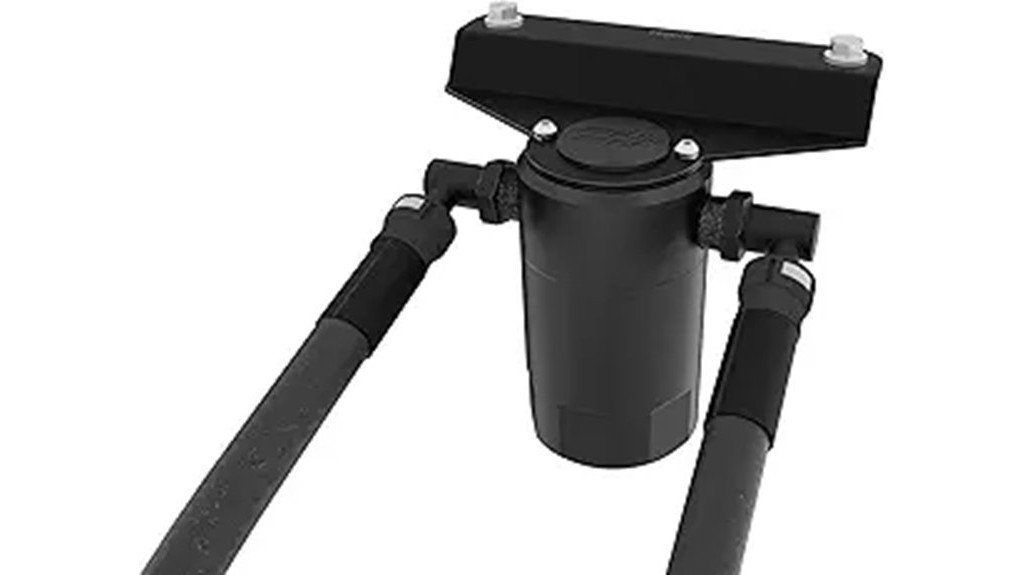
Oil vapor moving through the PCV system can leave unwanted residue in your engine’s intake tract, which is why a vehicle-specific catch can can be useful on the right GM V8. The K&N Air Oil Separator 81-0805 is designed to capture oil from blowby before more of it reaches the intake, while retaining factory-style hose connections and a direct-fit mounting arrangement. Its main strengths are the 6 oz reservoir, straightforward 20 to 30 minute installation, and easy servicing. The main limitation is equally important: fitment is specific, and K&N states that this part is not legal for sale or use in California on pollution-controlled motor vehicles.
Quick Verdict
Rating: 8.5/10, Recommended with caveats
Best For: Owners of compatible GM 5.3L and 6.2L vehicles who want a direct-fit, serviceable oil catch can rather than a universal setup.
Bottom Line: The K&N 81-0805 combines a useful 6 oz reservoir, factory-style connections, and simple maintenance in a vehicle-specific kit. Its fitment and California-use restrictions mean you should confirm your exact vehicle and local requirements before ordering.
| Specification | Detail |
|---|---|
| Brand | K&N |
| Model / Part Number | 81-0805 |
| Product Type | Air oil separator / oil catch can |
| Reservoir Capacity | 6 oz |
| Catch Can Size | 2.5-inch outside diameter × 4.5-inch height |
| Listed Weight | 2 lb (0.9 kg) |
| Hoses | Two 3/8-inch ID × 16-inch hoses |
| Connections | Factory-style connections with two 3/8-inch NPT quick-release fittings |
| Installation Time | About 20 to 30 minutes according to K&N |
| Service Guidance | Check every 10,000 miles or one year, sooner for towing, off-road, or other harsher use |
| Warranty | K&N No-Hassle Lifetime Limited Warranty |
| California Note | Not legal for sale or use in California on pollution-controlled motor vehicles |
What Is the K&N 81-0805 Air Oil Separator?
The K&N 81-0805 is a vehicle-specific oil catch can installed in the crankcase ventilation path. Blowby gases can carry suspended oil into the intake system. The separator gives that oil a place to collect in its 6 oz reservoir rather than allowing all of it to continue toward the intake tract.
K&N supplies the separator with a dedicated mounting bracket, hoses, quick-release fittings, and installation hardware. This makes it different from a generic universal catch can that may require you to select your own bracket location, cut hoses, or adapt fittings.
You should view it as a preventive engine accessory rather than a power modification. K&N says it helps protect against oil contamination, intake buildup, power loss, and premature detonation associated with blowby, but it does not repair existing deposits, worn engine components, or other underlying mechanical problems.
Key Takeaways
- The K&N 81-0805 uses a 6 oz reservoir to collect oil carried through the crankcase ventilation system.
- It is a direct-fit kit for specific Cadillac, Chevrolet, and GMC 5.3L or 6.2L applications.
- K&N estimates installation at about 20 to 30 minutes with basic hand tools.
- The reservoir can be checked and emptied without tools once installed.
- K&N recommends checking it every 10,000 miles or one year, and more often when towing or driving off-road.
- It is not legal for sale or use in California on pollution-controlled motor vehicles.
Who Should Buy It?
Best For
- Owners of a verified 81-0805 GM 5.3L or 6.2L application.
- Drivers who prefer factory-style connections and a dedicated mounting bracket.
- Owners willing to inspect and empty a catch can as part of regular vehicle maintenance.
Skip If
- Your exact year, engine, or vehicle is not listed for part 81-0805.
- You need a maintenance-free accessory that never requires inspection or draining.
- You need a part that is legal for use on a California pollution-controlled vehicle.
Before You Buy: Do not rely on vehicle name alone. Part 81-0805 is engine and model-year specific, and K&N also lists a California emissions restriction. Confirm your exact year, model, engine, and local requirements before ordering.
Fit and Compatibility
Fitment is one of the strongest reasons to choose this K&N kit over a generic catch can. The official 81-0805 instructions list the following applications:
- 2014-2018 Chevrolet Silverado: 5.3L and 6.2L
- 2014-2018 GMC Sierra: 5.3L and 6.2L
- 2015-2020 Chevrolet Tahoe: 5.3L and 6.2L
- 2015-2020 Chevrolet Suburban: 5.3L and 6.2L
- 2015-2020 GMC Yukon / Yukon XL: 5.3L and 6.2L
- 2015-2019 Cadillac Escalade: 6.2L
The installation instructions separate hose routing for the 5.3L and 6.2L engines, so correct engine identification matters. A similar-looking engine bay is not enough reason to assume compatibility.
Materials, Connections, and Build
K&N uses a dedicated bracket, robust hoses, and factory-style connections rather than asking you to build a universal plumbing arrangement. The kit includes two 3/8-inch-ID, 16-inch hoses and two 3/8-inch NPT quick-release fittings, plus the mounting hardware required by the installation instructions.
The 6 oz reservoir is one of its practical advantages. It gives collected fluid a reasonable amount of space while remaining compact enough for the specified engine-bay mounting location. K&N also designed the reservoir so you do not need tools simply to check and empty it.
Installation Process
K&N rates installation at roughly 20 to 30 minutes. Its instructions call for a 2.5 mm Allen key, 10 mm socket, ratchet, 10 mm wrench, and 13/16-inch wrench. The factory PCV line is removed, the supplied bracket is mounted at the cowling, and the catch can is connected using the supplied hoses and fittings.
The official instructions also contain details worth following closely. K&N specifies Teflon tape on the fittings to help obtain a proper seal and warns against overtightening fittings in the top of the separator. It also recommends lightly coating the fitting O-ring with oil to help insertion.
Hose routing differs between the 5.3L and 6.2L engines, so follow the instructions for your engine rather than copying another installation without checking the layout.
Pro Tip: Before tightening everything, compare your hose routing and separator orientation with the K&N instructions for your exact engine. Correct routing is more important than finishing the installation a few minutes faster.
Functionality and Performance Benefits
The separator’s job is simple: give oil carried in crankcase blowby a place to collect before more of that material enters the intake tract. K&N specifically describes the 81-0805 as an engine and intake protection accessory intended to reduce oil and contaminant buildup.
That distinction matters when setting expectations. You should not buy this part expecting a guaranteed horsepower increase. Its value is in managing blowby-related oil contamination and helping keep the intake tract cleaner over time.
K&N also states that reducing oil contamination can help protect against power loss and premature detonation. Those are protective benefits, not a promise that every vehicle will immediately feel faster after installation.
How It Performs in Real Use
For Daily Driving
For normal commuting and mixed driving, the separator works quietly in the background. Your main interaction with it comes during periodic inspection and draining. Because the reservoir is designed to be checked and emptied without tools, servicing does not require dismantling the installation.
For Towing
Towing is specifically called out by K&N as a harsher operating condition. If your truck regularly pulls a trailer, you should inspect the separator sooner than the standard 10,000-mile or one-year interval rather than assuming the reservoir will collect at the same rate as a lightly driven vehicle.
For Off-Road Use
K&N gives the same shorter-inspection guidance for off-road operation. The benefit here is not that the catch can changes the truck’s off-road capability. It simply means the engine may be working under conditions where more frequent catch-can checks are sensible.
For Long-Term Ownership
This product makes the most sense for an owner who accepts a small recurring maintenance task in exchange for collecting some of the oil that would otherwise continue through the PCV path. It is less attractive if you know you will install it and then forget to inspect it for years.
Maintenance and Cleaning
K&N recommends checking the 81-0805 every 10,000 miles or one year. That is the manufacturer’s normal guidance, not a requirement to wait until exactly 10,000 miles before looking at it.
Towing, off-road driving, and other harsh operating conditions call for earlier checks. During routine service, inspect the reservoir, fittings, hoses, and connections for anything that looks loose or abnormal. Follow K&N’s current instructions for servicing the separator rather than using an arbitrary cleaning schedule.
Compatibility and Safety
Work with a cool engine and follow the supplied installation instructions. Do not overtighten the separator fittings, and make sure the PCV hoses are routed according to the diagram for your 5.3L or 6.2L engine.
There is also an emissions-related restriction that buyers should not miss. K&N states that part 81-0805 is not legal for sale or use in California on any pollution-controlled motor vehicle. Check current laws and the manufacturer’s application information for your vehicle before installation.
An oil catch can is also not a repair for excessive crankcase blowby, worn engine components, an existing drivability problem, or established intake deposits. If your vehicle has mechanical symptoms, diagnose the underlying problem rather than expecting the separator to correct it.
Pros and Cons
Pros
- Vehicle-specific kit for supported GM 5.3L and 6.2L applications.
- Large 6 oz reservoir for collected oil and contaminants.
- Factory-style connections and supplied mounting hardware simplify installation.
- Reservoir can be checked and emptied without tools.
- Backed by K&N’s No-Hassle Lifetime Limited Warranty.
Cons
- Fitment is limited to specific models, years, and engines.
- The reservoir still requires periodic inspection and emptying.
- Not legal for sale or use in California on pollution-controlled motor vehicles.
Is It Worth the Price?
The K&N 81-0805 makes more sense as a premium direct-fit solution than as a bargain alternative to a generic catch can. You are paying for application-specific hose routing, a dedicated bracket, factory-style connections, a 6 oz reservoir, established installation instructions, and K&N’s lifetime limited warranty.
That added convenience gives it the most value for an owner who wants a clean installation without designing a universal setup from separate components. If your only priority is getting the least expensive catch can possible, a universal kit may cost less, but it may also require more planning and adaptation.
It is also not the best value if you dislike periodic maintenance. The catch can needs to be inspected and emptied for the design to remain useful.
How It Compares to Alternatives
The Mishimoto MMBCC-K2-14 is another direct-fit option for 2014-2018 Chevrolet/GMC 1500 5.3L and 6.2L applications. Mishimoto uses a 3 oz baffled can, while the K&N 81-0805 provides a larger 6 oz reservoir. Buyers who want to compare filtration design and reservoir size may want to examine both.
The J&L 3.0 Oil Separator 3085D is also offered for 2014-2018 Silverado/Sierra 1500 5.3L and 6.2L V8 applications and related Tahoe, Suburban, Yukon, and Yukon XL models. UPR also sells application-specific catch-can systems for these GM trucks. The K&N remains especially attractive if you prioritize a simple vehicle-specific kit, factory-style connections, a 6 oz reservoir, and K&N’s service instructions.
Frequently Asked Questions
Which vehicles fit the K&N 81-0805?
K&N lists 2014-2018 Silverado and Sierra 5.3L/6.2L, 2015-2020 Tahoe, Suburban, Yukon and Yukon XL 5.3L/6.2L, and 2015-2019 Escalade 6.2L applications. Confirm your exact vehicle before buying because the kit is not universal.
How often should you check the K&N Air Oil Separator?
K&N recommends checking it every 10,000 miles or one year under normal conditions. Check sooner if your vehicle sees harsher use such as towing or off-road driving.
How much does the reservoir hold?
K&N specifies a 6 oz reservoir for part 81-0805. The reservoir is designed so you can check and empty it without tools after installation.
Will the K&N 81-0805 increase horsepower?
You should not treat it as a guaranteed horsepower modification. K&N markets the separator mainly to capture blowby oil, reduce intake contamination, and help protect against performance loss associated with that contamination.
How difficult is installation?
K&N estimates about 20 to 30 minutes. Its instructions call for a 2.5 mm Allen key, 10 mm socket, ratchet, 10 mm wrench, and 13/16-inch wrench, along with careful attention to the correct 5.3L or 6.2L hose routing.
What warranty does K&N provide?
K&N lists its No-Hassle Lifetime Limited Warranty for the 81-0805. Check the manufacturer’s current warranty terms and eligibility requirements for complete coverage details.
Is the K&N 81-0805 legal in California?
K&N states that the 81-0805 is not legal for sale or use in California on pollution-controlled motor vehicles. Verify current emissions rules before purchasing or installing the part.
Can an oil separator fix existing carbon buildup or engine problems?
No. The separator is intended to capture oil from blowby before more contamination reaches the intake path. It does not remove existing deposits or repair mechanical problems that cause excessive blowby, oil consumption, misfires, or other drivability symptoms.
The Bottom Line
The K&N Air Oil Separator 81-0805 is a strong choice if you own one of its verified GM 5.3L or 6.2L applications and want a direct-fit catch can with factory-style connections, a 6 oz reservoir, and straightforward servicing. Skip it if your vehicle falls outside the listed applications, you do not want periodic maintenance, or the California emissions restriction applies to your intended use.
Its biggest strength is the complete vehicle-specific setup rather than a promise of instant power. For the right vehicle and an owner willing to inspect the reservoir periodically, it is a practical preventive upgrade.
Ready to Buy?
Check the latest price, fitment information, and product details before you decide.


