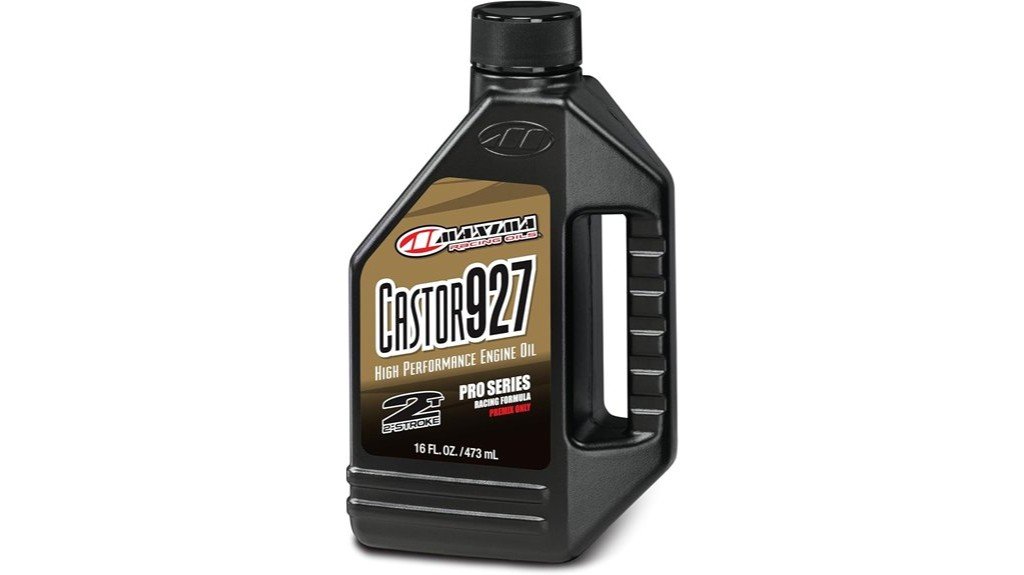
Maxima Castor 927 Racing Premix Review
Choosing a racing premix oil is not only about buying the thickest or most expensive bottle. The oil must suit your engine type, fuel ratio, jetting, operating load, and maintenance routine. Maxima Castor 927 is a castor-based, ester-fortified two-stroke oil made for carbureted gasoline engines that use premix. This review explains where its film strength and race-focused formula help, and why its premix-only design makes it a poor fit for oil-injection systems.
Quick Verdict
Rating: 8.5/10, recommended with caveats
Best For: Riders, racers, and kart owners using carbureted two-stroke engines that require a premixed fuel-and-oil blend.
Bottom Line: Maxima Castor 927 combines highly refined castor oil, surface-active esters, and an ash-free additive system for demanding two-stroke use. Its main tradeoff is strict compatibility: it is a premix-only oil and should not be used in oil-injection systems.
Key Specifications
| Specification | Detail |
|---|---|
| Brand | Maxima Racing Oils |
| Model | Castor 927 |
| ASIN | B0012TWXBW |
| Product Type | Castor-based, ester-fortified two-stroke engine oil |
| Application | Carbureted two-stroke gasoline engines used in high-performance applications |
| Lubrication Method | Premix only, not intended for oil-injection systems |
| Mix Ratio | Use the ratio recommended by the engine manufacturer or qualified tuner |
| Appearance | Amber liquid |
| Viscosity | 154.8 cSt at 40°C and 15.2 cSt at 100°C on the manufacturer technical data sheet |
| Flash Point | 218°C on the manufacturer technical data sheet |
| Pour Point | -39°C on the manufacturer technical data sheet |
| Manufacturer Sizes | 16 oz, 33.8 oz, 64 oz, and 5 gallons; confirm the selected Amazon variant before ordering |
| Storage and Safety | Keep sealed in a cool area, avoid eye and skin contact, and follow the current label and safety data sheet |
What Is Maxima Castor 927?
Maxima Castor 927 is a performance-focused two-stroke engine oil for fuel that is mixed before it enters the tank. Maxima describes the formula as highly refined castor oil combined with surface-active esters. The manufacturer also uses an ash-free additive system intended to limit gum formation, corrosion, and deposits.
The product is designed for carbureted two-stroke gasoline engines, including demanding off-road, karting, and racing applications. It is not a universal replacement for every two-stroke oil. Your engine must allow premix, and the oil-to-fuel ratio must match the engine maker’s or tuner’s recommendation.
Who Should Buy It?
Best For
- Carbureted two-stroke dirt bikes, karts, and racing engines that require premixed fuel.
- Riders who run sustained high RPM or heavy loads and inspect their engines regularly.
- Owners who understand fuel measurement, jetting checks, plug inspection, and top-end maintenance.
Skip If
- Your engine uses an oil-injection system or requires a different lubricant specification.
- You want a low-attention oil without careful measuring, fresh fuel, and routine inspection.
- Your engine builder has specified another oil for break-in, endurance use, or daily riding.
Before You Buy: Castor 927 is a premix-only formula. Do not pour it into an oil-injection reservoir, and do not assume a popular ratio such as 32:1 or 40:1 is correct for your engine.
Key Takeaways
- Maxima Castor 927 is made for carbureted two-stroke gasoline engines that use premixed fuel.
- The formula combines highly refined castor oil, surface-active esters, and an ash-free additive package.
- It is intended for severe, high-performance use, but it still depends on correct jetting, ratio, fuel quality, and maintenance.
- It is not designed for oil-injection systems.
- The manufacturer allows use at an OEM-recommended ratio, so your engine manual remains the starting point.
Feature-by-Feature Review
Castor-Based Film Strength
The main buying reason is the castor-based lubrication system. Maxima says the refined castor oil and surface-active ester chemistry maintain oil-film thickness and help the lubricant stay attached to critical surfaces. That makes Castor 927 relevant to engines exposed to high cylinder pressure, heat, and sustained RPM.
This strength does not remove the need for correct setup. A rich carburetor setting, unsuitable plug heat range, stale fuel, or excessive oil ratio can still cause poor running and deposits. Treat the oil as one part of the engine package, not as a fix for mechanical or tuning problems.
Ester-Fortified Formula and Deposit Control
Maxima describes Castor 927 as ester-fortified rather than a simple straight castor oil. Its ash-free additive system is intended to keep the engine cleaner and reduce gum, corrosion, and deposits. That is useful in a race oil because deposit control affects ring movement, exhaust-port condition, and consistency over repeated heat cycles.
Actual cleanliness still depends on combustion temperature, fuel, jetting, riding load, and service intervals. An engine that spends most of its time idling or running overly rich may not burn the mixture as cleanly as an engine operated in its intended range.
Premix Compatibility
Castor 927 must be measured into gasoline before the mixture goes into the tank. The manufacturer states that it is suitable for carbureted two-stroke gasoline engines at an OEM-recommended ratio. It is not intended for automatic oil-injection systems.
A ratio change also changes the amount of gasoline passing through a fixed jet. Adding more oil to the same total volume leaves slightly less gasoline, which can affect the delivered air-fuel mixture. Check tuning after changing oil brands or ratios instead of assuming the old settings remain correct.
Technical Properties
The manufacturer’s technical data sheet lists an amber appearance, viscosity of 154.8 cSt at 40°C and 15.2 cSt at 100°C, a 218°C flash point, a -39°C pour point, and density of 0.925 g/mL at 15°C. These figures describe the lubricant itself, but they do not replace your engine’s oil specification or tuning guidance.
The product is sold by the manufacturer in several container sizes. Check the quantity selected on Amazon because sellers may attach multiple pack sizes or variants to one product family.
How It Performs in Real Use
Motocross and Track Sessions
For a carbureted two-stroke that spends much of a session at high RPM, Castor 927’s thick, tenacious oil film is the main benefit. The practical test is not smell or smoke alone. Check throttle response, plug condition, exhaust residue, and top-end wear at the service interval recommended for your engine.
Kart Racing
Kart engines often run at sustained load, which suits a race-focused premix oil. Measure each fuel batch accurately and keep the fuel container sealed between sessions. A ratio error across multiple batches can make tuning inconsistent and complicate diagnosis.
Aggressive Off-Road Riding
Castor 927 can suit off-road riders who regularly load the engine and follow a disciplined maintenance schedule. For slow technical riding with long idle periods, watch for plug loading, smoke, and silencer-packing contamination. Those signs can point to an overly rich setup, unsuitable ratio, or operating conditions that do not match the tune.
Casual or Low-Maintenance Use
This oil is less compelling when your priority is simple, low-attention operation. A manufacturer-approved general-use two-stroke oil may be easier to live with if your engine sees light loads, uses injection, or rarely receives tuning checks. Follow the equipment manual rather than choosing a race oil only because it sounds more protective.
How to Use It Correctly
- Confirm that your engine is carbureted and designed for premixed two-stroke fuel.
- Use the oil ratio specified by the engine maker, engine builder, or qualified tuner.
- Measure gasoline and oil with clean, marked containers rather than estimating by eye.
- Add part of the gasoline to an approved fuel can, add the measured oil, then add the remaining gasoline and mix thoroughly.
- Label the can with the ratio, fuel type, and mixing date so different batches are not confused.
- After changing oil or ratio, inspect running behavior and tune the carburetor when needed.
Pro Tip: Use one dedicated ratio bottle or graduated cylinder for Castor 927. Consistent measurement makes jetting changes easier to evaluate because the oil ratio is no longer an unknown variable.
Maintenance and Tuning Notes
Judge the setup by several signs together. Starting behavior, idle quality, throttle response, smoke, plug deposits, exhaust-port condition, and piston appearance can all provide clues. Do not rely on plug color alone, especially with modern fuels and additives.
Fuel quality, carburetor calibration, air temperature, altitude, engine condition, and riding load all change combustion. If the engine feels flat, runs unusually hot, fouls plugs, or produces abnormal noise, stop and inspect the setup rather than continuing to ride.
Top-end service life should not be based on oil choice alone. Hours, RPM, filtration, dust exposure, piston design, cooling, and maintenance history matter. Follow the engine builder’s service interval and shorten it when racing conditions demand closer inspection.
Safety, Handling, and Storage
The manufacturer safety data sheet warns that Castor 927 can irritate skin and eyes and may cause an allergic skin reaction. Avoid breathing mist or spray, wash after handling, and use suitable gloves or eye protection when splashing is possible. Seek medical guidance if irritation persists or if the product is swallowed.
Keep the bottle sealed in a cool area away from strong oxidizing agents and physical damage. Store gasoline and premix only in approved fuel containers, away from heat, sparks, children, and pets. Dispose of used oil, contaminated absorbent, and old premix according to local rules.
Pros and Cons
Pros
- Castor-based, ester-fortified formula aimed at high-load two-stroke operation.
- Surface-active chemistry is designed to maintain oil-film thickness on critical engine parts.
- Ash-free additive system targets gum, corrosion, and deposit control.
- Suitable for any ratio recommended by the engine manufacturer when used in a compatible premix engine.
- Available from the manufacturer in several container sizes.
Cons
- Not intended for oil-injection systems.
- Accurate measuring and possible jetting adjustments require more attention than a basic fill-and-go setup.
- Race-focused use can demand frequent plug, exhaust, and top-end inspection.
Is It Worth the Price?
Maxima Castor 927 sits in the specialized performance-oil category rather than the basic utility-oil category. It is worth considering when you own a compatible carbureted premix engine, ride hard, and value a castor-based film with ester support. Those buyers can use its strengths as part of a careful tuning and maintenance plan.
It offers less value if your engine uses injection, sees light duty, or must follow another lubricant specification. The cost of the bottle also matters less than the cost of using the wrong oil or ratio. Confirm the selected quantity, engine compatibility, and current product label before buying.
How It Compares to Alternatives
Motul 800 2T Factory Line Off Road, Bel-Ray H1R Racing 2T engine oil, and Klotz Super Techniplate are real alternatives in the performance premix category. Compare each product’s label, base-oil approach, intended engine type, ratio guidance, and oil-injection compatibility before switching.
Castor 927 makes the most sense when you specifically want Maxima’s castor-based, ester-fortified formula for a carbureted premix engine. Another oil may be the better choice when your engine builder specifies it, your system uses injection, or your use pattern favors lower-maintenance operation.
Frequently Asked Questions
Is Maxima Castor 927 premix only?
Yes. Maxima lists it as a premix-only oil for carbureted two-stroke gasoline engines. Do not use it in an automatic oil-injection reservoir.
What fuel-to-oil ratio should I use?
Use the ratio specified by your engine manufacturer, engine builder, or tuner. Maxima says the oil is safe at an OEM-recommended ratio, but that does not make one ratio correct for every engine.
Will switching to Castor 927 require rejetting?
It may, especially when you also change the oil ratio or fuel. Monitor throttle response, operating temperature, plug deposits, and other tuning signs, then make changes using the engine maker’s or tuner’s process.
Can I mix Castor 927 with another two-stroke oil?
Avoid mixing different oils unless both manufacturers or your engine builder approve it. Start with a clean, clearly labeled batch of fuel so compatibility and ratio are easier to control.
Can Castor 927 foul spark plugs?
Any premix oil can be associated with plug fouling when jetting, ratio, plug heat range, fuel, or operating load is unsuitable. Frequent fouling calls for diagnosis, not simply a leaner oil ratio.
Is it suitable for engine break-in?
Use it for break-in only when your engine builder or manufacturer approves it. Break-in oil, ratio, load, and service intervals can differ from normal racing settings.
How should I store the oil and mixed fuel?
Keep the oil sealed in a cool area and protect the container from damage. Store premix in an approved, labeled fuel can away from heat and ignition sources, and follow the fuel supplier’s guidance on storage life.
What container size will the Amazon link open?
The manufacturer offers several sizes, and online listings can group variants together. Check the selected quantity and package count on the Amazon page before placing your order.
The Bottom Line
Maxima Castor 927 is a strong match for experienced riders and racers using carbureted two-stroke engines that require premix. Its castor-based, ester-fortified formula is built around oil-film strength and severe-use protection, but its premix-only compatibility and tuning demands make it unsuitable for every setup.
Buy it when your engine manual or builder supports this type of oil and you are willing to measure fuel carefully. Skip it when you use oil injection, need a different specification, or want a lower-maintenance lubricant.
Ready to Buy?
Check the latest price, selected container size, and product details before you decide.