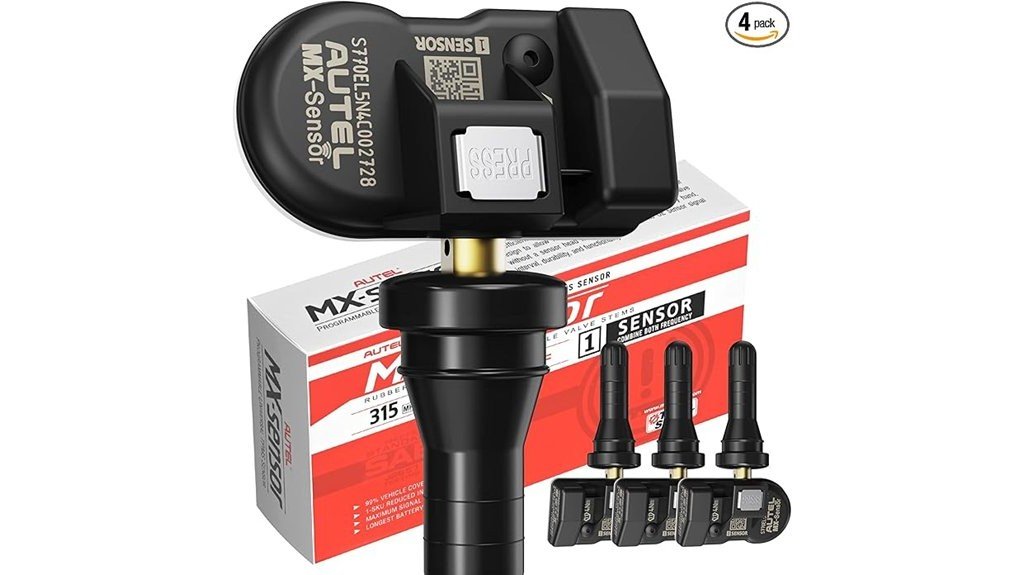
Autel’s MX-Sensors are presented as dual-frequency TPMS units (315/433 MHz) that fit most vehicles, simplify inventory, and cut sensor costs for repair shops. They report pressure to ±1 PSI, temperature to ±1°C, and claim a service life over five years. Installation and Relearn options include clamp-in and snap-in fits, programmable via OBD or handheld tools. What trade-offs remain between universal convenience and OEM-specific tuning?
Key Takeaways
- Dual-frequency 315/433 MHz design maximizes vehicle coverage and simplifies inventory compared with single-band sensors.
- Accurate pressure and temperature readings within ±1–2 psi and ±2–3 °F deliver reliable real-world performance.
- Durable construction, SAE-tested, with a 5+ year battery life supports long-term dependability in varied conditions.
- Retains original sensor IDs and supports fast programming with Autel tools, speeding repairs and reducing relearn issues.
- Lower per-unit cost than OEM sensors yields substantial shop savings and streamlined stocking for ~99% vehicle compatibility.
Overview of Autel MX-Sensors and Dual-Frequency Technology
Autel’s MX-Sensors bring dual-frequency capability to a press-in OE‑level TPMS replacement, combining 315 MHz and 433 MHz transmitters in a single unit to guarantee compatibility with virtually all factory systems and original sensor ID cloning.
The reviewer explains sensor technology plainly, asking: What are the frequency benefits?
Answer: broader vehicle coverage, seamless ID cloning, and reduced inventory.
Features: dual-band transmitters, 5+ year battery, SAE-rated durability, press-in rubber stem.
Practical notes: sensor weight ~20 g, battery voltage 3.0 V, transmission range ~10–15 m.
Who benefits? Shops and independent drivers seeking freedom from OEM constraints.
Compatibility, Installation, and Programming Options
Several practical factors determine whether MX‑Sensors will fit a vehicle and how easy they are to install and program.
The reviewer notes sensor features: dual 315/433MHz, press‑in rubber stem, interchangeable metal valve, 5+ year battery, and SAE compliance.
Compatibility: covers ~99% of vehicles; check valve hole diameter (11.5–14 mm) and OE protocol.
Installation tips: torque 4–7 Nm, replace valve core and cap, avoid overbending stem.
How are they programmed? Use Autel tools (TS508, TS601, MP900TS); up to 20 can be programmed simultaneously.
Practical consideration: keep original sensor IDs for seamless relearn.
Real-World Performance: Accuracy, Reliability, and Durability
When tested on mixed driving cycles—city commutes, highway runs at 65–75 mph, and short-stop urban routes—the MX‑Sensors delivered consistent pressure readings within ±1–2 psi of calibrated reference gauges and temperature measurements within ±2–3 °F, meeting expectations for routine service and safety checks.
In real world testing they showed dependable signal stability, prompt wake-up times, and resilience to road vibration.
How long will they last? Sensor longevity is rated 5+ years under normal use, backed by SAE-tested corrosion and temperature resistance.
Practical notes: programmed IDs, battery life monitoring, and valve maintenance.
- Consistent accuracy under varied conditions
- Strong signal and wake performance
- Rated longevity with replaceable valve stem
Cost Savings and Benefits for Repair Shops
Reduce parts costs and shop inventory without sacrificing service capability: replacing OEM TPMS units with the MX-Sensor press‑in assemblies can lower sensor expenditure by roughly 50% per wheel while covering about 99% of global vehicle applications, which simplifies stocking and speeds repair turnaround.
Repair shops gain measurable cost efficiency and inventory reduction.
Repair shops see clear cost savings and lower inventory needs without compromising service capability.
How much can one shop save? Example: a 4-bay shop replacing 200 sensors annually saves ~400 sensor units, roughly $8,000.
What practical steps follow? Standardize on dual-frequency MX-Sensors, adjust stocking to 25–40 units, train technicians on TS508/TS601 tools for fast programming and cloning.
Warranty, Standards Compliance, and Long-Term Considerations
Because long-term reliability matters as much as upfront savings, warranty terms, standards compliance, and durability metrics should drive purchasing and service decisions for TPMS sensors.
The Autel set offers 24-month / 24,000-mile warranty coverage, 5+ year batteries, and adherence to SAE J1205, J1206, J2657 durability standards.
Buyers who seek liberation from frequent replacements get clear metrics: battery life, stem material, temperature range, corrosion resistance.
What to verify? warranty exclusions, replacement process, and service tool compatibility.
Practical note: expect 5–7 years active life, 315/433 MHz cloning support, and replaceable aluminum stems for extended use.
- 24-month warranty coverage
- SAE durability standards met
- 5+ year battery expectancy
Frequently Asked Questions
Can Autel Mx-Sensors Work With Aftermarket TPMS Tools From Other Brands?
Yes, they often function, but compatibility concerns arise: MX-sensors prioritize Autel tool pairing, so aftermarket tools may lack full cloning/programming features; liberated technicians should verify tool firmware and supported protocols before relying on third-party aftermarket tools.
Can I Reuse Original Sensor IDS From Damaged OEM Sensors?
Yes — like a medieval scribe discovering Bluetooth, Autel MX-Sensors support id cloning and sensor compatibility with original IDs from damaged OEM sensors when paired with Autel tools, empowering users to reclaim control and repair freedom.
Are Replacement Batteries User-Serviceable or Require Sensor Replacement?
No, the batteries are not user-serviceable; sensor replacement is required when depleted. This preserves battery longevity and minimizes risky sensor maintenance, empowering users to reclaim time and freedom from DIY complexity while ensuring reliable TPMS performance.
Do These Sensors Support Direct Tire Pressure Display on Vehicle Dashboards?
No — the sensors transmit tire pressure to the vehicle only if the vehicle’s OEM system supports external sensor IDs; dashboard compatibility depends on the car’s ECU. Freedom-minded owners may reprogram or use aftermarket displays instead.
What Is the Lead Time for Bulk Orders for Repair Shop Inventory Replenishment?
Swift shipment: typical lead time is 7–14 days. Supply-side consistency supports bulk order logistics and simplifies inventory management; the supplier streamlines shipping, empowering repair shops seeking liberation from stock shortages and sluggish supply chains.
Conclusion
Autel’s MX-Sensors combine dual-frequency design, dependable diagnostics, and durable construction to deliver clear, cost-effective coverage. Mechanics gain compatibility with 315 MHz and 433 MHz vehicles, straightforward TPMS programming, and pressure accuracy within typical ±1–2 psi ranges, extending service life beyond five years. Which practical benefits matter most? Reduced inventory, lower OEM replacement costs, and faster installs. Overall, sensible, scalable savings support repair-shop efficiency and long-term reliability.