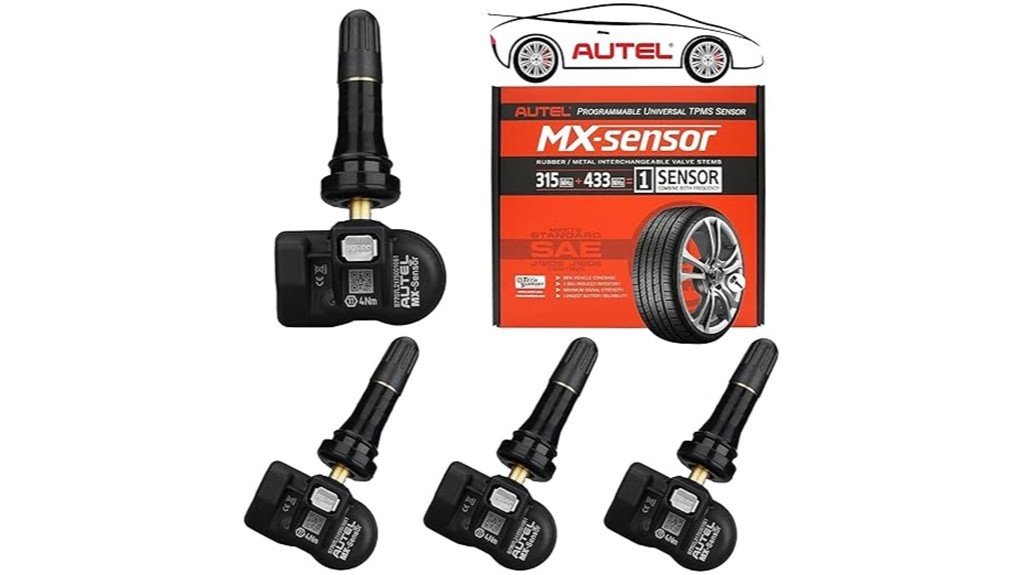
The Autel TPMS Sensors 2in1 MX‑Sensor is presented as a versatile, dual‑band tire pressure monitoring option, covering 315MHz and 433MHz and fitting over 150 brands and 15,000 models. It weighs 11 g, offers interchangeable rubber and metal valves, and programs in about 5–6 seconds with Autel tools. What are the real tradeoffs in durability, battery life, and inventory management for a DIY mechanic or independent shop — and which workflows benefit most?
Key Takeaways
- Dual-band 315/433 MHz design provides wide compatibility with 150+ brands and 15,000+ models.
- Lightweight 11 g sensor with interchangeable rubber and metal valves for versatile fitment.
- Requires Autel programming tools (TS408S, TS501PRO) to clone or program IDs in about 5–6 seconds.
- Automotive-grade battery and durable construction ensure multi-year life and resistance to temperature and corrosion.
- Best for shops and DIYers needing inventory simplicity, though programming tool dependence is a drawback.
Key Features and Specifications
Specifications matter when choosing replacement TPMS sensors, and the Autel MX-Sensor presents a compact, versatile option with clear technical details.
The reader learns concise specs, benefits, and practical limits, framed for those seeking freedom from complex parts.
What are core specs?
- Frequencies: 315MHz / 433MHz dual-band.
- Weight: 11 grams.
- Compatibility: 150+ brands, 15,000+ models.
- Valve types: interchangeable rubber and metal, press-in design.
How does it aid tire maintenance and sensor technology needs?
It offers OEM-equivalent reliability, long-life automotive battery, SAE J1205/J1206 compliance, reduced inventory, and suitability for shops and DIYers wanting autonomy.
Installation and Programming Process
Installation and programming of the Autel MX-Sensor combine a few straightforward mechanical steps with a rapid electronic setup, making the process suitable for both DIYers and professional shops.
Installation and programming of the Autel MX-Sensor blend simple mechanical steps with fast electronic setup—ideal for DIYers and pros.
The installer is guided through installation tips: press-in valve fit, torque 4–7 Nm, sensor weight 11 g, swap rubber/metal valve as needed.
What are the programming steps? Use an Autel tool (TS408S, TS501PRO), activate sensor, read/clone original ID, or program new ID; up to 20 sensors in 5–6 seconds.
Practical note: check valve sealing, tire pressure, and tool battery charge before relearn.
Compatibility and Vehicle Coverage
Having completed the mechanical fit and electronic setup, attention turns to which vehicles the MX-Sensor will work with and what to check before ordering.
The MX-Sensor uses modern sensor technology, dual-frequency 315/433 MHz, and supports 150+ vehicle brands and 15,000+ models, so compatibility is broad.
What should be verified? Tire valve type, frequency, TPM tool compatibility, and OE fit dimensions (11 g weight reference).
Practical checklist for liberation-minded owners:
- Confirm vehicle brands and model year against Autel’s database
- Verify required frequency (315/433 MHz)
- Check valve type: rubber or metal interchangeability
- Ascertain availability of Autel programming tools
Performance, Durability, and Battery Life
Durability and long-term performance are central to evaluating any TPMS replacement, and the MX-Sensor addresses both with measurable specifications and service-oriented design.
How reliable is it? Sensor efficiency is high: dual-frequency operation, automotive-grade battery, and 11 g lightweight construction yield consistent transmissions.
How reliable is it? High-efficiency sensor with dual-frequency operation, automotive-grade battery, and 11 g construction for consistent transmissions
What about lifespan? Longevity testing to SAE standards suggests multi-year service, resistant to cold, heat, and corrosion.
Practical considerations: replaceable rubber and metal valves, press-in install, compatibility with Autel tools for programming.
Expected battery life: multiple years under normal use (manufacturer-rated), reducing inventory turnover and downtime for shops and independent installers.
Pros, Cons, and Who Should Buy
For technicians and DIYers weighing replacement TPMS options, the Autel MX-Sensor presents a clear value proposition: dual-frequency coverage (315/433 MHz), 11 g weight, and compatibility with 150+ brands and 15,000+ models make it a broadly usable unit for most passenger cars, light trucks, and SUVs.
It balances user benefits—easy programming, interchangeable valves, long battery life—with real-world customer feedback noting fast installs and OEM-like reliability.
Who should buy? Shops needing inventory simplicity, independent mechanics, and liberated DIYers seeking one-sensor versatility.
- Pros: dual-frequency, 11 g, broad compatibility
- Cons: requires Autel tools
- Best for: shops and DIYers
- Practical: programs 20 sensors in ~5s
Frequently Asked Questions
Are Replacement Valves Sold Separately or Included With the Sensor?
Replacement valves are included with the sensor; sensor accessories like interchangeable rubber and metal valves arrive ready for installation. The liberated user gains flexibility, minimizing inventory and asserting control over maintenance and fitment choices.
Can Mx-Sensors Be Shipped Pre-Programmed to My Vehicle?
Yes — like a key forged to a lock, MX-Sensors can arrive with pre programming options, but freedom demands verification: vehicle compatibility must be confirmed and Autel TPMS tools often finalize activation for guaranteed operation.
Do These Sensors Affect TPMS Warranty or Vehicle Warranty?
No, these sensors typically do not void vehicle warranty; warranty implications hinge on installer and dealer policies. The speaker notes sensor reliability parallels OEM units, empowering owners seeking independent maintenance and freedom from dealer constraints.
Are Mx-Sensors Compatible With Aftermarket TPMS Receivers?
Yes; MX sensors compatibility with aftermarket receivers is generally strong. They pair with many aftermarket receivers when the receiver supports 315/433MHz and OEM ID cloning. This empowers users to choose liberating, cost-saving setups.
Is There a Return or Warranty Policy for Defective Sensors?
Yes — the brand offers a return policy and warranty coverage for defective sensors. Like a ship finding harbor, the company honors replacements or repairs within specified warranty periods, empowering buyers to seek remedy and freedom.
Conclusion
The Autel TPMS 2in1 MX-Sensor delivers broad vehicle coverage, 315/433 MHz dual-band flexibility, and a lightweight 11 g design with rubber or metal valve options. Programming with Autel tools takes about 5–6 seconds per sensor, so inventory stays lean and installations stay fast. Concerned about fit or longevity? Compatibility spans 150+ brands and 15,000 models, batteries are long-lived under normal use, and durable valves reduce leaks, making it a pragmatic choice for pros and DIYers.