Disclosure: As an Amazon Associate, we earn from qualifying purchases. If you click a link on this page and make a purchase, we may receive a small commission at no extra cost to you.
Autel TPMS Sensors Set of 4 Review: Are These MX-Sensors Worth Buying?
A weak TPMS sensor can turn a simple tire service into another dashboard warning. You need sensors that program correctly, match your vehicle frequency, fit the wheel, and keep a stable signal after installation.
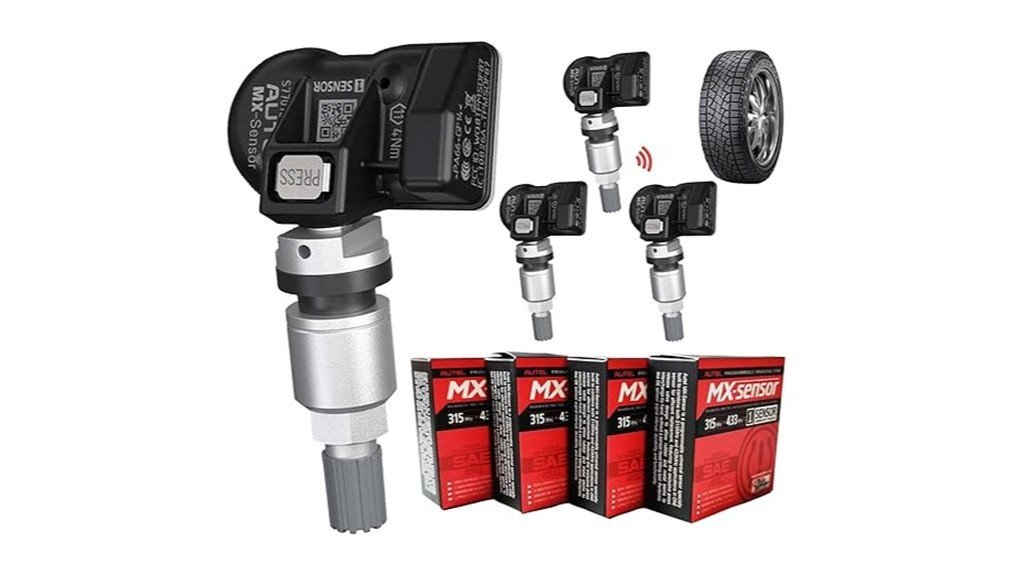
The Autel TPMS Sensors Set of 4 uses the MX-Sensor 1-Sensor design with dual 315 MHz and 433 MHz frequency support. This review explains what the sensors do well, where they have limits, and whether this Autel set makes sense for your vehicle, garage, or tire shop.
Our Verdict
Rating: 8.5/10
Best For: Drivers, tire shops, and technicians who already use Autel MaxiTPMS tools and need programmable dual-frequency TPMS sensors.
Bottom Line: The Autel MX-Sensor set gives you 315 MHz and 433 MHz coverage, wireless programming, ID cloning support, SAE J1205/J1206 testing, and a lightweight 11 g sensor body. You give up plug-and-play setup because these sensors require compatible Autel MaxiTPMS tools before use.
| Specification | Detail |
|---|---|
| Brand | Autel |
| Model | MX-Sensor 1-Sensor, 4-piece metal valve set |
| Operating Frequency | 315 MHz / 433 MHz |
| Programming | Wireless programming with compatible Autel MaxiTPMS tools |
| ID Cloning | Cloneable when programmed with a supported Autel tool |
| Vehicle Coverage | Broad TPMS coverage claimed by Autel; confirm year, make, model, and tool support before buying |
| Battery Life | 4 to 6 years |
| Battery | 3.0 V sealed battery |
| Dimensions | 42.4 mm x 24.1 mm x 16 mm |
| Weight | 11 g without valve |
| Pressure Monitoring Range | 0 to 800 kPa |
| Pressure Reading Accuracy | ±10 kPa |
| Operating Temperature | -40°C to +125°C |
| Storage Temperature | -40°C to +125°C, with ≤35°C recommended storage |
| Temperature Accuracy | ±5°C |
| G Sensor Reading Accuracy | ±15% |
| Transmission Power | 5 to 8 dBm |
| Operating Humidity | ≤90% |
| Included Accessories | 4 press-in metal-valve TPMS sensors |
| Certification | SAE J1205 / J1206 tested |
| Warranty | 24 months or 24,000 miles against material and manufacturing defects |
What Is the Autel TPMS Sensors Set of 4?
The Autel TPMS Sensors Set of 4 is a programmable tire pressure monitoring sensor kit for passenger vehicles with factory TPMS systems. The listing uses Autel’s MX-Sensor 1-Sensor platform, which combines 315 MHz and 433 MHz support in one sensor body.
This set sits in the service-grade TPMS category rather than the basic direct-fit sensor category. You can program, clone, and relearn the sensors with compatible Autel MaxiTPMS tools, including TS408S, TS508WF, TS601, TS900, MS906TS, and ITS600 models.
The main advantage is the 2-in-1 dual-frequency design. One SKU can cover many OE sensor applications, which helps a tire shop reduce inventory and helps you avoid buying the wrong frequency sensor.
How This Review Was Prepared
We checked the product listing, Autel MX-Sensor specifications, compatibility notes, warranty terms, and common buyer concerns. The review focuses on verified product details, real use cases, and practical tradeoffs instead of temporary price or stock claims.
Who It’s For and Who Should Skip It
Who It’s For
- Drivers who need replacement TPMS sensors and already have access to an Autel MaxiTPMS programming tool.
- Tire shops that want one 315 MHz / 433 MHz sensor SKU for broad passenger vehicle coverage.
- Technicians who need ID cloning, wireless programming, and batch setup for faster wheel service.
Who Should Skip It
- You should skip it if you do not own or have access to a compatible Autel MaxiTPMS tool.
- You should choose a direct-fit OE sensor if your vehicle requires a specific factory part number and you do not want programming steps.
- You should avoid this set for motorcycles, trailers, or specialty wheels unless you confirm valve fit, frequency, and programming support first.
Overview of Autel MX-Sensor Design and Features
The Autel MX-Sensor combines compact engineering with service-focused TPMS features. Each sensor supports both 315 MHz and 433 MHz frequencies, which helps one sensor replace many OE-style TPMS applications.
The Autel MX-Sensor uses a dual-frequency design, a compact 11 g body, and a metal valve setup for shop-friendly TPMS service.
The sensor body measures 42.4 mm x 24.1 mm x 16 mm and weighs 11 g without the valve. That low body weight helps reduce wheel balance concerns after installation, especially when you replace all four sensors during tire service.
The press-in metal valve design supports a clean and durable installation inside the wheel. You still need to confirm valve hole fit, bead clearance, and wheel type before mounting because TPMS fitment can vary by wheel design.
Autel also marks each sensor with a traceable series number. That helps with quality control, warranty review, and inventory tracking when you manage multiple sensors in a repair shop.
Dual-Frequency Coverage
The most useful feature is dual-frequency coverage. A 315 MHz and 433 MHz sensor can reduce the chance of ordering the wrong frequency for many supported vehicles.
This matters because many replacement TPMS sensors target only one frequency. The Autel 1-Sensor design gives a shop more flexibility when servicing different makes, models, and model years.
Wireless Programming and ID Cloning
The sensor supports wireless programming through Autel MaxiTPMS tools. You can program the sensor before installation or while it is mounted, depending on your tool, workflow, and vehicle needs.
ID cloning is helpful when your old sensor still reads correctly. A technician can copy the original sensor ID to the new MX-Sensor and install it in the same wheel position on supported vehicles.
Autel states that MX-Sensors are 100% ID cloneable when you clone the original sensor ID and place the new sensor in the same wheel position. That workflow can reduce relearn steps on supported vehicles, but you still need to follow the vehicle manufacturer’s TPMS procedure.
Battery Design and Service Life
The battery rating is 4 to 6 years, which fits the normal service life range for many TPMS sensors. Since the 3.0 V battery is sealed inside the sensor, you replace the sensor when the battery reaches end of life.
That sealed design reduces maintenance, but it also creates a real long-term cost. You cannot open the sensor and replace the battery like a common household battery.
Compatibility and Programming With MaxiTPMS Tools
Programming is the main detail you must understand before buying this Autel set. These MX-Sensors need compatible Autel MaxiTPMS tools, so they are not simple plug-and-play sensors for every buyer.
The listing names Autel programming support for tools such as TS408S, TS508WF, TS601, TS900, MS906TS, and ITS600. You should update your tool firmware before programming because vehicle coverage and sensor menus can change over time.
The 1-Sensor design supports ID cloning. When your old sensor still reads correctly, a technician can copy the original sensor ID to the new MX-Sensor and install it in the same wheel position.
That cloning workflow can reduce relearn steps on supported vehicles. It also helps shops finish service faster because the vehicle may recognize the cloned ID like the original sensor.
Autel states broad vehicle coverage for the MX-Sensor line, but you should not treat that as a guarantee for every wheel and vehicle combination. Before installation, confirm the year, make, model, frequency, valve type, and tool coverage.
Installation Process and Time-Saving Benefits
The Autel MX-Sensor set uses a metal valve design that fits many standard TPMS service workflows. A trained technician still needs to break the tire bead, remove the old sensor, mount the new sensor, and reseal the tire.
Installation time depends on the shop, wheel condition, and programming method. You should treat any short installation-time claim as a shop-dependent estimate, not a fixed promise.
Before installation, check the wheel valve hole, valve nut seating, and sensor angle. Good positioning matters because the sensor must clear the tire bead and avoid contact during mounting.
The 11 g sensor body helps keep the assembly light. After installation, you should balance the wheel, confirm TPMS readings, and verify that the dash warning light clears after the relearn process.
For a shop, the biggest time-saving benefit comes from inventory and programming. One dual-frequency sensor SKU can cover many jobs, and batch programming can reduce repeated tool setup when you service several wheels.
Battery Life, Signal Strength, and Reliability
Battery life and RF performance matter because TPMS sensors work inside a harsh wheel environment. The Autel MX-Sensor battery is rated for 4 to 6 years, and the sensor operates from -40°C to +125°C.
Autel lists a 3.0 V battery, dual 315 MHz / 433 MHz operation, and 5 to 8 dBm transmission power for this MX-Sensor design.
The pressure monitoring range is 0 to 800 kPa, with pressure reading accuracy listed at ±10 kPa. That range fits many passenger vehicle TPMS needs, but you should verify suitability for specialty tires, high-pressure applications, or commercial use.
The temperature reading range is -40°C to +125°C, with accuracy listed at ±5°C. That matters because a wheel-mounted sensor faces winter road conditions, summer heat, brake heat, and long highway driving.
Signal reliability also depends on the vehicle receiver, wheel material, battery health, and programming quality. A strong sensor will still perform poorly if the wrong ID, wrong frequency, or wrong relearn procedure gets used.
Certification, Warranty, and Quality Assurance
Because tire-pressure monitoring systems are safety-related components, certification and warranty details matter. Autel lists SAE J1205 / J1206 testing for the MX-Sensor line.
The warranty covers material and manufacturing defects for 24 months or 24,000 miles, whichever comes first. That warranty does not mean every failure after improper installation, wheel damage, or incorrect programming will qualify.
- SAE J1205 / J1206 testing supports Autel’s quality claim for this sensor line.
- The 24-month / 24,000-mile warranty covers defects, not misuse or poor installation.
- Series numbers help Autel track sensor quality from production to service use.
- You should confirm tool support, frequency, valve fit, and relearn steps before installation.
How It Performs in Real Use
During Tire Replacement
During a tire replacement, the Autel MX-Sensor works best when the technician programs it before mounting the tire. The 315 MHz / 433 MHz dual-frequency design gives the shop more flexibility than a single-frequency sensor.
For Seasonal Wheel Swaps
For winter or summer wheel sets, the sensors can work well when your vehicle supports the programmed IDs and the wheels fit the metal valve stems correctly. You should confirm the sensors after every seasonal swap because some vehicles need a relearn procedure.
For Repair Shops
For repair shops, the main benefit is inventory control. A 4-piece metal sensor set can handle a full vehicle service, and Autel tool programming can support cloning, wireless programming, and faster setup for repeat TPMS jobs.
Pros and Cons
Pros
- Dual 315 MHz / 433 MHz support reduces the need to stock separate frequency sensors.
- 11 g sensor body helps limit wheel balance changes after installation.
- 4 to 6 year battery rating fits normal TPMS replacement expectations.
- SAE J1205 / J1206 testing and series numbers support quality tracking.
- Compatible Autel MaxiTPMS tools allow ID cloning and wireless programming.
Cons
- You need a compatible Autel MaxiTPMS tool, so this set is not ideal for tool-free DIY use.
- Fitment still depends on valve type, wheel design, vehicle coverage, and relearn support.
- The sealed battery is not user-serviceable, so you replace the sensor when the battery dies.
Is It Worth the Price?
The Autel TPMS Sensors Set of 4 offers strong value for the price if you already use Autel TPMS tools. You get four programmable metal-valve sensors, dual-frequency coverage, and a service-focused design made for tire shops and experienced technicians.
The value drops if you need to buy a programming tool only for one repair. In that case, a direct-fit sensor or a local tire shop installation may cost less once you include tool access, tire dismounting, balancing, and relearn service.
This set makes the most sense when you replace all four sensors at once or handle TPMS work often. For that buyer, broad compatibility and ID cloning can make it a smart buy for everyday service use.
How It Compares to Alternatives
If you want a direct replacement with no universal programming workflow, an OE sensor from brands such as Schrader or Denso may suit your vehicle better. Those options can offer exact part-number matching, but they may cover fewer vehicles per SKU.
If you already own an Autel MaxiTPMS tool, the Autel MX-Sensor remains the better choice for flexible shop use. Its dual-frequency design, 4-piece set format, and cloneable ID support help it stand out from many single-application sensors.
Frequently Asked Questions
Do Autel MX-Sensors work with any TPMS programming tool?
No. You need a compatible Autel MaxiTPMS tool to program these sensors. Check your tool model and firmware before buying because tool support affects programming success.
Can I use this Autel set on a 315 MHz or 433 MHz vehicle?
Yes, the MX-Sensor design supports both 315 MHz and 433 MHz operation. You still need to confirm your vehicle coverage in the Autel tool before installation.
How long do the Autel MX-Sensor batteries last?
Autel lists a 4 to 6 year battery life for this sensor design. Battery life can vary based on driving conditions, storage, temperature, and sensor use.
Can I replace the sensor battery myself?
No. The sensor battery is sealed and not meant for normal user replacement. When the battery reaches end of life, you replace the TPMS sensor.
Does this set include metal or rubber valves?
This Amazon listing is for the 4-piece metal valve version. Autel also sells rubber valve versions and larger packs, so check the selected variant before checkout.
Can I return the sensors after programming?
Return rules can vary by seller and marketplace policy. Since programmed sensors may be treated differently from unused parts, confirm the seller’s return policy before you program or install them.
The Bottom Line
The Autel TPMS Sensors Set of 4 earns an 8.5/10 because it offers dual-frequency 315 MHz / 433 MHz coverage, a compact 11 g body, SAE J1205 / J1206 testing, and strong shop-friendly programming support. You should buy it if you already use Autel MaxiTPMS tools or can access professional programming service.
You should look elsewhere if you want a no-tool, direct-fit replacement sensor for one simple repair. For repair shops, experienced DIY users, and drivers replacing all four TPMS sensors, this set is a practical and consistently well-reviewed option.
Ready to Buy?