Disclosure: As an Amazon Associate, we earn from qualifying purchases. If you click a link on this page and make a purchase, we may receive a small commission at no extra cost to you.
Finding a motorcycle tire that balances sticky sport cornering with high-mileage touring durability is a common struggle for street riders. The Pirelli Angel ST is designed specifically for sport-touring and heavy naked bikes that need predictable wet grip, stable highway tracking, and consistent wear. This review breaks down its high-silica compound performance, real-world mileage expectations, cold-weather limits, and bike fitment so you can decide if it is the right rubber for your machine.
Quick Verdict
Rating: 8.5/10 (Highly Recommended)
Best For: Sport-touring, hybrid, and heavy naked bike riders wanting high wet traction, fast warm-up, and consistent long-distance wear.
Bottom Line: The Pirelli Angel ST delivers excellent wet-weather confidence and neutral handling at an attractive price point. While newer dual-compound tires offer longer central tread life, the ST remains a versatile, dependable choice for daily commuters and touring enthusiasts.
| Specification | Detail |
|---|---|
| Brand | Pirelli |
| Model | Angel ST |
| Tire Category | Sport-Touring Radial |
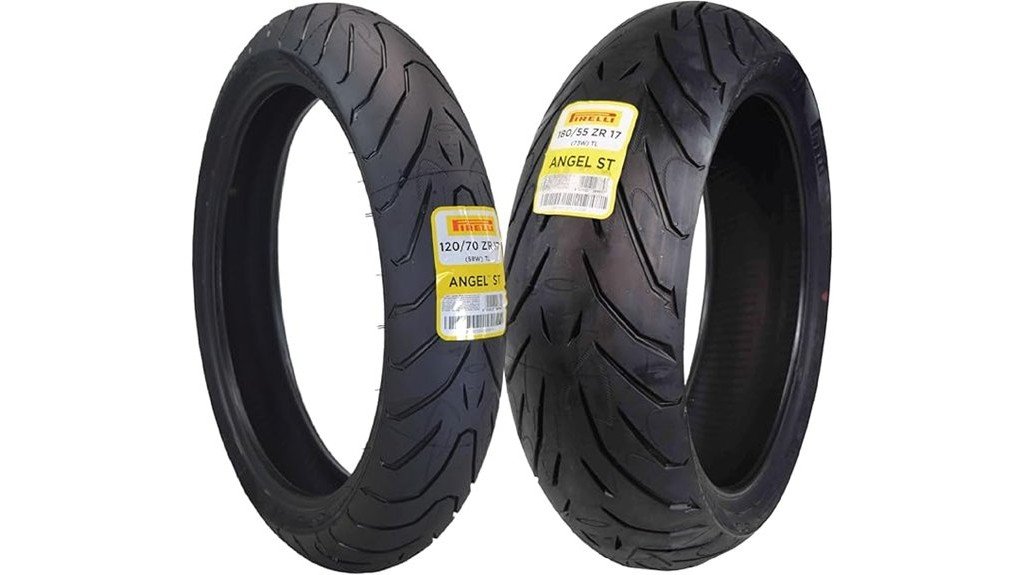
| Common Sizes | 120/70ZR17 (Front), 180/55ZR17 (Rear) |
| Tread Depth | 5 mm |
| Compound Type | High-Silica Content with Polymer Blends |
| Max Inflation Pressure | 42 PSI |
| Max Load Capacity | 520 lbs |
| Expected Rear Lifespan | 6,000 to 12,000+ miles (varies by load and riding style) |
| Construction | Radial with 0-degree steel belt carcass |
| Fitment Type | Tubeless (TL) for 17-inch wheels |
What Is the Pirelli Angel ST?
The Pirelli Angel ST is a street-focused radial tire built to span the gap between aggressive sport bike tires and long-distance touring rubbers. Designed for motorcycles running standard 17-inch rims, it delivers predictable lean behavior on twisty backroads while maintaining straight-line stability on long highway stretches.
At the core of its construction is a high-silica compound backed by a 0-degree steel belt radial architecture. This combination helps the tire warm up quickly in cold or damp conditions, offering solid mechanical keying into tarmac surfaces without requiring high operating temperatures.
Who Should Buy It?
Best For
- Sport-touring riders needing dependable dry cornering and high wet grip.
- Daily commuters who ride through rain, cool morning temperatures, and city asphalt.
- Heavier naked bike and sport-hybrid owners looking for stable handling under heavy loads up to 520 lbs.
Skip If
- You ride dedicated track days or require soft race track compounds.
- You ride off-road, adventure, or dual-sport trails where deep knobby treads are necessary.
- You want extreme multi-compound endurance exceeding 15,000 miles on heavy touring rigs.
Design and Construction: Engineering Features
The physical design of the Pirelli Angel ST centers around versatility. Featuring clean sidewall graphics, clear wear indicators, and a directional tread geometry, the tread pattern clears water away from the contact patch while minimizing irregular tread wear over time.
With a starting 5 mm tread depth on standard sizes like 120/70ZR17 (front) and 180/55ZR17 (rear), the tire provides enough rubber depth to absorb road imperfections while maintaining a rigid casing profile. The high-silica compound prevents cold-tearing, helping the rubber stay supple across changing seasonal temperatures.
On-Road Handling, Steering, and High-Speed Stability
When tipping into corners, the Angel ST presents a smooth, linear roll rate rather than an abrupt drop-in. Steering feedback feels neutral and predictable, allowing you to adjust your line mid-corner without upsetting the chassis.
On straight highways at speeds of 70 to 100+ mph, the radial steel belt structure minimizes carcass flexing and vibration. The carcass compliance dampens harsh expansion joints and minor road cracks, giving long-distance touring riders a calmer, less fatiguing ride.
Wet Weather and Low-Temperature Performance
Wet roads represent one of the strongest test cases for any sport-touring tire. The Angel ST uses its high-silica formulation to maintain surface adhesion when pavement temperatures drop or standing water coats the road.
During wet braking tests, the tire provides progressive bite that works predictably with modern anti-lock braking systems (ABS). Cold-weather responsiveness remains usable down to roughly 5–7°C (41–45°F). Below that ambient threshold, the rubber compound gradually hardens, requiring smoother throttle and braking inputs.
Before You Buy: Verify your rim dimensions and swingarm clearance before ordering. The Angel ST is designed for 17-inch sport and sport-touring wheels (such as 120/70ZR17 front and 180/55ZR17 rear) and is not intended for cruisers with 16-inch or 19-inch wheels, nor for adventure bikes with 19-inch or 21-inch front rims.
How It Performs in Real Use
For Daily Commuting
Commuters will appreciate how fast the high-silica compound warms up on cold asphalt. Navigating painted lane lines, metal bridge plates, and slick city streets feels secure, with minimal squirm under moderate acceleration.
For Highway Sport-Touring
Loaded with saddlebags or a passenger up to its 520 lb load limit, the tire holds tracking lines without weaving. At recommended pressures (up to 42 PSI rear), straight-line tread wear remains even across long interstate stretches.
For Rain and Cool Season Riding
When rain hits unexpectedly, the directional tread grooves channel water outward to resist hydroplaning. Braking confidence remains high, giving you predictable lever feedback under sudden stops in wet traffic.
For Weekend Canyon Riding
On twisty mountain roads, the Angel ST offers solid dry edge grip and stable lean angles. While it lacks the sheer sticky feedback of a dedicated hypersport tire, it provides plenty of cornering grip for spirited street riding.
Pro Tip: Check your tire pressures cold before heavy rides. For solo sport riding, run roughly 36 PSI front and 40 PSI rear. When riding 2-up or fully loaded with luggage, bump pressures up toward the maximum 42 PSI to ensure even tread wear and avoid center flattening.
Fitment, Maintenance, and Break-In Tips
To get the longest lifespan and best handling out of a fresh set of Angel ST tires, follow these practical installation and operational steps:
- Break-In Period: Allow 100 to 200 miles of moderate riding to scrub off release agents before pushing hard lean angles or applying maximum throttle.
- Wheel Inspection: Always check rim sealing surfaces and install new tubeless valve stems during mounting to prevent slow air leaks.
- Tread Log: Monitor the 5 mm initial tread and built-in wear indicators monthly to track mileage and ensure tread depth remains well above legal wear limits.
Pros and Cons
Pros
- High-silica compound delivers quick warm-up and strong wet traction.
- Neutral steering profile with smooth, predictable cornering entry.
- Stable highway tracking and comfortable vibration damping under load.
- Realistic rear tread lifespan of 6,000 to 12,000+ miles.
Cons
- Single-compound layout offers slightly less central mileage than newer dual-compound designs.
- Cold weather grip decreases when ambient temperatures drop below 5°C (41°F).
- Limited size availability for non-standard, cruiser, or adventure wheel setups.
Is It Worth the Price?
The Pirelli Angel ST sits in an attractive value tier for sport-touring riders. Because it is an established model within Pirelli’s lineup, it frequently sells at a noticeable discount compared to premium dual-compound flagships, making it a cost-effective choice for budget-conscious commuters and tourers.
Given its 6,000 to 12,000+ mile rear life and dependable all-weather grip, it provides a strong return on investment. If you want high-tier brand engineering and safe wet performance without paying top-dollar flagship prices, the Angel ST is a smart buy.
How It Compares to Alternatives
When evaluating tires in the sport-touring category, it helps to weigh performance against similar options. The Pirelli Angel GT builds on the ST’s foundation by introducing a dual-compound rear for extended highway mileage, though at a higher price point. Meanwhile, tires like the Michelin Pilot Road 4 or Dunlop Roadsmart III emphasize aggressive water-siping tread patterns for extreme rain riding. The Angel ST remains the more economical, sporty-feeling alternative that balances sport cornering precision with daily touring utility.
Frequently Asked Questions
Are Pirelli Angel ST tires tubeless or do they require inner tubes?
They are radial tubeless (TL) tires built for modern alloy wheels. While inner tubes can technically be used on non-sealed spoked rims if necessary, they are primarily engineered to run tubeless on standard 17-inch motorcycle rims.
What is the recommended break-in period before spirited riding?
A break-in period of 100 to 200 miles is recommended. Gently easing into acceleration, braking, and lean angles allows mold release agents to wear off safely, ensuring full surface traction before pushing hard cornering limits.
What tire pressures should I run on the Pirelli Angel ST?
Check your motorcycle owner’s manual for baseline settings. Generally, front pressures range between 36 and 42 PSI, while rear pressures perform best between 40 and 42 PSI, especially when carrying passengers or heavy luggage.
Are these tires available for cruisers or adventure bikes?
The Angel ST line primarily targets sport-touring 17-inch rim sizes (such as 120/70ZR17 and 180/55ZR17). It has limited cruiser sizing and is not suited for off-road or mixed-terrain adventure riding.
How many miles can I expect to get out of a rear tire?
Real-world mileage typically ranges between 6,000 and 12,000+ miles on the rear tire, while the front tire often lasts longer. Total mileage depends heavily on tire pressure maintenance, motorcycle weight, and riding style.
Do Pirelli Angel ST tires come with a manufacturer warranty?
Yes, Pirelli provides a limited manufacturer warranty covering defects in materials and workmanship. Exact coverage and claim conditions depend on regional distributor policies and proof of purchase.
Can I install and balance these tires at home without professional help?
Home installation is possible if you have tire spoons, rim protectors, bead seating tools, and a wheel balancer. However, improper DIY mounting risks damaging the bead or rim, so professional shop installation is recommended if you lack proper tools.
The Bottom Line
The Pirelli Angel ST is a dependable, high-performing sport-touring tire that delivers predictable cornering, smooth highway stability, and outstanding wet-weather grip. If you need a versatile rubber set for daily commuting or weekend touring without spending top-tier dual-compound prices, it is a proven choice that earns its place on your bike.
Ready to Upgrade Your Ride?
Check the latest price and available sizes on Amazon before your next trip.