Disclosure: As an Amazon Associate, we earn from qualifying purchases. If you click a link on this page and make a purchase, we may receive a small commission at no extra cost to you.
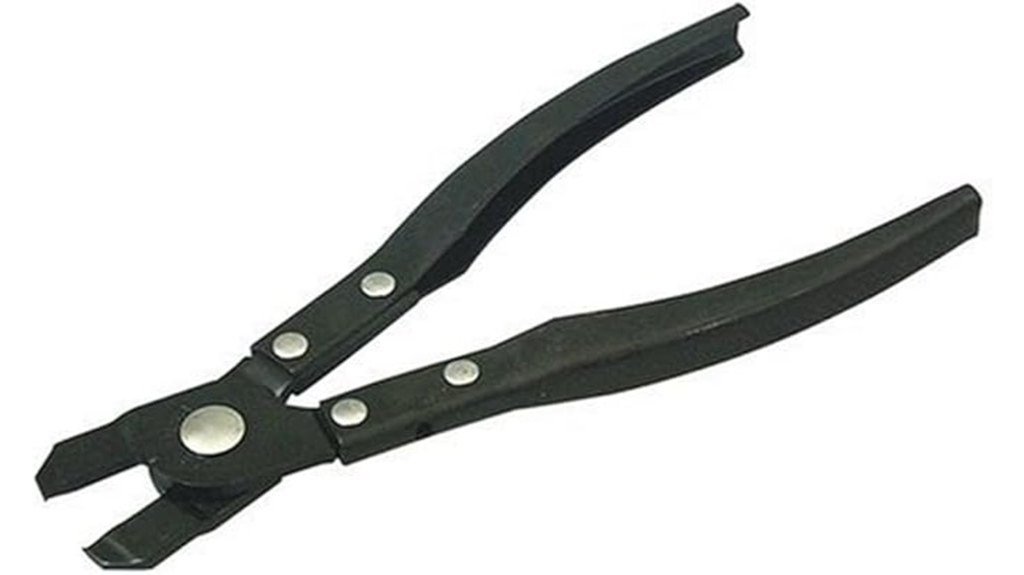
A CV boot clamp has to be tightened with the right tool and the right jaw design, especially when you are working with an earless-style band. The Lisle 30500 CV Boot Clamp Pliers are made specifically for that job, including earless clamps used on some GM inboard CV joints. The simple metal construction and compact plier format make the tool useful when a general-purpose pair of pliers cannot correctly tighten the band. Its main limitation is equally important: this is a specialist tool, so it is not the right choice for every CV clamp design.
Quick Verdict
Rating: 8/10
Best For: DIY mechanics and technicians who specifically need to install earless-type CV boot clamps.
Bottom Line: The Lisle 30500 is a focused, straightforward tool for the clamp style it was designed to handle. Its narrow purpose is also the tradeoff, because ear-type and Band-It-style clamps require different tools.
Key Takeaways
- Lisle model 30500 is designed specifically for earless-type CV boot clamps.
- It can be used on earless clamps found on some GM inboard CV-joint applications.
- The plier uses metal construction with plastic handle grips and weighs about 12 ounces.
- It is a single-purpose hand tool, not a universal solution for ear-type, Clic-R, or Band-It-style clamps.
- Before ordering, identify the clamp design on your vehicle instead of choosing a tool only by vehicle make or model.
Key Specifications
| Specification | Detail |
|---|---|
| Brand | Lisle |
| Model | 30500 |
| Product type | CV boot clamp pliers |
| Clamp type | Earless-type clamps |
| Construction | Metal plier with plastic handle grips |
| Weight | About 12 oz |
| Known application | Earless clamps, including those used on some GM inboard CV joints |
| Package | Single plier |
| Best use | Installing or tightening compatible earless CV boot clamps |
What Is the Lisle 30500 CV Boot Clamp Plier?
The Lisle 30500 is a specialty hand tool made to tighten earless-type boot clamps. Instead of trying to make one plier work with several unrelated clamp designs, Lisle gives this model a specific job.
That matters because CV boot bands do not all close in the same way. An earless clamp needs pressure applied at the correct section of the band, while an ear-type clamp has a raised ear that is crimped differently. Using a tool designed for the wrong clamp can make the job harder and may leave you with a poor clamp connection.
The 30500 has metal construction and plastic handle grips. At about 12 ounces, it remains a simple manual tool with no powered components, adjustment electronics, or extra accessories to manage.
Who Should Buy It?
Best For
- DIY mechanics replacing a CV boot that uses an earless clamp.
- Technicians who occasionally service compatible earless CV-joint bands.
- Buyers who want a dedicated tool instead of improvising with general-purpose pliers.
Skip If
- Your clamp has a raised ear that requires ear-type CV clamp pliers.
- You need a tool for Band-It or Band-It Jr.-style bands.
- You want one clamp tool that covers several unrelated clamp systems.
Before You Buy: Identify the clamp itself before ordering. The Lisle 30500 is for earless-type clamps. A similar-looking CV boot setup may use an ear-type or banding-style clamp that needs a different tool.
Fit and Compatibility
Compatibility is the most important buying factor with the Lisle 30500. The tool is not selected mainly by vehicle year or engine size. You need to match it to the clamp design you are working with.
Lisle identifies the 30500 specifically for earless-type clamps. The tool is also associated with earless clamps used on GM inboard CV joints. That does not mean every GM CV joint uses this clamp style, so visual confirmation of the band is still important before you start the repair.
If you see a raised section or “ear” intended to be pinched closed, you are probably dealing with a different clamp design. Likewise, continuous banding systems can require a separate tensioning and cutting tool.
Materials and Build Quality
The 30500 uses a metal plier body with plastic-covered handles. That is a sensible construction for a manual clamp tool because the working jaws need rigidity while the handle covering gives you a more comfortable gripping surface.
There are no complex adjustment mechanisms or powered parts. For a specialty tool used during CV boot service, the simple construction also means there are fewer parts to set up before each use.
You should still inspect the working jaws periodically. Clamp tools place concentrated force on a small area, so worn, chipped, bent, or damaged jaws are a reason to stop using the tool until it can be replaced or properly serviced.
How to Use It Correctly
Start by confirming that the replacement clamp is the earless type the Lisle 30500 is designed to handle. Position the CV boot and clamp according to the vehicle or replacement-boot instructions before applying final clamping force.
Place the plier jaws squarely on the section of the clamp designed to be compressed. Keeping the jaws aligned helps you apply force evenly rather than twisting the band sideways. Tighten only as required by the clamp or vehicle procedure.
After clamping, inspect the band around the boot. It should sit in the intended boot groove and should not be visibly twisted or displaced. Follow the clamp manufacturer’s or vehicle service instructions when they give a specific installation procedure.
Pro Tip: Compare the old clamp and replacement clamp before removing everything. Identifying the clamp style while the original installation is still visible can help you avoid buying the wrong specialty pliers.
How It Performs in Real Use
For a CV Boot Replacement
This is the situation where the 30500 makes the most sense. Once the replacement boot and compatible earless band are positioned correctly, the dedicated jaws let you close the clamp without relying on improvised tools that were not designed for the band.
For Tight Working Areas
CV-joint service often puts your hands close to suspension and drivetrain components. A dedicated plier can be easier to position than a larger general-purpose tool because you are using a jaw designed specifically for the clamp instead of trying to approach it at an awkward angle.
For Occasional DIY Repairs
If you service only one or two compatible vehicles, the 30500 gives you a straightforward solution without adding a complicated clamp kit to your toolbox. The drawback is that its usefulness drops sharply when your next vehicle uses another clamp design.
For Professional Shop Use
A shop that encounters earless CV boot clamps can keep the 30500 as a dedicated specialty tool. A high-volume shop will usually need several clamp tools as well, because ear-type, offset ear-type, Clic-style, and banding systems are not handled by one plier.
Compatibility and Safety
A CV boot clamp helps keep the boot secured around the joint and retain grease while limiting contamination. That makes correct installation more important than simply making the band feel tight.
Do not use the 30500 on a clamp simply because the jaws can physically reach it. Confirm the clamp style and follow the applicable service information. Excessive force, poor jaw alignment, or using the wrong tool can damage the clamp or boot.
If you are working under a vehicle, use proper lifting and support equipment. Do not rely on a jack alone. CV axle and suspension procedures can vary by vehicle, so consult the appropriate service information when the repair requires axle removal or other drivetrain work.
Pros and Cons
Pros
- Purpose-built for earless-type CV boot clamps.
- Applicable to earless clamps found on some GM inboard CV joints.
- Metal construction suits the concentrated force required during clamping.
- Plastic-covered handles give you a more comfortable gripping surface.
- Simple manual design requires little setup.
Cons
- Limited to compatible earless-type clamps.
- Does not replace ear-type or Band-It-style clamp tools.
- You must correctly identify your clamp before buying.
Is It Worth the Price?
The Lisle 30500 makes the most sense as a specialty tool purchase. You are paying for the correct jaw design and a simple way to install a compatible clamp rather than for a large feature set.
It offers strong value when you already know you have an earless CV boot clamp to install. A proper specialty tool can also be easier to justify than risking damage to a new clamp or boot by improvising with pliers that do not match the band.
The value is weaker if you rarely encounter earless clamps or need to service many different clamp systems. In that case, you may need additional specialty pliers or a broader clamp-tool set. Warranty, returns, and seller terms can also vary, so check the current product page before ordering.
How It Compares to Alternatives
Lisle offers several tools for clamp styles that the 30500 does not cover. The Lisle 30800 is intended for ear-type CV boot clamps, while the Lisle 30600 is an offset tool for crimping ear-type clamps in harder-to-reach areas.
If your application uses Band-It or Band-It Jr.-style bands, the Lisle 30950 CV Joint Banding Tool is the more relevant option. The 30500 is therefore the best match when you specifically need an earless-clamp plier rather than a general CV banding solution.
Frequently Asked Questions
What type of clamp does the Lisle 30500 work with?
It is designed for earless-type clamps. Lisle also identifies this type of tool with applications that include earless clamps found on some GM inboard CV joints.
Can the Lisle 30500 be used on ear-type CV clamps?
No. Ear-type clamps use a different closure design. Lisle sells other tools, including the 30800 and offset 30600, for ear-type applications.
Will it work on every GM CV boot clamp?
You should not assume that it will. The 30500 is associated with earless clamps used on GM inboard CV joints, but you still need to identify the actual clamp on your vehicle before ordering.
Can it replace a CV joint banding tool?
Not for every banding system. Band-It and Band-It Jr.-style clamps use a different process, and Lisle lists the 30950 as its tool for those bands.
Does the Lisle 30500 come with a protective case?
The available product information identifies the package as a single plier rather than a storage kit. Plan to store it in your existing toolbox or tool organizer.
Is the Lisle 30500 suitable for professional use?
It can serve as a dedicated earless-clamp tool in a professional toolbox. A shop that works on many vehicle brands will still need additional tools for other clamp designs.
What is the biggest mistake to avoid when buying this tool?
Do not order it based only on the fact that you are replacing a CV boot. First identify whether your clamp is earless, ear-type, or another banding design, because each style can require a different tool.
The Bottom Line
The Lisle 30500 is a good choice when you need a straightforward tool for a confirmed earless-type CV boot clamp. Its metal construction, simple manual operation, and focused jaw design make sense for DIY repairs and professional toolboxes, but you should skip it if your clamp uses an ear or a separate banding system.
Its biggest strength is specialization, and its biggest limitation is the same. Check your clamp design before buying, and the 30500 can be a practical addition to your drivetrain-service tools.