Last updated: September 2026
If you drive a 2015 Ford Explorer Sport, tire fitment should come before brand, tread pattern, warranty, or price. The standard Sport configuration uses P255/50R20 all-season tires on 20-inch wheels, while some Sport models were available with an optional P265/45ZR20 summer-only tire and wheel package.
Because wheel and tire equipment can be changed during a vehicle’s life, always confirm the size printed on the driver-side Tire Label before ordering. You should also match the required load index, speed rating, and tire type instead of assuming that any tire with a similar overall diameter is suitable.
Quick Fitment Verdict
- Standard 2015 Explorer Sport fitment: P255/50R20 all-season tires on compatible 20-inch wheels.
- Optional Sport configuration: P265/45ZR20 summer-only tires on the appropriate factory wheel package.
- Best first step: Read the Tire Label on the driver-side door area and match its specifications before shopping.
- AWD/4WD caution: Avoid major differences in tire size, overall diameter, or remaining tread depth because mismatched tires can affect the drivetrain.
What Tire Size Fits a 2015 Ford Explorer Sport?
The standard factory Sport setup uses P255/50R20 tires. Ford also offered an optional performance-oriented P265/45ZR20 summer-only setup on some Sport vehicles. That means you should not shop only by model year and trim; check the actual Tire Label and wheels currently installed on your Explorer before buying.
| Configuration | Factory Tire Size | Typical Use | What to Check |
|---|---|---|---|
| Standard Sport | P255/50R20 | Everyday all-season driving | Door Tire Label, load index, speed rating, wheel size, and tire type |
| Optional Sport performance setup | P265/45ZR20 | Warm-weather performance | Confirm the vehicle has the matching factory-style wheel setup and verify the Tire Label |
Important: A tire with the correct 20-inch rim diameter is not automatically a safe substitute. Width, sidewall ratio, overall diameter, load capacity, speed rating, wheel width, suspension clearance, and drivetrain requirements all matter.
Before You Buy Tires for Your Explorer Sport
- Read the Tire Label: Use the driver-side door or B-pillar label as your primary fitment reference.
- Confirm all four tires: Make sure the vehicle does not already have a non-factory wheel or tire conversion.
- Match wheel diameter: A tire must fit the actual wheel diameter installed on the vehicle.
- Check load index: Do not choose a replacement with less load capacity than required for the vehicle.
- Check speed rating: Match the vehicle’s required specification rather than selecting a lower rating simply to save money.
- Consider the AWD/4WD system: Keep tire dimensions and rolling circumference closely matched across all four corners.
- Choose the correct tire category: All-season, summer, severe-snow-rated, and dedicated winter tires serve different conditions.
- Verify TPMS compatibility: If wheels are also being replaced, confirm that the wheel and sensor setup works with the vehicle’s TPMS.
Factors to Consider When Choosing Tires for a 2015 Ford Explorer Sport
Tire Size and Wheel Compatibility
Start with the exact tire size listed for your vehicle. The standard Sport setup uses P255/50R20, while the optional performance setup uses a different specification. The first number is tire width in millimeters, the second is the sidewall aspect ratio, and the final number is the wheel diameter in inches.
You cannot install a 17-inch tire on a 20-inch wheel, and choosing another 20-inch tire size does not automatically make it compatible. A significant change in overall diameter can affect clearance, gearing, speedometer readings, handling, braking behavior, and the AWD/4WD system.
Load Index and Speed Rating
The tire size is only part of the fitment decision. Replacement tires should also meet the vehicle’s required load index and speed rating. The load index indicates how much weight the tire is designed to support, while the speed rating represents the tire’s tested speed capability under specified conditions.
Use the Tire Label and correct vehicle specification rather than assuming that a commonly available lower rating is acceptable. A higher numerical load capacity does not increase the vehicle’s legal payload or axle ratings.
All-Season, Summer, or Winter Tires
For most drivers, a quality all-season tire offers the easiest balance of dry-road handling, wet traction, tread life, noise, and mild cold-weather usability. This also matches the standard factory tire category for the Explorer Sport.
The optional performance setup uses summer-oriented tires. Summer tires can provide strong warm-weather dry and wet performance, but they are not intended for freezing temperatures, snow, or ice.
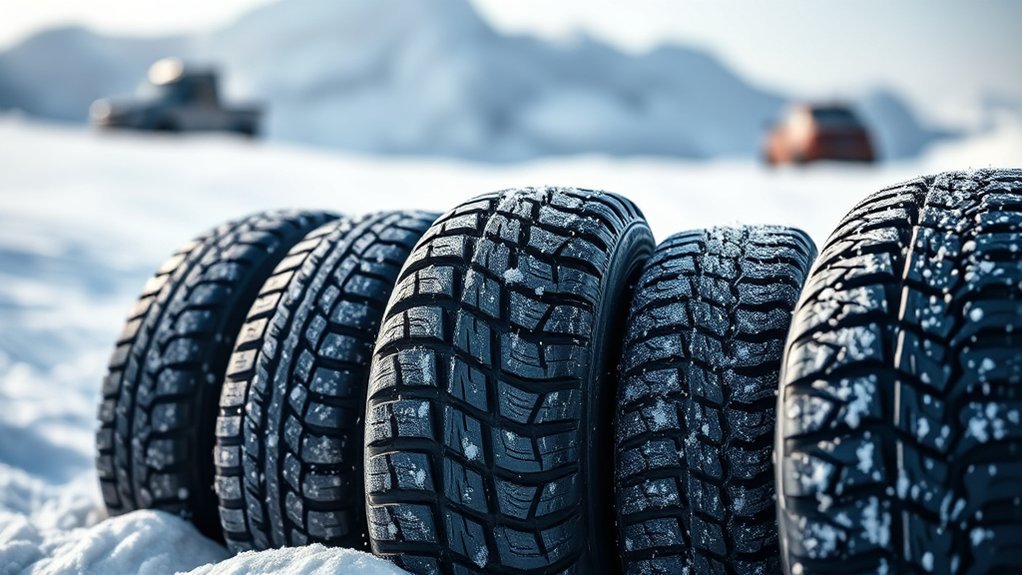
If you regularly drive in severe winter weather, consider a tire designed and rated for those conditions rather than assuming an ordinary M+S marking provides the same capability as a dedicated winter or severe-snow-rated tire.
Wet-Road Performance
A heavy, powerful SUV benefits from predictable wet-road traction. Look for tread designs with effective water evacuation channels, useful siping, and a compound intended to maintain grip in rain. Proper tread depth is also important because hydroplaning resistance generally declines as tires wear.
No tread design eliminates hydroplaning risk, so speed, standing water, inflation pressure, tire condition, and tread depth still matter.
Ride Comfort and Road Noise
If you spend most of your time commuting or traveling on highways, prioritize a tire designed for stable highway manners and reasonable noise levels. Tread-block arrangement, construction, compound, inflation pressure, and road surface all affect cabin noise and ride quality.
More aggressive tread patterns may trade some quietness and steering refinement for additional loose-surface or winter capability. Choose that compromise only when it matches how you actually use the Explorer.
Tread Life and Warranty
A mileage warranty can help you compare touring tires, but it should not be the only deciding factor. Warranty terms vary by manufacturer and may require correct inflation, regular rotation, proper alignment, proof of maintenance, and even wear.
Compare the written warranty for the exact tire model and size you plan to buy. Avoid assuming that every size within a tire line receives identical coverage.
AWD/4WD Tire Matching
The Explorer Sport’s intelligent four-wheel-drive system makes tire matching especially important. Significant differences in rolling circumference between the front and rear axles can affect drivetrain operation.
For best results, use four tires with matching size, type, and similar tread depth. If one tire is damaged when the other three are partially worn, have the remaining tread depths measured before deciding whether replacing one, two, or all four tires is appropriate.
AWD/4WD Safety Note: Do not intentionally mix substantially different tire sizes between axles. If you are considering a non-factory wheel or tire conversion, have the complete setup checked for wheel width, offset, brake clearance, overall diameter, load capacity, and drivetrain compatibility before installation.
Tire Pressure
Use the cold tire pressure listed on the vehicle’s Tire Label for the tire configuration installed on the vehicle. Do not use the maximum pressure printed on a tire sidewall as your normal inflation target. The sidewall number is a tire limit, not the vehicle’s recommended everyday pressure.
Check pressure when the tires are cold and recheck it after tire service or rotation.
TPMS Compatibility
The tire itself normally does not determine whether the factory tire-pressure monitoring system works. The TPMS sensor is associated with the wheel and valve/sensor assembly. If you keep the original compatible wheels and sensors, the system may continue to function after new tires are mounted, assuming the sensors are undamaged.
If you install aftermarket wheels, confirm that they accept compatible sensors and that any required relearn or programming procedure is completed correctly.
Alignment and Balancing
New tires should be properly mounted and balanced. An alignment is worth checking if the Explorer pulls to one side, the steering wheel is off-center, the old tires show uneven wear, or the vehicle recently hit a curb or severe pothole.
You do not automatically need an alignment simply because new tires were installed, but correcting an existing alignment problem can help prevent rapid or uneven wear on the new set.
How to Make a Better Tire Buying Decision
Once you confirm your correct fitment, compare tires based on your actual driving rather than choosing only by price or warranty mileage.
- Mostly highway driving: prioritize comfort, low noise, wet traction, and tread life.
- Frequent rain: give extra attention to wet braking, water evacuation, and remaining tread depth.
- Cold or snowy winters: consider severe-snow-rated or dedicated winter tires when conditions justify them.
- Warm-weather performance: a suitable performance-oriented tire can offer sharper response, but understand its temperature and tread-life limitations.
- Long road trips: prioritize predictable wet traction, ride comfort, load capability, and readily available replacement sizes.
- Towing or heavy loads: stay within the vehicle’s ratings and make sure the tires meet the required load specification.
Frequently Asked Questions
What is the standard tire size for a 2015 Ford Explorer Sport?
The standard factory Sport configuration uses P255/50R20 all-season tires on 20-inch wheels. Some Sport vehicles were available with an optional P265/45ZR20 summer-performance setup. Check your driver-side Tire Label because the wheels may have been changed since the vehicle was new.
Can I use a different 20-inch tire size on my Explorer Sport?
Possibly, but a matching wheel diameter alone does not confirm compatibility. Width, sidewall ratio, overall diameter, wheel width, offset, brake and suspension clearance, load index, speed rating, and AWD/4WD operation all need to be considered. For a normal replacement, the safest approach is to use the specification listed for your vehicle.
Can I put 17-inch tires on the factory Explorer Sport wheels?
No. A 17-inch tire cannot mount on a 20-inch wheel. Moving to a smaller wheel diameter requires a complete wheel-and-tire conversion, and the new wheels must also have the correct bolt pattern, offset, load capacity, hub fit, and brake clearance. Do not assume that a smaller Explorer wheel automatically fits the Sport trim.
Can I mix tire sizes on my Explorer Sport?
You should avoid mixing significantly different tire sizes. The four-wheel-drive system relies on closely matched rolling circumferences, and large differences between axles can interfere with drivetrain operation. Use matching specifications unless an approved vehicle configuration specifically calls for different front and rear sizes.
Can I mix tire brands?
Using four matching tires is the simplest way to maintain consistent traction and handling. If circumstances require replacing fewer than four tires, match size, tire type, load and speed specifications, and keep rolling circumference and tread depth as close as practical. On a four-wheel-drive vehicle, have a qualified tire professional measure the remaining tread before mixing a new tire with substantially worn tires.
Are replacement tires compatible with the factory TPMS?
Generally, TPMS compatibility depends more on the wheel and pressure sensor than on the rubber tire itself. Original sensors can often remain in service when tires are replaced if they are compatible and undamaged. Aftermarket wheels may require compatible sensors and a relearn procedure.
How often should I rotate the tires?
Follow the tire-rotation interval in the Explorer’s scheduled maintenance information and the tire manufacturer’s requirements. Regular rotation helps promote more even wear. After rotation, check and adjust cold inflation pressure to the vehicle specification.
Do new tires automatically require a wheel alignment?
No. New tires should be balanced correctly, but an alignment is especially important when you see uneven tire wear, pulling, an off-center steering wheel, or symptoms after a hard pothole or curb impact. Checking alignment during tire replacement can be worthwhile if the previous tires show abnormal wear.
Should I replace all four tires at the same time?
Replacing all four with a matching set gives the most consistent handling and keeps tread depth closely matched. If only one tire is damaged, the correct decision depends on the tread depth of the other tires, the replacement tire’s circumference, and the tire manufacturer’s guidance. Because the Explorer Sport uses four-wheel drive, avoid a large tread-depth or circumference difference between tires.
What tire pressure should I use?
Use the cold pressure printed on the vehicle’s Tire Label for the configuration installed on your Explorer. Do not inflate tires to the maximum sidewall pressure simply because that number is higher.
Conclusion
Choosing tires for a 2015 Ford Explorer Sport starts with fitment, not brand name or price. For the standard vehicle, begin with P255/50R20. If your Sport has the optional performance wheel package, verify whether it uses the P265/45ZR20 specification instead.
Before buying, confirm the driver-side Tire Label, wheel size, load index, speed rating, tire category, and current tread condition on all four corners. Keeping the tires properly matched is especially important on the Explorer Sport’s four-wheel-drive system.
Final Recommendation: Verify the Tire Label first, then shop only within the correct factory specification or a professionally approved alternative. Correct fitment protects handling, braking, TPMS operation, tire life, and four-wheel-drive performance far better than choosing a tire simply because its price or features look attractive.