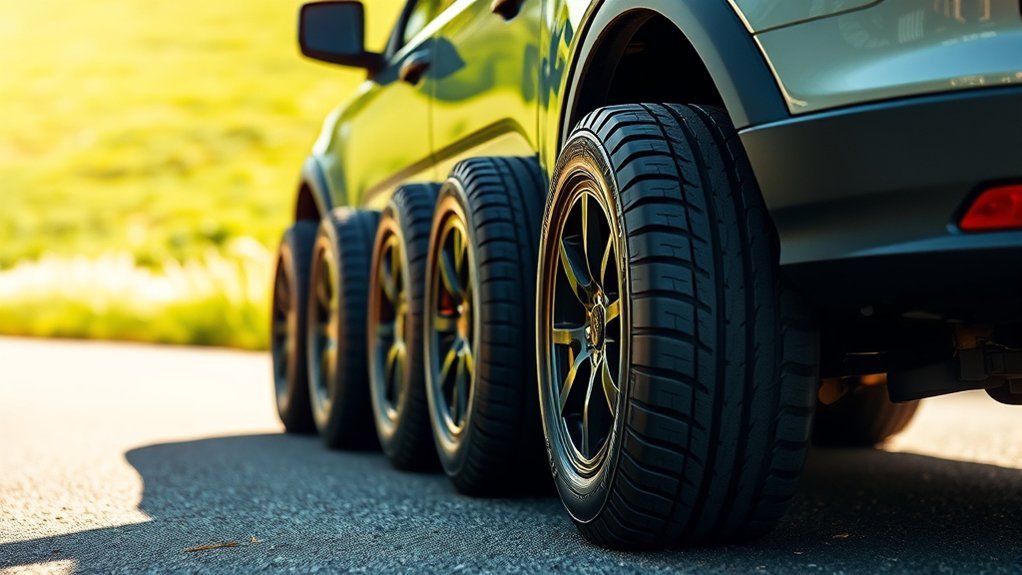
If you swapped your stock tires for 35s and noticed the front rubbing on turns, you’re not alone. You’ll want a kit that fixes clearance without wrecking ride comfort, and some options do that better than others. I’ll compare the Rough Country 3.5″, the KAX leveling kit, and the Dynofit option, plus installation tips to help you pick the right fit.
Rough Country 3.5″ Lift Kit with N3 Shocks for 2007-2021 Toyota Tundra (2WD/4WD)
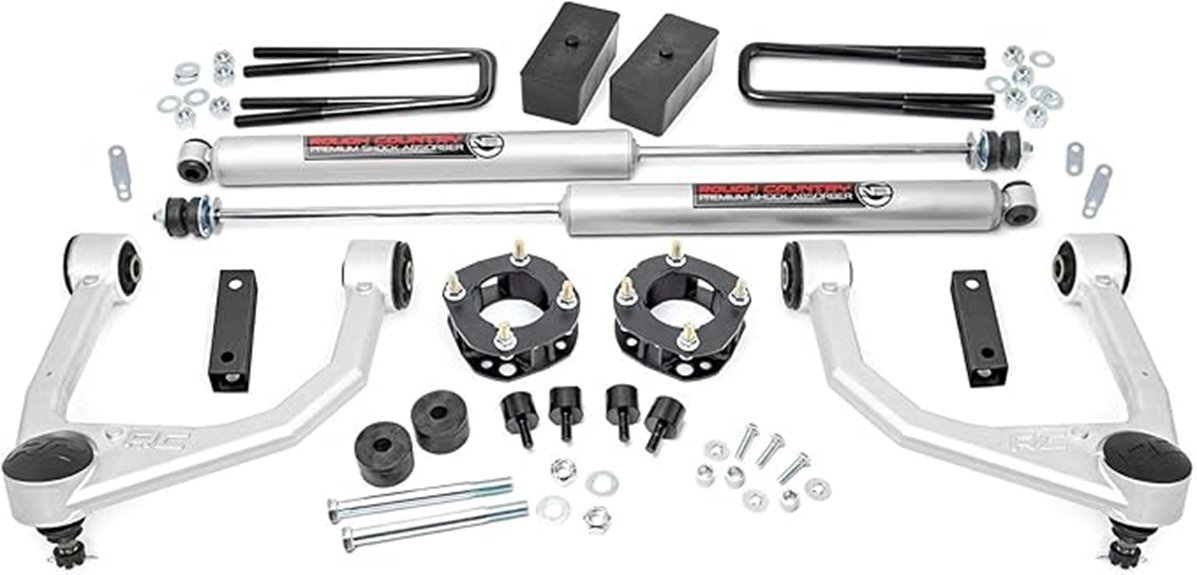
If you want a straightforward, bolt-on lift that balances daily drivability with off‑road capability, the Rough Country 3.5″ Lift Kit with N3 shocks is a solid choice—it’s designed for 2007–2021 Tundra owners who want reliable ground clearance and improved ride quality without cutting or drilling, and it comes with tubular upper control arms and nitrogen‑charged shocks to keep alignment and handling tight. You’ll get 3.5 inches of lift, N3 rear shocks, upper control arms, lift blocks, U‑bolts, spacers, and hardware in alloy steel, rubber, and zinc. It fits most Tundras, installs bolt‑on at home, and carries a limited lifetime replacement warranty.
Best For: Tundra owners (2007–2021, excluding TRD Pro/Rock Warrior/XSP‑X) who want an easy bolt‑on 3.5″ lift that improves ground clearance and ride quality for daily driving and moderate off‑road use.
Pros:
- Bolt‑on installation with no cutting or drilling; can be done at home and returned to stock.
- Tubular upper control arms and N3 nitrogen‑charged shocks maintain alignment and improve ride and off‑road performance.
- Backed by Rough Country’s limited lifetime replacement warranty and positive customer feedback.
Cons:
- Not compatible with TRD Pro, Rock Warrior, or XSP‑X models (and TRD models may require rear sway bar removal).
- Lifted height may alter handling and could require additional alignment or driveline adjustments.
- Some users report mixed long‑term durability/comfort compared to higher‑end kits (average rating ~4.0/5).
KAX Leveling Lift Kit for Toyota Tundra (3″ Front, 2″ Rear)
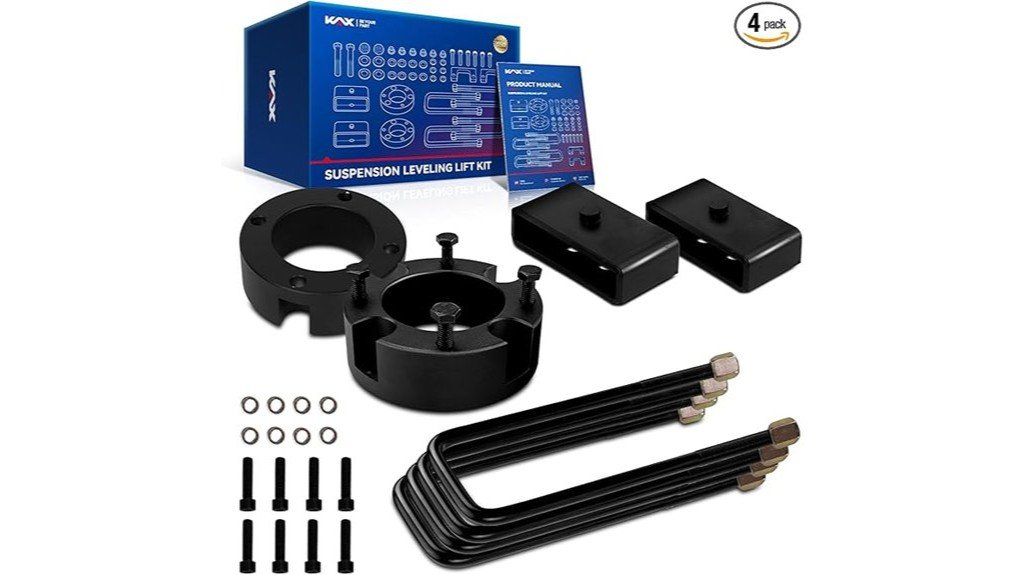
For Tundra owners who want a simple, durable way to gain extra tire clearance and a more aggressive stance, the KAX Leveling Lift Kit (3″ front, 2″ rear) delivers a quick, no-drill installation and solid aluminum construction. You’ll get forged 6061-T6 aluminum spacers and tapered rear blocks machined by CNC, anodized and heat-treated for corrosion resistance and strength. Installation takes about 1–2 hours with no strut or coil disassembly, and the kit includes extended U-bolts. It fits 2007–2021 2WD and 4WD Tundras, carries a two-year warranty, and averages a 4.2-star rating from buyers.
Best For: Tundra owners (2007–2021, 2WD or 4WD) who want a quick, no-drill way to add tire clearance and a more aggressive stance with durable aluminum components.
Pros:
- Forged 6061-T6 aluminum spacers and CNC-machined tapered rear blocks for strength, precision, and corrosion resistance.
- Quick 1–2 hour installation with no strut/coil disassembly, cutting, or drilling required; includes extended U-bolts.
- Two-year warranty and solid average customer rating (4.2/5) indicating generally satisfied buyers.
Cons:
- Front lift (3″) and rear lift (2″) are modest—may not accommodate very large tires or more aggressive lift needs.
- May require minor alignment or additional suspension adjustments after installation to optimize handling.
- Sales rank and availability suggest it’s a niche product; fitment limited to 2007–2021 Tundras only.
Dynofit Leveling Lift Kit for Toyota Tundra (2007–2021)
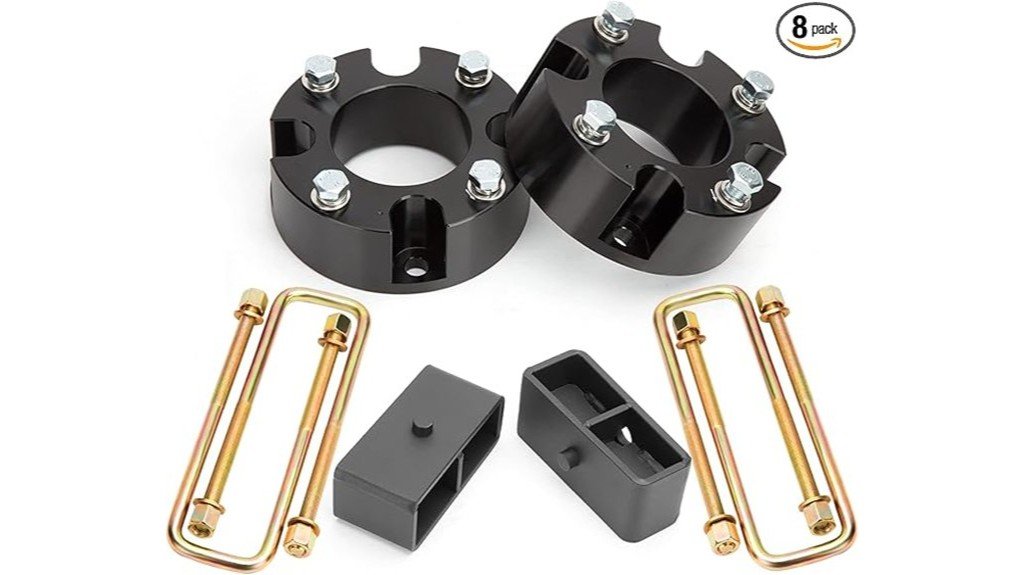
Truck owners who want a simple, reliable way to fit larger tires and level their stance will find the Dynofit Leveling Lift Kit a great choice—it’s designed for 2007–2021 Tundra 2WD and 4WD models (except the Rock Warrior Edition) and raises the front 3″ and rear 2″ with bolt-on parts you won’t have to disassemble. You’ll get CNC-machined forged 6061-T6 aluminum spacers with black anodizing, extended rear blocks and U-bolts, plus high-grade 10.9–12.9 bolts to resist compression and warping. Installation is bolt-on—no coil removal or drilling—but you’ll need a post-install alignment. Warranty covers two years; 30-day refunds.
Best For: Truck owners of 2007–2021 Toyota Tundra (2WD or 4WD, excluding Rock Warrior Edition) who want a simple bolt-on solution to level their truck and fit larger tires without strut disassembly.
Pros:
- CNC-machined forged 6061-T6 aluminum spacers with black anodizing provide strength, corrosion resistance, and a clean finish.
- Bolt-on installation (no coil removal or drilling) makes fitting straightforward and faster than many lift options.
- Includes extended rear blocks and U-bolts plus high-grade 10.9–12.9 bolts; backed by a 2-year warranty and 30-day refund policy.
Cons:
- Raises only 3″ front / 2″ rear—may not be sufficient for owners seeking larger lifts or extreme tire sizes.
- Requires a professional alignment after installation and recommends installing aftermarket wheels/tires post-alignment.
- Not compatible with the Rock Warrior Edition Tundra.
Factors to Consider When Choosing Lift Kit For 2019 Toyota Tundra
When choosing a lift kit for your 2019 Tundra, consider how much lift you want and whether the kit’s design matches your truck’s model and suspension. Think about how the change will affect ride quality, the materials and durability of the components, and how difficult the installation will be. Balancing these factors helps you pick a kit that fits your needs and driving style.
Desired Lift Height
Because your goals (aesthetics, off-road performance, or tire size) drive the choice, pick a lift height that balances looks, handling, and future mods—typically 2–3.5 inches for a 2019 Tundra—with 3 inches front/2 inches rear as a common compromise that lets you run larger tires without major changes. Decide if you want a subtle stance or serious clearance: 2–2.5 inches improves appearance and tire fit with minimal handling impact, while 3–3.5 inches raises approach angles and ground clearance but can change the center of gravity and ride quality. Match height to planned upgrades—bigger tires or bumpers need more lift—and mentally trade off capability versus handling. Pick a height that meets current needs and leaves room for future mods.
Vehicle Compatibility
Although lift kits can transform your 2019 Tundra, you’ll need to verify they’re specifically designed for that model year and trim—fitment varies by year, TRD Pro features, and drivetrain—2WD versus 4WD. Start by matching the kit to your exact trim and drivetrain; some kits are 4WD-only or omit TRD Pro-specific suspension layouts. Ascertain the kit won’t interfere with stock components like sway bars, control arms, or unique TRD hardware. Check the manufacturer’s installation notes so you won’t need frame or suspension modifications—bolt-on designs reduce complexity and preserve factory geometry. Finally, verify compatibility with your intended aftermarket wheels and tires, accounting for clearance changes at your chosen lift height to avoid rubbing or trimming later.
Ride Quality Impact
If you want your Tundra to ride confidently both on pavement and trail, pick a lift kit that balances shock quality, suspension geometry, and materials—nitrogen‑charged or premium shocks absorb impacts better, tubular upper control arms preserve alignment and reduce component wear, and forged or corrosion‑resistant parts keep performance consistent over time. When choosing lift height, remember moderate lifts usually maintain better handling and center‑of‑gravity balance; tall lifts can make steering feel floaty and increase body roll. After installation, get a professional alignment to prevent uneven tire wear and restore predictable steering. Prioritize kits that match your driving mix: daily highway use favors comfort‑oriented valving and progressive rates, while aggressive off‑roading benefits from firmer damping and travel‑focused components.
Material & Durability
After you’ve balanced shocks and geometry for the ride you want, the materials and build quality of the lift kit determine how long that performance lasts. You should favor forged 6061-T6 aluminum or alloy steel for core components — they offer proven strength and better corrosion resistance than lower-grade metals. CNC precision machining matters: it improves fit, reduces play, and minimizes uneven wear that can lead to failure. Look for anodized finishes to add corrosion and abrasion protection, especially if you drive in salt or mud. Check that manufacturers use high-grade bolts (10.9–12.9) so fasteners resist compression and warping under heavy loads. Finally, confirm the kit is engineered to hold structural integrity off-road to avoid safety risks.
Installation Complexity
When choosing a lift kit for your 2019 Tundra, consider how much time, tools, and mechanical skill the installation will demand, because kits range from simple 1–2 hour bolt-on installs to multi-hour jobs that require disassembling strut-coil assemblies or sway bars. Check whether the kit needs cutting, drilling, or special tools; kits that avoid modifications are far easier for DIYers with common tools. Read the manufacturer’s instructions and parts list beforehand to gauge needed skill and time. Remember some installs require removing components like sway bars or strut coils, which raises complexity and risk. Factor in the extra step of post-installation alignment when budgeting time or shop labor. If you’re unsure, plan on professional installation.
Alignment & Handling
Installation complexity affects more than just time and tools — it also changes how your Tundra steers and rides, so you’ll want to plan for alignment and handling adjustments right away. After a lift, proper alignment is essential: it sets wheel angles for predictable steering and reduces uneven tire wear. Lifts shift your center of gravity, so expect changes in stability and cornering behavior; small lifts can still alter feel. If you raise the front, you may need rear suspension tweaks to preserve balance and control. Misalignment can cause wandering or pulling, so schedule an alignment check immediately and after a few hundred miles. Choose kits that preserve control-arm and suspension geometry to maintain ideal handling and comfortable driving.
Warranty & Support
Because a lift kit changes key components of your Tundra, you’ll want a solid warranty and dependable support to back the purchase — especially if you run into fitment or performance issues. Check whether the warranty covers defects in materials and workmanship and protects against failures from normal use. Some brands offer limited lifetime replacements; others limit coverage to two years, so match coverage to how you drive. Verify customer support hours and responsiveness — timely help matters during installation or troubleshooting. Read return policies for timeframes and restocking conditions in case the kit doesn’t meet expectations. Finally, scan customer feedback about warranty claims and support experiences; real-world reports often reveal how reliably a manufacturer stands behind its product.
Frequently Asked Questions
Can a Lift Kit Affect My Truck’s Warranty?
Yes — installing a lift kit can void parts of your truck’s warranty if the modification causes damage to covered components; you should check your manufacturer and dealer policies, keep records, and consider certified installers and warranties.
Will Lift Kits Impact My Fuel Economy Noticeably?
Yes—you’ll likely see worse fuel economy; studies show lifts can increase drag and reduce MPG by around 5–20%. You’ll notice higher fuel use with larger tires and taller lifts, so expect more frequent fill-ups and costs.
Do Lifted Trucks Require Different Tire Alignment Intervals?
Yes — lifted trucks need more frequent alignments because altered suspension geometry and heavier tires wear settings faster. You should check alignment after lift installation, after new tires, and every 6,000–8,000 miles or if handling changes.
Can I Install a Lift Kit Myself Without Professional Help?
Yes — you can attempt it, but don’t underestimate complexity. If you’re experienced with tools and suspension work you’ll save money, yet without expertise you’ll risk safety, warranty issues, and improper alignment, so consider professional help.
Will Lifting My Tundra Change Tow and Payload Capacities?
Yes — lifting your Tundra can change tow and payload capacities. You’ll likely alter suspension geometry, axle loads, and drivetrain stress, so you should check manufacturer limits, re-evaluate ratings, and consult professionals or your insurer.
Conclusion
You’ve seen three solid options for lifting your 2019 Tundra—Rough Country for comfort and easy install, KAX for a no-drill aluminum solution, and Dynofit for reliably fitting bigger tires. Consider ride, materials, tire size, and alignment needs before deciding. Pick the kit that matches your driving and off-road goals, and you’ll transform your truck into a mile-eating beast that still handles like a daily driver. Go bolt it on.