Disclosure: As an Amazon Associate, we earn from qualifying purchases. If you click a link on this page and make a purchase, we may receive a small commission at no extra cost to you.
Editorial note: This review is based on verified retailer specifications, listed package contents, connectivity details, and buyer-use analysis. It does not claim long-term hands-on testing.
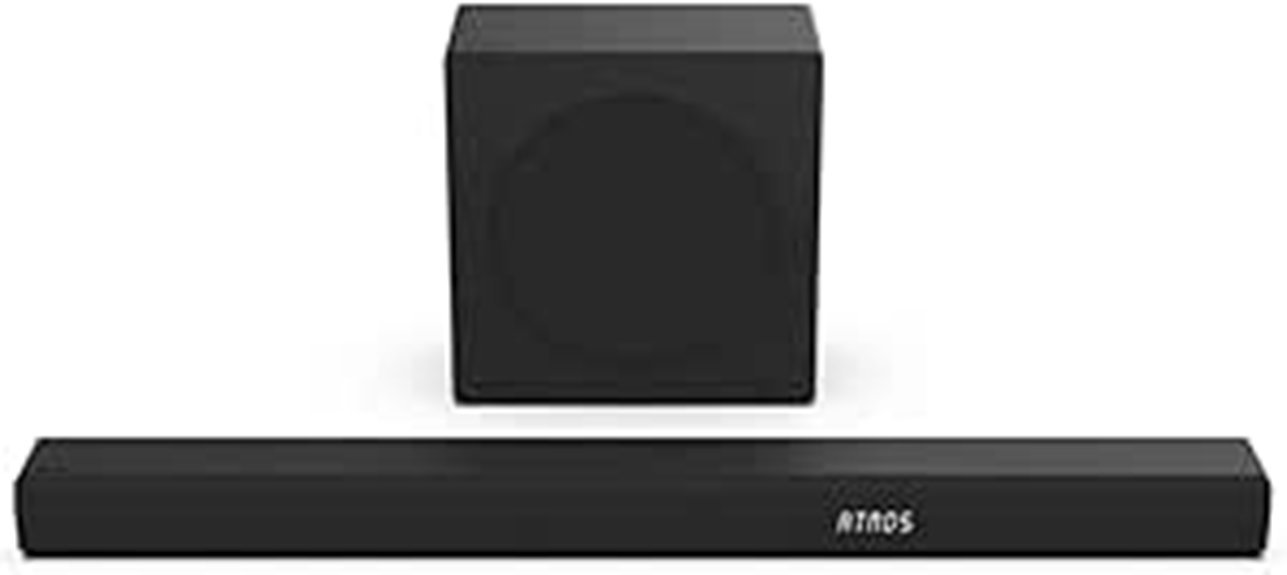
Thin TV speakers can make voices hard to follow and action scenes sound flat. The Hisense R632 addresses those problems with a 3.1-channel layout, a dedicated center channel, Dolby Atmos and DTS:X support, 380W maximum output, and a wireless subwoofer. It gives you more impact than basic TV audio without requiring an AV receiver or speakers around the room. Its main limitation is the linked Amazon Renewed listing, which requires closer attention to availability, cosmetic condition, accessories, and warranty terms.
Quick Verdict
Rating: Recommended with caveats, 8/10
Best For: You want clearer TV dialogue, stronger movie bass, and Dolby Atmos support without installing a receiver-based speaker system.
Bottom Line: The Hisense R632 combines a dedicated center channel, five soundbar drivers, a wireless subwoofer, 380W maximum output, and broad wired connectivity. It is a practical home-theater upgrade, but its renewed condition and changing seller availability make careful listing inspection essential.
| Specification | Detail |
|---|---|
| Brand | Hisense |
| Model | R632 |
| Model year | 2024, as shown on the Amazon Renewed listing |
| Listing condition | Amazon Renewed; condition grade and seller may change |
| Product type | 3.1-channel soundbar system with wireless subwoofer |
| Maximum audio output | 380W |
| Speaker configuration | Five drivers built into the soundbar, including a center channel and overhead-effect drivers, plus a wireless subwoofer |
| Supported audio formats | Dolby Atmos and DTS:X |
| TV connection | HDMI eARC/ARC |
| Other connections | Bluetooth, optical, USB-A, and 3.5mm audio input |
| EQ presets | Seven audio modes, including news, movie, sports, game, and night modes |
| Soundbar dimensions | 36.2 x 2.4 x 3.5 inches, width x height x depth |
| Soundbar weight | 5.8 pounds |
| Power | Corded electric; the soundbar and subwoofer require power connections |
| Mounting | Tabletop or wall-mounted indoor use |
| Listed package contents | Soundbar, subwoofer, remote with batteries, HDMI cable, optical cable, AC power cables, wall-mount kit, and user guide |
| Listed warranty | 90-day limited warranty; verify the live seller terms |
| Best use | TV dialogue, movies, sports, console gaming, and casual Bluetooth music |
What Is the Hisense R632 Soundbar?
The Hisense R632 is a 3.1-channel home-audio system built around a 36.2-inch soundbar and a separate wireless subwoofer. Its left and right channels handle the main front sound, while the center channel places dialogue near the middle of your TV. This layout makes it a more useful upgrade than a basic 2.0 or 2.1 soundbar when speech clarity is your main concern.
Five drivers are built into the soundbar. Hisense describes two of them as projecting overhead-style sound for Dolby Atmos effects, while the wireless subwoofer handles lower frequencies. The result is a taller and wider presentation than standard stereo, although it does not place physical speakers behind your seating position.
The system is intended for indoor TVs, streaming devices, gaming consoles, and casual music playback. HDMI eARC or ARC provides the main TV connection, while optical, Bluetooth, USB-A, and a 3.5mm input give you alternatives for older equipment.
Before You Buy: The linked product is an Amazon Renewed listing and may show temporary unavailability or a changing third-party seller. Confirm the live condition grade, remote, cables, wall-mount kit, cosmetic notes, return policy, and warranty before placing an order.
Who Should Buy It?
Best For
- You want a dedicated center channel that makes television dialogue easier to follow.
- You want Dolby Atmos, DTS:X, and a wireless subwoofer without installing rear speakers.
- You need HDMI eARC or ARC for your TV plus optical and Bluetooth for other devices.
Skip If
- You want physical rear speakers and clearly positioned surround effects behind your seat.
- You require a factory-sealed new product with a standard full manufacturer warranty.
- You need built-in Wi-Fi, multiroom music, advanced room correction, or detailed app controls.
Design and Build Quality
The R632 uses a low-profile black enclosure that measures 36.2 inches wide, 2.4 inches high, and 3.5 inches deep. Its 2.4-inch height should fit below many televisions without covering much of the screen, although you should measure the distance between your stand and the bottom edge of your TV first.
The soundbar weighs 5.8 pounds and can sit on a media console or attach to a wall. Wall mounting can create a cleaner layout, but you still need access to the HDMI connection and power cable. Renewed packages are listed with mounting hardware, yet you should confirm that the specific seller includes every required part.
The wireless subwoofer reduces cable clutter because it receives its audio signal without a long cable from the soundbar. It is not completely cable-free. The subwoofer needs its own power outlet, and its position can have a major effect on bass strength.
Dialogue and Everyday TV Performance
The center channel is the R632’s most practical feature. It keeps voices focused near the screen instead of blending them into music and sound effects. That design can make news, documentaries, dramas, sports commentary, and dialogue-heavy streaming shows easier to understand.
The seven preset EQ modes let you change the presentation without adjusting several separate controls. News mode is the logical starting point for speech, while movie and game modes give effects more presence. Night mode is useful when you want to reduce sudden volume changes during late viewing.
Dialogue improvement still depends on your source. Poorly mixed programs, compressed streaming audio, and incorrect TV output settings can limit the benefit. Start with a direct HDMI eARC or ARC connection and confirm that your TV is sending digital audio to the soundbar.
Dolby Atmos and DTS:X Performance
The R632 supports Dolby Atmos and DTS:X, which allow compatible content to place effects across a wider virtual sound field. Its five-driver array includes drivers intended to create overhead-style sound, helping rain, aircraft, music, and ambient effects feel less confined to the television.
This is still a compact 3.1-channel system. It does not include speakers behind you, so it cannot match the rear separation of a true 5.1 package. The Atmos effect will also vary with ceiling height, room shape, seating distance, source quality, and the audio format your television passes through HDMI.
For the best result, use content that identifies Dolby Atmos in the streaming app or disc menu. Your television and source device must also support the required audio output. A Dolby Atmos logo on the soundbar does not guarantee that every program will produce overhead effects.
Wireless Subwoofer and Bass
The included subwoofer gives the system more low-frequency output than the soundbar cabinet could produce by itself. It adds weight to explosions, engine sounds, drums, electronic music, and stadium ambience. That extra bass is one of the R632’s clearest advantages over an all-in-one soundbar.
Subwoofer placement matters. A corner usually increases bass output but can also make it sound boomy or uneven. Moving the cabinet several inches away from the wall may produce tighter bass, especially in a small bedroom or apartment.
The wireless connection only replaces the audio cable between the two speakers. You must still connect the subwoofer to a power outlet. Avoid placing it inside a closed cabinet because the enclosure can trap sound and create unwanted vibration.
Connectivity and Device Compatibility
HDMI eARC or ARC is the best first choice for a compatible television. It carries digital audio through one cable and may let your TV remote control the soundbar’s volume through HDMI-CEC. The listed package includes an HDMI cable, so most buyers should not need to purchase one for a basic setup.
Optical audio is a useful fallback for older TVs, monitors, and projectors. It handles digital television sound reliably, but your equipment may limit advanced formats or remote-control integration. Use HDMI when you want the best chance of receiving Dolby Atmos or DTS:X from a compatible source.
Bluetooth lets you play music, podcasts, and other audio from a phone, tablet, or laptop. The USB-A and 3.5mm inputs add flexibility for supported playback devices. Bluetooth is convenient for casual listening, but HDMI or optical is more stable for your main television connection.
Pro Tip: Connect the soundbar to the HDMI port labeled ARC or eARC on your TV. Then enable external speakers, HDMI-CEC, and digital audio passthrough in the TV menu before changing the soundbar’s bass or EQ settings.
Controls and Audio Modes
The R632 uses a remote for source selection, volume, sound modes, and other basic adjustments. The listed renewed package includes the remote and batteries, but accessory completeness should be checked before purchase.
| Feature | What It Does | Buyer Benefit |
|---|---|---|
| Center channel | Keeps speech focused near the center of the screen | Makes voices easier to follow during television and movies |
| Dolby Atmos and DTS:X | Processes compatible spatial-audio soundtracks | Creates more height and width than ordinary stereo playback |
| Seven EQ presets | Changes tuning for news, movies, sports, games, music, and quiet listening | Lets you adjust the sound without navigating complex menus |
| HDMI eARC/ARC | Routes television audio through a single HDMI connection | Simplifies setup and may support TV-remote volume control |
| Bluetooth | Pairs with phones, tablets, and laptops | Adds convenient wireless music and podcast playback |
Preset modes are convenient, but they do not replace full manual equalization or automatic room correction. Buyers who enjoy detailed app-based tuning may find the controls basic. For most television viewers, the simpler design reduces the time spent adjusting settings.
Setup Tips Before First Use
Center the soundbar under the television with its grille facing your seating position. Keep the top and front surfaces clear so furniture or decorations do not block the drivers. If your television sits on a stand, confirm that the 2.4-inch bar does not cover the screen or remote sensor.
Connect the HDMI cable to the TV port labeled ARC or eARC. Open the television’s audio menu and select external speakers, receiver, or audio system. You may also need to enable HDMI-CEC and choose passthrough, auto, bitstream, or Dolby audio output.
Place the subwoofer near a power outlet with space around its front and sides. Test it near the wall first, then move it away from corners if the bass sounds too heavy. Do not judge the system until you have tested at least two positions and several types of content.
Common Setup Mistakes to Avoid
- Connecting the HDMI cable to a TV port that is not labeled ARC or eARC.
- Leaving the television set to its internal speakers after connecting the soundbar.
- Using Bluetooth for television audio when HDMI or optical is available.
- Placing the subwoofer inside a cabinet or tightly against lightweight furniture.
- Expecting Dolby Atmos from content or devices that only output basic stereo.
Compatibility and Safety Notes
The R632 is designed for indoor use with televisions, streaming devices, gaming consoles, and other supported audio sources. It is corded equipment, so both the soundbar and subwoofer need suitable power connections. Use the included or manufacturer-recommended power cables.
Keep both components away from water, heaters, direct moisture, and enclosed spaces that trap heat. Do not block ventilation openings or place unstable objects on top of the soundbar. Follow the included user guide when wall mounting or reconnecting the wireless subwoofer.
The remote is listed with batteries. Store small batteries where children cannot reach them and follow local guidance for disposal. Renewed accessories may be compatible replacements rather than the original parts, so inspect them before use.
How It Performs in Real Use
For TV Shows and Dialogue
The center channel should provide the most noticeable daily improvement. Voices stay closer to the screen and compete less with background music. News mode can add further speech emphasis when a program has a quiet or crowded mix.
For Movies and Streaming
Dolby Atmos and DTS:X give compatible soundtracks more width and height, while the subwoofer adds impact to action scenes. The R632 works well as a compact front-stage system, but effects will not move behind you as clearly as they would with physical rear speakers.
For Sports and Console Gaming
Sports mode can bring commentary and crowd ambience forward. Game mode can make engines, impacts, environmental effects, and music feel more energetic. Correct HDMI settings remain essential when you want a console or streaming device to pass spatial audio through the television.
For Music and Bluetooth Playback
Bluetooth turns the system into a convenient living-room speaker for playlists and podcasts. The subwoofer gives modern music more low-end weight than typical television speakers. Dedicated stereo speakers may still provide more precise left-to-right imaging for critical music listening.
Pros and Cons
Pros
- The dedicated center channel provides a practical upgrade for dialogue-heavy television.
- Dolby Atmos and DTS:X support add height and width with compatible content.
- The wireless subwoofer produces stronger bass without a long audio cable across the room.
- HDMI eARC/ARC, optical, USB-A, 3.5mm, and Bluetooth support a wide range of devices.
- Seven EQ presets make quick adjustments easier for movies, news, sports, games, and night use.
Cons
- The renewed listing may vary in cosmetic condition, accessory completeness, seller, and availability.
- No physical rear speakers are included, which limits sound placement behind your seating position.
- The listed 90-day limited warranty is shorter than many standard new-product warranties.
Is It Worth the Price?
The R632 is worth considering when its renewed price is meaningfully lower than comparable new 3.1-channel soundbars. You receive a dedicated center channel, Dolby Atmos and DTS:X processing, a wireless subwoofer, 380W maximum output, and more physical connections than many entry-level models.
Buyers who mainly want better dialogue, stronger bass, and simple HDMI setup should receive the most value. The system is less attractive when its renewed price approaches the cost of a new model with longer coverage, Wi-Fi features, or rear speakers.
Do not judge value from the product name alone. Compare the live seller condition, warranty, accessory list, and return terms with current new-product alternatives before you decide.
How It Compares to Alternatives
The Hisense R651 is a better match when you want a 5.1-channel package with physical rear speakers and higher maximum output. It can create clearer effects behind your seat, but it also requires more speaker placement and additional cables around the room.
The Hisense R652 is another 5.1-channel option with rear surrounds, a wireless subwoofer, and spatial-audio support. The Sony HT-S2000 takes the opposite approach: it is a compact 3.1-channel bar with built-in bass rather than a separate subwoofer. The R632 makes the most sense when you want a separate wireless subwoofer and broad connectivity without installing rear speakers.
Customer Reviews and Buyer Feedback
Retailer feedback commonly highlights straightforward setup, clearer television dialogue, and stronger bass than built-in TV speakers. These benefits match the R632’s center-channel layout and separate subwoofer.
The most useful concerns involve HDMI ARC or eARC configuration, subwoofer adjustment, and the condition of refurbished packages. Some setup complaints may come from television audio settings rather than a soundbar fault, but renewed buyers should still test every input, speaker, button, and accessory during the return period.
Buyer feedback cannot guarantee the condition of your specific unit. Give more weight to the live seller description, warranty, and return policy than to comments attached to a different seller or condition grade.
Frequently Asked Questions
Is the Hisense R632 a meaningful upgrade over TV speakers?
Yes, it should improve most thin television audio by adding a dedicated center channel, a wider front soundstage, and a separate subwoofer. The clearest gains should be easier-to-follow dialogue and stronger bass during movies, sports, and games.
Does the Hisense R632 support real Dolby Atmos?
The R632 supports Dolby Atmos and uses soundbar drivers intended to create overhead-style effects. It does not include physical rear speakers, so its presentation will not surround you as fully as a larger 5.1.2-channel system.
Should you connect it with HDMI or optical?
Use HDMI eARC or ARC when your television supports it because HDMI offers better format support and may allow TV-remote volume control. Optical is a dependable fallback for older televisions but may limit advanced audio features.
Does the wireless subwoofer need to be plugged in?
Yes. It receives its audio signal wirelessly from the soundbar, but it still needs an AC power connection. Place it near an outlet and test different positions if the bass sounds weak or boomy.
Can you wall-mount the Hisense R632?
Yes, the soundbar is listed as wall-mountable, and the renewed package description includes a wall-mount kit. Confirm that the specific seller includes the hardware and follow the user guide for safe installation.
What should come with a renewed R632?
The listing names the soundbar, subwoofer, remote with batteries, HDMI cable, optical cable, power cables, wall-mount kit, and user guide. Renewed accessories may be compatible replacements, so compare the delivered package with the live listing immediately.
Is the R632 suitable for a large home theater room?
It is better suited to bedrooms and small or medium living rooms than a large dedicated theater. A larger room may benefit from physical rear speakers, a larger subwoofer, and automatic room correction.
Who should skip the Hisense R632?
Skip it if you require physical rear speakers, built-in Wi-Fi, app-based room correction, or guaranteed factory-sealed condition. You should also compare other models when a renewed R632 costs close to a new system with longer warranty coverage.
The Bottom Line
The Hisense R632 is recommended with caveats for buyers who want clearer dialogue, Dolby Atmos and DTS:X support, flexible connections, and stronger bass from a separate wireless subwoofer. Its main strengths are the center channel and simple home-theater layout, while its main limitations are the lack of rear speakers and the uncertainty that comes with a renewed listing.
Buy it when the live condition, accessory list, warranty, and price make sense. Skip it when you need a factory-sealed system, advanced smart features, or true surround speakers behind your seating position.
Ready to Buy?
Check the current availability, renewed condition, included accessories, warranty, and product details before you decide.