Disclosure: As an Amazon Associate, we earn from qualifying purchases. If you click a link on this page and make a purchase, we may receive a small commission at no extra cost to you.
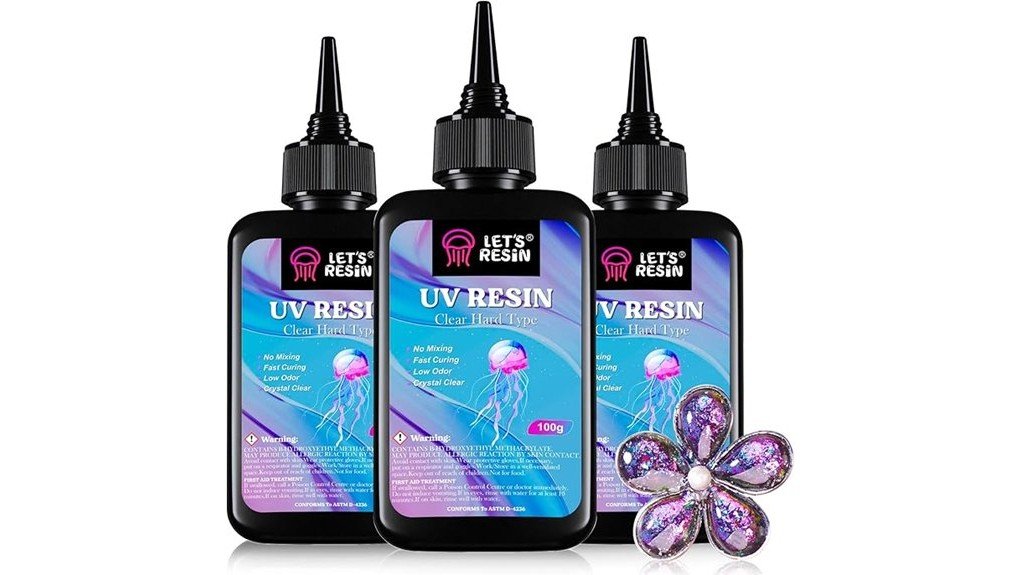
Choosing the wrong UV resin often leads to tacky surfaces, persistent air bubbles, or unsightly yellowing over time. Crafters working on fine jewelry, doming projects, and intricate silicone molds need a formula that cures completely rigid without requiring complex two-part mixing ratios. The LET’S RESIN UV Resin promises ultra-fast 2 to 5 minute cure times, a crystal-clear finish, and a high 85D Shore hardness rating. In this detailed review, we evaluate its flow rate, optical clarity, durability, and safety requirements so you can decide if it belongs on your workbench.
Quick Verdict
Rating: 9.1/10 – Highly Recommended for Small Crafts
Best For: Jewelry makers, keychains, open-bezel filling, minor repairs, and doming detailed crafts.
Bottom Line: This low-viscosity resin cures exceptionally hard (85D) in under 5 minutes under a standard 36W UV light, self-degasses quickly, and maintains exceptional clarity. However, like all UV resins, it must be poured in thin layers (1-2mm) to ensure a complete cure through dark or deep molds.
| Specification | Detail |
|---|---|
| Brand | LET’S RESIN |
| Resin Type | 1-Part Ultraviolet Curing Polyurethane/Acrylic Resin |
| Viscosity | Low Viscosity (Thin Flowing) |
| Cured Hardness | 85D Shore Hardness |
| Volumetric Shrinkage | Less than 2% |
| Cure Time | 2–5 Minutes (36W UV Lamp or direct high sunlight) |
| Wavelength Spectrum | 365nm – 405nm UV Light |
| Yellowing Resistance | Enhanced UV Inhibitors (Anti-Yellowing) |
| Food Safety | Not Food-Safe (Art & Craft Use Only) |
What Is LET’S RESIN UV Resin?
LET’S RESIN UV Resin is a single-component acrylic resin formulation designed for quick-turnaround crafting. Unlike traditional two-part epoxy resins that require exact measuring, thorough stirring, and a 24-to-48-hour cure cycle, UV resin comes ready to pour straight out of the bottle. It remains liquid until exposed to concentrated ultraviolet light in the 365nm to 405nm spectrum, allowing unlimited working time to adjust inclusions, clear bubbles, and fine-tune details.
Engineered specifically for artisans, jewelry crafters, and hobbyists, this resin features a low-viscosity formula. The thinner consistency lets it flow smoothly into tiny mold crevices, fill open bezels, and level itself across flat surfaces. Upon exposure to a standard 36W UV lamp or direct sunlight, the liquid polymerizes within 2 to 5 minutes into a glass-like finish rated at 85D Shore hardness.
Best For
- Crafters making resin earrings, pendants, and charms
- Doming keychains, stickers, and decorative pieces
- Quick repairs and sealing dried flowers or glitter
Skip If
- You are pouring thick coasters, river tables, or deep castings
- You lack a UV lamp or consistent direct sunlight access
- You need a certified food-safe surface for kitchen items
Key Features Breakdown
Understanding how a resin behaves during application and curing prevents failed projects and wasted material. Below is a detailed look at how the key characteristics of LET’S RESIN UV Resin translate into practical performance.
Low Viscosity and Bubble Release
Viscosity determines how easily resin flows and how quickly trapped air can escape. The low viscosity of this liquid allows air bubbles generated during squeezing or pigment mixing to rise to the surface naturally. Passing a lighter or heat gun briefly over the top surface pops these micro-bubbles effortlessly before you light-cure the piece. Furthermore, the thin fluidity helps fill detailed silicone molds without leaving trapped air pockets in narrow corners.
85D Hardness and Shrinkage Control
Soft or tacky cured resin is a common issue with lower-quality UV products. LET’S RESIN yields a rigid final surface reaching an 85D Shore hardness rating, similar to hard plastics and bowler-ball polymers. This rigidity offers solid scratch resistance, stain repellency, and long-term durability for items like keychains and daily-wear jewelry. Additionally, with a volumetric shrinkage rate under 2%, cured pieces maintain their dimensions accurately without warping away from mold walls or pulling away from metal bezel edges.
Pro Tip: For deep molds, always pour in thin layers of 1mm to 2mm at a time, curing each layer for 60 to 90 seconds under your UV light. This prevents shrinkage tension, eliminates uncured tacky centers, and guarantees maximum hardness throughout the piece.
Optical Clarity and Anti-Yellowing Properties
UV resins are susceptible to turning yellow over time due to exposure to ambient sunlight and oxygen. This formula includes enhanced UV light stabilizers and optical brighteners that resist photo-degradation. Clear castings remain transparent, preserving the vivid colors of encapsulated glitters, alcohol inks, mica powders, and dried botanical specimens without shifting toward a murky yellow hue over months of display.
Practical Usage and Mold Preparation
Achieving professional results with UV resin depends on proper preparation, application tools, and curing discipline. Small oversights during mold prep can lead to dull surfaces or uncured patches.
Surface Preparation and Dispensing
Before dispensing resin, clean your silicone molds or metal bezels thoroughly with isopropyl alcohol and allow them to dry completely. Moisture or dust oil on the surface can cause fish-eyes or surface pitting. For tiny areas or intricate work, avoid squeezing directly from the bottle spout. Instead, transfer small amounts of resin using a fine silicone stir stick, a glass pipette, or a fine-tipped syringe to maintain control over placement.
Prepping your molds and surfaces by cleaning and drying them is key to achieving flawless results in your resin projects.
Curing Time and Light Selection
Curing time depends heavily on your light source wattage and piece thickness:
- 36W UV Light (365nm-405nm): Cures thin layers in 2 to 3 minutes. flip translucent molds over and cure the bottom side for an additional 1 to 2 minutes.
- Direct Sunlight (Bright Day): Cures in 5 to 10 minutes depending on UV index levels.
- Handheld UV Flashlights (9W-12W): Best used only for flash-tacking pieces in place before a full cure under a dedicated lamp.
Before You Buy: Opaque, solid-colored, or dark silicone molds block UV light rays from penetrating the resin. You must use clear or semi-transparent silicone molds when working with UV resin, or cure open-faced projects from both top and bottom to avoid liquid cores.
Safety Protocols and Working Environment
Although UV resin is convenient, it contains active acrylic monomers before curing that require careful handling to prevent skin sensitization and respiratory irritation.
- Work Space Ventilation: Always work in a well-ventilated space, ideally near an open window or with an exhaust fan running to disperse fumes emitted during the heat-generating curing reaction.
- Personal Protective Equipment: Wear nitrile gloves to avoid direct skin contact. If uncured resin touches your skin, wash immediately with soap and cold water (avoid using solvents like acetone directly on skin, as they drive chemicals deeper into pores).
- Eye Protection: Wear protective safety glasses to shield your eyes from accidental splashes and to protect your vision from intense ultraviolet light output when operating curing lamps.
How It Performs in Real Use
To evaluate its performance across common crafting workflows, we tested LET’S RESIN UV Resin across three distinct applications.
Jewelry Making and Open Bezels
When filling open metal bezels set on silicone tape, the low viscosity flows evenly to edges without overflowing. Surface tension allows for a subtle dome shape over pendants. A 3-minute exposure under a 36W UV lamp produces a rock-hard, non-tacky coating that requires zero topcoat sealing.
Casting in Transparent Silicone Molds
In small gem and dice molds, the resin flows into tight angles effortlessly. Because air bubbles migrate to the top rapidly, minimal torching is required. When cured in 2mm layers, the resulting pieces show high clarity with sharp edge definition and no visible shrinkage lines.
Doming and Surface Sealing
When applied over cured epoxy, acrylic paint, or wood pieces, the resin seals surfaces smoothly. It resists slump when brushed thin, providing a durable glossy seal over stickers, keychains, and badge reels within minutes.
Customer Experience and Support
LET’S RESIN has established a strong presence in the resin art community by prioritizing product consistency and customer communication. The brand actively collects user feedback to refine formulations over time.
Crafters have access to extensive documentation, including downloadable project guides, troubleshooting charts, and official video tutorials. Dedicated customer service representatives address product inquiries, batch questions, or replacement needs promptly, supporting both novice crafters and commercial shop owners.
Pros and Cons
Pros
- Fast 2-5 minute curing time with no mixing required
- Cures to a hard 85D Shore rating that resists scratches
- Low viscosity allows self-degassing and smooth detail flow
- Enhanced anti-yellowing stabilizers maintain clear finishes
- Low shrinkage rate (<2%) prevents warping and edge pull-away
Cons
- Not suitable for thick single pours over 2mm deep
- Requires transparent molds for complete light penetration
- Emits noticeable odor during the active curing process
- Not rated food-safe for direct kitchenware contact
Is It Worth the Price?
LET’S RESIN UV Resin sits in the mid-tier price point for craft resins, offering solid value for hobbyists and small production businesses. While cheap white-label UV resins can leave sticky films or yellow within weeks, this formula provides reliable clarity and high shore hardness, reducing wasted materials from failed cures.
For crafters making small items like earrings, charms, or custom keychains, a single bottle lasts through dozens of projects. The time saved compared to 24-hour epoxy resin curing makes it a practical purchase for artisans working on tight turnarounds or craft fair inventory.
How It Compares to Alternatives
When evaluating UV resins, matching the liquid characteristics to your crafting style is key:
- vs. Standard 2-Part Epoxy Resin: 2-part epoxy is cheaper per ounce and better suited for massive castings, tumblers, and coasters. However, LET’S RESIN UV Resin cures in minutes rather than days and requires no volume measuring or mixing ratios.
- vs. High-Viscosity UV Resins: High-viscosity formulas are better for steep doming work where you want thick, raised edges that resist flowing over borders. LET’S RESIN’s low-viscosity formula is far better for mold filling, self-leveling, and fast bubble release.
Frequently Asked Questions
Can LET’S RESIN UV Resin be used outdoors?
Yes, cured items made with this resin can be used outdoors due to its UV-stable formulation and anti-yellowing additive package. However, prolonged exposure to extreme weather and intense sunlight over years may eventually affect gloss levels, so indoor display or sheltered outdoor use is recommended for fine jewelry.
What safety precautions should I take while using this resin?
Always work in a well-ventilated area or wear a organic vapor respirator. Wear protective nitrile gloves and safety goggles to prevent skin contact and eye exposure during dispensing and curing.
How should I store leftover UV resin?
Store leftover resin in its original opaque black bottle with the cap tightly sealed. Keep it in a cool, dry place away from windows, ambient UV rays, and heat sources to prevent premature polymerization inside the bottle.
Is this resin food-safe for crafting items like bowls or spoons?
No, this resin is not rated food-safe. It is designed strictly for decorative art, jewelry, and non-food craft applications. Do not use it on surfaces that will come into direct contact with food or beverages.
Can I mix color pigments with LET’S RESIN UV Resin?
Yes, you can blend mica powders, liquid resin dyes, glitter, and alcohol inks into the resin. Keep pigment amounts minimal, as heavily opaque colors block UV light from penetrating, which can cause incomplete curing in deeper layers.
Why is my UV resin still sticky after curing under the light?
Sticky surfaces usually indicate low UV lamp wattage (below 36W), layers poured too thick, or insufficient exposure time. Cure under a 36W lamp for an extra 2 minutes, or wipe the cured surface with 91% isopropyl alcohol to remove oxygen-inhibited surface tackiness.
The Bottom Line
LET’S RESIN UV Resin is an exceptional choice for crafters who need fast turnaround times, high optical clarity, and dependable hardness without the mess of two-part epoxy mixing. Its low viscosity eliminates air bubbles quickly and fills intricate molds effortlessly. While it is not intended for large castings or food-contact surfaces, its 85D Shore hardness and anti-yellowing performance make it a top contender for jewelry, keychains, and decorative doming.
Ready to Start Crafting?
Check current pricing and customer reviews before finalizing your workbench setup.