For safer stroller naps, always place your baby in a near-flat reclining position and secure them with a five-point harness. Supervise every nap to guarantee their airway remains clear and breathing unobstructed. Avoid covering their face with blankets and limit naps to under two hours. Shift your baby to a crib for longer sleep. Maintain visibility of their face for monitoring. Keep these practices in mind, and you’ll discover even more essential tips ahead.
Understanding Baby Sleep Needs and Safe Sleep Practices
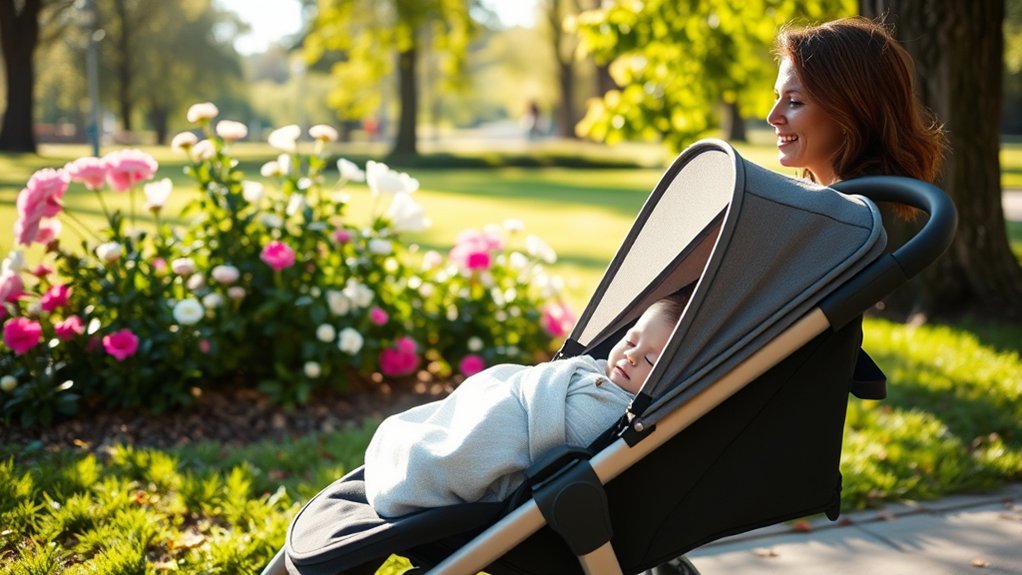
When it comes to your baby’s sleep needs, understanding safe sleep practices is essential. The American Academy of Pediatrics recommends placing your baby on their back in a safe, flat environment, like a crib or bassinet, to promote healthy brain development.
Understanding safe sleep practices is vital; place your baby on their back in a crib for healthy development.
Quality baby sleep not only supports growth but also positively impacts your mental health, reducing stress and enhancing mood.
Remember the ABCs of safe sleep: babies should sleep Alone, on their Back, and in a Crib.
While strollers are convenient, shifting your baby from stroller naps to a crib is crucial for restorative sleep. Always supervise stroller naps to prevent risks like positional asphyxiation, ensuring stroller safety and your baby’s comfort throughout their nap.
Adapting to Naps On-the-Go
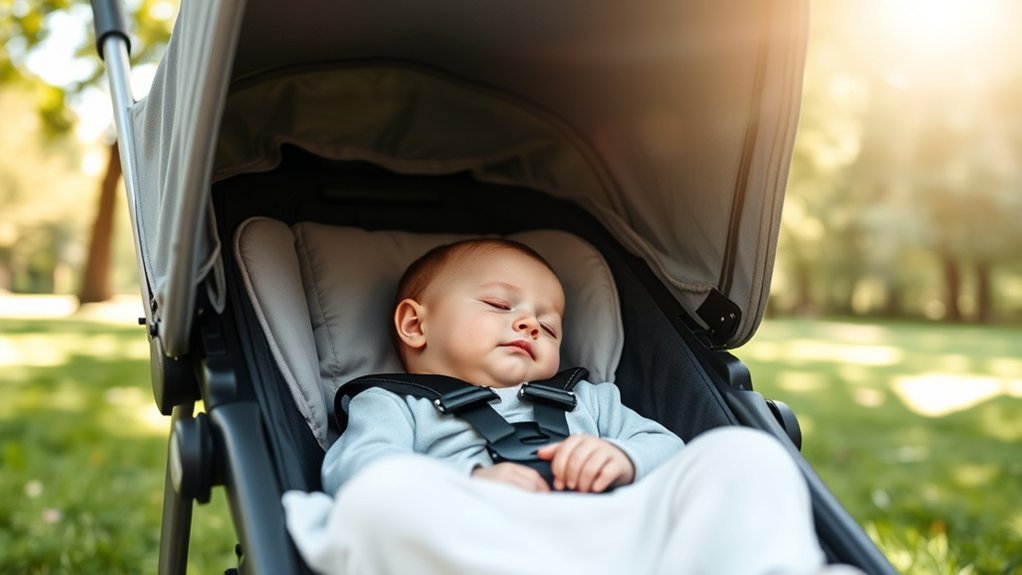
As life gets busy, adapting to naps on-the-go becomes a smart strategy for parents. Stroller naps allow you to run errands or enjoy outdoor environments while guaranteeing your baby gets the rest they need.
Fresh air can enhance your baby’s mood and promote better sleep quality, mimicking the gentle motion of the womb. To maintain a healthy sleep routine, limit stroller naps to under 2 hours and shift your little one to a firm sleep surface afterward.
Confirm your stroller is equipped with flat recline or appropriate bassinet accessories for newborns, providing the necessary support and safety.
Stroller Sleeping: Safety Considerations

To guarantee your baby’s safety while sleeping in a stroller, it’s crucial to follow specific guidelines.
Always prioritize parent supervision; never leave your child unattended. Make sure your stroller features a five-point harness to secure your little one and prevent falls.
For infants under six months, recline the seat nearly flat to keep airways open and avoid positional asphyxiation. Limit naps to under two hours, and shift your baby to a firm sleep surface like a crib as soon as possible.
Avoid covering the stroller with blankets or other materials that can obstruct airflow and visibility, ensuring your baby stays cool and safe.
These practices not only protect your child but also empower you as a mindful parent.
The Pros and Cons of Stroller Naps
Stroller naps can be a lifesaver for busy parents, allowing you to keep up with your daily activities while soothing your little one.
However, you need to weigh potential downsides, like shorter sleep durations and the risk of overreliance on this method.
Striking a balance between stroller naps and safe sleep practices is essential for your baby’s well-being.
Convenience for Busy Parents
While balancing a busy schedule, finding time for your baby to nap can feel like a challenging task. Stroller naps offer a convenient solution, allowing you to run errands or enjoy outdoor activities while ensuring your little one gets the rest they need.
The soothing motion of stroller features can mimic the comforting womb experience, making it easier for fussy babies to drift off. Plus, fresh air can boost both your baby’s mood and your mental well-being.
However, over-reliance on stroller naps may disrupt established crib sleeping habits, leading to shorter sleep durations. Remember, stroller naps should complement, not replace, safe sleeping environments like cribs, where your baby should ideally spend most of their sleep time for maximum safety and quality.
Sleep Quality Concerns
Although stroller naps can be a lifesaver for busy parents, they come with important considerations regarding your baby’s sleep quality.
Here are some pros and cons to keep in mind:
- The gentle motion of the stroller can mimic the womb, potentially enhancing sleep quality.
- Stroller naps allow for fresh air and outdoor exposure, which is beneficial.
- However, these naps often lead to shorter sleep durations than crib naps.
- Always guarantee your baby is positioned safely to avoid the risk of positional asphyxiation.
Risk of Overreliance
Relying too much on stroller naps can lead to challenges in your baby’s sleep routine. While they offer a convenient solution for busy parents, overreliance risks can disrupt your baby’s ability to sleep soundly in a crib.
Stroller naps often result in shorter sleep durations, as external stimuli and movement interrupt rest, leading to sleep disruption. Babies accustomed to napping in strollers might become fussy when denied their preferred environment, increasing parental stress.
To maintain healthy sleep patterns, limit stroller naps to under two hours and prioritize shifting to a crib or bassinet for longer, safer sleep.
Tips for Safe and Comfortable Stroller Naps
When your baby takes a nap in the stroller, it’s essential to prioritize their safety and comfort. Here are some practical tips to guarantee a restful experience:
- Always supervise your baby to prevent hazards and guarantee comfort.
- Dress your baby in appropriate sleepwear for the weather; avoid overheating or over-bundling.
- Use a stroller with a flat or nearly flat recline to support their head and neck, preventing positional asphyxiation.
- Limit stroller naps to under 2 hours, shifting to a crib or bassinet for longer sleep.
Age-Specific Stroller Sleep Guidelines
When it comes to stroller sleep, understanding age-specific guidelines is vital for your baby’s safety.
For newborns, you’ll want to guarantee a fully flat recline to prevent any airway issues, while infants aged 4-6 months require careful head positioning.
As your baby grows and shifts to longer crib naps, adjusting their stroller positioning becomes essential to support healthy sleep habits.
Newborn Stroller Sleep Safety
Ensuring your newborn sleeps safely in a stroller is essential for their well-being.
To keep your little one secure during stroller naps, follow these guidelines:
- Use a stroller with a fully flat recline to support airway safety.
- Always place your newborn in appropriate stroller accessories, like a bassinet or infant seat insert, for head and neck support.
- Supervise your baby constantly while they sleep, checking for uninterrupted breathing.
- Shift to a crib or bassinet for longer naps after 90 minutes to 2 hours.
Optimal Positioning for Infants
As your baby grows, their sleep positioning in the stroller needs to adjust to their developing abilities.
For infants aged 0-3 months, always opt for a stroller with a fully flat recline to guarantee safe sleep and maintain proper infant posture.
From 4-6 months, you should still use the recline feature, keeping an eye on head alignment to prevent slumping.
Once your baby reaches 6 months, they’ll likely have better head control and can sit more upright, but make certain the stroller fits their size and weight.
Regularly check their position for safety and comfort, and remember, stroller naps should be short, encouraging healthier sleep habits while shifting to crib or bassinet for longer rests.
Transitioning to Crib Naps
Although stroller naps can be convenient, moving your baby to a crib for longer sleep periods is essential for their development.
Crib naps offer numerous benefits, but they come with their own challenges.
- Crib nap benefits include a safer sleep environment and better sleep quality.
- Crib nap challenges may involve establishing a consistent routine and addressing potential resistance from your baby.
For infants aged 0-3 months, avoid prolonged stroller naps and prioritize the crib.
As your baby grows, shift them to the crib for longer naps, limiting stroller use to short durations.
This approach fosters healthy sleep habits and guarantees your baby’s airway remains unobstructed, supporting their overall well-being.
Prioritize those crib naps; your baby will thank you later!
Essential Dos for Safe Stroller Sleep
To help your baby sleep safely in a stroller, always utilize the stroller’s recline function, positioning them nearly flat. This promotes proper head alignment and reduces the risk of airway compromise.
Regularly check your baby’s position during naps to verify they’re breathing easily. Secure them with a properly fitted five-point harness that’s snug yet comfortable, preventing any sliding or falls.
Regularly monitor your baby’s position to ensure easy breathing, and secure them safely with a snug five-point harness.
Dress your baby appropriately for the weather, opting for lightweight fabrics in hot conditions to avoid overheating, and keep an eye on their temperature.
Maintain clear visibility of your baby’s face while they sleep in the stroller, allowing you to quickly assess their comfort and breathing status.
Choosing the right stroller types and sleep accessories can further enhance safety.
Critical Don’ts for Stroller Sleep Safety
When your baby sleeps in a stroller, never cover their face with blankets or fabrics, as this can block airflow and pose serious risks.
Always keep a watchful eye on your little one and never leave them unattended, even for a moment.
Ensuring their safety during stroller sleep means being proactive and attentive at all times.
Avoid Covering Baby’s Face
Covering your baby’s face while they nap in a stroller can pose serious risks, including suffocation and overheating.
Maintaining clear face visibility is essential for monitoring your baby’s breathing and safety. Instead of using blankets or fabrics, focus on these key guidelines:
- Guarantee proper airflow around your baby’s face.
- Use the stroller canopy for shade, but keep it ventilated.
- Dress your baby appropriately to prevent overheating.
- Regularly check your baby’s position to avoid airway obstruction.
Never Leave Unattended
Leaving your baby unattended in a stroller while they sleep can lead to dangerous situations. Always supervise your little one to prevent accidents and guarantee their safety.
Stroller stability can be compromised, and a moment of distraction may result in tipping or rolling away, putting your baby’s well-being at risk. Regular baby monitoring is essential, especially during longer naps. Frequent checks on their position help prevent suffocation or positional asphyxiation, which can occur if they shift unexpectedly.
Never assume the stroller is secure enough for you to step away. Stay vigilant; your baby’s safety is paramount. Prioritizing supervision allows you to enjoy those moments of independence while guaranteeing your child remains safe and sound.
Recognizing Safe Sleep Positions in Strollers
To guarantee your baby sleeps safely in a stroller, it’s crucial to recognize proper sleep positions that support their airway and comfort.
Follow these guidelines for safe sleep:
- Ensure your baby’s head is in a neutral position, avoiding forward slumping or hyperextension.
- Regularly check for unobstructed breathing; their chin shouldn’t rest on their chest.
- Maintain clear visibility of your baby’s face to monitor their breathing and comfort.
- Adjust the stroller’s angle based on your baby’s developmental stage, using stroller accessories like supportive inserts or bassinet accessories for adequate support.
Finding the Right Stroller for Naps
When you’re choosing a stroller for naps, it’s essential to prioritize models that confirm your baby can sleep safely and comfortably. Look for strollers with features like a flat or nearly flat recline, which promotes safe sleeping positions for newborns. Bassinet attachments can enhance infant comfort, confirming a cozy environment.
Here’s a quick guide to help you choose:
| Feature | Importance |
|---|---|
| Flat Recline | Confirms safe sleeping position |
| Bassinet Attachment | Provides secure nap environment |
| Five-Point Harness | Keeps baby secure while sleeping |
| Visibility of Baby’s Face | Allows monitoring of breathing & comfort |
Frequently Asked Questions
How Long Can My Baby Safely Sleep in a Stroller?
Your baby can safely sleep in a stroller for about 30 minutes to 2 hours, depending on their age and comfort. Always prioritize stroller safety, ensuring they’re properly secured and supported during sleep duration.
What Should I Do if My Baby Wakes up During a Stroller Nap?
When your baby wakes during a stroller nap, embrace soothing techniques like gentle rocking or softly humming. Shifting to a quiet space can help ease them back to sleep, fostering a sense of calm and comfort.
Can I Use a Regular Stroller for Overnight Sleeping?
You shouldn’t use a regular stroller for overnight sleeping. Most strollers lack essential overnight safety features, like proper support and ventilation. Consider a crib or bassinet designed specifically for safe, comfortable overnight rest instead.
How Can I Keep My Baby Cool in a Stroller on Hot Days?
To keep your baby cool in a stroller on hot days, guarantee proper stroller ventilation and use sunshade options. These features help maintain airflow and protect against direct sunlight, keeping your little one comfortable.
What Are Signs My Baby Is Uncomfortable in the Stroller?
You’ll notice baby signs like fussiness, arching their back, or excessive squirming. Make stroller adjustments by checking the straps, temperature, and position to guarantee your little one’s comfort and happiness during rides.
Conclusion
In the journey of parenting, ensuring your baby sleeps safely in a stroller is like steering through a winding path—full of twists and turns. By following the safety guidelines outlined, you’re not just protecting your little one; you’re creating a peaceful oasis for naps on-the-go. Keep those essential dos and don’ts at the forefront, and choose the right stroller wisely. With these tips in your toolkit, you’ll transform every ride into a safe and soothing adventure for your child.