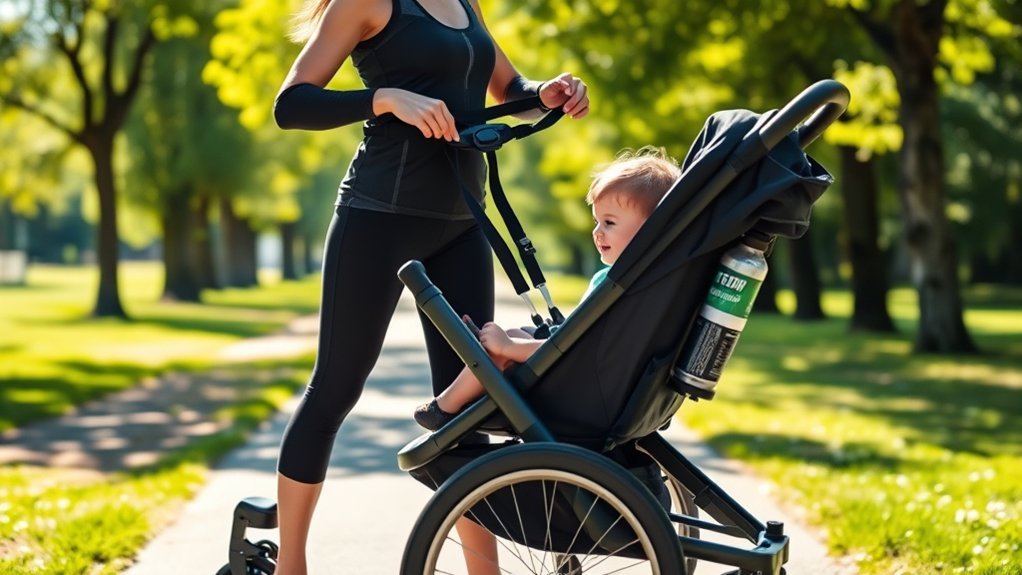
To guarantee safe rides with your jogging stroller, start by making sure your baby is at least 6 to 8 months old. Choose a stroller with a 5-point harness and lockable front wheels. Before each run, check the tires, brakes, and stroller frame. Secure your child snugly and lock the front wheel for stability. Maintain proper form and control your speed on smooth terrain. Keeping these tips in mind helps enhance safety and comfort, guaranteeing an enjoyable experience for both you and your child.
Ensure Your Baby Is Old Enough
Before you take your baby out in a jogging stroller, it’s important to make certain they’re old enough to handle the ride safely.
Ideally, your little one should be at least 6 to 8 months old. This age guarantees they’ve developed adequate neck and head control, which is vital for a smooth ride.
Look for milestones like strong head control, the ability to sit independently, and overall core stability. Jogging with a baby who isn’t developmentally prepared can pose risks, as infants under 6 months often prefer smoother rides without jostling.
Always consult a pediatrician before you start jogging with your baby to confirm they’re ready for this activity.
Prioritizing your baby’s development guarantees a safer, more enjoyable experience for both of you.
Choose the Right Jogging Stroller

Selecting the right jogging stroller is fundamental for a safe and enjoyable experience. When considering stroller features, look for fixed or lockable front wheels for stability. A 5-point harness system is essential to keep your child secure, minimizing injury risk. Additionally, a robust suspension system will safeguard your baby’s spine on rough terrains. Hand brakes are critical for controlling speed on slopes.
Here’s a quick comparison of jogger styles to help you decide:
| Jogger Style | Key Features | Best For |
|---|---|---|
| Traditional Jogger | Fixed front wheel, robust design | Smooth, flat surfaces |
| All-Terrain Jogger | Adjustable wheels, suspension | Uneven paths, trails |
| Lightweight Jogger | Easy to maneuver, compact | Quick errands, travel |
| Double Jogger | Space for two children | Parents with twins |
| Running Stroller | Ultra-light, aerodynamic | Serious runners |
Perform Pre-run Safety Checks
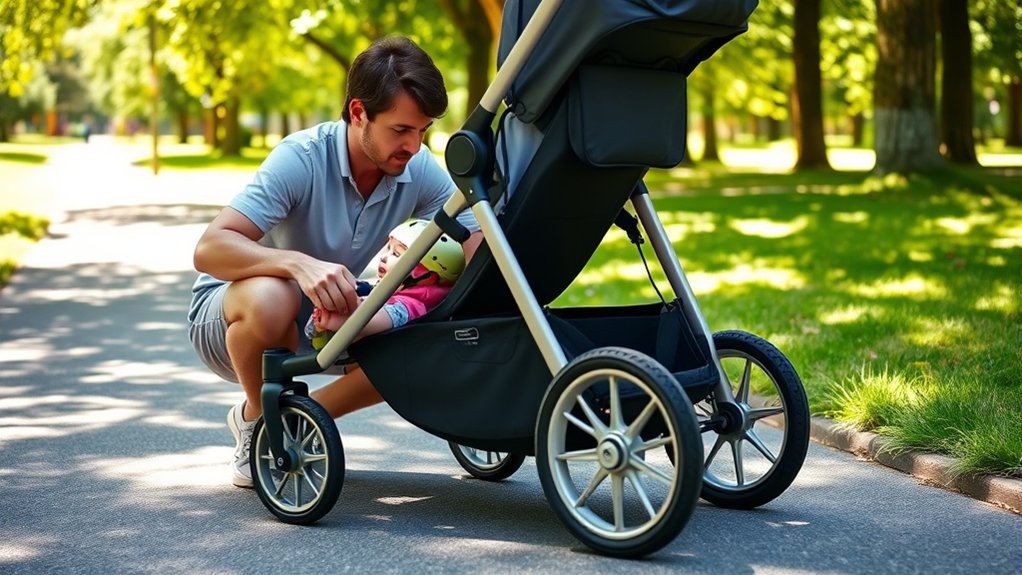
Before you head out for your jog, it’s essential to perform a few safety checks.
Start by ensuring your tires are inflated to around 30 psi, and test the brakes to verify they’re functioning properly.
Finally, inspect the stroller frame for any damage to guarantee a safe and reliable run.
Tire Inflation Levels
Regularly checking tire inflation levels is essential for ensuring a safe and smooth jogging experience with your stroller. Aim for around 30 psi to keep your tires properly inflated.
Under-inflated tires can make it considerably harder to push, affecting both effort and safety. Use reliable inflation tools, like a bicycle pump, to achieve accurate inflation before each run.
Additionally, inspect your tires for any signs of wear or damage, such as cracks or punctures, and replace them immediately if necessary.
Prioritizing tire maintenance not only enhances your running experience but also improves the stroller’s maneuverability and stability on various terrains.
Make it a habit to check tire conditions as part of your pre-run safety checks for ideal performance.
Brake Functionality Check
Maintaining proper tire inflation is just one part of guaranteeing your jogging stroller is safe and ready for your run.
A thorough brake functionality check is essential for your peace of mind.
- Test the parking brake to confirm it engages and holds securely.
- Check the hand brake by squeezing it to verify responsiveness.
- Conduct a brake wear assessment for any signs of damage.
- Confirm easy engagement and disengagement for distraction-free running.
- Familiarize yourself with your specific braking system for peak use.
Don’t overlook the importance of a brake alignment check.
Performing these checks will keep you and your little one safe and liberated on every jog.
Prioritize these safety measures to enjoy every moment of your run.
Frame Inspection Review
To guarantee a safe and enjoyable jogging experience, it’s crucial to inspect your stroller’s frame thoroughly before each run.
Start by checking for cracks, bends, or any signs of wear in the frame materials that could compromise safety. Ascertain all wheels are securely attached and rotate freely; loose or damaged wheels can lead to loss of control.
Examine the folding mechanism to confirm it locks securely, preventing accidental collapse during use. Don’t overlook the handlebar—make sure it’s stable and securely connected to the frame for proper control.
Finally, regularly perform frame maintenance by inspecting for rust or corrosion, especially in moisture-prone areas, as these can weaken the frame and impact your safety.
Secure Your Child Properly
Securing your child properly in a jogging stroller is essential for their safety during your runs.
Follow these guidelines to guarantee a secure and comfortable ride:
- Use a snug five-point harness to keep your child restrained.
- Adjust the harness straps for a fit that allows only a finger’s width of space.
- Regularly check buckle maintenance for proper functionality.
- Avoid bulky clothing that can create slack; use blankets instead.
- Familiarize yourself with the stroller’s harness system using the manufacturer’s instructions.
Lock the Front Wheel
Locking the front wheel of your jogging stroller is essential for stability and safety during your runs. Engaging the front wheel lock prevents unexpected turns, especially on uneven terrains. Before each run, check the locking mechanism to guarantee it’s functioning properly. Remember, while jogging, a locked front wheel enhances jogging safety, reducing the risk of accidents.
| Action | Purpose |
|---|---|
| Lock the front wheel | Guarantees a straight path |
| Check the locking mechanism | Confirms security and functionality |
| Release when walking | Allows better maneuverability |
| Use on uneven surfaces | Prevents tipping and instability |
| Engage before every run | Maximizes overall jogging safety |
Use the Safety Wrist Strap
Using the safety wrist strap is an essential practice for every jogger with a stroller. This simple yet vital feature keeps you in control, preventing the stroller from rolling away during unexpected moments.
Using a safety wrist strap is crucial for joggers with strollers, ensuring control and preventing accidents during unforeseen moments.
Remember the wrist strap’s importance:
- Securely fasten it around your wrist.
- Regularly inspect it for wear and tear.
- Engage the strap during all jogs, especially downhill.
- A damaged strap can lead to accidents.
- Statistics show that proper use minimizes stroller-related injuries.
Maintain Proper Running Form
Maintaining proper running form is essential when jogging with a stroller, as it not only enhances your performance but also guarantees your baby’s safety and comfort.
Focus on achieving correct posture alignment—keep your back straight and shoulders relaxed to prevent strain. Always keep both hands on the stroller handlebar for maximum control, allowing for a natural running stride. If you need to switch hands, do so frequently to maintain balance and avoid muscle fatigue.
Pay attention to even strides and a steady pace, minimizing jolting for your little one. Most importantly, engage your core throughout your run; this support improves your stability while maneuvering the stroller, ensuring a safer and more enjoyable experience for both you and your child.
Be Mindful of Terrain and Speed
When jogging with a stroller, always assess the terrain to guarantee it’s smooth and safe for you and your baby.
Control your speed to maintain stability and avoid sudden jolts that could disturb your little one.
Choosing safe paths not only enhances your running experience but also keeps your child secure throughout the outing.
Assess Terrain Conditions
Evaluating terrain conditions is essential for ensuring a safe and enjoyable jogging experience with your stroller.
Choose wisely when it comes to trail types and surface materials; the right path makes all the difference.
- Opt for smooth, flat paths to minimize jostling.
- Avoid steep inclines and declines to maintain control.
- Watch for obstacles like potholes and curbs that could lead to accidents.
- Select routes with minimal traffic to keep your pace steady.
- Monitor weather conditions; slippery surfaces can be dangerous.
Control Your Speed
After evaluating the terrain conditions, it’s important to control your speed to guarantee a safe jogging experience with your stroller.
Effective speed management is vital, so maintain a steady pace that allows you to breathe comfortably and converse. On downhill slopes, be cautious; increased speed can lead to loss of control. Engage the hand brake to slow down effectively.
Adjust your pace based on the terrain—opting for slower speeds on uneven surfaces guarantees stability and reduces the risk of tipping. Always monitor your surroundings and be prepared to slow down or stop for pedestrians, cyclists, or obstacles.
Using a jogging stroller designed for stability, with a fixed front wheel, can help maintain control at higher speeds on diverse terrains.
Choose Safe Paths
Choosing safe paths is essential for a smooth jogging experience with your stroller. By paying attention to trail selection and path maintenance, you can create a safer environment for both you and your little one.
- Opt for smooth, flat trails to reduce jostling.
- Avoid busy streets and high-traffic areas.
- Stick to designated paths for joggers and pedestrians.
- Be cautious with inclines and declines to maintain control.
- Regularly assess paths for obstacles like potholes or debris.
These choices not only enhance your jogging experience but also keep your baby safe.
Embracing the freedom of jogging with your stroller means prioritizing safety, allowing you to enjoy each ride without worry.
Keep Your Child Comfortable
To keep your child comfortable during jogging stroller outings, it’s important to dress them in appropriate layers for the weather. Layered clothing allows for temperature regulation, so adjust as needed.
Dress your child in layers for jogging stroller outings to ensure their comfort and regulate temperature effectively.
Instead of bulky winter coats, opt for blankets to keep your child warm while guaranteeing a snug fit with the 5-point harness. Regularly check your child’s comfort level; if they seem restless, adjust your pace or route.
Confirm the stroller has a well-padded seat and proper recline to support their posture. Additionally, prioritize hydration monitoring, especially on warmer days, to prevent overheating.
Keeping your child comfortable not only enhances their experience but also makes your outing more enjoyable.
Frequently Asked Questions
Can I Jog With a Newborn in a Jogging Stroller?
You shouldn’t jog with a newborn in a jogging stroller. Most safety guidelines recommend waiting until your baby is at least six months old, ensuring they can support their head and neck properly during rides.
How Do I Clean My Jogging Stroller Safely?
To clean your jogging stroller safely, use mild soap and warm water. Avoid harsh chemicals. Opt for safe materials like microfiber cloths. Regular stroller cleaning keeps it fresh and guarantees a healthier ride for you and your child.
What Should I Do if It Rains During My Jog?
If it rains during your jog, use rain gear for yourself and a stroller cover to keep your child dry. Make certain the cover’s secure, and adjust your pace to maintain control on slippery surfaces.
Can I Take My Jogging Stroller on Rough Trails?
Sure, you can take your jogging stroller on rough trails—if you enjoy a thrilling rollercoaster ride! Just remember, trail suitability and stroller stability are essential for a safe and enjoyable experience. Choose wisely!
How Often Should I Check My Stroller for Maintenance?
You should check your stroller for maintenance at least once a month. Use a maintenance checklist to inspect wheels, brakes, and harnesses regularly, ensuring your rides remain safe and enjoyable for both you and your child.
Conclusion
In conclusion, keeping your little one safe while jogging is like steering a ship through calm waters. By ensuring your child is old enough, choosing the right stroller, and performing pre-run checks, you lay the groundwork for a smooth ride. Always secure your child, lock the front wheel, and use the safety wrist strap. With mindful running and attention to comfort, you can enjoy your jog while ensuring your child’s safety—making every outing a pleasant adventure.