Stroller safety testing is essential for protecting your child. It greatly reduces the risk of injuries, with over 64,000 reported annually. Various safety standards, like ASTM and JPMA, guarantee strollers pass rigorous performance tests. Key features, such as a five-point harness and effective braking systems, boost safety. Understanding these factors helps you make informed decisions. Explore how to choose the safest stroller and what to look for to guarantee lasting protection for your little one.
Importance of Stroller Safety Testing
When you consider the safety of your child, stroller safety testing becomes vital. Each year, around 64,373 stroller-related injuries occur, underscoring the need for rigorous testing to prevent accidents like falls, tip-overs, and entrapment.
Compliance with safety standards like ASTM F833 and JPMA certification guarantees that strollers undergo stability tests, evaluating their resistance to tipping both when stationary and in motion. These evaluations not only enhance consumer confidence but also greatly reduce the likelihood of stroller recalls.
Key Safety Standards and Certifications
Understanding key safety standards and certifications is essential for making informed decisions about stroller purchases. These certifications guarantee that strollers undergo rigorous testing processes to confirm safety and reliability. Notable standards include ASTM F833-15 and F833-21, focusing on brake functionality, locking mechanisms, and stability. Additionally, the JPMA certification verifies compliance through annual retesting.
| Standard/Certification | Focus Area |
|---|---|
| ASTM F833-15 | Brake functionality, entrapment |
| ASTM F833-21 | Tipping hazards, brake failures |
| JPMA | Overall safety compliance |
| EN 1888 | Mechanical and suffocation risks |
Essential Safety Features in Strollers
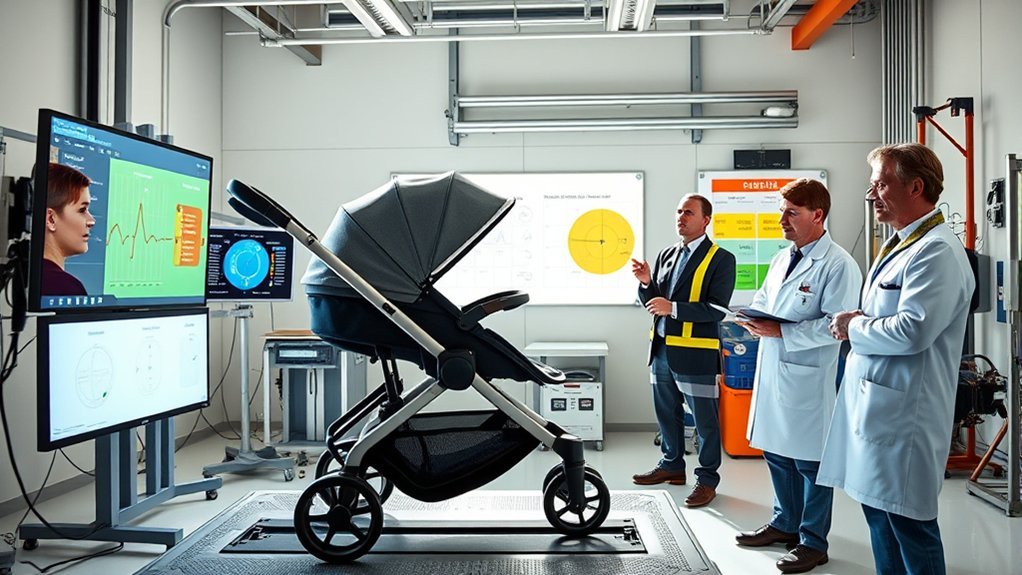
Safety features in strollers play a crucial role in protecting your child during outings. A five-point harness system is essential, keeping your child securely fastened with adjustable straps that are hard for little ones to unbuckle.
Effective braking systems should lock both rear wheels, guaranteeing stability; many models offer simple activation, while jogging strollers may have hand-operated brakes for enhanced control. Additionally, leg enclosures must accommodate full recline for newborns, minimizing the risk of slipping through.
A roomy canopy protects against sunlight and inclement weather, offering various designs, including deep pull-down versions. Finally, verify your stroller complies with federal safety standards, as these guarantees rigorous testing for overall safety, stability, and braking performance.
Understanding Stroller Stability and Performance
Stroller stability directly impacts your child’s safety during outings, preventing dangerous incidents like tip-overs and falls. With around 64,373 stroller-related injuries reported annually, understanding the stability factors in stroller design is essential.
Stability tests, including static and dynamic assessments, guarantee that strollers meet safety standards like ASTM F833 and EN 1888. Key features enhancing stability include a broad wheelbase, low seat position, solid metal frames, reliable braking systems, and a five-point harness.
Regular inspections and maintenance are important to uphold stability, checking for wear, functionality of folding hardware, and brake engagement. Compliance with safety regulations, such as 16 CFR Part 1227 and JPMA certification, minimizes hazards and enhances your child’s safety during use.
Best Practices for Choosing a Safe Stroller
How can you guarantee your child’s safety while on the go? Start by choosing a JPMA-certified stroller, ensuring it meets rigorous safety standards.
Look for a model with a five-point safety harness to keep your child secure. A reliable braking system that locks both rear wheels is vital for stability when stationary.
Opt for strollers with a wide base and low seat position to minimize tip-over risks, especially on uneven surfaces. Don’t forget to stay informed about recalls and safety alerts related to your stroller model.
Regular stroller maintenance is essential, so check for wear and tear frequently. By following these safety guidelines, you can confidently transport your child while prioritizing their well-being.
Frequently Asked Questions
How Often Should I Replace My Stroller for Safety Reasons?
You should replace your stroller every 3 to 5 years, considering its lifespan and evolving safety features. Regularly assess for wear and tear to guarantee your child’s safety remains a top priority.
Are Second-Hand Strollers Safe to Use?
Absolutely, second-hand strollers can be safe if you check for recalls, wear, and functionality. Always prioritize second hand safety; inspect thoroughly and guarantee it meets current safety standards before using that beloved used stroller.
What Should I Do if My Stroller Is Recalled?
If your stroller’s recalled, stop using it immediately. Contact the manufacturer for instructions on returning the product. Remember, you have consumer rights that protect you, ensuring you receive a refund or replacement for recalled products.
How Can I Check if My Stroller Meets Safety Standards?
To check if your stroller meets safety standards, review its stroller certifications and examine safety features. Look for labels from recognized organizations and guarantee it complies with current regulations for added peace of mind.
Do Stroller Safety Tests Vary by Country?
Yes, stroller safety tests vary by country due to different stroller regulations and international standards. Always check your region’s guidelines to guarantee your stroller meets the necessary safety criteria for your peace of mind.
Conclusion
In the world of parenting, choosing a stroller is like selecting a sturdy ship for your voyage through the unpredictable seas of childhood. Safety testing acts as your compass, guiding you toward the shores of peace of mind. By understanding safety standards, essential features, and stability, you’re equipping yourself for smooth sailing. Remember, a safe stroller isn’t just a purchase; it’s an investment in your child’s well-being. Navigate wisely, and let every stroll be a joyful journey.