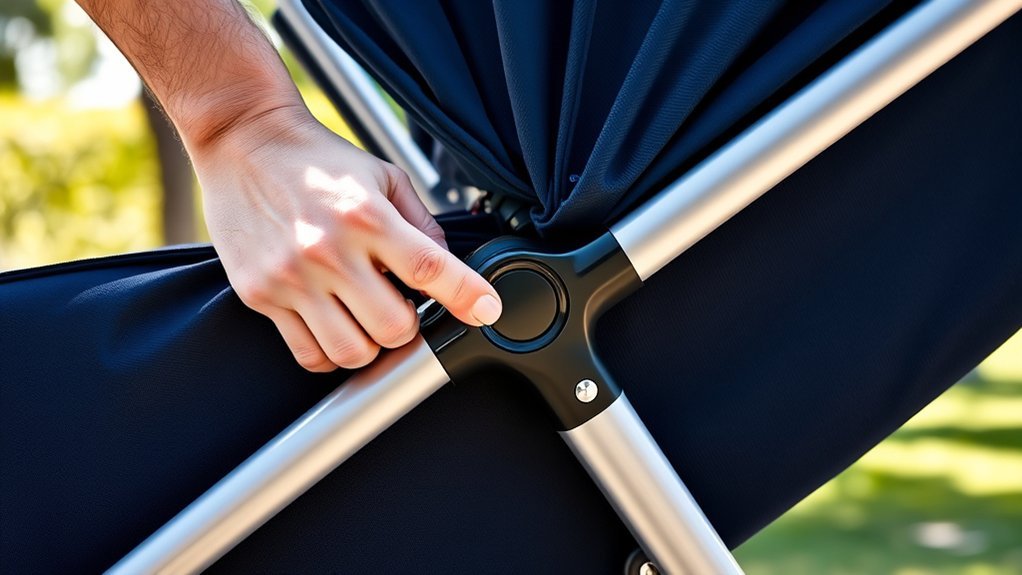
Stroller straps collect crumbs, sunscreen, milk, drool, and dirt, but the harness is also an important safety component. Cleaning it requires a gentler approach than cleaning ordinary fabric. Before using water, detergent, tools, or a washing machine, check the care instructions for your exact stroller model.
Quick Answer
Check your stroller’s exact manual before cleaning or removing the harness. In most cases, wipe the straps with a damp cloth and a small amount of mild soap, then air-dry them fully. Do not soak, steam, bleach, machine-wash, or detach the harness unless the manufacturer specifically allows it.
Key Takeaways
- Use the instructions for your exact stroller model because harness-cleaning rules differ between manufacturers.
- Surface cleaning with a damp cloth and mild soap is the safest default when the manual is unavailable.
- Do not use bleach, chlorine, solvents, disinfectant sprays, steam, or high heat unless the manufacturer approves them.
- Never cut, resew, glue, knot, or otherwise modify stroller harness webbing or stitching.
- Let every component dry completely, then check the routing, buckle, adjusters, and anchors before your child rides again.
At a Glance
| Time Required | 15–30 minutes of active cleaning, plus several hours for complete air-drying |
| Difficulty | Easy for surface cleaning; model-specific removal may require extra care |
| Tools Needed | Stroller manual, clean cloths, lukewarm water, mild soap, towel, and an optional soft brush for loose debris |
| Cost | Usually no extra cost if you already have mild soap and clean cloths |
Understanding the Importance of Clean Stroller Straps
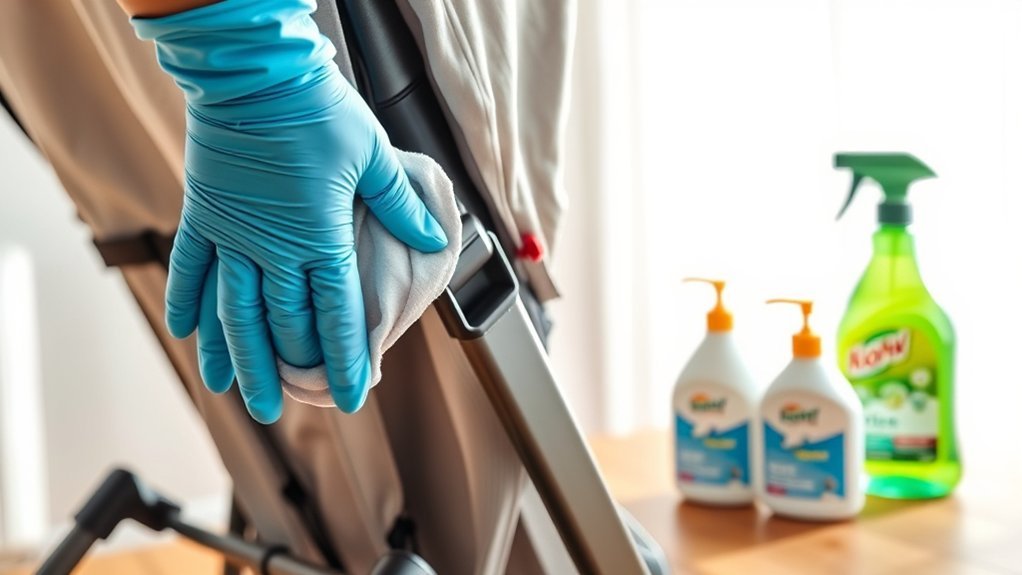
Stroller straps help keep your child correctly positioned in the seat. The U.S. Consumer Product Safety Commission advises caregivers to use the stroller safety harness whenever a child is riding.
Food, sweat, sunscreen, and moisture can make the webbing sticky or unpleasant. Crumbs can also collect around buckles and adjusters. Regular surface cleaning improves comfort and makes it easier to see fraying, cuts, loose stitching, or damaged hardware.
Cleaning does not make a damaged harness safe again. If the webbing is torn, melted, stretched, badly frayed, or altered, stop using the stroller and contact its manufacturer about an approved replacement.
The safest cleaning method is the one approved for your exact stroller model.
Tools and Supplies You’ll Need

Gather the basic supplies before you begin. You usually do not need a bucket for soaking, pliers, a knife, or a screwdriver for routine harness cleaning.
| Tool or Supply | Purpose |
|---|---|
| Exact stroller manual or care label | Confirms whether the harness may be removed, soaked, hand-washed, or machine-washed |
| Clean white or colorfast cloths | Wipes dirt away without transferring dye |
| Lukewarm water | Dampens the cloth without exposing the harness to unnecessary heat |
| Small amount of mild soap or detergent | Loosens ordinary food, dirt, and skin oils when permitted by the manual |
| Soft brush or vacuum attachment | Removes dry crumbs around the seat and buckle before moisture is added |
| Dry absorbent towel | Blots excess moisture without twisting the webbing |
| Manufacturer-approved tool, if required | Used only when the exact manual requires a tool for an approved removal procedure |
| Stain remover | Use only when the stroller manufacturer specifically approves that product type |
Warning: Never cut stitching, force an anchor through a slot, pry clips with a knife, or repair harness webbing with glue, knots, staples, or home sewing. Contact the manufacturer if the harness cannot be removed or reinstalled exactly as described in the manual.
Step-by-Step Guide to Strap Removal

Many stroller straps can be cleaned while they remain attached. Do not assume that removal is required. Start by finding the model name or number on the frame, seat label, underside of the stroller, or original paperwork. Then download the matching manual from the manufacturer’s website.
Tools Needed Only If the Manual Allows Removal
An approved removal procedure may require no tools at all. Some harnesses use anchors that turn and pass through a slot, while others connect to buckles or loops. A different stroller may use permanently attached stitching or a routing system that should not be disturbed.
Use only the tool named in the exact manual. Do not substitute a butter knife, pliers, screwdriver, or another object simply because a clip feels tight.
Safe Removal Techniques
- Read the full procedure first. Confirm whether the manual discusses removing the harness, removing only the seat cover, or cleaning everything in place.
- Take clear photos. Photograph the front, back, anchor points, adjusters, buckle, and every slot before moving a component.
- Loosen the harness normally. Use the stroller’s adjustment control rather than pulling forcefully on the straps.
- Remove only approved parts. Shoulder pads or seat covers may be removable even when the main harness is not.
- Follow the illustrated routing. Turn or release anchors only in the direction shown by the manufacturer.
- Stop if you meet resistance. Resistance may mean the part is not designed to pass through that opening.
- Keep small parts together. Store approved clips, pads, or anchors in a container where they cannot be lost.
Pro Tip: Record a short video as you unthread each approved removable part. Your photos and video will be more reliable than memory during reinstallation.
Cleaning Techniques for Stroller Straps
Cleaning instructions are not universal. For example, UPPAbaby’s cleaning guidance permits the harness described on its page to be hand-washed or machine-washed on a cold gentle cycle in a garment bag. In contrast, Graco’s Outpace LX care guidance says to surface-wash its harness and not immerse the straps.
Machine-wash a stroller harness only when the instructions for that exact harness clearly permit machine washing.
When the manual calls for surface cleaning, use the following method:
- Remove loose debris. Brush or vacuum crumbs from the seat, webbing, buckle area, and adjustment slots.
- Prepare a mild solution. Mix a small amount of manufacturer-approved mild soap with lukewarm water.
- Dampen the cloth. The cloth should be damp, not dripping.
- Wipe the webbing gently. Work from one end toward the other. Blot stubborn spots instead of aggressively scrubbing the fibers.
- Remove soap residue. Wipe again with a separate cloth dampened with clean water.
- Clean around the hardware. Wipe exposed buckle surfaces and anchors according to the manual. Do not flood an adjuster or buckle.
- Blot excess moisture. Press the straps between sections of a clean towel. Do not twist or wring them.
- Air-dry completely. Keep the stroller out of use until the straps, pads, slots, and buckle area are fully dry.
If the manual allows machine washing, follow its exact water temperature, cycle, bag, detergent, and drying instructions. Do not assume the removable seat cover and the harness share the same care method.
How to Effectively Sanitize Straps
Routine cleaning removes visible dirt and much of the residue that causes odors. It should not be described as verified disinfection unless the stroller manufacturer provides an approved disinfecting process.
If the straps have been exposed to vomit, urine, feces, floodwater, heavy mold, or another difficult contaminant, follow the manual and contact the manufacturer if approved surface cleaning is not enough. Replacing an approved harness component may be safer than applying an unapproved chemical or heat treatment.
Safe Cleaning Solutions
| Cleaning Method | When to Use It | Important Limit |
|---|---|---|
| Mild soap and a damp cloth | Routine surface cleaning | Use only the amount needed and remove residue with a clean damp cloth |
| Gentle machine wash | Only when the exact harness instructions permit it | Follow the stated cycle, temperature, bag, and drying method |
| Soaking or immersion | Only if the exact manual permits it | Many restraint instructions specifically prohibit immersion |
| Steam cleaning | Only with written manufacturer approval | Heat and concentrated moisture may affect webbing or nearby components |
| Bleach, chlorine, solvents, or disinfectant sprays | Do not use unless the manufacturer explicitly names the product and method | These products may weaken, discolor, stiffen, or leave residue on restraint materials |
| Vinegar, baking soda, essential oils, or homemade mixtures | Use only if the manual approves them | A product being natural does not make it compatible with harness webbing or hardware |
Effective Stain Removal
Start stain treatment as soon as practical. Blot wet spills with a clean cloth rather than rubbing them deeper into the fibers.
For dried food or dirt, loosen the residue with a damp cloth. Apply a small amount of approved mild soap to the cloth, not directly to the harness. Gently dab the stain, then wipe the area with another cloth dampened with clean water.
Repeat the process instead of using a stronger chemical or a stiff brush. A cosmetic mark that remains after safe cleaning is preferable to damaged webbing.
If a strong odor, mold, or stain remains after the approved process, contact the stroller manufacturer. Ask whether the harness can be replaced and whether the stroller should remain out of use.
Proper Drying Techniques
Use a clean towel to blot moisture without wringing or twisting the straps. Position the stroller or removable harness in a well-ventilated indoor area.
Follow the manual’s drying position. Some manufacturers call for laying a harness flat, while others permit drip-drying. Keep the straps away from tumble dryers, hair dryers, radiators, open flames, and other direct heat sources.
Do not reinstall pads or fold the stroller while moisture remains trapped around the straps, anchors, buckle, or seat slots.
Proper Drying Methods for Stroller Straps
Use this final drying checklist before reassembling or using the stroller:
- Blot both sides of the webbing with a dry absorbent towel.
- Separate overlapping strap sections so air can reach each surface.
- Open the harness adjusters enough to expose areas that may hold moisture.
- Place a fan nearby for room-temperature air circulation if needed.
- Keep the straps out of strong direct sunlight unless the manual permits sun-drying.
- Check the buckle slots, strap pads, anchor openings, and underside of the seat.
- Wait until the harness feels dry, flexible, and free of trapped moisture before use.
Note: A persistent musty odor may indicate moisture or contamination in an area you cannot reach safely. Do not cover the odor with fragrance spray. Contact the manufacturer for guidance.
Reinstallation Tips for Stroller Straps
Reinstall only the components that the manual allowed you to remove. Use your reference photos and the manufacturer’s routing diagram.
- Match each strap to its original slot. Shoulder, waist, and crotch straps are not interchangeable unless the manual says otherwise.
- Keep the webbing flat. Remove twists before securing anchors or attaching pads.
- Seat each anchor fully. An anchor should lie in the position shown in the manual and should not pull back through its slot.
- Check buckle orientation. Follow the model-specific diagram rather than assuming the release button must face a particular direction.
- Operate every adjuster. Loosen and tighten the harness through its full normal range.
- Test the buckle. Insert each tongue and confirm that it locks and releases normally.
- Perform a firm pull check. Pull each attached section by hand to confirm that it remains secured.
- Fit the harness to your child. Follow the stroller manual for shoulder height, strap position, and snugness.
Never cut stitches to make reinstallation easier. Do not resew, knot, melt, glue, or drill any harness component. If the routing is unclear or an anchor will not lock, keep the stroller out of use and contact the manufacturer.
When to Replace Straps or Stop Using the Stroller
Inspect the harness whenever you clean it. Stop using the stroller and request manufacturer guidance if you find:
- Frayed, cut, torn, melted, or unusually thin webbing
- Loose, broken, or missing stitching
- A cracked buckle, anchor, adjuster, or clip
- A buckle that sticks, releases unexpectedly, or does not click securely
- Webbing that remains stiff, brittle, distorted, or heavily discolored after drying
- Persistent mold, contamination, or odor that approved cleaning cannot remove
- A missing component or unapproved replacement strap
- Uncertain routing after removal
Replacement parts should come from the stroller manufacturer and match the exact model. Do not use a generic harness unless the manufacturer identifies it as compatible.
You can also search the CPSC recalls and product-safety warnings by brand and model. Follow the official remedy if your stroller or restraint component is affected.
Frequently Asked Questions
How often should I clean stroller straps?
Wipe fresh spills as soon as possible and inspect the harness before regular use. A deeper surface clean may be needed every few weeks or whenever the straps become visibly dirty, sticky, or smelly. The right schedule depends on how often you use the stroller and whether your child eats or drinks in it.
Can I machine-wash stroller straps?
Only if the instructions for your exact stroller or harness allow it. Some manufacturers permit a cold gentle cycle, while others require surface cleaning and prohibit immersion. Do not base the decision on the seat-cover instructions because the harness may have different care rules.
What should I do if the straps have a bad odor?
Clean them with the manufacturer-approved method and let them dry completely in moving room-temperature air. Do not soak them in vinegar, spray them with fragrance, or apply another homemade solution unless the manual approves it. Contact the manufacturer if the odor remains.
Are there specific cleaners to avoid?
Avoid bleach, chlorine, solvents, abrasive cleaners, disinfectant sprays, strong stain removers, and concentrated detergent unless the stroller manufacturer explicitly approves them. These products may affect webbing, stitching, color, flexibility, or hardware.
Can I use bleach on stroller straps?
Do not use bleach or diluted chlorine unless the instructions for the exact stroller expressly permit it. Major stroller and restraint manufacturers commonly prohibit bleach because it can damage fabrics, plastics, or restraint materials.
Should I remove the stroller harness before cleaning it?
Usually not. Surface cleaning can often be completed with the harness installed. Remove the straps only when the exact model manual provides a removal and reinstallation procedure. Never force anchors through slots or cut stitching.
How should I clean the stroller buckle?
Remove dry crumbs with a soft brush or vacuum attachment, then follow the buckle instructions in the stroller manual. Do not apply oil, lubricant, soap, or large amounts of water unless the manufacturer directs you to do so. Replace or service a buckle that does not lock and release correctly.
Sources
- U.S. Consumer Product Safety Commission Safety Education Materials — supports using the stroller safety harness whenever a child is riding.
- CPSC Recalls and Product Safety Warnings — provides current recall and safety-warning searches by product and brand.
- Graco Product Instructions — provides model-specific stroller manuals and care instructions.
- UPPAbaby Cleaning and Care — demonstrates that certain harnesses may have specific hand-washing or machine-washing instructions.
- Baby Trend FAQs — supports mild soap and water cleaning plus regular inspection for worn or damaged parts.
- Chicco Stroller Cleaning Guide — supports following model instructions and avoiding harsh chemicals and bleach.
Conclusion
Cleaning stroller straps safely usually requires only a damp cloth, mild soap, careful wiping, and complete air-drying. The most important step is checking the manual for your exact model before removing, soaking, or machine-washing the harness.
After cleaning, inspect every strap, anchor, adjuster, and buckle. Do not use the stroller if the harness is damaged, incorrectly routed, still damp, or unable to lock and adjust normally. Contact the manufacturer when approved cleaning cannot resolve the problem.