To remove stains from your stroller, start by vacuuming to clear crumbs and debris. Next, mix a baby-safe stain remover or use diluted baking soda for tough spots. Apply the solution, let it sit briefly, and gently scrub. Rinse fabric with a damp cloth and air-dry completely to prevent mildew. For plastic parts, wipe with warm soapy water, ensuring everything’s dry before reassembling. This method keeps your stroller looking great—keep going to discover detailed steps and more expert tips!
Preparing to Clean Your Stroller
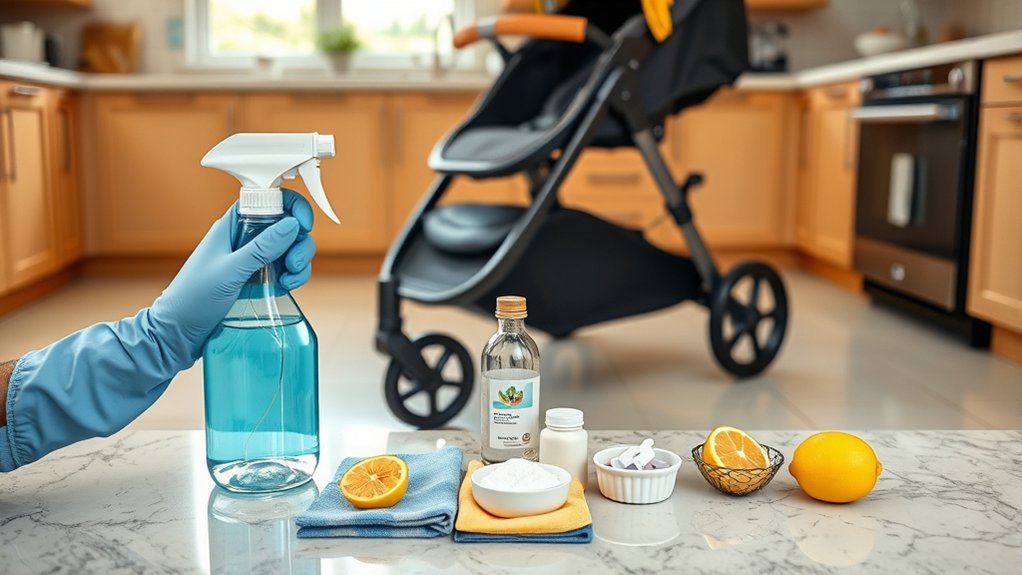
Before you plunge into cleaning your stroller, it’s important to gather all your cleaning supplies to guarantee an efficient process.
Start by locating the stroller manual; it contains essential manufacturer’s cleaning instructions. Next, grab a handheld vacuum to remove crumbs and debris. Have gentle stain remover and eco-friendly cleaning products on hand, like food-grade distilled vinegar or baking soda, both of which are child-safe.
Detach any removable parts from the stroller to access every nook and cranny. A well-planned cleaning schedule will help you maintain your stroller’s condition.
Before reassembling, make sure all components are completely air-dried to prevent mildew or mold. Following these stroller maintenance tips will keep your stroller looking fresh and safe for your little one.
Essential Cleaning Supplies

To effectively clean your stroller, you’ll need a few essential supplies ready at hand.
Start with eco-friendly cleaning options like distilled vinegar and baking soda, and don’t forget a baby-friendly stain remover for tougher marks.
Also, make sure you have a handheld vacuum to tackle crumbs and debris hiding in the crevices.
Eco-Friendly Cleaning Options
When you’re tackling stains on your stroller, choosing eco-friendly cleaning options not only protects the environment but also guarantees your child’s safety.
Start with food-grade distilled vinegar and baking soda, two powerful eco-friendly alternatives that break down stains effectively without harmful chemicals.
For spot-cleaning non-machine washable fabrics, use a gentle dish soap—it’s safe for kids and maintains fabric integrity.
If you catch a stain early, club soda works wonders as a natural degreaser.
Lemon juice can serve as a natural bleaching agent for tougher stains but use it cautiously on colored fabrics to avoid discoloration.
Always opt for child-safe cleaning supplies labeled as eco-friendly or non-toxic to secure your baby’s health while keeping your stroller clean.
Essential Tools Needed
Maintaining a clean stroller requires a few key tools that make the process efficient and effective. By gathering the right supplies, you can guarantee proper stroller maintenance and improve cleaning frequency.
Here’s a handy list of essential tools to have on hand:
- Baby-friendly stain remover spray or mild dish soap for safe stain tackling
- Handheld or upright vacuum with a crevice attachment to remove dirt and crumbs
- Disinfectant wipes or all-purpose spray for cleaning the stroller frame and wheels
- Gentle laundry detergent, like Seventh Generation Free & Clear, for machine-washable parts
With these tools, you can easily address stains and maintain a hygienic environment for your little one, allowing you to enjoy stress-free outings.
Stain Removal Agents
While tackling those stubborn stains on your stroller, using the right stain removal agents can make all the difference.
Eco-friendly options like baking soda lift various stain types and neutralize odors without harsh chemicals. Food-grade distilled vinegar is another versatile agent that breaks down tough stains safely.
For organic stains, hydrogen peroxide, when diluted, acts as a mild bleaching agent. If you’re dealing with spills from drinks or food, club soda’s carbonation can effectively lift those stains.
Remember to test each agent on a small, inconspicuous area first to avoid discoloration. Regular cleaning frequency will help prevent the buildup of stains, making your stroller easier to maintain and ensuring a fresh, inviting environment for your little one.
Step-by-Step Cleaning Process

To effectively clean your stroller and remove stains, follow these five essential steps:
- Identify the stain type: Different stains require different cleaning approaches.
- Choose a safe cleaner: Use a baby-safe stain remover or a mild dish soap solution.
- Apply and wait: For tough stains, apply the solution, let it sit for a few minutes, then gently scrub.
- Check the manual: Verify you’re following the stroller’s specific cleaning instructions, as some fabrics may be machine washable.
- Air-dry completely: Prevent mildew by letting all fabric components dry thoroughly before reassembling.
Vacuuming the Stroller
Vacuuming your stroller regularly is essential to keep it free from allergens, dirt, and crumbs that can accumulate over time.
Start by removing loose debris from all fabric surfaces, focusing on high-traffic areas like the seat and cupholders.
Use a handheld vacuum with a crevice attachment for those hard-to-reach spots, ensuring a thorough clean each time.
Importance of Vacuuming Regularly
A clean stroller is crucial for providing a safe and healthy environment for your child, and regular vacuuming plays an important role in achieving that.
Establishing a consistent vacuuming frequency guarantees that loose dirt and crumbs don’t accumulate, which can harbor allergens and bacteria.
Here are some cleaning benefits to reflect on:
- Removes dirt, crumbs, and debris from fabric and crevices.
- Focuses on high-traffic areas like the seat, canopy, and cupholders.
- Enhances cleanliness by using a handheld vacuum for tight spaces.
- Prolongs the stroller’s lifespan by preventing material wear from dirt buildup.
Techniques for Effective Vacuuming
While it might seem straightforward, effectively vacuuming your stroller requires a methodical approach to guarantee all dirt and debris are removed. Start with a handheld vacuum or an upright vacuum with a crevice attachment to tackle loose dirt. Focus on high-traffic areas like the seat, canopy, and cupholders. Lay removable fabric covers flat for easier access to seams. For stubborn dirt, use a toothbrush or sponge alongside your vacuum. This keeps your stroller hygienic and welcoming for your baby.
| Technique | Tools Needed | Areas to Focus |
|---|---|---|
| Handheld Vacuum | Handheld vacuum | Seat, Canopy |
| Crevice Attachment | Upright vacuum | Cupholders, Storage |
| Toothbrush/Sponge | Toothbrush or sponge | Tight spaces |
| Regular Maintenance | Upholstery cleaner (if needed) | Overall cleanliness |
Cleaning Fabric Components
Start by checking your stroller manual for specific cleaning instructions regarding the fabric components. Proper fabric care is essential for stain prevention and longevity.
Depending on the material, follow these steps:
- For machine-washable fabrics, use a gentle cycle with cold water and mild detergent.
- If hand cleaning is necessary, mix mild dish soap with warm water and apply it with a soft cloth or sponge.
- Always test any cleaning solution on a small, inconspicuous area to avoid discoloration or damage.
- Allow fabric components to air dry completely on the stroller frame to prevent shrinkage; avoid using artificial heat sources.
Tackling Tough Stains
After ensuring the fabric components are clean, it’s time to tackle those tough stains that can be stubborn and unsightly.
For food or spill stains, grab a baby-safe stain remover or mix mild dish soap with water. Gently scrub the affected area with a soft brush or cloth. Always test any solution in a hidden spot first to prevent discoloration.
For particularly stubborn stains like sunscreen, let the solution sit for a few minutes before blotting. You can also sprinkle baking soda on stains to absorb odors—just let it sit for 15 minutes before vacuuming.
Finally, air dry the cleaned area completely to prevent mildew, steering clear of artificial heat sources that might shrink or warp the fabric.
Wiping Down Plastic Parts
Plastic parts of your stroller can accumulate dirt and grime quickly, so regular cleaning is crucial for maintaining a safe and hygienic environment for your baby.
Follow these maintenance tips to keep those plastic components in top shape:
- Use a damp cloth or sponge with warm soapy water for routine cleaning.
- Avoid excessive moisture near electronic components to protect them.
- For tough stains, apply a baking soda and water mixture, let it sit, then gently scrub.
- Verify all products are child-safe and free from harsh chemicals.
Aim to wipe down plastic parts weekly or after messy outings.
This cleaning frequency not only maintains hygiene but also prolongs the lifespan of your stroller materials.
Reassembling and Drying the Stroller
Once you’ve thoroughly cleaned the plastic parts of your stroller, it’s important to take the right steps for reassembling and drying.
Start by ensuring all components are completely dry to prevent mold and mildew. Use any pictures you took during disassembly to guide your stroller assembly, ensuring every part fits correctly.
When reattaching fabric components, align them according to the manufacturer’s instructions for a secure fit. Avoid artificial heat sources like hair dryers or heaters; these can damage the fabric and cause shrinkage.
Finally, double-check that all wheels, handles, and moving parts operate smoothly and are securely attached.
Frequently Asked Questions
Can I Use Bleach to Clean Stroller Fabrics?
You shouldn’t use bleach on stroller fabrics, as it can damage them. Instead, opt for bleach alternatives like vinegar or baking soda for effective cleaning while ensuring fabric care and maintaining the integrity of your stroller.
How Often Should I Clean My Stroller?
You should clean your stroller every month, unless you enjoy the charming aroma of old snacks. Stick to a cleaning schedule for stroller maintenance, and you’ll keep it fresh and ready for your little adventurer!
Is It Safe to Machine Wash Stroller Fabric?
Yes, it’s generally safe to machine wash stroller fabric, but always check the care label first. Use a gentle cycle and mild detergent for proper fabric care, ensuring your stroller remains clean without damage.
What if My Stroller Has a Mildew Smell?
If your stroller has a mildew smell, clean it with a vinegar solution and let it air dry. For mildew prevention, regularly wipe surfaces and store it in a well-ventilated area to avoid future odor buildup.
Can I Use Essential Oils for Cleaning?
Yes, you can use essential oils for cleaning! Their benefits include natural antibacterial properties and pleasant scents. Mix a few drops with water for effective cleaning alternatives that leave your stroller fresh and free from harsh chemicals.
Conclusion
Now that you’ve tackled those stubborn stains and freshened up your stroller, it’s like giving it a new lease on life. Picture it gleaming under the sun, ready for your next adventure. By following these simple steps and using the right supplies, you’ve not only cleaned but also protected your investment. So, whether you’re off to the park or running errands, you can confidently roll with a stroller that’s both spotless and safe for your little one.