To prevent stroller mold during storage, regularly clean it by wiping all surfaces with a damp cloth and suitable cleaning solutions. Make certain it’s completely dry by placing it in a well-ventilated area. Store your stroller in a dry space, avoiding basements or garages. Consider using breathable covers to block dust while allowing air circulation. Regularly inspect for mold signs like musty odors or fuzzy textures. There are more effective strategies to keep your stroller in top shape.
Understanding Mold Growth on Strollers

Understanding mold growth on strollers is vital because it can pose health risks to your child.
Mold thrives in damp environments, particularly where moisture sources, like sugary spills from milk or juice, lurk. Closed canopies often trap humidity, creating a perfect breeding ground for various mold types.
If you’re not vigilant in cleaning these areas promptly, your stroller may become a health hazard. Regular inspections for mold signs and scrubbing all surfaces, including crevices, are essential steps in prevention.
Storing strollers in dry, well-ventilated spaces and using dehumidifying products can greatly reduce mold risks.
Importance of Regular Cleaning
While it might seem like a hassle, regular cleaning of your stroller is essential for keeping mold at bay and guaranteeing your child’s safety.
Establishing a cleaning frequency helps you remove spills and sugary residues that can promote mold growth. By wiping down all surfaces, including hard-to-reach areas, you’ll guarantee no moisture or food particles are left behind.
Using safe cleaning solutions for fabrics protects the integrity of your stroller while eliminating potential mold spores. After cleaning, make certain to allow the stroller to dry completely, as lingering moisture creates an ideal environment for mold.
Using fabric-safe cleaning solutions ensures your stroller remains intact while effectively removing mold spores; always let it dry thoroughly to prevent moisture buildup.
Regular inspections and cleaning not only enhance mold prevention but also prolong the life of your stroller, giving you peace of mind.
Steps to Clean Your Stroller Effectively

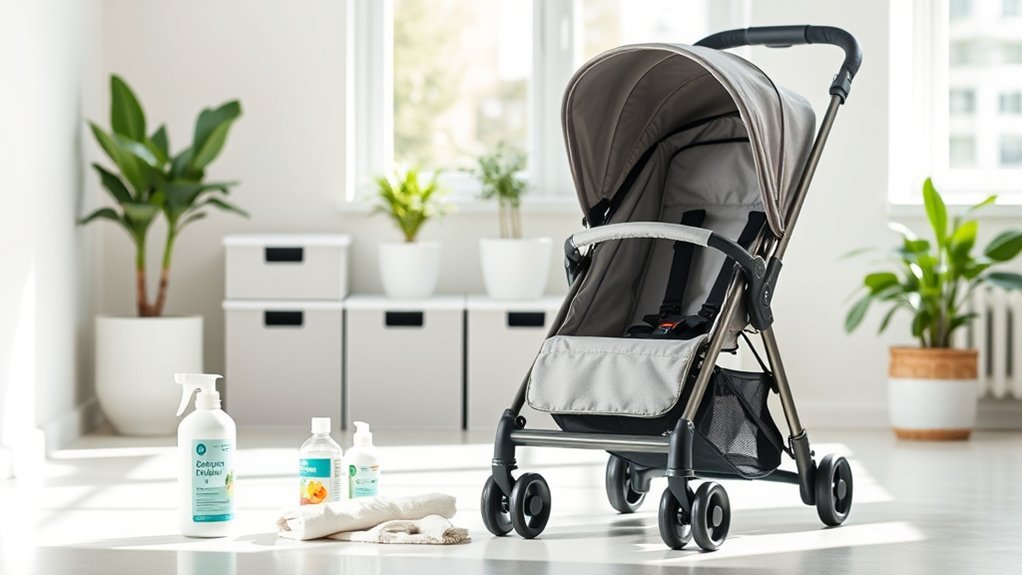
To effectively clean your stroller and prevent mold, start by gathering your cleaning supplies.
Use a damp dish towel to wipe down all surfaces, paying special attention to hard-to-reach areas where moisture and sugary residues might hide.
For any spills, immediately apply suitable cleaning solutions safe for stroller fabrics to avoid sugar build-up that could encourage mold growth.
After cleaning, allow the stroller to dry completely in a well-ventilated area, ensuring no moisture remains.
Regularly inspect the stroller for signs of mold and moisture, particularly in crevices and under the canopy.
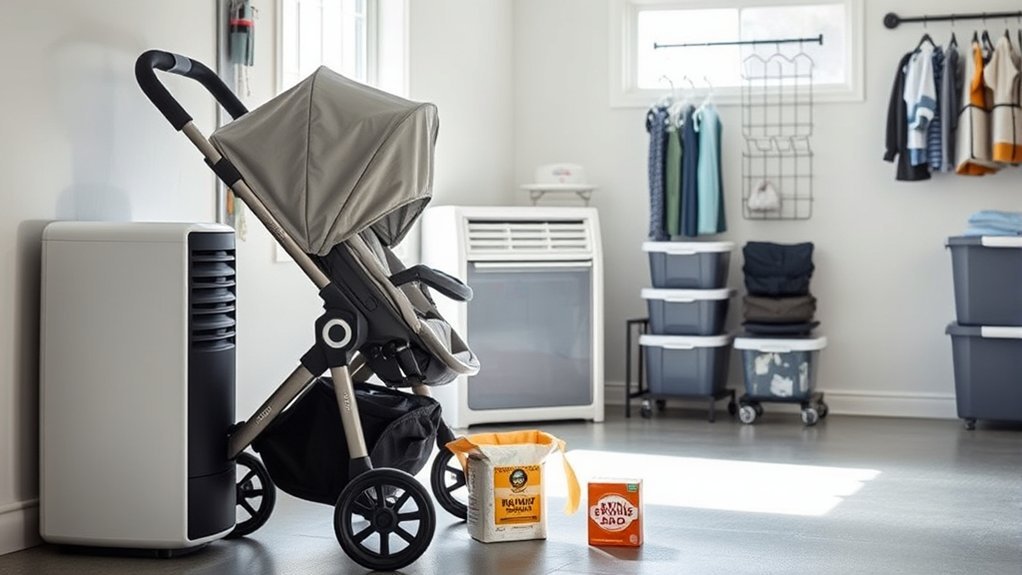
Finally, store your stroller in a dry, well-ventilated spot, and consider using a dehumidifying pod to absorb excess moisture during storage.
Drying Techniques to Prevent Moisture
After cleaning your stroller, drying it thoroughly is crucial to prevent moisture accumulation that can lead to mold growth.
Start by using a damp dish towel to wipe down surfaces and guarantee no moisture is trapped in crevices.
Effective drying methods include placing your stroller in a well-ventilated area, allowing air circulation to aid in moisture control.
If you’re in a damp environment, consider using dehumidifying products to absorb excess moisture during storage.
Regularly inspect your stroller and open its canopy upon arrival at a destination to let any accumulated moisture escape.
Using Dehumidifying Products for Storage
Using dehumidifying products in your stroller’s storage area can considerably reduce the risk of mold and mildew.
Dehumidifying pods are effective tools for moisture absorption, especially in damp environments like garages. These affordable pods, costing between $17 to $20, can be easily placed under your stroller during storage to maintain a drier atmosphere.
Regularly replacing or refilling the pods guarantees they continue to manage moisture levels effectively over time.
By incorporating dehumidifying products into your storage routine, you not only create a safer environment for your stroller but also prolong its lifespan.
Take the proactive step to safeguard your investment and enjoy peace of mind, knowing you’re keeping mold and mildew at bay.
Best Practices for Storing Strollers
When storing your stroller, always choose a dry, well-ventilated location to reduce humidity and prevent mold growth.
Using breathable covers can protect it from dust while allowing air to circulate, which is essential for moisture control.
Regularly inspecting your stroller for signs of moisture will help you catch any potential mold issues early on.
Choose Dry Storage Locations
To prevent mold from forming on your stroller, it’s crucial to choose a dry storage location that promotes good air circulation.
Follow these best practices for effective stroller maintenance and humidity control:
- Select a well-ventilated area: Avoid damp spaces like basements or garages where humidity is high.
- Use breathable covers: Opt for fabric covers instead of plastic ones to enhance airflow.
- Regularly inspect the space: Check for signs of moisture or mold and address issues immediately.
- Consider dehumidifying products: Use closet dehumidifying pods to absorb excess moisture in your storage area.
Use Breathable Covers
Breathable covers are essential for preventing mold growth on your stroller, as they allow air circulation while keeping moisture at bay.
Opt for covers made from breathable materials like cotton or mesh, as they effectively wick away moisture and promote evaporation.
Before you cover your stroller, make sure it’s completely dry; any residual moisture can still lead to mold, regardless of the cover’s effectiveness.
Additionally, store the stroller in a well-ventilated area to enhance moisture control.
Regularly inspect the breathable cover for any signs of moisture or mold, and clean it as needed to maintain its protective qualities.
Regularly Inspect for Moisture
Maintaining a mold-free stroller goes beyond using breathable covers; regular inspections for moisture are just as important.
Here are some best practices for effective moisture detection:
- Check for dampness after each use, especially if it’s been exposed to rain or high humidity.
- Perform a crevice inspection under the seat and in tight spots where water can hide.
- Wipe down all surfaces, including fabric and hard components, to eliminate moisture sources.
- Open the stroller canopy during inspections to enhance airflow and reduce humidity build-up.
Inspecting for Mold: What to Look For
When inspecting your stroller for mold, start by checking hidden crevices and folds where moisture can collect.
Look for any discoloration spots on the fabric, as these can signal mold growth.
Regularly evaluating these areas helps guarantee your stroller remains safe and clean for your child.
Check Hidden Crevices
How can you guarantee your stroller remains mold-free? Start by checking those hidden compartments where moisture retention often occurs. Mold loves to hide in these crevices, so thorough inspections are essential.
Here’s what to look for:
- Underside of the seat: This area can trap moisture, especially after spills.
- Inside the canopy: Humidity accumulates here without proper ventilation.
- Seams and folds: Inspect for any debris or dark spots that could indicate mold.
- Dark corners: Use a flashlight to illuminate these less visible spots.
Make regular inspections a habit, especially after exposure to moisture.
Look for Discoloration Spots
While inspecting your stroller for mold, it’s vital to look for discoloration spots that might signal early growth.
Focus on discoloration detection by examining the fabric and seams closely for any dark or off-color areas. These spots can indicate the presence of mold, especially in places that trap moisture, like crevices, under seat cushions, and around the canopy.
When spotting mold, also be aware of fuzzy or slimy textures, which suggest active colonies. Don’t forget to check for musty odors, as these can hint at hidden mold issues.
Regularly inspect the stroller’s storage areas, particularly after it’s been in damp environments, to nip any potential mold problems in the bud.
Tips for Maintaining a Mold-Free Environment
To keep your stroller and car seat mold-free, regular inspections are essential. Here are some effective mold prevention storage tips to follow:
- Inspect Regularly: Check for any signs of mold, especially in crevices and hard-to-reach areas.
- Choose Dry Spaces: Store strollers and car seats in a dry, well-ventilated area to minimize moisture accumulation.
- Use Breathable Covers: Protect your stroller with breathable storage covers that allow air circulation, preventing humidity buildup.
- Add Dehumidifying Pods: Place a dehumidifying pod underneath your stroller to absorb excess moisture, especially in damp environments like garages.
Choosing the Right Storage Location
Finding the right storage location for your stroller and car seat is key to preventing mold growth. Choose a dry, well-ventilated area to minimize moisture accumulation, which can harm your stroller materials. Avoid damp places like basements or poorly ventilated garages.
| Storage Location | Ventilation Importance |
|---|---|
| Dry attic | Excellent air flow |
| Airy closet | Moderate air flow |
| Basement | Poor air circulation |
Ensure consistent temperature to avoid humidity fluctuations that promote mold. Regularly check for signs of dampness or mold, and relocate items immediately if moisture is detected. By prioritizing ventilation and proper storage, you can keep your gear safe and ready for use.
Benefits of Breathable Storage Covers
Using breathable storage covers can greatly enhance the protection of your stroller and car seat from mold and other contaminants. Here are some key benefits to evaluate:
- Air Circulation: They allow air to flow, reducing humidity that leads to mold growth.
- Moisture Prevention: Made from materials that resist moisture retention, these covers keep your items dry.
- Dust Protection: They shield against dust and dirt, minimizing additional cleaning and potential mold sources.
- Easy Maintenance: Lightweight and easy to remove, they simplify regular inspections and cover maintenance.
Investing in breathable storage covers is a smart, cost-effective choice that prolongs your stroller’s life while creating a healthier environment for your child.
Frequently Asked Questions
Can I Use Vinegar to Clean My Stroller?
Yes, you can use vinegar to clean your stroller. Its natural cleaning benefits effectively tackle stains and odors. Just mix it with water, apply, and wipe down surfaces for a safe, chemical-free cleaning technique.
What Types of Dehumidifying Products Work Best?
For effective moisture control, consider using compact dehumidifier options like electric dehumidifiers or moisture absorbers such as silica gel packs. They’ll help keep your stroller mold-free by reducing humidity levels during storage. Stay safe!
How Often Should I Inspect My Stroller for Mold?
You should inspect your stroller for mold monthly. Regular checks are key to effective stroller maintenance tips and mold prevention strategies. Catching any issues early guarantees a safe, clean ride for your little one.
Are There Specific Storage Locations to Avoid?
Avoid storing your stroller in damp garages or humid basements; they’re mold’s favorite hideaways. Instead, choose a dry, climate-controlled space to keep your stroller safe and ready for your next adventure.
Can I Use Plastic Covers Instead of Breathable Ones?
You can’t rely solely on plastic covers; while they protect, they trap moisture. Breathable covers are essential for airflow, preventing mold and mildew. Choose wisely to keep your stroller safe and ready for use whenever you need it.
Conclusion
By following these simple steps, you can guarantee your stroller remains a safe and welcoming space for your little one. Imagine opening your storage area to find a fresh, clean stroller, free from any musty odors or unsightly mold. Regular cleaning and smart storage choices not only protect your investment but also safeguard your child’s health. With a little effort, you can create a mold-free haven for your stroller, ready for countless adventures ahead.