Discovering that your stroller was damaged by an airline can instantly derail your family trip, but acting quickly and following strict reporting protocols can secure full repair or replacement compensation. To protect your rights, you must photograph every angle of the damage, retain your baggage claim tags, and report the incident to an airline representative immediately—often before leaving the airport.
Quick Answer
If an airline damages your stroller, immediately take high-resolution photos and report the damage to the airport’s Baggage Service Office (BSO) before leaving the terminal. Request a Property Irregularity Report (PIR) and claim number. Strict reporting windows range from 4 hours (Southwest, Frontier) to 24 hours (United, Delta, American). Keep all baggage tags, receipts, and repair estimates to claim full compensation under standard domestic DOT baggage liability rules (up to $3,800).
Key Takeaways
- Report Before Leaving the Terminal: Always visit the airline’s Baggage Service Office at your destination airport to file an initial damage report and receive a Property Irregularity Report (PIR) number.
- Mind Strict Reporting Windows: Southwest and Frontier enforce a strict 4-hour reporting deadline, while United, Delta, and American allow up to 24 hours for domestic flights.
- Know Your Legal Rights: Under US Department of Transportation (DOT) regulations, domestic airline baggage liability is capped at $3,800 per passenger, which includes gate-checked strollers unless pre-existing damage applies.
- Escalate Denied Claims: If an airline unfairly denies your claim, file a formal complaint with the US DOT or submit a secondary claim through your credit card’s travel protection benefits.
At a Glance
| Time Required | 15–30 minutes at airport; 7–30 days for claim processing |
| Difficulty | Moderate (Requires meticulous paperwork and follow-up) |
| Tools Needed | Baggage claim tags, smartphone camera, purchase receipt, Property Irregularity Report (PIR) |
| Potential Payout | Up to $3,800 (US domestic) or ~1,288 SDRs (International under Montreal Convention) |
How to Document Stroller Damage
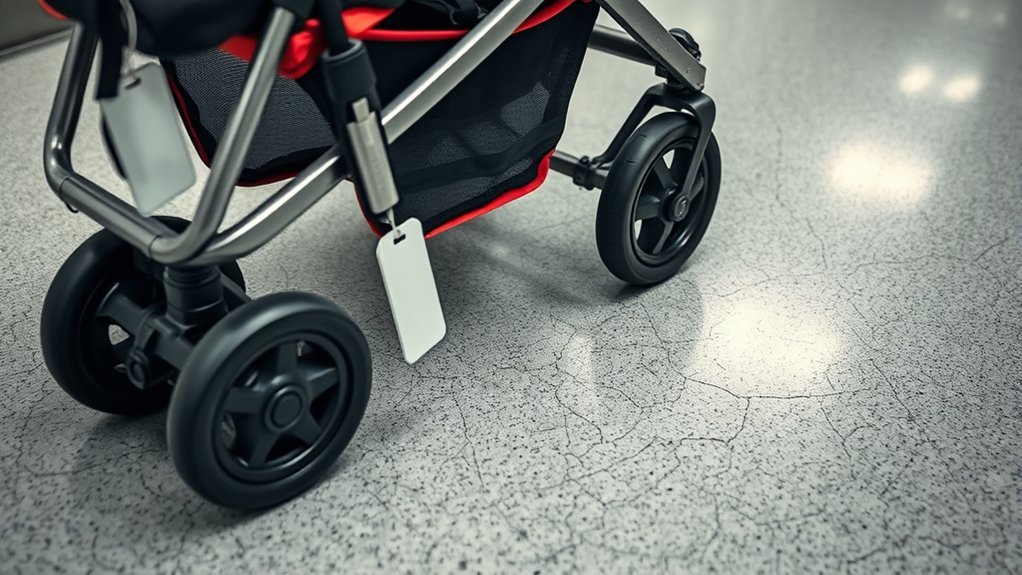
When you discover that your stroller has been damaged during transit, comprehensive evidence is the most critical factor in winning your claim. Airlines require definitive proof that the damage occurred while the stroller was in their custody and that it exceeds normal wear and tear.
Start by taking clear, high-resolution photographs of the damage from multiple angles before leaving the baggage pickup or jetbridge area. Capture close-ups of cracked frames, bent wheels, torn fabric, or broken locking mechanisms, as well as wide shots showing the entire stroller.
Pro Tip: Take timestamped photos and a brief video of your stroller at the departure gate right before handing it over for gate-checking. Pre-flight photos prove the stroller was in pristine condition prior to boarding, preventing airlines from blaming pre-existing wear.
Maintain an organized digital file containing all relevant documentation to streamline your damage assessment and reimbursement negotiations:
- Baggage Claim Tags: Do not peel off or discard the barcode tag attached to your stroller handle or frame.
- Original Purchase Receipt: Locate your retail receipt or order confirmation email to verify the stroller’s market value.
- Serial Number & Model Badge: Photograph the manufacturer label detailing the exact model, manufacture date, and serial number.
- Written Incident Record: Log the exact flight number, date, arrival time, and names of all airline staff members spoken to.
- Repair Estimates: Obtain an official written estimate from an authorized stroller repair shop or manufacturer outlining whether the item can be repaired or must be replaced.
Reporting the Damage to the Airline
Reporting the damage promptly is essential to preserving your claim rights. Most major airlines require passenger reports to be initiated at the airport Baggage Service Office (BSO) located near the baggage claim area.
Immediate Reporting Steps
As soon as your stroller is returned on the jetbridge or at baggage claim, conduct an immediate inspection. If you notice any bent metal, cracked plastic, or missing parts, proceed straight to the airline’s Baggage Service Office before exiting the airport security perimeter.
Familiarize yourself with your specific airline’s filing deadlines. While carriers like United Airlines, Delta Air Lines, and American Airlines allow up to 24 hours for domestic damage reports, ultra-low-cost and regional carriers enforce much stricter windows. For instance, Southwest Airlines and Frontier Airlines mandate that baggage and gate-checked stroller damage be reported within 4 hours of arrival.
Below is a comparative overview of reporting deadlines and claim requirements across major domestic carriers:
| Airline | Domestic Reporting Deadline | International Deadline | Primary Claim Requirement |
|---|---|---|---|
| United Airlines | 24 hours | 7 days | BSO inspection & PIR number |
| Southwest Airlines | 4 hours | 7 days | In-person report & original tag |
| Frontier Airlines | 4 hours | 7 days | Online portal or BSO report with photos |
| Delta Air Lines | 24 hours | 7 days | Physical inspection & representative name |
| American Airlines | 24 hours | 7 days | Written report & original claim check |
Documenting Damage Effectively
When reporting in person at the airport, request that the agent create a Property Irregularity Report (PIR). Ensure the agent inspects the stroller, notes every point of structural defect, and hands you a physical or digital copy of the report featuring a unique 10-character file reference code (e.g., LAXUA12345).
Warning: Never leave the airport terminal without obtaining a written Property Irregularity Report (PIR) or official claim reference number. Departing the airport without filing an initial report makes proving the airline caused the damage exponentially harder, especially with carriers enforcing 4-hour window rules.
Understanding Airline Liability Policies & Federal Regulations
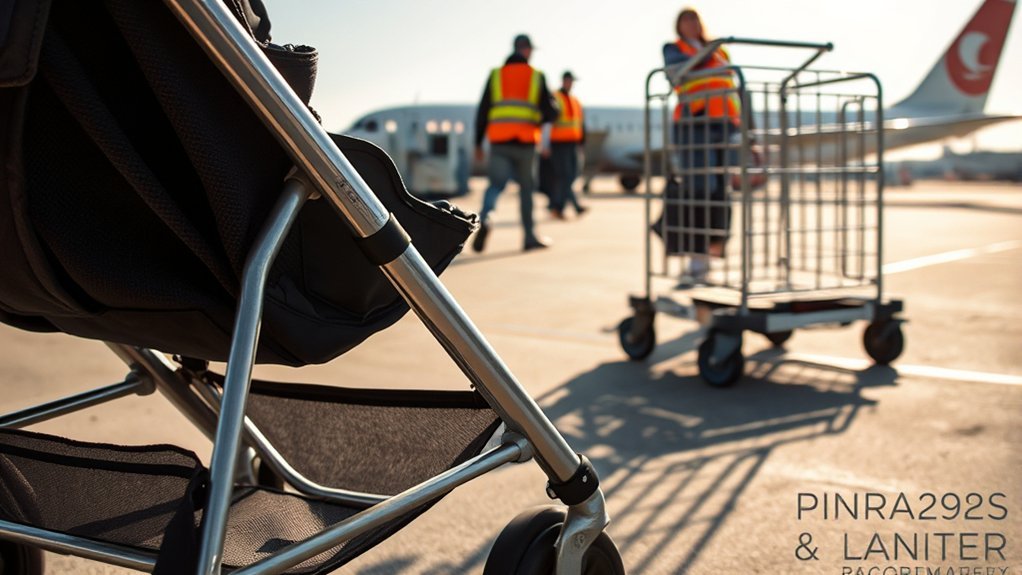
Contrary to common misconceptions, federal regulations require airlines to compensate passengers for damaged checked gear, subject to specific limits and exclusions.
Under US Department of Transportation regulation 14 CFR Part 254, airlines operating domestic flights are legally liable for lost, damaged, or delayed checked baggage—including gate-checked strollers—up to $3,800 per ticketed passenger.
While federal rules establish liability maximums, individual airline contract of carriage rules include specific nuances regarding how strollers are handled:
- Federal Domestic Cap ($3,800): On US domestic flights, federal law caps baggage liability at $3,800. Airlines cannot limit their liability to a lower amount for items accepted as checked baggage unless specific pre-flight limited release waivers were signed.
- International Flights (Montreal Convention): On international journeys, passenger rights are governed by the Montreal Convention, which caps liability at approximately 1,288 Special Drawing Rights (SDRs)—roughly $1,700 USD per passenger.
- Packaging Disclaimers: Certain carriers, such as United Airlines, include contract language stating they are not liable for minor cosmetic damage or damage to unboxed strollers. However, structural failure caused by gross negligence remains subject to compensation claims.
- Assistive Equipment Exception: If a specialized stroller is designated as an officially documented medical assistive device for a child with special needs, standard liability caps do not apply under the Air Carrier Access Act (ACAA), rendering the airline liable for full replacement value.
Navigating Gate-Checked vs. Counter-Checked Stroller Claims
Where you hand over your stroller significantly impacts how it is handled and how liability claims are evaluated.
Gate-Checked Strollers: Most families choose to check strollers at the boarding gate using a pink or yellow gate tag. This allows parents to use the stroller throughout the airport terminal. However, because gate-checked strollers are loaded into the cargo hold via tarmac chutes or manual lifting right before takeoff, they face frequent handling risks during quick turnaround windows.
Counter-Checked Strollers: Checking your stroller at the main ticket counter inside a heavily padded travel bag or original cardboard box offers maximum physical protection. If an airline attempts to deny a damage claim, presenting evidence that the stroller was checked in a protective padded travel case drastically strengthens your case.
Steps to File a Claim for Compensation
If your stroller cannot be repaired on-site at the airport, follow this structured process to submit a formal written claim for financial compensation:
- Obtain Official Written Quotes: Contact the stroller manufacturer or a certified repair vendor to secure a formal estimate stating whether the frame or components can be safely repaired, or if the unit is structural scrap.
- Gather Required Claim Artifacts: Compile your PIR control number, flight boarding passes, luggage claim tags, repair quotes, and original purchase receipt.
- Submit Through Official Online Portals: Access the airline’s central baggage claim portal (e.g., United Central Baggage Resolution or Delta Baggage Claim) within the required timeframe and upload all digital evidence.
- Request Depreciation Adjustments: If you lack an original receipt, provide current retail listings for the identical model. Be prepared for the airline to apply standard annual depreciation (typically 10%–20% per year of age).
- Maintain a Communication Log: Document every phone call, email reply, agent name, and timestamp during the reimbursement review period.
How to Escalate Denied Claims & Alternative Reimbursement
If the airline rejects your claim by citing fine-print contract exclusions, you have multiple escalation avenues available:
1. File an Official Complaint with the US DOT: If an airline refuses to honour federal baggage regulations or unreasonably denies your claim for a gate-checked stroller, submit a consumer complaint directly with the US Department of Transportation Aviation Consumer Protection Division. Airlines are legally required to investigate and respond to DOT complaints within 30 days.
Note: Filing a DOT complaint triggers formal review by the airline’s corporate legal team, which frequently leads to an out-of-court settlement offer or voucher payout to resolve the regulatory flag.
2. Leverage Credit Card Travel Protections: Many premium travel credit cards (such as Chase Sapphire Reserve, Capital One Venture X, or American Express Platinum) offer built-in lost or damaged baggage coverage. If you paid for your airline ticket with an eligible card, submit a secondary coverage claim through your card issuer’s benefits administrator to cover costs excluded by the airline.
Tips for Preventing Stroller Damage During Travel
Taking defensive measures before arriving at the airport significantly reduces the risk of structural damage during flight operations:
- Use a Compact Overhead Travel Stroller: Select an ultra-compact travel stroller designed to fold down into standard IATA cabin luggage dimensions (such as the Babyzen YOYO or Bugaboo Butterfly) that can be stowed directly in the overhead bin.
- Invest in a Padded Travel Bag: Purchase a heavy-duty, padded travel bag specifically contoured for your stroller model. Many manufacturers (e.g., Uppababy TravelSafe) offer travel insurance programs that cover any airline damage incurred while using their official travel bag.
- Remove Detachable Accessories: Remove cup holders, snack trays, organizer bags, and rain covers before checking the stroller. Loose accessories are easily caught in baggage handling conveyer belts.
- Secure the Frame Lock: Fasten cable ties or Velcro straps around the folded frame to prevent the stroller from accidentally springing open during transit.
Exploring Replacement Options and Resources
When an airline renders your primary stroller unusable upon arrival at your destination, immediate practical alternatives are necessary:
- Airport Loaner Strollers: Request an immediate loaner stroller from the airport Baggage Service Office. Major hub airports routinely maintain a fleet of basic strollers for stranded families.
- Emergency Purchase Vouchers: Ask the customer service manager for an emergency incidentals voucher or authorization to purchase a temporary replacement stroller at a local retailer, with costs billed to the claim file.
- Local Baby Gear Rentals: Utilize local equipment rental services (such as BabyQuip) at your destination to rent an equivalent stroller model delivered directly to your hotel while your claim is processed.
Frequently Asked Questions
What types of strollers are most commonly damaged by airlines?
Full-size modular strollers and lightweight umbrella strollers with exposed folding joints are most frequently damaged. Their extended aluminum frames and protruding wheels easily snag on luggage sorting machinery or suffer impact damage when stacked beneath heavy suitcases in the aircraft cargo hold.
How long do I have to file a stroller damage claim with an airline?
Reporting windows vary by carrier and route. On domestic US flights, strict deadlines range from 4 hours (Southwest, Frontier) to 24 hours (United, Delta, American). On international flights governed by the Montreal Convention, passengers have up to 7 days from the date of baggage receipt to submit a formal written claim.
Can I travel with a stroller if it is heavily used or previously worn?
Yes, you can travel with a heavily used stroller. However, airline staff may inspect the item at check-in and request that you sign a Limited Liability Release form if pre-existing damage, tears, or structural weakness are visible prior to boarding.
Are specific airlines known for better stroller handling?
Legacy international airlines and family-oriented carriers like Singapore Airlines, Emirates, and Delta Air Lines consistently receive higher consumer ratings for baggage handling. Using an overhead-compliant stroller or a padded travel bag remains the best safeguard regardless of the carrier.
What should I do if the airline denies my stroller damage claim?
If your claim is denied, escalate the issue by filing an official consumer complaint with the US Department of Transportation (DOT) Aviation Consumer Protection Division. Additionally, check if your credit card provides secondary baggage protection benefits or file a formal appeal with the airline’s corporate customer care department.
Conclusion
Handling a stroller damaged by an airline requires prompt action, meticulous documentation, and a clear understanding of federal passenger rights. By photographing damage at the arrival gate, securing a Property Irregularity Report before exiting the terminal, and citing standard US Department of Transportation liability rules, you position yourself for successful repair or replacement compensation. Prepare for future travels by selecting protective gear, considering compact overhead strollers, and knowing your escalation options if claims run into friction.
Sources
- US Department of Transportation — Fly Rights: Domestic Baggage Liability & Regulations (14 CFR Part 254)
- United Airlines — Special Baggage & Children’s Equipment Liability Policies
- Southwest Airlines — Stroller & Car Seat Acceptance and Damage Reporting Rules
- Delta Air Lines — Children & Infant Equipment Claims Procedures
- International Air Transport Association (IATA) — Passenger Rights & Montreal Convention Baggage Standards