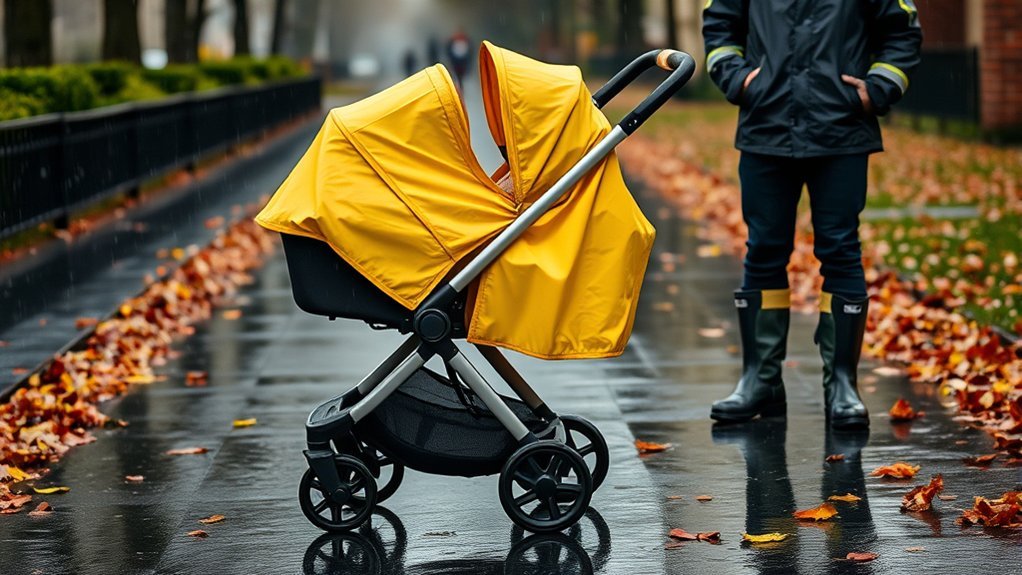
A sudden shower can turn a smooth stroller outing into a cold, wet mess. The right rain cover helps keep your child dry while still allowing airflow and a clear view. This guide explains how to choose, use, and care for stroller rain protection so rainy trips feel safer and less stressful.
Quick Answer
Use a stroller rain cover that fits securely, has ventilation openings, and gives your child a clear view. A model-specific cover often gives the best seal, but a well-fitted universal cover can work for many stroller frames.
Key Takeaways
- Choose a rain cover that fits your stroller closely and attaches firmly.
- Look for ventilation openings to support airflow and reduce condensation.
- Pick clear windows so you can check your child without lifting the cover.
- Dry and store the cover properly after each rainy outing.
- Replace a damaged cover before it leaks, tears, or blocks visibility.
Understanding Rain Protection for Your Stroller
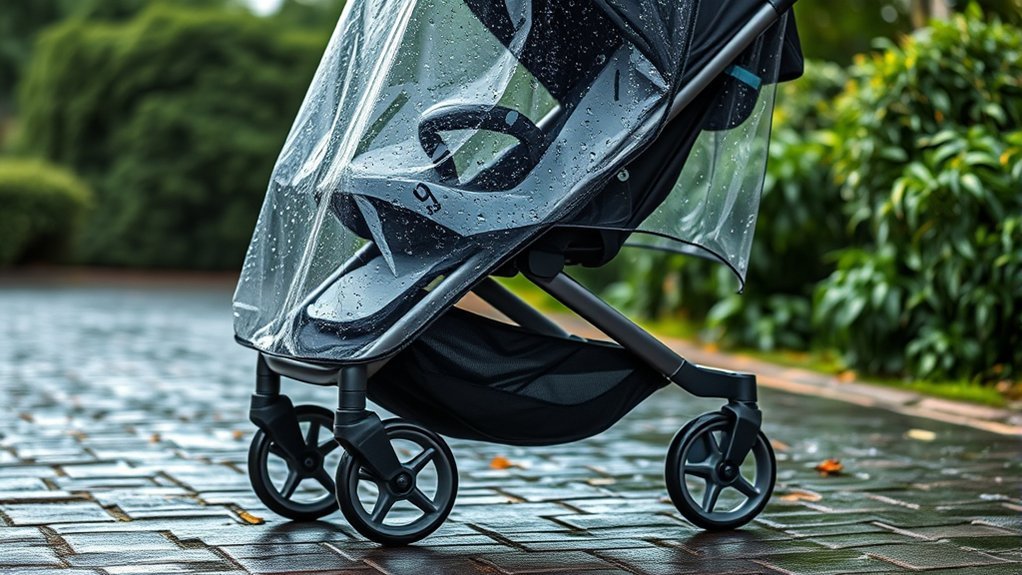
Weather can shift fast when you’re out with your child. Rain protection helps shield your stroller from rain, wind, and splashback while keeping your child more comfortable.
A quality rain cover works as a clear, waterproof barrier. It should protect your child without trapping too much heat or blocking your view.
Choose a cover with ventilation openings, secure edges, and a lower skirt that helps stop spray from wet paths. A model-specific cover can trace the stroller frame more closely and leave fewer gaps.
Good care also matters. Wipe the cover after use, let it air-dry, and store it away from heat and direct sun.
Choosing the Right Rain Cover: Universal Vs Model-Specific

When you choose a rain cover, focus on fit, airflow, and budget. A cover that fits poorly can let rain enter around the sides or foot area.
Universal covers often cost less and work with many stroller shapes. But they can leave gaps on unusual frames, especially in windy rain.
Model-specific covers usually cost more, but they often fit more securely. That tighter fit can help during regular rainy walks, school runs, or errands.
Fit and Compatibility
Start by checking your stroller brand, model, and frame shape. A good rain cover should cover the seat area without pulling tight across your child’s face or legs.
Universal stroller covers can work well when they include adjustable straps, elastic edges, or hook-and-loop tabs. Test the fit before you need it in rain.
Model-specific covers usually line up better with canopies, handles, footrests, and vents. They may also stay steadier during windy weather.
Warning: Do not use a rain cover that blocks airflow or presses against your child’s face.
Budget Considerations
Choosing the right rain cover for your stroller can affect your budget. Universal covers often cost less and may suit families with more than one stroller.
A lower price does not always mean poor protection. Still, check the seams, attachments, material quality, and ventilation before you buy.
Model-specific covers usually cost more because they fit one stroller line or frame. They may give better long-term value if you walk often in wet weather.
Essential Features for Effective Rain Covers
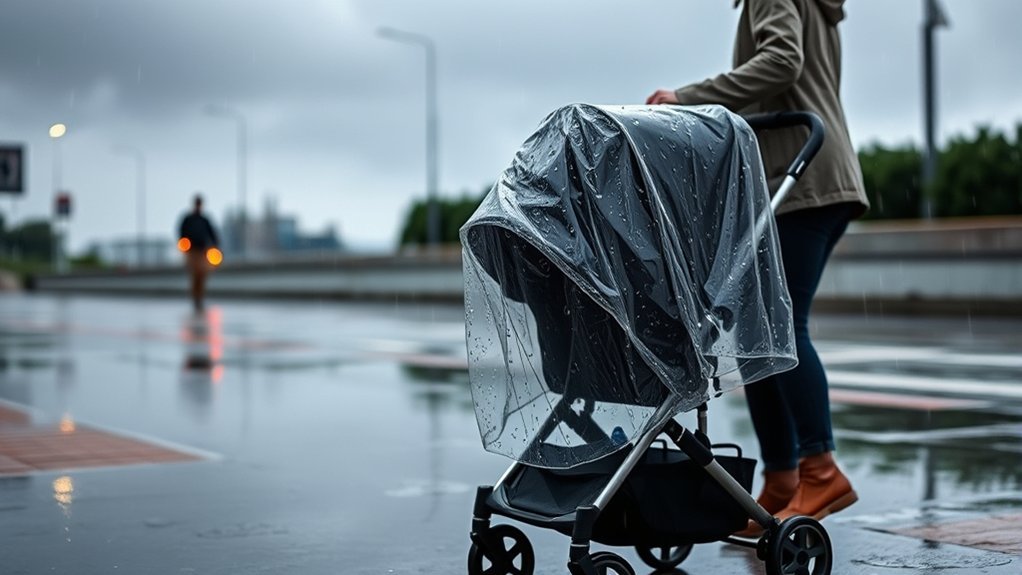
To keep your child dry and comfortable during rain, choose a cover with practical safety features. Focus on fit first, then comfort and ease of use.
- Secure attachment: Make sure the rain cover fits snugly to your stroller and reduces gaps.
- Safer materials: Look for non-toxic, polyvinyl chloride (PVC)-free, and phthalate-free options when available.
- Ventilation openings: Choose vents or mesh panels that help air move through the cover.
- Clear windows: Pick undistorted windows so you can see your child and your child can look out.
These features help you handle wet weather with more confidence. They also make the stroller more comfortable for your child.
Practical Scenarios for Rainy Day Outings
Rainy days do not need to cancel every stroller outing. A little planning can keep errands, walks, and travel days on track.
For city errands, make stroller adjustments before you leave. Check the cover seal, clear window, and lower edges so rain does not blow inside.
Keep a microfiber cloth nearby to wipe fog or water from the window. Store phones, wallets, and snacks in higher stroller pockets to protect them from splashes.
If you’re visiting a theme park or outdoor event, choose a cover you can attach quickly. Practice folding and storing it at home so you can use it without stress.
If you do not have a cover, a lightweight poncho can offer short-term help in light rain. Avoid loose plastic sheets because they can block airflow or shift into unsafe positions.
Ensuring Safety With Airflow and Visibility
Your child needs more than dry fabric and a covered seat. They also need fresh air, a clear view, and enough space to sit comfortably.
Safe stroller rain protection should block rain without blocking airflow, visibility, or your child’s movement.
Use these tips to support airflow and visibility:
- Choose rain covers with ventilation openings or mesh panels to help reduce heat buildup.
- Use covers with clear windows so you can check your child often.
- Attach the cover firmly to the stroller frame to reduce gaps and shifting.
- Check the cover’s position during the outing so it does not block your view.
If your child seems too warm, sweaty, upset, or hard to see, stop and adjust the cover. Move to a dry sheltered area before removing it in heavy rain.
Maintenance Tips for Longevity of Your Rain Cover
Good rain cover care helps it last longer and work better. It also helps prevent mildew, odors, and cloudy windows.
After each use, wipe the cover with a soft cloth and let it air-dry completely. Do not fold it while the edges still feel damp.
Store your cover in a cool, dry place, away from direct sunlight and heat. Heat can weaken some clear materials and make them crack sooner.
Use mild soap and cool water to clean road grime. Rinse well so soap residue does not cloud the surface.
Many universal rain covers include pouches for storage. You can also use a resealable bag for damp edges until you can dry the cover fully.
Inspect the cover often for wear and tear. Replace it if you find cracks, torn seams, loose fasteners, or cloudy areas that block your view.
Budgeting for Quality Rain Protection
When you budget for a rain cover, compare cost with fit, materials, and how often you’ll use it. A cheap cover can still work if it fits well and allows airflow.
Universal covers may save money at first. A model-specific cover may protect better if you use one stroller every day.
Check for safety features, sturdy seams, and clear panels before you focus on price alone. A cover that fails in heavy rain can cost more if you need to replace it soon.
Assessing Cover Options
As you compare stroller rain covers, look beyond the product photo. Think about how the cover will work on your real stroller during a wet walk.
- Cover materials: Choose durable, child-safe materials that feel sturdy but not stiff.
- Universal vs. model-specific fit: Pick a flexible universal cover or a snug model-specific option based on your stroller.
- Safety features: Look for vents, clear windows, taped seams, and reflective details where available.
- Ease of use: Choose a cover you can attach, remove, dry, and store without much effort.
A balanced choice can reduce future replacements. It can also keep your stroller easier to use during sudden rain.
Long-term Value Considerations
Choosing the right stroller rain cover can support your family’s comfort over many outings. A better fit, stronger seams, and safer materials often matter more than the lowest price.
Use this simple comparison when you weigh your options:
| Cover Type | Typical Cost | Key Features |
|---|---|---|
| Universal | Often lower | Flexible fit, useful for many strollers |
| Model-specific | Often higher | Closer fit, fewer gaps, stronger weather protection |
| Premium options | Highest range | Safer materials, stronger seams, easier handling |
Think about how often you walk in wet weather. Frequent use can justify a stronger cover with a better fit.
When Not to Use a Stroller Rain Cover
A rain cover helps in wet weather, but it does not suit every condition. Avoid using it as a sun shield, windproof blanket, or long-term indoor cover.
Do not use a cover if it traps heat, blocks air, or limits your view of your child. Remove it when you reach a dry indoor space.
In heavy storms, lightning, flooding, or strong wind, stay indoors when you can. A stroller rain cover can help with rain, but it cannot make unsafe weather safe.
Pro tip: Keep the folded rain cover in your stroller basket so sudden showers do not catch you off guard.
Frequently Asked Questions
Can I Use an Umbrella Instead of a Rain Cover?
You can use an umbrella for light rain, but it usually gives less coverage than a fitted rain cover. Make sure it does not block your view or pull the stroller off balance.
How Do I Clean My Rain Cover After Use?
Rinse the rain cover with cool water, then wipe it with mild soap and a soft cloth. Let it air-dry fully before you fold or store it.
What Should I Do if My Stroller Gets Wet?
Wipe the stroller with a clean cloth, then let it dry in a shaded, airy spot. Check fabric seams, storage pockets, and metal parts so moisture does not sit there.
Are There Any Stroller Brands Better for Rain?
Some stroller brands sell matching rain covers, which can improve fit and reduce gaps. Check your stroller maker’s accessories first, then compare universal options if a matching cover does not exist.
How Can I Ensure My Child Stays Warm in the Rain?
Dress your child in warm layers and use weather-appropriate outerwear before you attach the rain cover. Avoid bulky items that press against the cover or limit airflow.
Conclusion
The best stroller rain cover keeps your child dry while still supporting airflow, visibility, and comfort. Choose a cover that fits your stroller well, attaches securely, and stays easy to clean. Before your next wet outing, test the fit at home and pack a cloth for quick window wipes. With the right setup, rainy days can still feel calm, safe, and manageable.