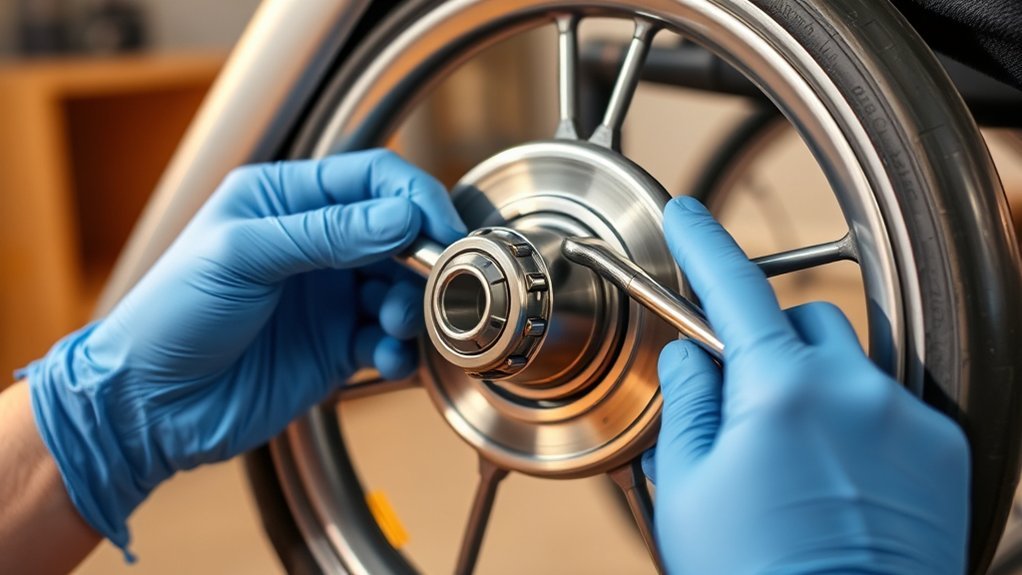
To maintain your jogging stroller’s tires, regularly check tire pressure to prevent flats. Inspect for visible damage like cracks or punctures. When you’ve identified a flat, remove the wheel using a wrench, keeping track of components. Carefully extract the old tube, replace it with a new size-matched one, and make certain it’s seated correctly. Finally, reassemble the stroller, confirm tire firmness, and inspect for safety. Keep going to uncover more tips for ideal tire care.
Identifying the Problem With Flat Tires
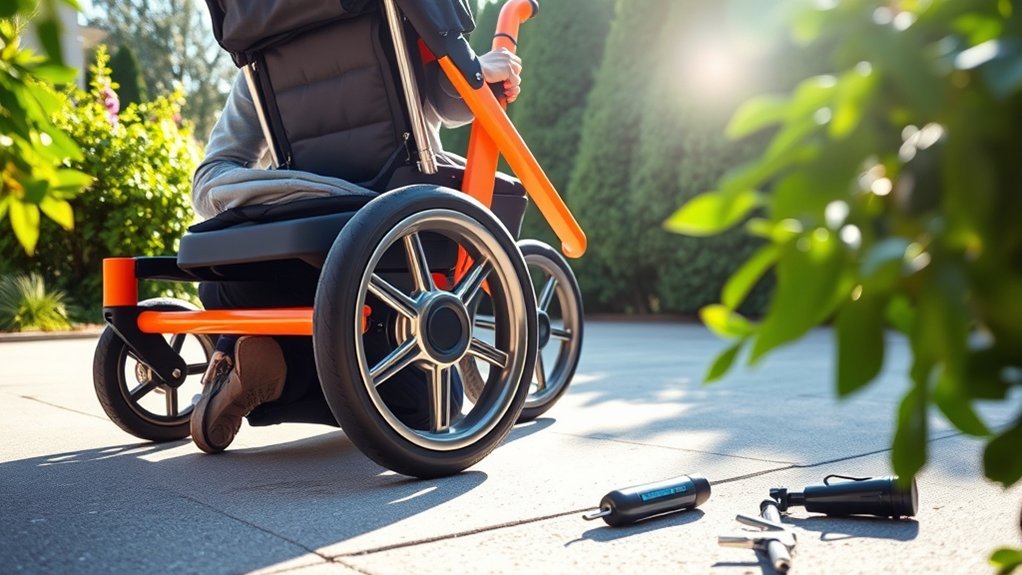
When you notice a flat tire on your jogging stroller, it’s essential to act quickly, as a flat tire can disrupt your routine and compromise safety.
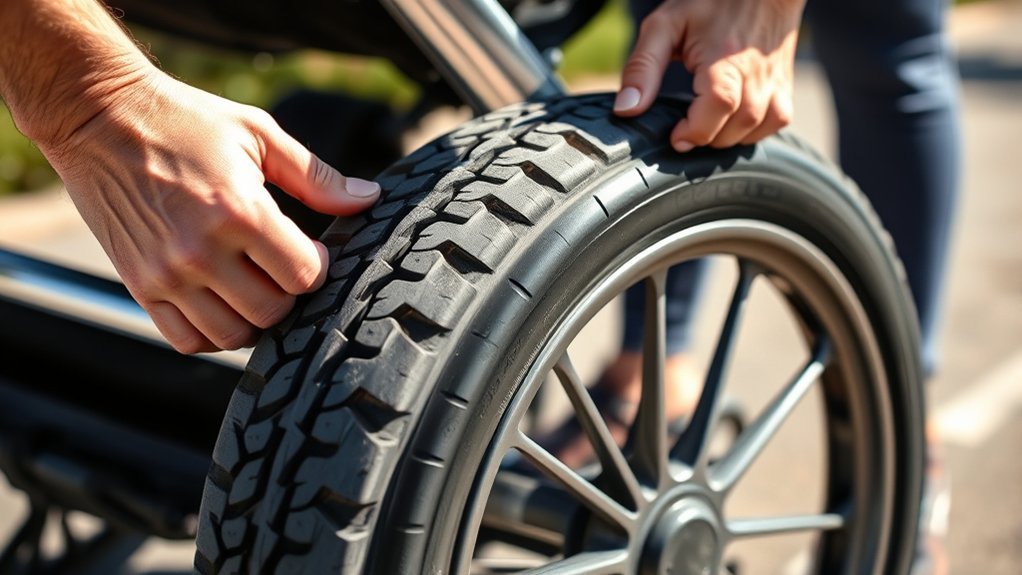
Start by checking the tire pressure; low pressure often indicates air loss. Look closely for any visible damage, such as cracks or punctures on both the tire and tube. Persistent air loss typically points to a hole in the tube, which may require replacement.
Check tire pressure and inspect for damage; persistent air loss may indicate a hole in the tube needing replacement.
Remember, the repair methods for jogger-type strollers differ from traditional ones, so make sure you’re familiar with your stroller’s specifications.
Regularly checking tire pressure and maintaining proper inflation can prevent unexpected flat tires, keeping your jogging experience smooth and enjoyable while guaranteeing safety for you and your little one.
Removing the Wheel for Inspection
Removing the wheel from your jogging stroller is a straightforward process that requires attention to detail.
Start by loosening the wheel using a wrench or the built-in pin mechanism, making sure to keep track of any washers or small components. Carefully pull the wheel off the stroller frame, keeping a firm grip to prevent dropping parts.
Before fully removing it, inspect the area around the wheel for any debris or obstructions that could hinder the process. Note the orientation of the wheel and its components for proper reassembly later.
After the wheel’s off, check for visible damage to the tire or tube—this is essential for maintaining proper wheel alignment and following key maintenance tips for peak performance.
Extracting and Replacing the Tube
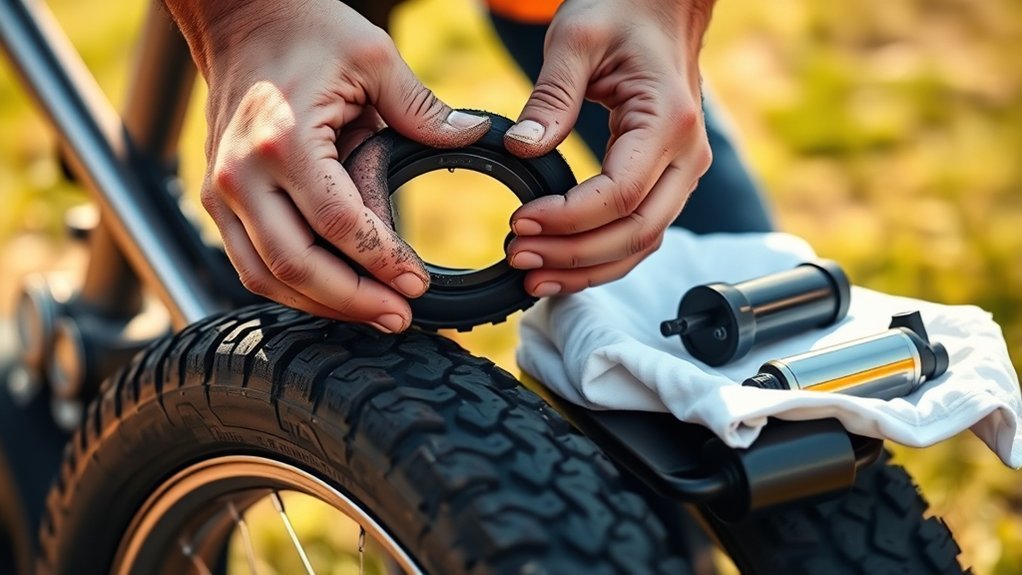
To extract the tube from your jogging stroller tire, start by removing the tire cap and using a flathead screwdriver to carefully pry the tire off the rim without causing any damage.
Once the tire’s off, note the tube size, such as 12 by 1.75, so you can purchase the correct replacement tube type later. Use tire tools like levers to help with removal if needed.
When you insert the new tube, make certain to seat one side into the tire first to avoid folds or wrinkles, which can cause problems.
After placing the tube, inflate it gently to check for proper seating before reassembling the tire.
Finally, verify all washers are replaced and the wheel is securely tightened.
Installing the New Tube Properly
Before you install the new tube in your jogging stroller tire, make sure it matches the tire size, such as 12 by 1.75, for ideal compatibility.
Begin by carefully inserting the new tube into the tire, guaranteeing there are no twists or folds that could cause air leakage.
Use effective seating techniques by starting with one side of the tube in the tire and gradually working around the rim for an even fit.
If needed, employ a flathead screwdriver to assist in seating the tube properly without risking damage.
Once installed, gently inflate the tube to check for proper seating and verify it’s well positioned within the tire before moving on to final assembly.
Reassembling the Stroller for Use
Once you’ve inflated the new tube, it’s crucial to carefully replace the tire onto the wheel, ensuring perfect alignment.
Reinsert the washers and secure the wheel by tightening both sides to prevent any wobbling during use.
Next, check the tire firmness by pressing on it to confirm it’s adequately inflated, adhering to the recommended tire pressure for best performance.
Check the tire firmness by pressing on it to ensure proper inflation and optimal performance.
Don’t overlook any small components, such as pins or caps; make sure they’re accounted for and properly attached to maintain the stroller’s integrity.
Finally, perform a thorough inspection of the wheel and tire, ensuring everything is in place and ready for safe use.
Following these safety precautions guarantees a smooth, enjoyable jogging experience for you and your little one.
Frequently Asked Questions
How Often Should I Check My Jogging Stroller Tires?
You should check your jogging stroller tires at least once a month. Monitor for tire wear and incorporate it into your maintenance schedule to guarantee safety and performance during your runs, keeping everything in prime condition.
What Tire Pressure Is Recommended for Jogging Strollers?
For jogging strollers, maintain tire pressure between 20-30 PSI, following specific inflation guidelines. Regularly check for tread wear to guarantee safety and performance. Proper pressure enhances stability and makes your runs smoother and more enjoyable.
Can I Use a Regular Bike Tube for My Jogging Stroller?
No, you can’t use a regular bike tube for your jogging stroller. Confirm tire compatibility by selecting the correct tube replacement designed specifically for your stroller’s tires to maintain safety and performance.
How Do I Know if My Tire Is Damaged Beyond Repair?
Check for significant tire wear, deep cracks, or bulges. If you notice puncture signs like air loss or visible holes, it’s likely damaged beyond repair. Replace the tire for ideal safety and performance.
What Tools Do I Need for Tire Maintenance on a Jogging Stroller?
You’ll need a tire pressure gauge, a patch kit for tire repair, a pump, and a tire lever. With these tools, you’re unstoppable, ensuring your jogging stroller’s tires stay in top shape for every adventure.
Conclusion
By following these steps, you can keep your jogging stroller in top shape and avoid flat tires that can slow you down. Remember, a stitch in time saves nine; regular maintenance can save you from bigger issues later on. Inspect your tires frequently, and don’t hesitate to replace worn tubes. With the right care, you’ll guarantee a smooth ride for both you and your little one, making every jog a joy instead of a hassle.