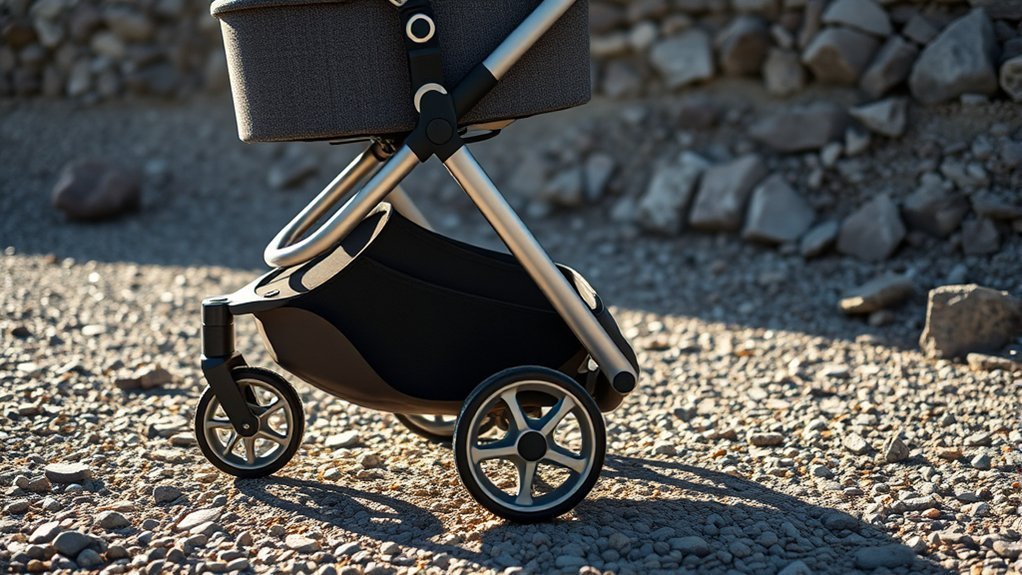
Cleaning a secondhand stroller can be a breeze! Start by finding a ventilated workspace and gather your supplies. Disassemble the stroller gently, washing the textiles in cold water and allowing them to air dry. Don’t forget to clean the chassis with warm soapy water, scrubbing stubborn spots. Lubricate moving parts with WD-40 for smooth operation. Finally, reassemble everything, check for loose screws, and you’re good to go! Trust me, there’s plenty more handy tips you won’t want to miss!
Preparing for the Cleaning Process

Before you plunge into cleaning that secondhand stroller, it’s a good idea to get everything set up for success.
First, find a well-ventilated workspace—this’ll keep the air fresh while you tackle those stubborn stains. Trust me, you’ll want to wear old clothes that you don’t mind ruining; cleaning can get messy!
Gather your cleaning supplies—mild detergent, a soft brush, and some microfiber cloths are essentials. Don’t forget a butter knife for those pesky rusted push buttons and WD-40 or silicone spray for corroded zippers.
As you remove all the textiles, take a moment to inspect the chassis for any loose parts or damage, noting any scuffs or rust. This preparation makes the actual cleaning process so much smoother!
Disassembling the Stroller

As you plunge into disassembling the stroller, remember to take your time and be gentle with each part. Start by removing all textiles; this lets you inspect for any damage. If you encounter rusted push buttons, a butter knife can help detach them, and a splash of WD-40 or silicone spray makes zipper removal easier. Check for loose stroller components or rips in the fabric, noting any scuffs or rust on the chassis for later cleanup.
| Disassembly Tips | Action Needed |
|---|---|
| Remove Textiles | Inspect for damage |
| Rusted Push Buttons | Use a butter knife |
| Corroded Zippers | Apply WD-40 |
| Loose Parts | Keep track of screws |
| Ventilated Workspace | Wear old clothes |
Stay organized and enjoy the process!
Washing the Textiles

Now that you’ve carefully disassembled the stroller and checked the textiles for damage, it’s time to tackle the washing process.
First, remove any hard elements like backboards to guarantee the textile materials get a thorough clean. Shake or vacuum them to eliminate loose debris.
To ensure a deep clean, start by removing hard elements and shaking or vacuuming the textiles to eliminate loose debris.
If you’re dealing with delicate fabrics, hand washing might be best; otherwise, a cold, gentle machine wash works wonders. I remember using a gentle cycle on my son’s stroller, and it came out looking brand new!
After washing, hang the textiles to dry—avoid the dryer as it can warp them.
Finally, give them a quick once-over for any remaining dirt before reassembling. You’ve got this!
Treating Mildew and Stains
When you’re tackling mildew and stains on your secondhand stroller, a little know-how goes a long way.
Start with a diluted chlorine solution for that pesky mildew, but don’t forget to rinse thoroughly afterward.
For those stubborn stains, a gentle wash or even hand washing is your best bet to keep the fabric intact.
Mildew Removal Techniques
If you’ve discovered mildew on your secondhand stroller, don’t worry—removing it can be straightforward with the right approach.
Start by taking off any hard elements like backboards to guarantee every fabric piece gets clean. Use a gentle wash cycle with cold water and regular detergent, and if the fabric allows it, add some diluted chlorine to zap that mildew.
Just remember to rinse everything thoroughly to avoid skin irritation later!
Once washed, hang the fabrics to dry in a well-ventilated area—this is key for mildew prevention.
Before putting your stroller back together, do a quick check for any remaining spots.
Trust me, these fabric care tips will help you keep your stroller fresh and ready for your next adventure!
Stain Treatment Methods
Even the best-loved strollers can fall victim to stubborn stains, so knowing how to tackle them is essential.
Start by shaking or vacuuming the fabric to get rid of any loose debris. For mildew, try a diluted chlorine solution alongside regular detergent—just make sure you rinse thoroughly afterward to avoid any chlorine residue.
Hand washing delicate fabrics helps prevent damage, while stain removal techniques like soaking can work wonders on tough spots.
Remember, hang your textiles to dry instead of using a dryer; it’ll help maintain their integrity.
And don’t forget your mildew prevention tips—regular cleaning and proper storage make a world of difference.
With these methods, your stroller will look as good as new!
Cleaning the Chassis
When it comes to cleaning the chassis of your secondhand stroller, a little care goes a long way.
Start by safely disassembling it to reach all those nooks and crannies where dirt likes to hide.
From there, you’ll want to tackle effective cleaning methods and rust treatments to keep your stroller looking and working like new.
Safe Disassembly Techniques
Before diving into cleaning your secondhand stroller, it’s essential to safely disassemble the chassis. Start by finding a well-ventilated workspace and throw on some old clothes to protect against dirt.
Carefully remove the textiles and hard components, inspecting each for damage or loose parts. I once had a stubborn rusted push button, and using a butter knife helped me gently pry it off—just be cautious!
For corroded zippers, a quick spray of WD-40 works wonders. Keep track of any scuffs or rust, as these spots will need special attention later.
Effective Cleaning Methods
Once you’ve safely disassembled the stroller, it’s time to tackle the chassis cleaning.
Start by rinsing the frame with a hose or buckets of warm soapy water, using a sponge for general cleaning.
Don’t forget those tricky spots around wheel mountings—grab a brush to scrub away dirt without scratching the stroller materials.
Once you’ve banished the grit, follow up with a clean rag to wipe off any oily residues.
If you spot surface rust, crumple up some tin foil and gently rub it away.
Before putting everything back together, check for loose screws and give the joints a spritz with WD-40 or silicone spray, allowing excess lubricant to drain.
Your stroller will feel brand new!
Rust Treatment Solutions
If you notice rust on your stroller’s chassis, tackling it promptly can save you from bigger problems down the line. For surface rust, grab a balled-up piece of tin foil. It’s surprisingly effective for chrome restoration without scratching the surface. If you encounter deeper rust, try an acidic paste like rust eater from an automotive store.
Before you engage, always check for loose screws with a screwdriver—safety first! To enhance rust prevention, WD-40 is your best friend for lubrication and cleaning. Just let it sit for at least 20 minutes after application to guarantee it works its magic.
| Rust Condition | Treatment Method |
|---|---|
| Surface Rust | Tin foil scrub |
| Deeper Rust | Acidic paste (rust eater) |
| General Lubrication | WD-40 |
| Inspection | Screwdriver check |
Addressing Rust and Scuffs
When you’re cleaning a secondhand stroller, tackling rust and scuffs can seem intimidating, but it doesn’t have to be.
Start with surface rust on chrome or metal parts—grab a balled-up piece of tin foil. It’s surprisingly effective for rust prevention without scratching!
If you find deeper rust, don’t hesitate to use an acidic paste from an auto shop; it works wonders.
For scuffs, the rough side of a dish sponge can work magic—just buff gently to lift those stubborn paint marks.
Keep an eye on the chassis during your cleaning spree to catch any new issues.
And if you’ve got faded plastic, automotive products can restore that fresh look.
You’ve got this!
Lubricating Moving Parts
Keeping your secondhand stroller running smoothly is crucial, and lubricating the moving parts is an essential step many overlook. You can use various lubrication techniques to keep everything functioning well. For instance, WD-40 is great for breaking up rust while providing lubrication. Silicone spray works wonders on pre-cleaned mechanisms, keeping things slick without attracting dirt. For those heavy-duty parts, a thicker grease is your best bet.
| Lubricant Type | Best For | Application Tips |
|---|---|---|
| WD-40 | Rust and grit | Apply and let sit for 20 mins |
| Silicone Spray | Clean, de-rusted parts | Spray lightly to avoid dirt |
| Heavy-Duty Grease | High-stress applications | Use sparingly on moving parts |
Don’t forget to wipe down areas that touch your child!
Reassembling the Stroller
After you’ve taken care of lubricating the moving parts, it’s time to put the stroller back together.
First, make certain all the cleaned parts are dry and free from any lubricant residue. Align the textiles with their respective chassis components, securing all clips and fasteners—trust me, you don’t want any accidental detachments!
Next, double-check that screws and bolts are tight; loose parts can be a real hassle.
Once assembled, test the stroller’s maneuverability and folding mechanism to ascertain everything operates smoothly.
Finally, do a visual inspection to confirm there are no missed areas during cleaning and that all textiles are intact.
Remember to reattach any stroller accessories you love. Happy strolling!
Final Tune-Up and Inspection
Now that you’ve cleaned and reassembled your stroller, it’s time for a final tune-up and inspection to make sure everything’s in tip-top shape.
Check for loose screws and give the wheels a spin to spot any issues that might need fixing.
Trust me, a quick safety check can save you from headaches down the road!
Chassis Tune-Up Essentials
Before you plunge into the cleaning process, taking a moment to inspect the chassis of your secondhand stroller can make a world of difference.
You want smooth rides, not bumpy ones! Here’s what to focus on:
- Chassis Adjustments: Grab a screwdriver and tighten any loose screws to boost stability.
- Tire Inflation: Check those air-filled tires! Pump them as needed to avoid any lopsided positioning.
- Lubrication: Use WD-40 on moving parts, letting it work its magic for 20 minutes before wiping off the excess.
Once you’ve tackled these essentials, take the stroller for a spin.
Testing maneuverability is key to ensuring your little one enjoys a safe and comfy ride!
Safety Inspection Checklist
A thorough safety inspection can make all the difference when it comes to ensuring your secondhand stroller is ready for your little one.
Start by checking for loose screws—tightening them up means that stroller models can handle the adventures ahead without a hitch.
Next, inspect the tires; if they’re worn out or under-inflated, re-pump them to keep your rides stable.
Don’t forget to test push buttons and zippers; they should operate smoothly and be free from rust.
After cleaning, examine the textiles for rips or mildew—your child deserves a safe, hygienic space.
Finally, give the stroller a quick test drive to make sure it’s as user-friendly as it should be.
You’ve got this!
Maintenance Tips for Ongoing Care
While you might think cleaning a secondhand stroller is a one-time task, regular maintenance is key to keeping it in top shape.
Here are some easy tips to help you create a solid maintenance schedule:
- Inspect the chassis: Check for loose screws every few weeks and tighten them to guarantee those safety features are intact.
- Lubricate moving parts: Use WD-40 every few months to keep everything running smoothly and rust-free.
- Store properly: Keep your stroller in a dry, well-ventilated area to avoid mildew and rust on textiles and metal parts.
Frequently Asked Questions
Can I Use Bleach on the Stroller Fabrics?
You shouldn’t use bleach on stroller fabrics; it can damage them. Instead, try bleach alternatives like vinegar or gentle soap for safe cleaning. Your stroller will stay fresh without risking fabric care or color fading!
How Often Should I Clean My Stroller?
You should clean your stroller every couple of weeks, especially if you use it frequently. Stroller maintenance tips suggest wiping down surfaces regularly and deep cleaning monthly. Trust me, your stroller will thank you!
What Should I Do if the Wheels Squeak?
If your stroller wheels squeak, try applying some lubricant for quick wheel maintenance. I’ve found that a little silicone spray works wonders. You’ll be surprised how smooth your strolls become with this simple squeaky solution!
Is It Safe to Machine Wash All Stroller Parts?
“Don’t throw the baby out with the bathwater!” While some stroller parts can go in the machine, always follow fabric care guidelines. Stick to stroller maintenance tips to keep everything clean without risking damage.
Can I Use a Steam Cleaner on the Stroller?
Yes, you can use a steam cleaner on your stroller! It’s great for killing bacteria and sanitizing. Just make sure to check the fabric care guidelines first, so you don’t damage anything.
Conclusion
Now that you’ve tackled each step, take a moment to admire your handiwork. But wait—before you roll that freshly cleaned stroller out the door, give it a final once-over. Check for any loose screws or hidden grime that might’ve slipped through the cracks. You never know what little surprise might be lurking! With just a bit of extra care, you’ll guarantee countless adventures ahead. Trust me, you’ll be glad you did when your little one is happily cruising along!