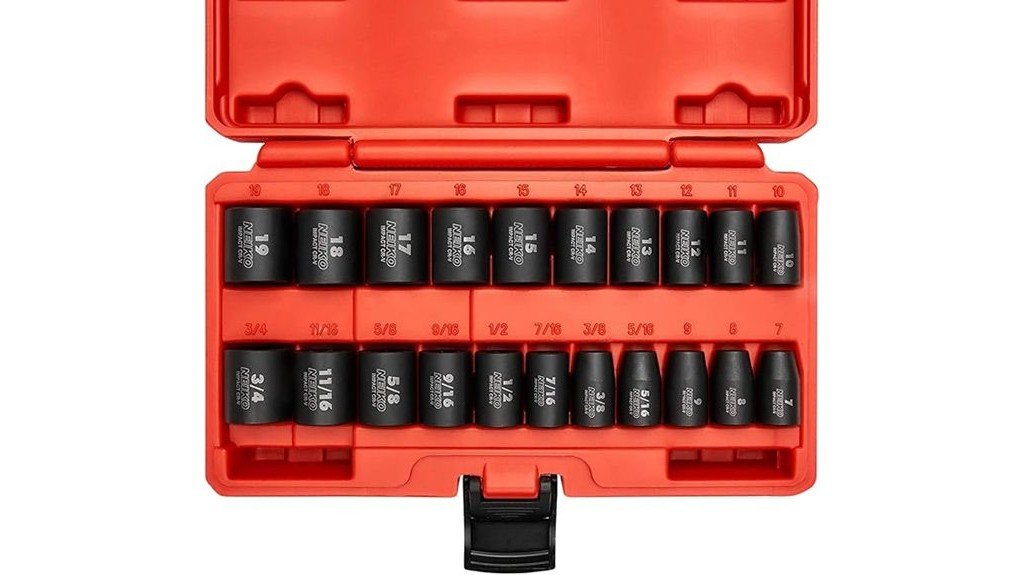
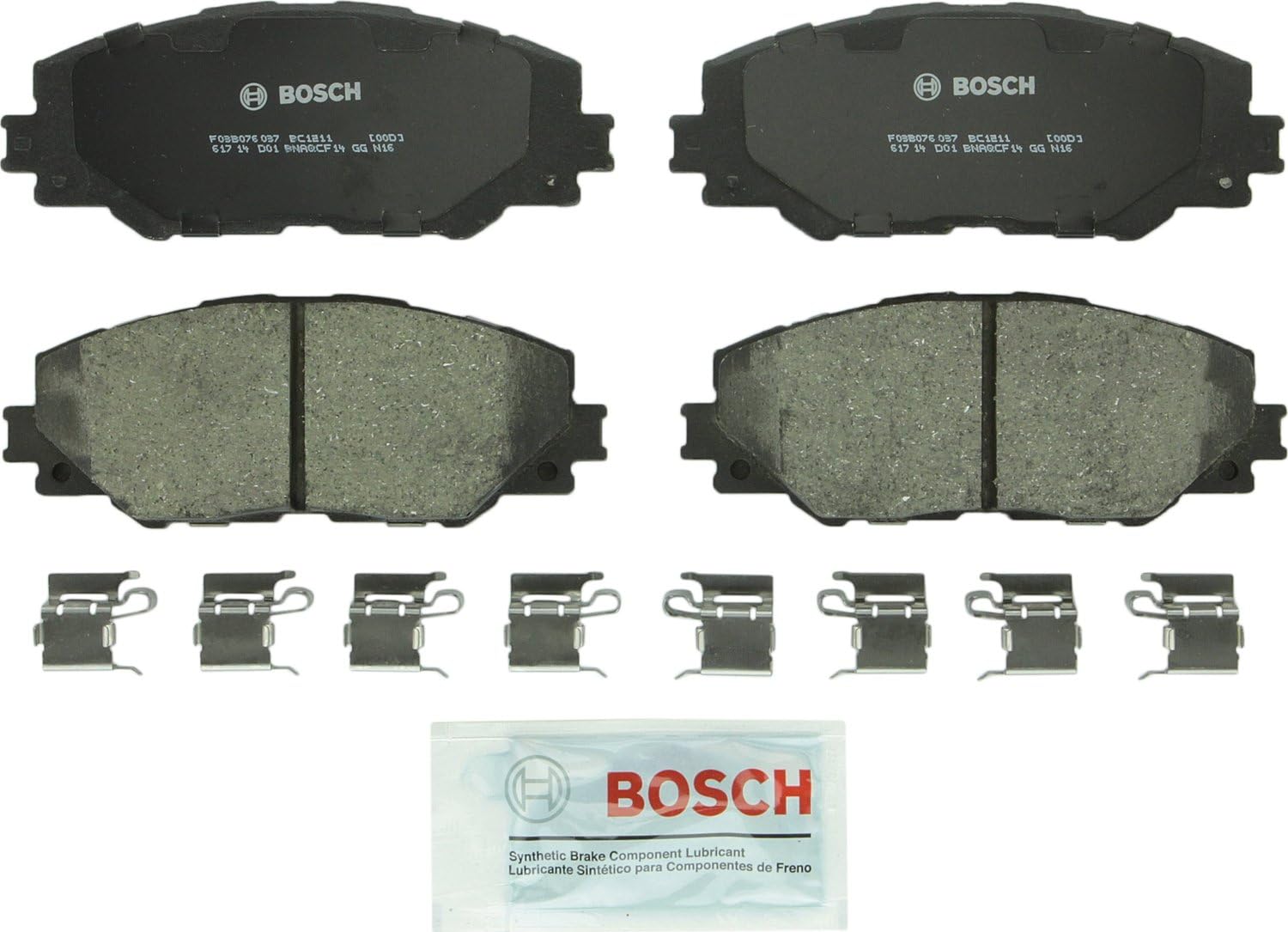
Your 2014 Toyota Tundra’s brakes can squeak because of moisture, light surface rust, pad vibration, worn friction material, contaminated surfaces, incorrect hardware, rotor problems, or a sticking caliper. The sound alone does not reveal the cause. You need to note when it happens, inspect both sides of each brake assembly, and treat any change in braking performance as a safety issue.
Quick Answer
A brief squeak during the first few stops can come from moisture or light rotor rust. Constant squealing may indicate worn pads, glazing, loose or incorrect hardware, contamination, or caliper trouble. Grinding, pulling, a soft pedal, fluid leakage, smoke, or reduced stopping power requires immediate professional inspection.
Key Takeaways
- Temporary cold or wet-weather squeal can be normal, but noise that continues after warm-up needs inspection.
- Check the inner and outer pads, rotor surfaces, shims, support plates, calipers, slide components, hoses, and fluid condition.
- Use only the lubricant and hardware specified for the exact brake application. Never grease a rotor or pad friction surface.
- The yellow or gold-dot rotor guidance found in a later Toyota bulletin applies to newer Tundras, not a 2014 Tundra.
- Grinding, pulling, smoke, a soft pedal, fluid leakage, a warning light, or reduced braking means you should stop driving and arrange an inspection.
At a Glance
| Time Required | About 15–30 minutes for an initial visual and driving-condition check; longer if the wheels or brake parts must be removed. |
| Difficulty | Beginner for observing symptoms; intermediate to advanced for removing, measuring, or servicing brake components. |
| Tools Needed | Flashlight, wheel chocks, rated jack stands, pad-thickness gauge or ruler, torque wrench, and model-appropriate service information. Rotor measurements may require a micrometer and dial indicator. |
| Cost | An observation or basic visual check costs nothing. Professional diagnosis and repair depend on whether the truck needs cleaning, hardware, pads, rotor service, a caliper, or another component. |
Warning: Do not keep driving if the truck grinds, pulls strongly, has a soft or sinking pedal, leaks brake fluid, produces smoke or a burning odor, shows a brake-system warning light, or takes longer to stop. Park safely and have the brake system inspected before further use.
Why Your 2014 Tundra Brakes Squeak in the First Place
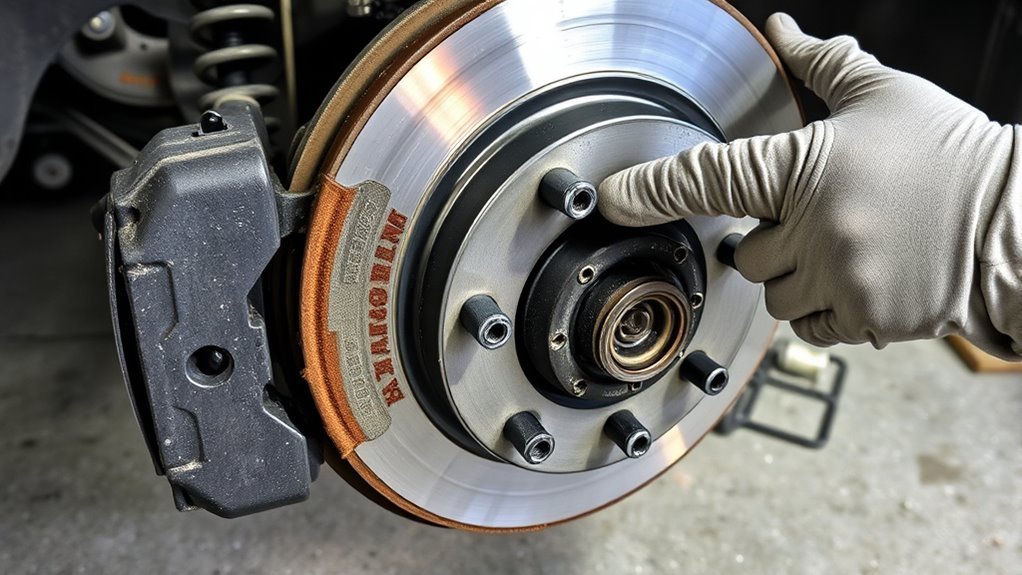
Most brake squeal is a high-frequency vibration involving the pad, rotor, caliper, shim, or support hardware. The noise can become noticeable under light pedal pressure because the parts are not being clamped as firmly as they are during a harder stop.
Cold temperatures, moisture, and light surface rust can also create temporary noise. A truck parked overnight may develop a thin film of rust on the rotors, especially in humid or wet conditions. The first few brake applications usually remove that film.
Noise that continues after the brakes warm up has a wider range of possible causes:
- Worn pads: A wear indicator may contact the rotor, or thin friction material may no longer damp vibration effectively.
- Uneven pad wear: A sticking caliper component can leave one pad much thinner than the other.
- Glazing or uneven material transfer: Excess heat or an incomplete bedding process can leave a smooth or patchy friction surface.
- Damaged or incorrect hardware: Bent support plates, old shims, incorrect clips, rust, or debris can prevent free pad movement.
- Rotor problems: Scoring, excessive thickness variation, runout, rust buildup, or contamination can cause noise and pedal pulsation.
- Caliper trouble: A sticking piston or sliding component can keep a pad in contact with the rotor.
- Contamination: Grease, brake fluid, road debris, or some wheel-cleaning products can alter friction and produce noise.
- Installation errors: Incorrect pad orientation, reused damaged shims, improper wheel tightening, or failure to follow the pad maker’s bedding process can allow noise to return.
Factory or aftermarket pad material can affect noise, dust, pedal feel, and heat performance. However, compound choice is only one part of the system. Correct fit, clean contact surfaces, sound hardware, rotor condition, and proper installation matter just as much. You can compare compatible options in this guide to the right brake pads for a 2014 Toyota Tundra.
How to Tell If Brake Noise Is Normal or a Warning Sign
Record the sound, the vehicle speed, pedal pressure, weather, direction of travel, and whether the brakes are cold or warm. These details help separate temporary surface noise from a mechanical problem.
| Sound or Symptom | Possible Cause | Recommended Action |
|---|---|---|
| Brief squeak after rain or overnight parking | Moisture or light surface rust | Monitor whether it disappears after several normal stops. |
| High-pitched squeal on most stops | Wear indicator, glazing, hardware vibration, contamination, or pad fit | Inspect the pads, rotors, shims, support plates, and caliper operation. |
| Metallic grinding or rough scraping | Severely worn pad, foreign material, or damaged rotor or backing plate | Stop driving and arrange an immediate inspection. |
| Pedal or steering-wheel pulsation | Rotor runout, thickness variation, hub corrosion, or uneven wheel tightening | Measure the rotor and hub assembly rather than replacing parts by guesswork. |
| Pulling, burning odor, or one wheel much hotter | Dragging caliper, restricted hose, contamination, or uneven friction | Do not touch a hot wheel or rotor. Have the brake inspected promptly. |
| Click or clunk when changing direction | Pad movement, loose or incorrect hardware, or another suspension or driveline source | Confirm the source and inspect hardware fit and fastener security. |
Typical Temporary Brake Squeal
A light squeak that appears only during the first few cold or damp stops and then disappears is often caused by moisture or surface rust. A brief noise while reversing can also occur because the pads shift against their contact surfaces when braking direction changes.
Temporary noise should not cause pedal changes, pulling, vibration, warning lights, smoke, or reduced stopping power. If any of those symptoms appear, treat the problem as more than normal surface noise.
Noises and Symptoms That Signal Danger
Grinding is the clearest warning sound. It may indicate that the friction material has worn away or that debris or another component is contacting the rotor. Continuing to drive can damage the rotor and reduce braking performance.
You should also stop and seek professional help when brake noise occurs with:
- A soft, sinking, or unusually hard pedal
- A brake or ABS warning light
- Brake-fluid leakage
- Strong pulling to one side
- Smoke or a sharp burning odor
- Severe vibration
- A wheel that becomes much hotter than the others
- Longer stopping distance or reduced brake response
When to Schedule a Brake Inspection
- Monitor brief moisture-related noise: If it disappears after several normal stops and no other symptom exists, continue observing it.
- Inspect persistent squeal: Noise that remains after warm-up may involve wear, glazing, hardware, contamination, or caliper movement.
- Return after recent service: New noise can indicate hardware fit, pad orientation, rotor condition, contamination, or an incomplete bedding process.
- Act immediately on grinding or performance changes: Do not wait for the next maintenance visit.
Worn Brake Pads and Rotor Surface Problems
Worn pads are one of the first items to check, but you must inspect both the inner and outer pads. A caliper problem can wear the inner pad much faster, leaving the outer pad looking acceptable through the wheel.
Measure only the friction material, not the metal backing plate. Compare the measurement with the minimum thickness in the applicable Toyota repair information or the service limit supplied by the brake manufacturer. Toyota’s general brake guidance directs technicians to use the model-specific specification rather than one universal replacement number.
Look for these pad conditions:
- One pad or one end of a pad is noticeably thinner
- Cracks, missing friction material, or separation from the backing plate
- A smooth, shiny, or contaminated surface
- A wear indicator touching or approaching the rotor
- Heat discoloration or crumbling edges
A shiny rotor does not automatically prove that it is defective. Inspect for deep scoring, heat spots, heavy rust, cracking, measurable thickness variation, and runout. A technician should measure rotor thickness at several points and compare it with the marked or model-specific minimum.
Rotor resurfacing may be possible when the rotor remains above its minimum thickness and the equipment can produce the required finish. Replacement is more appropriate when the rotor is below specification, cracked, badly corroded, deeply scored, heat damaged, or unable to remain within specification after machining.
Brake noise should be diagnosed as a complete system. Pad material, rotor condition, hardware fit, caliper movement, hub cleanliness, and installation quality all affect the result.
Anti-Rattle Clips, Shims, and Hardware Issues to Check
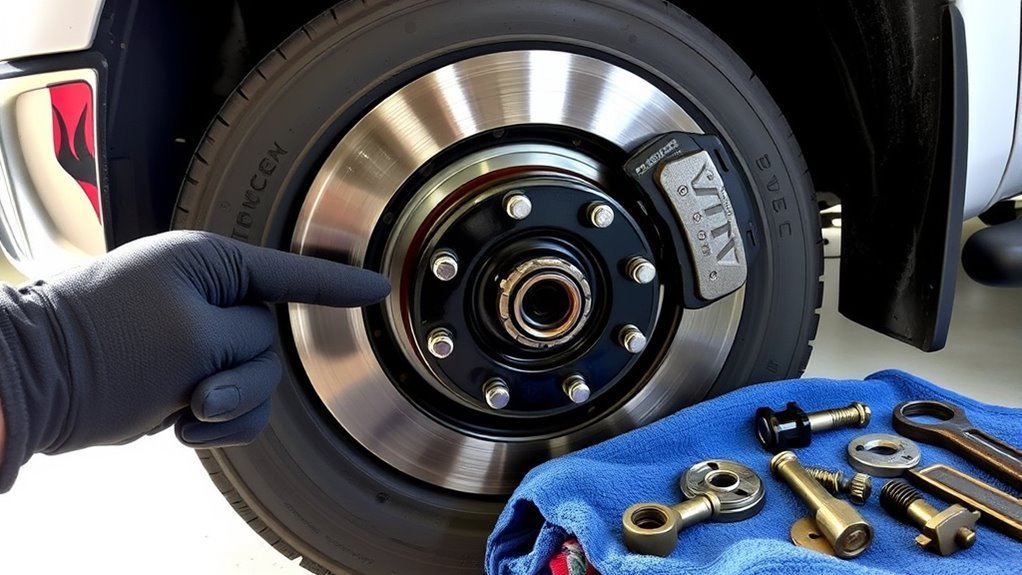
Small brake-hardware problems can create a large amount of noise. Pads must move freely in their intended contact areas without excessive looseness, binding, or contact with the rotor where contact is not designed.
- Confirm the exact application: Match pads, shims, support plates, springs, and other hardware to the truck’s VIN, axle position, caliper, and brake package.
- Inspect support plates and clips: Replace parts that are bent, cracked, badly corroded, loose, or missing their spring tension.
- Inspect the shims: Shims should lie flat and match the pad design. Do not reuse damaged or heavily worn shims.
- Clean the contact areas: Remove rust and dirt without grinding away bracket material or changing the pad fit.
- Check pad orientation: Inner and outer pads, wear indicators, and multi-piece shims may have a required position or direction.
- Follow the kit instructions: Use the hardware, shim stack, lubricant, and installation sequence supplied for that exact kit.
Note: Do not install an older or newer clip design merely because someone describes it as quieter. Use hardware that is approved for the exact caliper and pad application unless Toyota’s model-specific repair information directs otherwise.
Proper Lubrication Points for Tundra Brakes
Brake lubricant should be selected by its intended use and material compatibility, not by its color. Different products may be required for pad shims, caliper sliding components, piston boots, and other surfaces.
Toyota’s general brake-pad installation guidance distinguishes between the supplied anti-squeal shim grease and rubber-compatible grease used on specified sliding or sealing surfaces. It also warns against applying lubricant to pad friction material or using shim grease as a slide-pin lubricant.
- Pad shims: Use the grease supplied with the pad or shim kit only in the locations and amount shown by the instructions.
- Slide pins and rubber components: Use a lubricant approved for the pin, boot, and seal materials and for the required brake temperature.
- Pad support clips: Toyota’s general TCMC guidance says not to apply grease to the pad clips. Follow the exact service information for your installed brake system.
- Pad ears or contact surfaces: Apply lubricant only when the applicable repair procedure or pad instructions call for it.
- Rotor and friction material: Keep these surfaces completely free of grease, oil, brake fluid, and anti-seize compound.
Pro Tip: Before adding lubricant, identify why the pad is not moving correctly. Grease cannot repair a bent support plate, swollen rubber boot, seized pin, corroded bracket, incorrect pad, or damaged caliper.
Step-by-Step Inspection Guide for DIY Owners
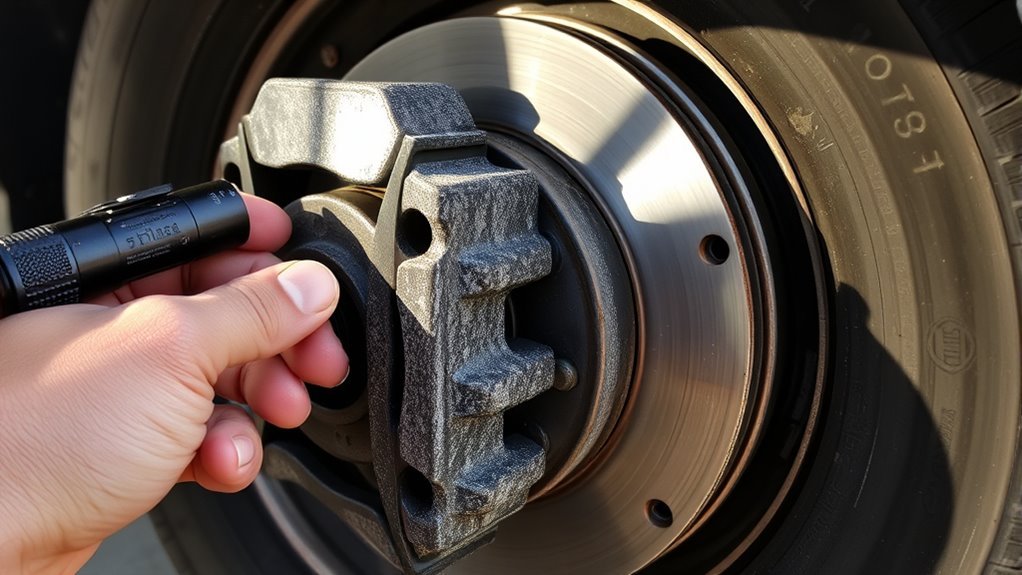
A systematic inspection helps you locate the cause without replacing good parts. Work only within your skill level. Brake disassembly, rotor measurement, caliper repair, and final torque checks require suitable tools and model-specific service information.
- Record the operating conditions. Note whether the sound occurs when cold, warm, wet, reversing, turning, lightly braking, or stopping from higher speed. Record any pulsation, pulling, odor, warning light, or pedal change.
- Identify the general location. In a safe area, determine whether the sound appears to come from the front, rear, left, or right. Sound can travel through the frame, so treat this only as an initial clue.
- Park and cool the truck. Use level ground, select Park, apply the parking brake when appropriate, and chock the wheels. Do not work near hot rotors or calipers.
- Inspect through the wheel where possible. Look for a deeply scored rotor, obvious pad wear, fluid leakage, damaged hoses, loose shields, or debris.
- Lift the truck correctly if wheel removal is required. Use the approved lift points, a suitable jack, and rated jack stands. Never rely on a hydraulic jack alone.
- Compare the inner and outer pads. Measure the friction material at several points. Tapered or one-sided wear can indicate binding hardware, a caliper problem, or misalignment.
- Inspect the rotor. Check both faces for scoring, cracks, rust, heat spots, contamination, and uneven deposits. Measure thickness and runout when symptoms call for it.
- Inspect the hardware and caliper. Check shims, support plates, springs, boots, pistons, sliding components, mounting points, and hoses for damage, corrosion, leakage, or restricted movement.
- Clean and service only as directed. Replace damaged hardware and use the specified lubricants in the specified places. Do not sand, grind, bend, or modify parts without an approved procedure.
- Reassemble using the correct specifications. Tighten wheel and brake fasteners in the required sequence and to the model-specific torque. Do not guess or use a universal value.
- Bed new friction parts when required. Follow the pad or rotor manufacturer’s break-in procedure. Avoid an improvised series of hard stops on public roads.
- Perform a cautious final test. Confirm a firm pedal before moving. Test at low speed in a safe area and stop immediately if braking feels abnormal.
Other Problems That Can Sound Like Brake Squeal
Not every squeak near a wheel comes from the pad-to-rotor interface. Inspect surrounding parts when the sound does not match brake application.
- Dust shield or backing plate contact: A bent shield can lightly scrape the rotor.
- Small stones or debris: Material trapped near the shield or friction surfaces can create scraping or chirping.
- Wheel bearing or hub trouble: Noise that changes while turning may require bearing and hub inspection.
- Suspension or steering joints: Bushings, ball joints, tie-rod ends, or other components can squeak when weight transfers during braking.
- Loose wheel or incorrect lug tightening: This is a serious safety issue and can also contribute to vibration.
- Parking-brake components: Rear brake or parking-brake parts can create noise that seems to come from the service pads.
If the squeak occurs while driving without touching the pedal, check for caliper drag, shield contact, debris, a wear indicator, wheel-bearing trouble, or another rotating component.
Choosing Replacement Pads and Rotors for a Quieter Ride
Choose replacement parts by exact fit, operating use, friction characteristics, included hardware, manufacturer support, and the condition of the remaining brake components. No pad compound can compensate for a sticking caliper, damaged shim, incorrect fit, dirty hub, or out-of-spec rotor.
OEM vs. Aftermarket Options
Genuine Toyota parts can simplify application matching when selected by VIN. Quality aftermarket parts may offer different dust, noise, pedal-feel, towing, coating, or heat-management characteristics. Neither category guarantees silence.
| Option | Potential Advantages | What to Confirm |
|---|---|---|
| Genuine Toyota application | VIN-based catalog support and hardware designed for the specified factory brake assembly | Current part numbers, included shims or hardware, and whether separate components are required |
| Premium aftermarket application | More choices for dust, noise, towing, coating, and pedal characteristics | Exact fit, friction rating, hardware quality, bedding instructions, warranty, and intended vehicle use |
| Economy replacement | Lower initial cost | Fit consistency, shim design, included hardware, heat capability, noise control, and manufacturer support |
Using aftermarket maintenance parts does not automatically make a repair unsafe or void every warranty. However, damage caused by an incorrect part or installation may not be covered. Keep receipts, part numbers, measurements, and service records.
Choosing a Pad Compound
| Pad Type | Typical Strengths | Possible Tradeoffs |
|---|---|---|
| Ceramic-style formulation | Often selected for daily driving, controlled dust, and refined operation | Noise and towing performance vary by formulation; not every ceramic pad suits repeated heavy use |
| Semi-metallic formulation | Strong heat tolerance and braking response in demanding service | May produce more visible dust or noise depending on the compound and rotor pairing |
| Application-specific low-noise pad | Designed with matched shims, slots, chamfers, and friction material for a specific application | Still requires correct hardware, rotor preparation, lubrication, torque, and bedding |
Drivers who tow frequently should prioritize a pad designed for the truck’s loaded operating conditions rather than selecting a compound only because it is advertised as quiet.
Rotor Design, Surface Finish, and Coatings
A standard-quality blank rotor is suitable for many daily-driven Tundras when it meets the correct dimensions and material requirements. Drilled or slotted designs are not automatically quieter and may produce their own sound characteristics.
Protective coatings on the rotor hat and non-friction edges can help control visible corrosion. The braking surface must still be prepared according to the rotor and pad instructions. Confirm whether the rotor arrives ready to install or requires cleaning.
Do not replace a usable rotor solely because the pads are worn. Measure thickness, inspect both faces, and evaluate runout and surface condition. Replace or machine the rotor only when its condition and specifications justify that work.
Bedding New Pads and Rotors
New pads and rotors may require a controlled bedding process to establish an even transfer layer. An incorrect process can contribute to vibration, uneven deposits, poor initial feel, or recurring noise.
Follow the instructions supplied with the friction parts. Choose a safe, legal location, avoid coming to a complete stop with extremely hot brakes unless instructed, and allow suitable cooling. A technician should perform the process when the manufacturer’s procedure cannot be completed safely.
Working With Your Toyota Dealer and Understanding Bulletins
When discussing brake noise with a dealer or repair shop, provide the date, mileage, weather, direction of travel, pedal pressure, brake temperature, and a recording when possible. Ask the technician to document whether the noise came from the front or rear and what measurements were taken.
A technical service bulletin is not the same as a recall. Toyota explains that a TSB provides service information and that any warranty eligibility must be stated in that bulletin. A recall or service campaign has a separate eligibility process.
Important model-year correction: Toyota bulletin T-SB-0043-24 and its gold or yellow-dot rotor identification concern later 2022–2024 Tundra and Sequoia models. That rotor marker is not a diagnostic or parts-selection rule for a 2014 Tundra.
Toyota has also published general installation guidance for Toyota Complete Maintenance Care brake pads. A March 2022 revision lists 2000–2020 Tundra models and emphasizes correct pad installation to address groan or squeak concerns. It does not establish a special yellow-dot rotor repair for a 2014 Tundra.
Before requesting coverage:
- Ask the dealer to check your VIN for applicable recalls, service campaigns, and current service information.
- Ask for the brake measurements and inspection findings in writing.
- Request the part numbers of any pads, shims, clips, rotors, or calipers being recommended.
- Ask whether the work is covered by a recall, campaign, active warranty, parts warranty, goodwill assistance, or customer payment.
- Keep previous repair orders showing when the complaint was first reported.
You can check your VIN through Toyota’s Safety Recall and Service Campaign Lookup and the NHTSA recall lookup.
Preventive Maintenance Tips to Keep Brake Squeal Away
Brake noise cannot always be eliminated, but regular inspection helps catch the wear, corrosion, contamination, and binding that often cause it.
- Follow Toyota’s maintenance schedule. Inspect the pads, discs, linings, drums, lines, and hoses at the intervals and operating conditions listed for the truck.
- Inspect more closely after demanding use. Towing, hauling, mountain driving, mud, deep water, dust, and repeated low-speed operation can increase heat or contamination.
- Check both pads at each wheel. Do not judge remaining life from the visible outer pad alone.
- Keep hardware serviceable. Replace bent, corroded, cracked, or weakened shims and support components.
- Use correct lubricants sparingly. Apply them only to approved locations and keep the friction surfaces clean.
- Torque wheels correctly. Clean the mating surfaces as required and use the specified tightening sequence and torque.
- Address dragging brakes promptly. A hot wheel, burning odor, pulling, or rapid uneven wear can indicate a caliper or hose problem.
- Follow bedding instructions. New friction parts may become noisy or develop uneven deposits if they are not conditioned correctly.
- Document recurring noise. Record the conditions and mileage so a technician can reproduce the concern.
Frequently Asked Questions
Can towing or hauling heavy loads make my 2014 Tundra’s brakes squeak more?
Yes. Added vehicle weight and repeated braking can create more heat and accelerate wear. Inspect pad thickness, rotor condition, caliper operation, hoses, and hardware more often when the truck regularly tows, hauls, or travels through steep terrain. Use pads approved for the truck and its operating demands.
Do wheel spacers or larger tires cause brake squeal?
Not automatically. Heavier or larger-diameter tire and wheel combinations can change braking demand, while incorrect wheel installation can contribute to vibration. Spacers can also introduce fit or torque concerns when they are unsuitable or installed incorrectly. Inspect hub cleanliness, wheel seating, lug torque, rotor runout, pad wear, and caliper operation before blaming the modification itself.
Is it safe to drive long distances with occasional light brake squeaking?
A brief squeak caused by overnight moisture may disappear after several stops. Long-distance driving is not advisable when the cause is unknown or when the sound persists. Inspect the system first, especially if the truck will carry a heavy load. Do not drive with grinding, pulling, fluid leakage, a soft pedal, smoke, warning lights, or reduced stopping power.
Will ceramic brake pads always reduce dust and squeak better than semi-metallic pads?
No. Many ceramic-style pads are designed for refined daily use and controlled dust, but performance varies by formulation. Some semi-metallic pads provide stronger heat capability for demanding service. Correct fit, rotor condition, shims, hardware, lubrication, torque, and bedding can affect noise as much as the compound category.
Can rust from sitting for several weeks cause temporary brake squealing?
Yes. Moisture can create surface rust on the rotors while the truck is parked. Light rust often clears after several normal stops. Inspect the brakes if the sound remains, the rotor is heavily pitted, the pedal pulsates, or the truck pulls while braking.
Does Toyota’s yellow or gold-dot brake rotor bulletin apply to a 2014 Tundra?
No. The yellow or gold-dot rotor identification discussed in Toyota’s 2024 front-brake-squeal bulletin concerns later 2022–2024 Tundra and Sequoia models. Select 2014 parts by VIN, brake application, current catalog information, and the repair procedure that applies to the second-generation truck.
Do I have to replace the rotors whenever I replace the pads?
Not always. A rotor may be reusable when it remains above minimum thickness and has an acceptable surface, runout, and thickness variation. It may need machining or replacement when it is below specification, deeply scored, cracked, badly corroded, heat damaged, or unable to provide the required finish.
Conclusion
A brief cold or wet-weather squeak can be harmless, but persistent noise deserves a complete inspection. Check both pads at each wheel, the rotor surfaces, caliper operation, hoses, shims, support hardware, hub condition, and correct lubrication. Do not rely on later-model Tundra bulletins, grease color, or anecdotal clip changes when servicing a 2014 truck.
Stopping performance always matters more than sound. Grinding, pulling, smoke, fluid leakage, a soft pedal, a warning light, or reduced braking means the truck should remain parked until the problem is diagnosed. Accurate measurements, application-correct parts, approved service information, and careful installation provide the best chance of restoring quiet and dependable braking.
Sources
- Toyota 2014 Tundra Warranty and Maintenance Guide — brake inspection and scheduled-maintenance guidance.
- Toyota Tech Tip T-TT-0132-11: Best Practices for TCMC Front Brake Pad Installation — pad, rotor, caliper, shim, lubricant, and wheel-installation guidance.
- Toyota Tech Tip T-TT-0636-20: Best Practices for TCMC Brake Pads — general squeak-prevention guidance that lists 2000–2020 Tundra models.
- Toyota T-SB-0043-24: Front Brake Squeal — later-model bulletin used to clarify that the gold-dot rotor procedure does not apply to a 2014 Tundra.
- Toyota: What Is a Technical Service Bulletin? — distinction between a TSB, recall, service campaign, and warranty coverage.
- National Highway Traffic Safety Administration Recall Lookup — VIN-based recall and manufacturer-communication lookup.