The best tire for a 2001 Toyota 4Runner starts with correct fitment. Depending on the trim and original wheel package, common factory configurations include 225/75R15 and 265/70R16. Before buying any tire, check the tire-information label on the driver-side door jamb and confirm the size currently approved for your vehicle. A tire designed for a 17-inch wheel cannot mount on a stock 15- or 16-inch wheel, even when its width looks similar.
Quick Fitment Verdict
Start with the exact tire size on your 4Runner’s door placard. Match the rim diameter, load rating, and appropriate speed rating before comparing tread patterns or brands. If your 4Runner has aftermarket wheels, a lift, or non-stock suspension, confirm wheel width, offset, clearance, and overall tire diameter with a qualified tire installer before ordering.
2001 Toyota 4Runner Tire Size and Fitment
There is not one tire size that should automatically be assumed for every 2001 Toyota 4Runner. Factory fitment varies by trim and wheel package. Common configurations include 15-inch and 16-inch wheels, so the safest reference is the driver-side door-jamb tire placard, followed by your owner’s manual and the size printed on the existing tire sidewall.
A tire size such as 265/70R16 tells you several things. The first number is the approximate section width in millimeters, the second is the sidewall aspect ratio, and the final number is the wheel diameter in inches. That final number must match the wheel. For example, an R17 tire requires a 17-inch wheel and cannot be installed on an R16 rim.
Before You Buy Tires for a 2001 Toyota 4Runner
Fitment comes before tread style, brand reputation, or warranty. Use the following checks to narrow your choices safely and avoid ordering a tire that cannot be installed on your current wheels.
- Confirm the tire size: Use the door-jamb placard as your primary reference for an otherwise stock vehicle.
- Match the wheel diameter: A 15-inch, 16-inch, and 17-inch tire are not interchangeable on the same wheel.
- Check load requirements: Choose a tire with a load index that meets or exceeds the vehicle manufacturer’s requirement for your configuration.
- Consider your driving: Highway, all-terrain, severe-snow, and mud-terrain tires prioritize different characteristics.
- Check clearance before upsizing: Wider or taller tires can affect suspension, body, steering, and fender clearance.
- Keep four-wheel-drive compatibility in mind: Tire size and tread depth should remain appropriately matched across the vehicle. Follow Toyota’s guidance when replacing fewer than four tires.
- Use the vehicle’s recommended inflation pressure: Do not use the maximum pressure molded onto the tire sidewall as your normal inflation target.
Factors to Consider When Choosing Tires for a 2001 Toyota 4Runner
Tire Size Compatibility
Correct tire size is the first requirement for safe fitment. Common factory configurations for the 2001 4Runner use 15- or 16-inch wheels, including fitments such as 225/75R15 and 265/70R16. However, trim, original equipment, and previous modifications can change what is currently installed on an individual vehicle.
Check the door placard before ordering. If the vehicle has aftermarket wheels, do not assume that a tire with a similar overall diameter will automatically fit. Wheel diameter, wheel width, offset, tire width, suspension clearance, steering clearance, and load rating all matter.
Terrain Type Consideration
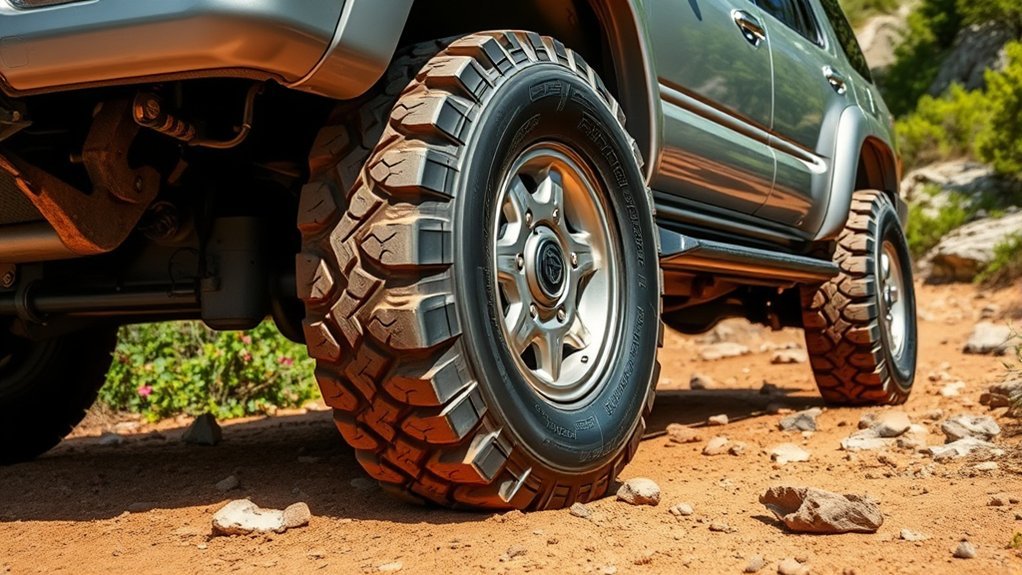
Your normal driving environment should determine which tire category makes the most sense. A highway or touring tire usually prioritizes road comfort, predictable pavement handling, and lower noise. An all-terrain tire adds stronger traction for gravel, dirt roads, trails, and other loose surfaces while remaining usable for everyday driving.
More aggressive mud-terrain tires can provide additional bite in challenging off-road conditions, but they may also bring more tread noise, weight, and less refined pavement behavior. Choose the least aggressive tire that still handles the conditions you actually encounter.
Load Capacity Requirements
Do not choose a tire based only on its dimensions. Its load index must also be appropriate for your 4Runner. The safest approach is to check the vehicle’s tire placard and select a properly sized tire whose load capability meets or exceeds the specified requirement.
A larger numerical load rating is not automatically better for every driver. Light-truck tires with heavier load ranges can have different weights, pressures, and ride characteristics than standard-load passenger tires. If you tow, carry substantial cargo, or are considering a different load range, confirm the correct setup with a qualified tire professional.
Tread Design Features
Tread pattern affects traction, wet-road performance, road noise, steering response, and off-road ability. Open shoulder blocks and larger voids can help an all-terrain tire clear loose material, while continuous center ribs and less aggressive patterns generally favor pavement stability and comfort.
Siping creates additional biting edges that can help on wet or snowy surfaces. Deep tread can be useful off road, but tread depth by itself does not determine how well a tire performs. Rubber compound, tread geometry, construction, temperature, and road conditions also matter.
Weather Performance Rating
If you regularly encounter winter conditions, look beyond the words “all season.” Tires carrying the Three-Peak Mountain Snowflake (3PMSF) symbol have met a defined severe-snow traction performance standard. That makes the symbol a useful comparison point for drivers who expect regular snow travel.
However, 3PMSF does not make every all-terrain tire equivalent to a dedicated winter tire on ice or in extreme cold. Drivers facing prolonged severe winter conditions should compare dedicated winter options as well as all-weather and all-terrain choices.
Wet-Road Performance
Wet braking and hydroplaning resistance are important for a tall SUV such as the 4Runner. Look for tread designs that provide effective water evacuation through circumferential or lateral grooves. Maintain adequate tread depth and correct inflation because even a highly rated tire cannot perform as intended when badly worn or improperly inflated.
Ride Comfort and Road Noise
Aggressive off-road tread can look appealing, but daily drivers should also consider ride quality and noise. Large tread blocks, heavier LT construction, and aggressive void areas can produce more vibration or sound than a road-focused tire.
If most of your mileage is commuting or highway travel, a mild all-terrain or highway-oriented tire may provide a better balance. If you regularly drive forest roads, trails, gravel, or rough terrain, accepting some additional road noise may be worthwhile for stronger off-pavement capability.
Load Range and LT vs. Passenger Tires
Do not assume that an LT tire is automatically the best upgrade. LT tires are designed for light-truck applications and may offer stronger construction or higher load capability, but they can also be heavier and may require different inflation pressures to carry the intended load correctly.
For normal commuting and moderate use, the factory-specified tire type and load capability may provide a more comfortable balance. For towing, heavy cargo, or demanding off-road use, discuss the appropriate load range and inflation requirements with a tire professional before changing from the vehicle’s original specification.
Tire Diameter and Upsizing
Changing to a taller tire changes more than appearance. Overall diameter can affect speedometer accuracy, effective gearing, acceleration, braking feel, clearance, and spare-tire compatibility. Width and wheel offset can also affect rubbing at full steering lock or during suspension compression.
If your 2001 4Runner has a lift or aftermarket wheels, have the complete wheel-and-tire combination checked rather than selecting a tire based on diameter alone. A size that works on one modified 4Runner may not fit another vehicle with different wheels, suspension components, or alignment settings.
Warranty and Support
A treadwear warranty can be useful, but mileage alone should not decide your purchase. Read the manufacturer’s warranty conditions, including rotation requirements, maintenance records, covered defects, prorated replacement terms, and exclusions.
Also distinguish between a manufacturer treadwear warranty and retailer-provided road-hazard protection. They are different types of coverage, and road-hazard programs can vary substantially between sellers. Verify the exact policy from the retailer and tire manufacturer before relying on it.
Price vs. Performance
The cheapest tire is not always the lowest-cost choice over its useful life, but a premium tire is not automatically the best fit either. Compare the characteristics that matter for your driving: correct fitment, wet braking, highway manners, winter capability, off-road traction, treadwear coverage, replacement availability, and expected mileage.
For a mostly stock daily-driven 4Runner, buying a properly sized tire suited to your normal roads is more important than paying extra for capabilities you rarely use.
Highway vs. All-Terrain Tires for a 2001 4Runner
Choose Highway-Oriented Tires If
A highway or road-focused tire is usually the stronger choice when most of your driving involves commuting, city roads, and long highway trips. These tires generally emphasize comfort, predictable pavement handling, lower noise, and long-distance usability.
Choose All-Terrain Tires If
Consider all-terrain tires if your 4Runner regularly travels on gravel, dirt roads, campsites, trail access roads, or other loose surfaces. Look for an A/T model that still provides the wet-road, braking, noise, and winter characteristics you need for everyday use.
Consider Winter Tires If
Drivers who regularly face freezing temperatures, packed snow, or icy roads should consider dedicated winter tires. Severe-snow-rated all-weather or all-terrain tires can be useful for mixed conditions, but dedicated winter designs are specifically optimized for cold-weather traction.
Common Tire Fitment Mistakes to Avoid
One of the easiest mistakes is buying a tire with the correct width but the wrong rim diameter. For example, changing the final number from R16 to R17 means the tire requires an entirely different wheel.
Other common mistakes include choosing a lower load index than required, assuming every trim uses the same OEM size, copying a modified 4Runner’s tire setup without checking wheel specifications, ignoring full-lock steering clearance, and using the maximum tire-sidewall pressure as the vehicle’s normal inflation pressure.
When in doubt, provide the installer with your exact year, trim, drivetrain, current wheel size, suspension modifications, and the tire information from the door placard.
Frequently Asked Questions
What Tire Size Is Recommended for a 2001 Toyota 4Runner?
Common factory fitments include 225/75R15 and 265/70R16, depending on trim and wheel package. Do not order from a generic size list alone. Check the driver-side door-jamb placard on your specific 4Runner before buying.
Can I Put 17-Inch Tires on a 2001 Toyota 4Runner?
Not on a stock 15- or 16-inch wheel. An R17 tire requires a 17-inch wheel. Converting to 17-inch wheels can also require checking wheel width, offset, bolt pattern, brake clearance, tire diameter, suspension clearance, and load rating. Have the complete setup verified before purchasing.
How Often Should I Rotate My Tires?
Follow the interval specified by your tire manufacturer and vehicle maintenance schedule. Many tires are rotated roughly every 5,000 to 7,500 miles, but the correct interval can vary. Regular rotation helps promote more even tread wear.
How Long Do 4Runner Tires Last?
There is no single mileage that applies to every tire. Lifespan depends on tire design, rubber compound, alignment, inflation, rotation, vehicle load, road surface, climate, and driving style. Use tread condition, age, damage, and manufacturer guidance rather than mileage alone when deciding when to replace a tire.
Can I Use Winter Tires on My 2001 Toyota 4Runner?
Yes, provided the winter tires are correctly sized and meet the vehicle’s load and fitment requirements. Dedicated winter tires can provide valuable traction in consistently cold, snowy, or icy conditions.
How Do I Know When to Replace My Tires?
Inspect tires regularly for worn tread, exposed wear indicators, cracks, bulges, cuts, uneven wear, repeated pressure loss, or other damage. A tread depth of 2/32 inch is a commonly used minimum replacement threshold, but wet and snow traction can decline substantially before a tire reaches that point. Replace damaged or unsafe tires sooner.
What Tire Pressure Should I Use?
Use the inflation pressure specified on the vehicle’s tire-information placard for the approved tire setup unless a qualified professional specifies a different pressure for a modified configuration. The pressure molded into a tire’s sidewall is generally a maximum specification, not the normal inflation target for your 4Runner.
Should I Buy LT Tires for My 4Runner?
Not automatically. LT tires can make sense for certain towing, cargo, and demanding off-road applications, but they may be heavier and can require different operating pressures. Choose based on your actual load, driving conditions, wheel fitment, and the tire manufacturer’s guidance rather than assuming an LT designation is always an upgrade.
Conclusion
Choosing tires for a 2001 Toyota 4Runner should begin with fitment, not brand name. Check your door-jamb placard, confirm whether your vehicle uses 15- or 16-inch wheels or an aftermarket setup, and match the required tire size and load capability before comparing tread designs.
For mostly paved driving, prioritize road comfort, wet performance, and predictable handling. For mixed pavement and trail use, an appropriately sized all-terrain tire can provide a useful balance. If your 4Runner has aftermarket wheels, suspension changes, or larger-than-stock tires, verify the complete wheel-and-tire combination before ordering. Correct fitment is the foundation for safe handling, reliable performance, and a better tire-buying decision.