
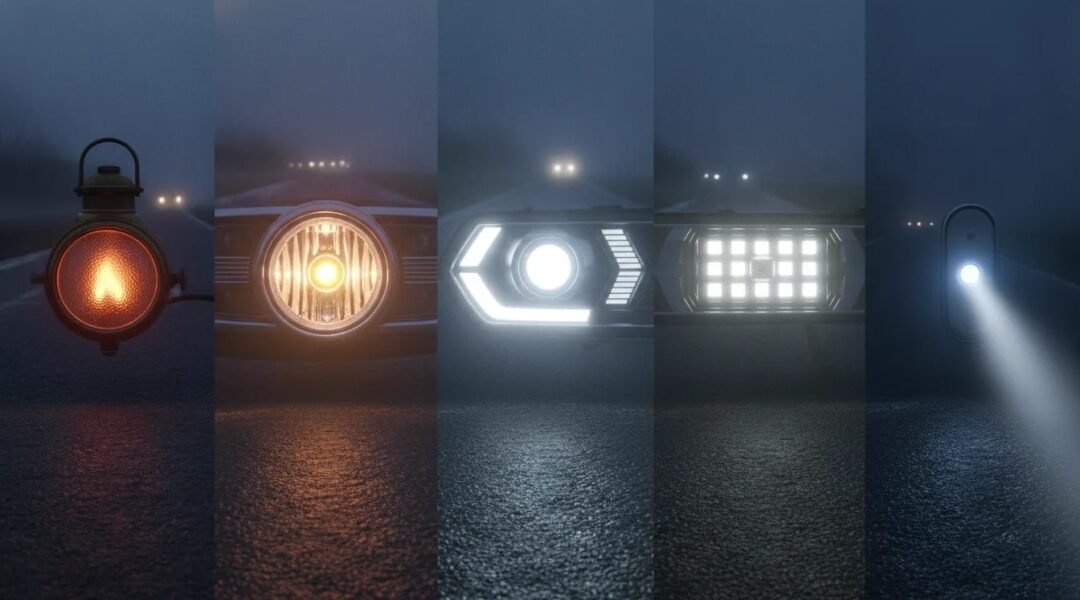
Modern cars are packed with safety technology, and headlights are among the most important systems on the vehicle. They do far more than light up a dark road. Headlights influence visibility, safety, efficiency, and even the personality of a car.
From open flames behind glass lenses to intelligent LED arrays and compact laser units, automotive lighting has changed dramatically. Each breakthrough solved a problem with the technology that came before it, whether that problem was weak light output, short bulb life, poor beam control, excessive power consumption, or glare for oncoming traffic.
Key Takeaways
- Car headlights evolved from acetylene flames to electronically controlled laser lighting systems.
- Halogen bulbs use a tungsten regeneration cycle, but have limited lifespan and range.
- LED headlights provide instant illumination, high efficiency, long life, and flexible vehicle styling.
- Matrix headlights selectively control LED segments to improve visibility without dazzling other road users.
Table of Contents
- Why Headlights Became Essential
- Carbide Lamps: When Headlights Used Real Flames
- Electric Headlights Changed Everything
- Sealed Beam Headlights: A Classic Car Icon
- Halogen Headlights: The Long-Running Standard
- Xenon and HID Headlights: Brighter, Whiter, More Complex
- LED Headlights: Efficient, Fast, and Highly Flexible
- Adaptive Headlights: Light That Follows the Road
- Matrix Headlights: Smart Pixel Lighting
- Laser Headlights: Compact Technology With Huge Potential
- How Headlight Technology Keeps Evolving
Why Headlights Became Essential
In the earliest years of the automobile, driving after dark was not a normal part of daily travel. Roads were often unpaved, rough, poorly marked, and sometimes barely existed at all. Cars themselves were also less dependable, so a nighttime breakdown could become a serious problem.
Proper vehicle lighting made nighttime travel possible. But the first headlamps were very different from the sophisticated systems installed on cars today.
Carbide Lamps: When Headlights Used Real Flames
The earliest car headlights appeared in the late 1880s and were commonly fueled by acetylene gas or oil. These lamps were essentially small flames burning behind glass lenses, much like the gas lamps used in homes at the time.
A carbide lamp had two main chambers:
- The lower chamber held solid calcium carbide.
- The upper chamber held water.
Water dripped slowly from the upper chamber onto the calcium carbide. The resulting chemical reaction generated acetylene gas, which traveled through a pipe to the burner at the front of the lamp. Once ignited, that gas produced a bright flame.
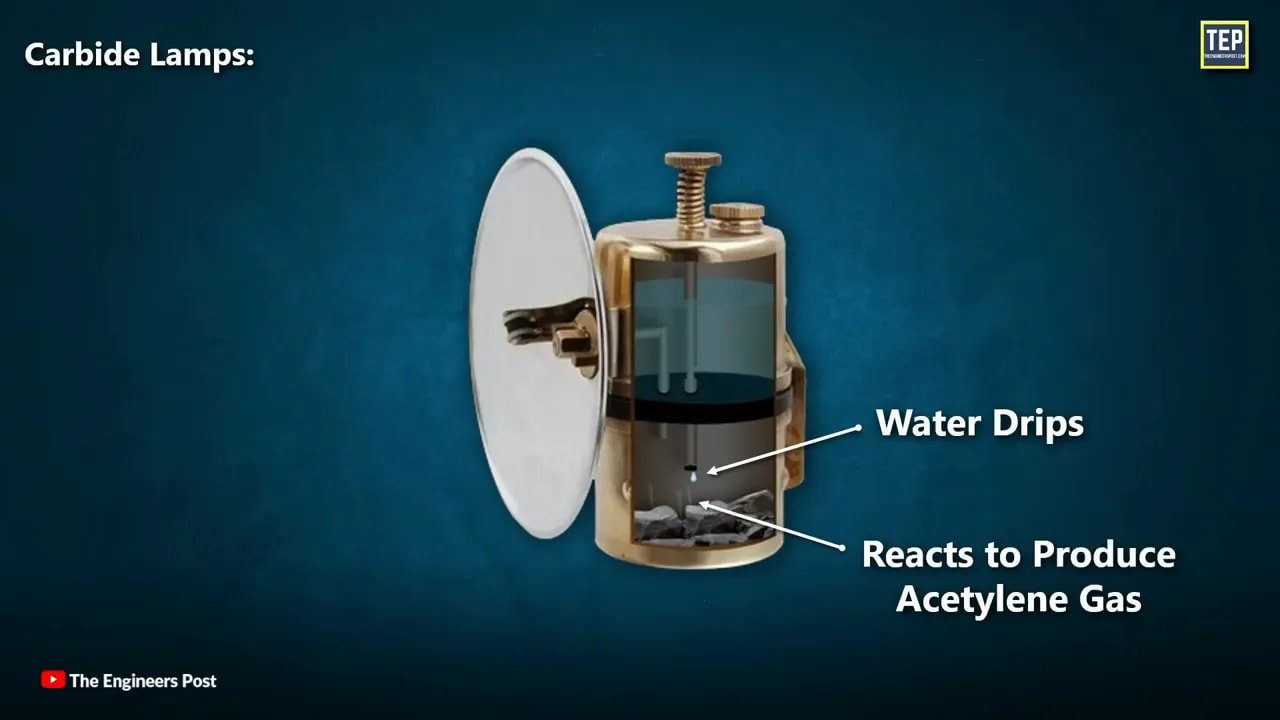
A valve controlled the water flow, allowing the lamp to regulate how much acetylene gas was produced. A reflector behind the flame attempted to direct light forward.
It was clever for its day, but carbide lighting had some obvious disadvantages. The light beam was not well focused, so much of the light scattered upward instead of reaching the road. Drivers also had to regularly replenish the water and calcium carbide.
There was another issue: acetylene is highly flammable. The reaction also created caustic lime residue that built up inside the lamps, requiring frequent cleaning. Despite the maintenance and hazards, acetylene lamps did their job until electric headlights became practical.
Electric Headlights Changed Everything
The first electric headlight was introduced in 1898 by the Electric Vehicle Company. In 1904, Peerless became the first American manufacturer to offer electric headlights across its vehicle range. A few years later, Pockley Automobile Electric Lighting offered a complete system that included headlights, tail lamps, and side lamps powered by an 8 volt battery.
Early electric lighting was far from perfect. Filaments had short lives and struggled with the vibration, weather, and general punishment of automotive use. Manufacturers also had difficulty building dynamos compact enough to fit into a car while supplying enough power for the lamps.
The breakthrough came in 1912, when Cadillac introduced the Delco electrical ignition and lighting system on the Model 30. The car combined electric headlamps with electric ignition and an electric starter, replacing the hand crank.
Electric headlights could operate in rain and snow, were more convenient than gas lamps, and gave engineers a foundation for improving light output. By the mid 1910s, manufacturers were improving not only the bulb but also the optics around it.
Instead of relying only on a reflector behind the light source, engineers began shaping the headlight lens itself to intensify and direct the beam. The idea was similar to lighthouse optics, where the goal is to send light farther and more precisely.
Sealed Beam Headlights: A Classic Car Icon
When most people picture an older classic car, they picture sealed beam headlights. Introduced in 1939, sealed beams became compulsory on vehicles in the United States from 1940 through 1983.
A sealed beam unit combined the lens, parabolic reflector, and tungsten filament into one enclosed component. This design produced a brighter and more focused beam than many earlier systems while preventing rainwater, road spray, or cleaning water from entering the lamp.
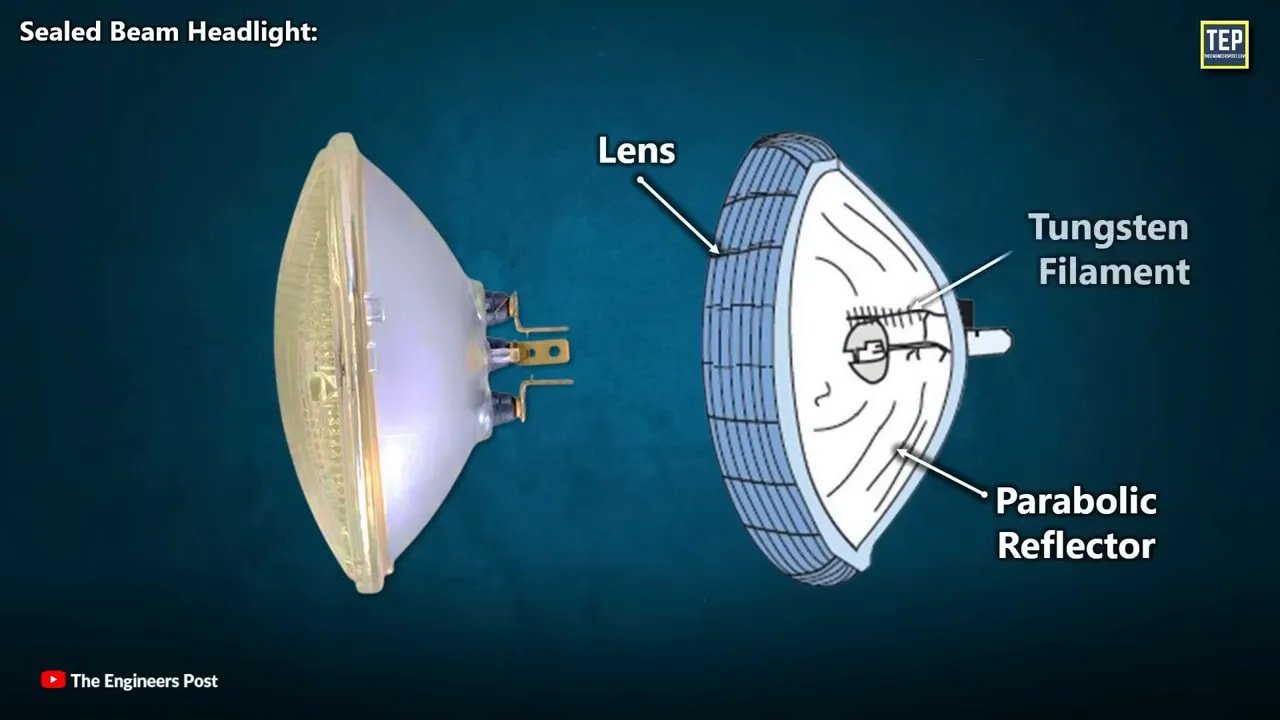
The drawback was simple: if the filament failed, the whole sealed beam unit had to be replaced. Early sealed beams also consumed considerable power while producing relatively modest light output. Over time, residue from the hot filament could darken the inside of the glass and further reduce the available light.
Halogen Headlights: The Long-Running Standard
Halogen headlights became standard technology in Europe during the early 1960s. In 1962, a French, German, and Italian consortium of bulb and headlamp manufacturers produced the first vehicle-mounted halogen lamps.
Halogen bulbs remain the most traditional and widely used automotive headlight bulbs. They are based on a tungsten filament enclosed in heat-resistant glass with inert halogen gas.
When electric current passes through the filament, it heats to roughly 2,500°C and glows. The halogen gas plays a crucial role in extending bulb life. As tungsten atoms evaporate from the hot filament, halogen compounds such as bromide and iodide help redeposit tungsten back onto it.
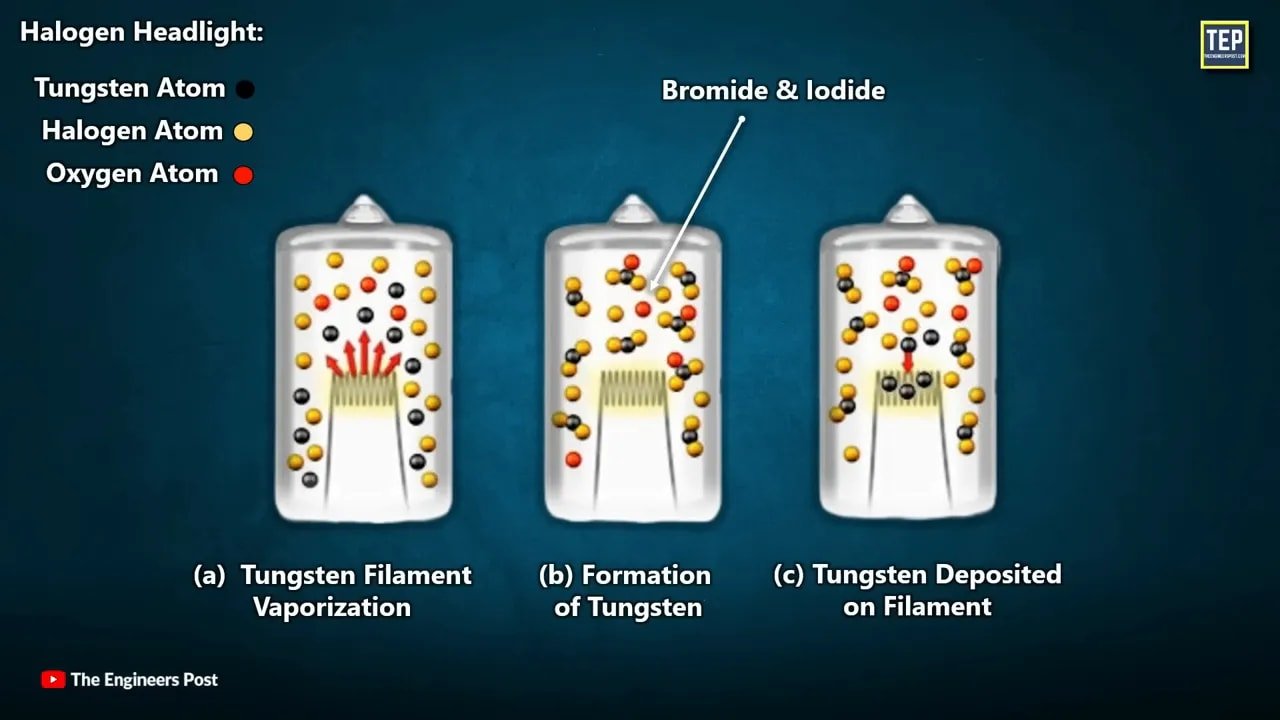
This regeneration cycle allows a halogen bulb to operate hotter and brighter than a traditional incandescent bulb. The light normally has a slightly yellow appearance, generally around 3,000 Kelvin.
What Kelvin Means for Headlights
Kelvin is a color-temperature scale. It describes the color appearance of the light, not simply how much useful light reaches the road.
- About 2,500 to 3,000 Kelvin: warm yellowish light, typical of standard halogen bulbs.
- About 4,000 to 6,000 Kelvin: whiter light, common with xenon and LED systems.
- About 6,500 Kelvin: a cooler white tone closer to natural daylight.
Some halogen bulbs are marketed in the 3,400 to 4,200 Kelvin range, but these may not be street legal in every location. Always check local lighting rules and use the correct bulb specification for the vehicle.
Halogen lighting is inexpensive and familiar, but it has two major limitations: the bulbs do not last as long as many drivers would like, and their light range is not exceptional. Those weaknesses pushed the industry toward high-intensity discharge systems.
Xenon and HID Headlights: Brighter, Whiter, More Complex
Xenon headlights are also known as HID headlights, short for high-intensity discharge. Unlike halogen lamps, they do not create light with a tungsten filament.
An HID bulb contains a quartz housing with electrodes at both ends, xenon gas between them, and metal halide salts. When the system is activated, a high initial voltage creates a spark that ionizes the gas. This produces an electrical arc between the electrodes, creating intense light.
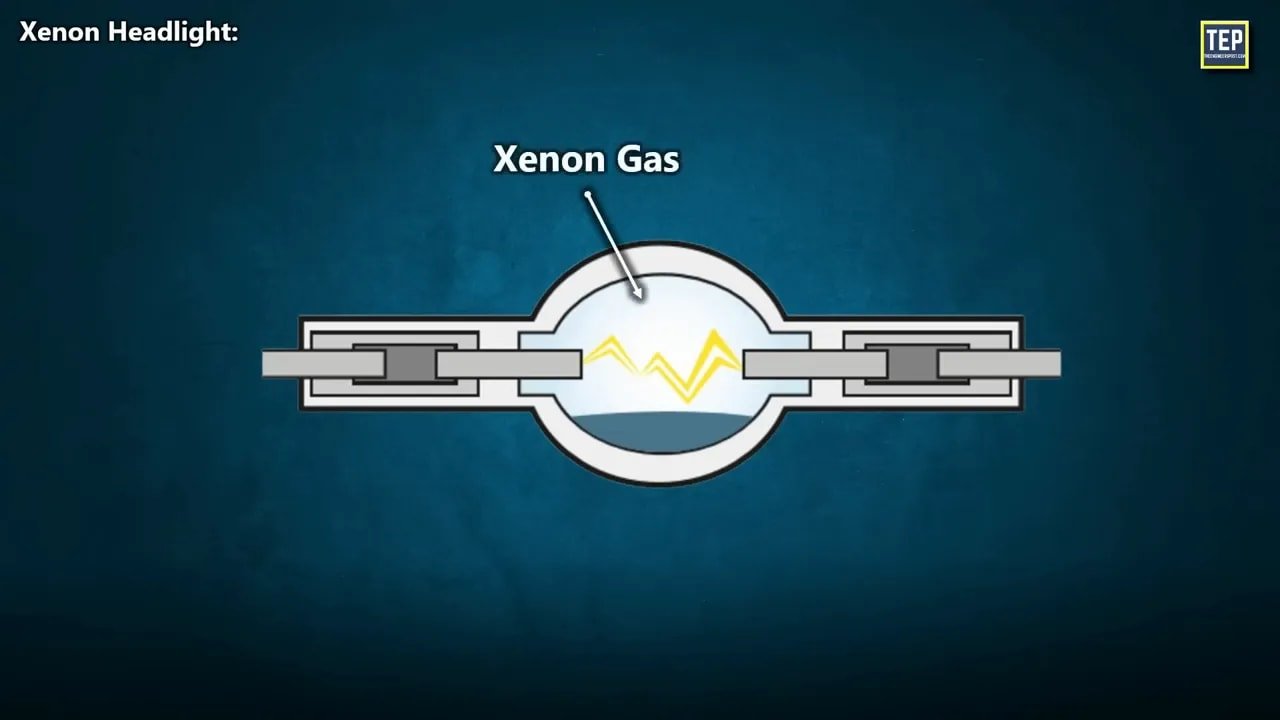
A ballast is required to maintain the electrical current after ignition. This is one reason HID systems are more complex than halogen systems.
Xenon headlights typically produce a crisp white light in the 4,000 to 6,000 Kelvin range. They can throw light roughly 200 to 250 meters and generally last much longer than halogen bulbs because there is no filament burning away over time.
The Main Problem With HID Lighting
HID lamps take a few seconds to reach full brightness. That delay makes them unsuitable for a separate high beam that needs to activate immediately.
Many vehicles with HID low beams use halogen bulbs for high beams. More expensive vehicles may use bi-xenon systems instead. In a bi-xenon headlamp, a mechanical shutter limits the low beam. When high beam is selected, the shutter lifts and allows the full HID output through.
HID lighting also has drawbacks:
- It is more expensive and more complicated than halogen lighting.
- It needs a warm-up period before reaching full brightness.
- The bulbs may gradually shift from crisp white toward a bluish hue.
- It is less durable than modern LED technology.
HID headlights offered a major improvement in brightness and range, but LEDs soon became the more efficient and versatile solution.
LED Headlights: Efficient, Fast, and Highly Flexible
LED headlights work through electroluminescence. In simple terms, electrons move through a semiconductor and release energy as photons, which are particles of light.
Unlike a halogen bulb, an LED has no thin tungsten filament that gradually degrades. It needs very little energy to illuminate, reaches full output without a warm-up period, and produces very little heat compared with filament-based lighting.
LEDs are highly energy-efficient, bright, and durable. They can project light up to roughly 300 meters, and their compact size gives vehicle designers much more freedom. This is why modern cars can use sharp light signatures, narrow lamps, and distinctive daytime running light shapes.
LED technology is also used far beyond headlights, including:
- Turn indicators
- Brake and tail lamps
- Interior lights
- Stop lamps
- Daytime running lights
The Audi A8 brought LED headlamps into the automotive market in 2004. Early versions were not perfect, but the technology quickly improved and became a major part of modern vehicle design.
Do Not Simply Install LED Bulbs in Any Housing
Aftermarket LED conversions can create problems when installed in a housing designed for halogen or xenon bulbs. LED headlights need the correct optical design and housing to control the beam properly.
Simply placing an LED bulb into a halogen or HID housing can scatter the light in the wrong direction. That may reduce usable road illumination and create glare for other road users. A headlight system must be designed as a complete unit, including the bulb, reflector or projector, lens, alignment, and beam pattern.
Adaptive Headlights: Light That Follows the Road
Adaptive headlights take modern lighting further by changing the direction of the beam as the vehicle turns. Their purpose is to improve visibility around curves and corners, where fixed headlights may leave a dark area ahead.
The system uses electronic sensors to monitor several inputs:
- Vehicle speed
- Steering-wheel angle
- Vehicle yaw
Yaw is the rotation of a car around its vertical axis. By monitoring it, the system can understand the vehicle’s orientation and better predict the road’s curve. Small electric motors inside the headlight casing then turn the lamps in the appropriate direction.
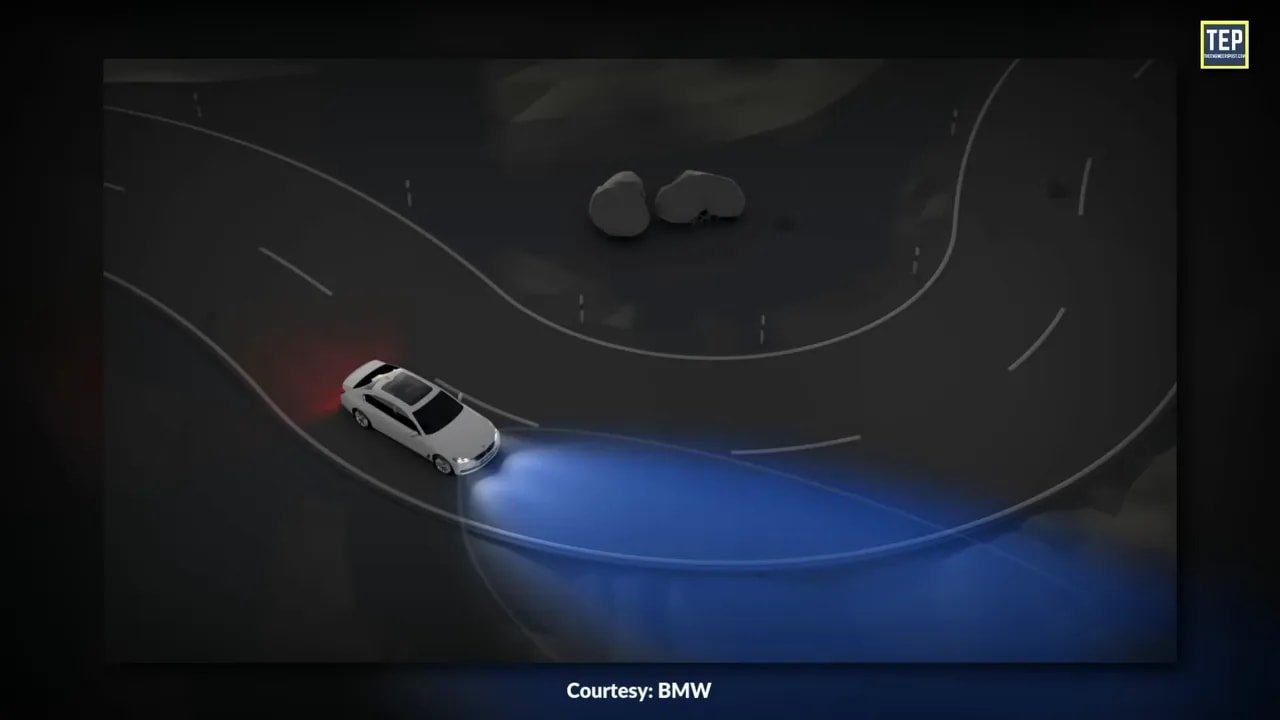
A typical adaptive headlight can turn up to 15 degrees from center in either direction, giving a total movement range of about 30 degrees.
The concept is not as new as it may seem. The Tucker 48, also called the Tucker Torpedo, featured an early example in the late 1940s. Its center-mounted third headlight, known as the Cyclops eye, turned with the steering wheel to illuminate corners.
Matrix Headlights: Smart Pixel Lighting
Matrix headlights take adaptive lighting to another level. Instead of moving one entire beam, they use multiple individual LED modules within a single headlamp. Each module can be controlled independently.
These systems are often called smart lights or pixel lighting. Cameras and sensors detect vehicles ahead or approaching from the opposite direction. The headlight can then dim or switch off only the segments that would shine directly at another driver, while keeping the rest of the road brightly illuminated.
That means the system can preserve much of the benefit of high beam without constantly dazzling others. It can dynamically adjust its pattern for city streets, highways, curves, and changing traffic conditions.
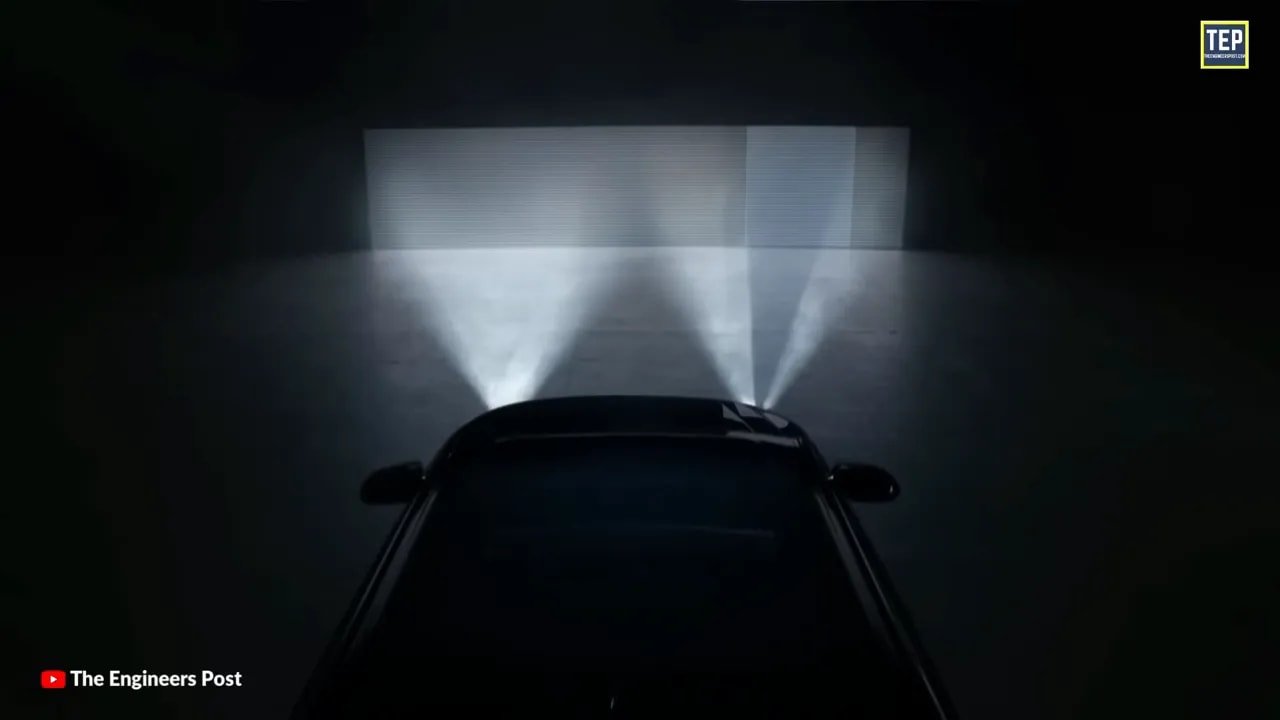
This is a major change in the way headlights work. Instead of choosing only between low beam and high beam, matrix systems shape the light precisely around the environment.
Laser Headlights: Compact Technology With Huge Potential
Laser headlights are one of the newest and most advanced lighting technologies. While halogen and LED systems remain common, laser lighting is emerging as a highly efficient alternative for premium and limited-production vehicles.
A laser headlamp contains one or more laser diodes that emit blue laser light. Mirrors direct that light toward a phosphor material. When the phosphor is energized by the blue laser, it produces an intense white light that can be directed through the headlamp optics.
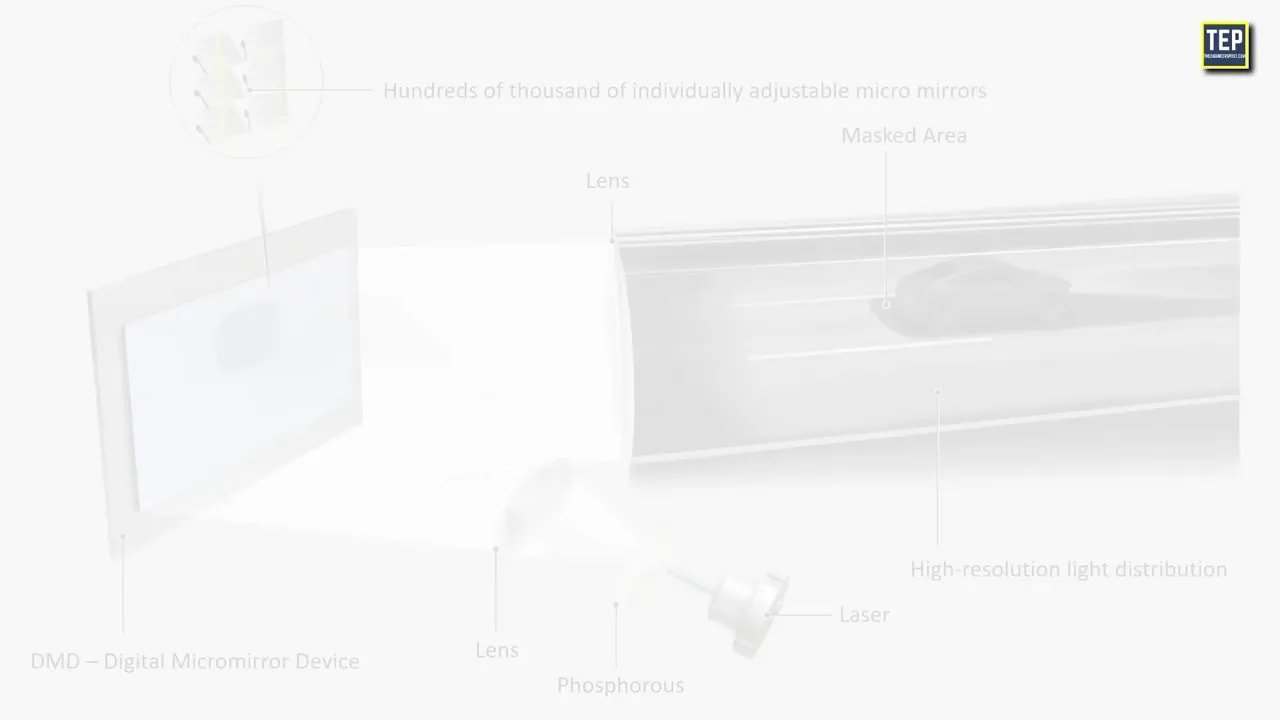
Laser units are compact, which gives designers more freedom when packaging the lighting assembly. They can be up to twice as power-efficient as LEDs, up to four times brighter, and can provide about twice the range of LED lamps.
Laser headlights commonly operate around 6,500 Kelvin, producing a bright white tone similar to natural daylight. Their biggest drawback is cost. At present, laser headlamps are largely found in prototypes and high-priced models, including optional laser high beams on the BMW i8 hybrid sports car.
How Headlight Technology Keeps Evolving
The journey from carbide lamps to laser systems shows how far automotive lighting has come. Each generation has focused on improving one or more key areas:
- Visibility: extending the distance and width of useful illumination.
- Beam control: putting light where it is needed without creating glare.
- Durability: reducing failures caused by filaments and heat.
- Efficiency: producing more light with less energy.
- Design freedom: allowing headlights to become a defining part of a car’s appearance.
Halogen headlights remain practical and common. Xenon systems provide strong output but add complexity. LEDs combine efficiency, instant response, long life, and design flexibility. Adaptive and matrix systems make lighting smarter, while lasers point toward an even more compact and powerful future.
As the technology matures, features once reserved for expensive cars are likely to move into more affordable vehicles. The headlight is no longer just a bulb at the front of a car. It is becoming an intelligent safety system.
Frequently Asked Questions
What is the difference between halogen, xenon, and LED headlights?
Halogen bulbs use a heated tungsten filament, xenon HID systems create an electrical arc through gas, and LEDs create light through a semiconductor. LEDs are generally the most energy-efficient and durable of the three.
Why do xenon headlights take time to become bright?
Xenon HID lamps need a high-voltage spark to ionize the gas and then require a short warm-up period before they reach full brightness.
Can LED bulbs be installed in halogen headlight housings?
Not reliably without a housing designed for LEDs. A mismatched LED bulb and housing can produce an incorrect beam pattern, poor road illumination, and glare for oncoming traffic.
How do adaptive headlights work?
Adaptive headlights use sensors to monitor vehicle speed, steering angle, and yaw. Small motors move the lamps so the beam follows the vehicle through corners.
What are matrix headlights?
Matrix headlights contain multiple independently controlled LED sections. Cameras and sensors allow the system to dim selected segments while keeping other areas brightly illuminated.
Are laser headlights better than LED headlights?
Laser headlights can be more compact, more efficient, brighter, and longer-ranging than LEDs, but they are also much more expensive and currently limited to select premium vehicles.


