Disclosure: As an Amazon Associate, we earn from qualifying purchases. If you click a link on this page and make a purchase, we may receive a small commission at no extra cost to you.
LIQUI MOLY DOT 4 Brake Fluid Review
Brake fade at the wrong moment is dangerous. When brake fluid breaks down under heat, you lose the firm pedal feel you depend on, and your stopping distance can grow fast.
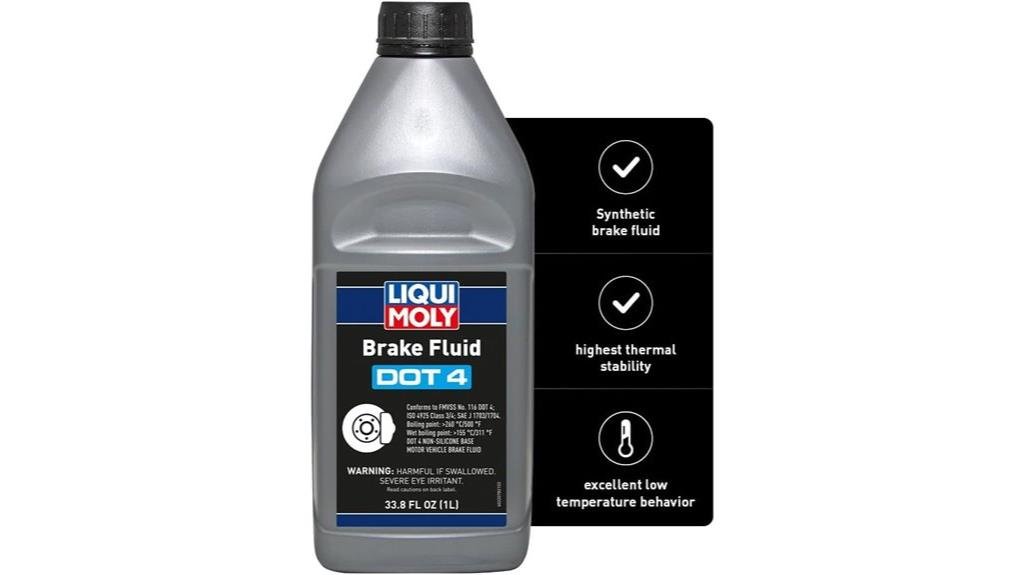
LIQUI MOLY DOT 4 Brake Fluid gives you a synthetic glycol-based formula made for modern hydraulic brake and clutch systems. This review explains its boiling point protection, ABS compatibility, maintenance needs, and the tradeoffs you should know before you buy.
Our Verdict
Rating: 8.2/10
Best For: Drivers who need a reliable DOT 4 brake fluid for passenger cars, ABS brake systems, and hydraulic clutch systems.
Bottom Line: LIQUI MOLY DOT 4 Brake Fluid offers strong heat resistance, corrosion protection, and a practical 1-liter bottle size for many service jobs. It is not a dedicated racing fluid, and you still need regular replacement because glycol-based brake fluid absorbs moisture over time.
| Specification | Detail |
|---|---|
| Brand | LIQUI MOLY |
| Product Name | LIQUI MOLY DOT 4 Brake Fluid |
| ASIN | B0CSZWH74Y |
| Part Number | 22078 |
| Volume | 1 liter, pack of 1 |
| DOT Rating | DOT 4 |
| Formula Type | Synthetic glycol-based brake fluid using glycol ethers, alkyl polyglycols, and glycol ether esters |
| Dry Boiling Point | Above 250°C |
| Wet Boiling Point | Around 155°C |
| Compatibility | Disc brake systems, drum brake systems, ABS brake systems, and hydraulic clutch systems that specify DOT 4 fluid |
| Container | Bottle |
| Included Accessories | 1 bottle of brake fluid |
| Handling Note | Damaging to painted surfaces, so protect paint and wear gloves during service |
Key Takeaways
- LIQUI MOLY DOT 4 Brake Fluid uses a synthetic glycol-based formula made for hydraulic brake and clutch systems.
- The 1-liter bottle suits many full brake fluid flushes, but your exact fluid capacity depends on your vehicle.
- The dry boiling point above 250°C helps resist vapor lock during repeated high-temperature stops.
- The wet boiling point around 155°C matches the DOT 4 minimum after moisture absorption.
- Corrosion and oxidation inhibitors help protect brake lines, calipers, master cylinders, and ABS components.
- You should not mix it with silicone-based DOT 5 fluid, and you should always follow your vehicle owner’s manual.
What Is the LIQUI MOLY DOT 4 Brake Fluid?
LIQUI MOLY DOT 4 Brake Fluid is a synthetic hydraulic brake fluid for vehicles that call for DOT 4 fluid. It is sold here in a 1-liter bottle under part number 22078 and ASIN B0CSZWH74Y.
The formula uses glycol ethers, alkyl polyglycols, and glycol ether esters. That composition places it in the standard DOT 4 category, which many modern passenger cars, SUVs, and light trucks use for hydraulic brake systems.
The headline feature is heat control. Its dry boiling point sits above 250°C, while its wet boiling point sits around 155°C after moisture absorption. Those numbers matter because boiling brake fluid can create vapor bubbles, soften the pedal, and reduce braking force.
Who It’s For
- Daily drivers who need a DOT 4 brake fluid for regular brake service on a passenger car or SUV.
- Owners of vehicles with ABS systems that specify DOT 4 brake fluid in the owner’s manual.
- DIY mechanics who want a 1-liter bottle for a brake flush or hydraulic clutch service.
Who Should Skip It
- Track drivers who need a racing brake fluid with much higher wet and dry boiling points.
- Owners of vehicles that require DOT 5 silicone brake fluid, mineral hydraulic fluid, or a specific low-viscosity DOT 4 LV fluid.
- Anyone who cannot confirm the correct brake fluid type for their vehicle before service.
Feature Deep Dive
Formula and System Protection
LIQUI MOLY uses a synthetic formulation based on glycol ethers, alkyl polyglycols, and glycol ether esters. This gives the fluid the chemical base needed for DOT 4 hydraulic brake and clutch systems.
The formula includes inhibitors that help reduce corrosion of metallic brake parts. That matters for calipers, steel brake lines, master cylinders, and ABS hydraulic components that need clean fluid to work smoothly.
It also includes oxidation protection for high-temperature use. This helps the fluid stay stable during hard braking, long downhill drives, and warm driving conditions where brake temperatures can climb quickly.
Boiling Point and Vapor Lock Resistance
Brake fluid performance depends heavily on dry and wet boiling points. The dry boiling point above 250°C gives you a useful heat margin when the fluid is fresh and properly sealed in the braking system.
The wet boiling point around 155°C reflects how DOT 4 fluid behaves after it absorbs moisture. Brake fluid is hygroscopic, so water slowly enters the system over time and lowers the fluid’s boiling point.
Special moisture scavengers help suppress steam bubble formation at higher moisture levels. That benefit does not remove the need for service, but it helps maintain braking confidence between fluid changes.
Compatibility With ABS, Disc Brakes, Drum Brakes, and Clutch Systems
This LIQUI MOLY fluid suits disc brake systems, drum brake systems, and ABS brake systems that specify DOT 4 fluid. It can also work in hydraulic clutch systems when the vehicle manufacturer calls for DOT 4.
You should not treat DOT 4 as a universal replacement for every vehicle. Some cars need DOT 3, DOT 4 LV, DOT 5.1, DOT 5 silicone fluid, or a brand-specific fluid specification.
Always check your owner’s manual, brake reservoir cap, or service guide before filling the system. If your car requires a low-viscosity DOT 4 LV fluid for advanced stability systems, confirm that standard DOT 4 meets the requirement before use.
Handling, Storage, and Service Interval
Brake fluid can damage paint, so you should cover nearby panels and wipe spills at once. Wear gloves, avoid skin contact, and keep the bottle cap sealed until you are ready to pour.
Store unused fluid in a cool, dry place with the cap tightly closed. Once you open the bottle, moisture from the air can enter the fluid and reduce its boiling point over time.
For most daily drivers, brake fluid service commonly falls around every 1 to 2 years, but your vehicle manual controls the final interval. You should also replace the fluid when moisture content reaches about 3 to 4 percent.
How It Performs in Real Use
For Daily Driving
For normal commuting, the 1-liter DOT 4 bottle gives you a practical fluid choice for routine brake maintenance. The corrosion inhibitors and DOT 4 boiling point help support steady pedal feel in everyday stop-and-go traffic.
For Mountain Roads and Heavy Braking
On long downhill roads, brake temperatures can rise as you use the pedal often. The dry boiling point above 250°C helps delay vapor lock when the fluid is fresh and the brake system is in good condition.
For Hydraulic Clutch Service
Many hydraulic clutch systems use the same type of glycol-based brake fluid as the brake system. If your vehicle specifies DOT 4 clutch fluid, this LIQUI MOLY bottle can serve both systems during maintenance.
Pros and Cons
Pros
- Dry boiling point above 250°C helps resist vapor lock during repeated hard stops.
- Synthetic glycol-based formula matches DOT 4 brake and clutch systems that require this spec.
- Corrosion and oxidation inhibitors help protect metallic brake components under heat.
- Moisture scavengers help reduce steam bubble formation after the fluid absorbs moisture.
- 1-liter bottle size works well for many DIY brake fluid flushes and clutch services.
Cons
- Wet boiling point around 155°C is standard DOT 4 territory, not a premium racing-fluid number.
- Like all glycol-based brake fluids, it absorbs moisture and needs regular replacement.
- It is not the right choice for systems that require DOT 5 silicone fluid or mineral hydraulic fluid.
Is It Worth the Price?
LIQUI MOLY DOT 4 Brake Fluid sits in a practical value position for drivers who want a trusted brand and a full 1-liter bottle. It is a strong value for the price when you need standard DOT 4 service fluid for a daily driver.
You get heat resistance, corrosion protection, ABS suitability, and hydraulic clutch compatibility in one bottle. You do not get a dedicated track formula with extreme wet boiling point performance.
The best value goes to owners who service their brakes on schedule and want dependable pedal feel without paying for racing fluid. If your car only sees normal road use, this bottle makes more sense than a premium motorsport fluid.
How It Compares to Alternatives
If you want a common budget option, Valvoline DOT 3 & 4 Synthetic Brake Fluid is a popular alternative for basic service. If you need longer-life compatibility across DOT 3, DOT 4, and DOT 5.1 applications, Bosch ESI6-32N may fit your needs better.
For track days or repeated high-speed braking, ATE Original TYP 200 and Motul RBF 600 target more aggressive use cases. LIQUI MOLY DOT 4 remains the better pick for everyday drivers who want a recognized European fluid brand, a 1-liter bottle, and standard DOT 4 performance.
Compatibility, Maintenance, and Handling
LIQUI MOLY DOT 4 works with ABS systems, disc brakes, drum brakes, and hydraulic clutch systems when DOT 4 is the required fluid. It is also miscible with high-quality synthetic brake fluids, but the best performance comes from using it alone after a proper flush.
Do not mix it with silicone-based DOT 5 fluid. DOT 5 uses a different chemistry, and mixing incompatible fluids can damage braking performance and create service problems.
Use clean tools during bleeding and keep dirt, old fluid, and water out of the system. Brake fluid contamination can affect seals, pedal feel, and the hydraulic pressure your brakes need to stop the vehicle.
Pick this if you drive a modern passenger vehicle with ABS or a hydraulic clutch system and your manual calls for DOT 4 fluid.
Skip this if your vehicle requires DOT 5 silicone fluid, DOT 4 LV fluid, or a racing brake fluid with higher wet boiling point performance.
Frequently Asked Questions
Can LIQUI MOLY DOT 4 Brake Fluid Be Used With ABS Brakes?
Yes, it is suitable for ABS brake systems that specify DOT 4 brake fluid. You should still check your owner’s manual because some newer vehicles require a low-viscosity DOT 4 LV fluid.
Can It Be Used in Hydraulic Clutch Systems?
Yes, it can work in hydraulic clutch systems that call for DOT 4 fluid. Confirm the correct specification in your vehicle manual before filling the clutch reservoir.
Can You Mix This With DOT 3 or DOT 5 Fluid?
DOT 4 brake fluid is generally compatible with glycol-based DOT 3 and DOT 5.1 fluids, but a full flush gives you cleaner and more predictable results. Do not mix it with silicone-based DOT 5 fluid.
Is One Liter Enough for a Complete Brake Fluid Flush?
One liter is enough for many passenger car brake fluid flushes, but fluid capacity varies by vehicle. Check your service manual before starting, especially if you plan to flush both the brake and clutch systems.
How Often Should You Replace LIQUI MOLY DOT 4 Brake Fluid?
Many vehicles need brake fluid service every 1 to 2 years, but your vehicle manufacturer’s schedule should guide the final interval. You should also replace the fluid when moisture testing shows about 3 to 4 percent water content.
Is This Brake Fluid Suitable for Classic Cars With Non-Sealed Systems?
It can suit classic cars that specify DOT 4 fluid and use compatible seals. Older vehicles may need closer inspection because seal materials, service history, and moisture exposure can vary widely.
What Is the Shelf Life Unopened at Room Temperature?
An unopened bottle should be stored sealed in a cool, dry place. Once opened, use it as soon as practical because brake fluid pulls moisture from the air and loses boiling point protection over time.
Does It Have a Noticeable Odor During Filling?
Brake fluid may have a mild chemical odor during filling or bleeding. Work in a ventilated area, wear gloves, and avoid spilling fluid on painted surfaces.
Is the Bottle Recyclable or Made From Recycled Plastic?
The product information does not confirm recycled-content claims for the bottle. Follow your local waste rules because containers that held brake fluid may need special handling.
The Bottom Line
LIQUI MOLY DOT 4 Brake Fluid earns an 8.2/10 because it gives you a strong standard DOT 4 formula, a 1-liter bottle, ABS compatibility, and useful corrosion protection. It makes the most sense for daily drivers, DIY brake service, and hydraulic clutch systems that require DOT 4 fluid.
You should look elsewhere if you need DOT 5 silicone fluid, DOT 4 LV fluid, or a racing brake fluid with a higher wet boiling point. For normal road use and scheduled maintenance, this is a smart buy for everyday braking confidence.
Ready to Buy?