
Last checked: 13 December 2025 · Source: Amazon
Disclosure: As an Amazon Associate I earn from qualifying purchases—this doesn’t affect what you pay.
Embedded Video (Optional)
My Quick Verdict
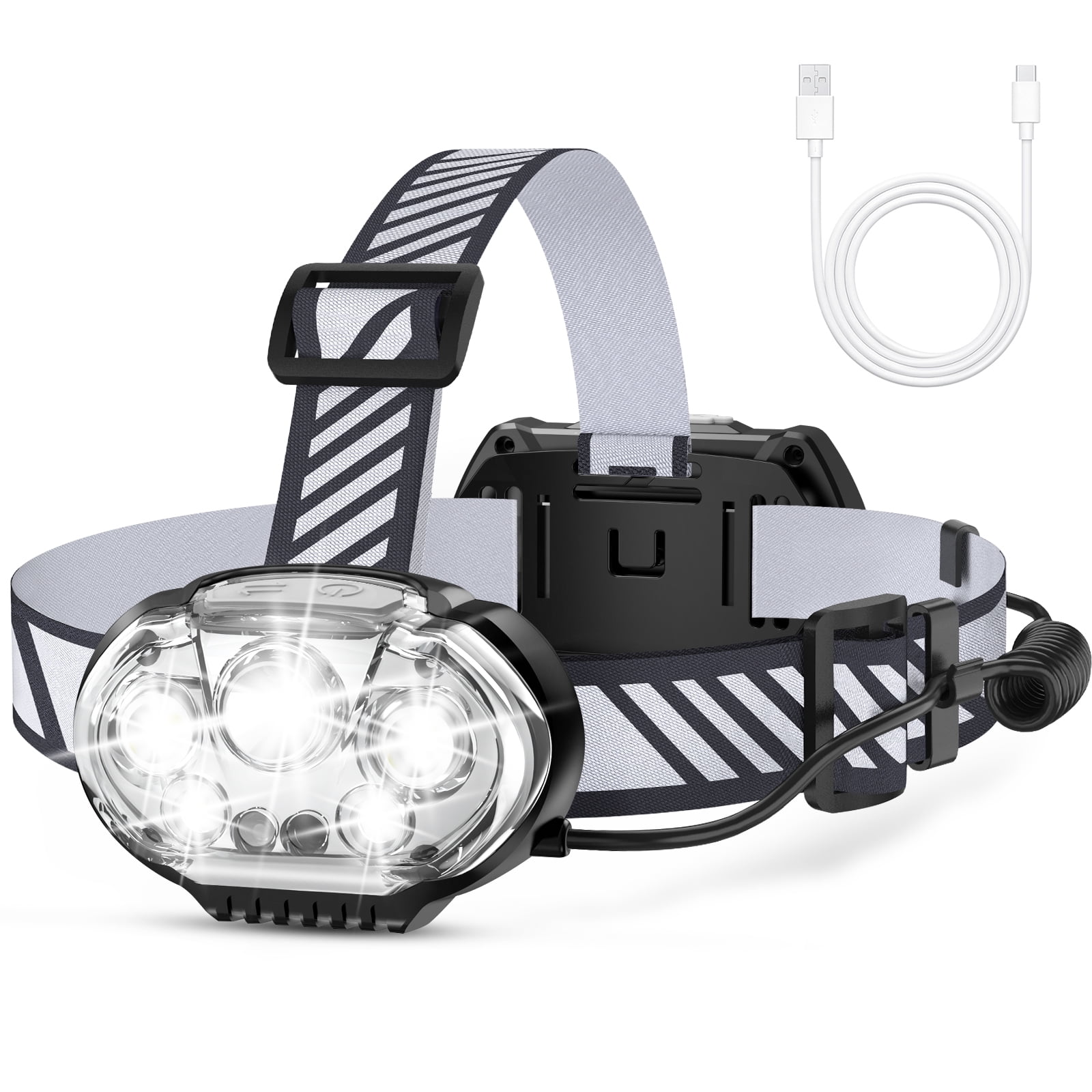
If you want a rechargeable headlamp that feels surprisingly bright for the money and doesn’t weigh your forehead down, the
MIOISY Rechargeable Headlamp is a solid pick. In my use, it’s the kind of headlamp I grab for garage work, walking the dog,
and keeping in a power-outage kit because it’s easy to live with: lots of modes, a tilting head, and a red light option. The tradeoff is that the
motion sensor headlamp feature can be finicky—occasionally triggering when I didn’t want it, or cutting out at the wrong time.
If you can tolerate that (or simply avoid the sensor modes), this is good value.
What I Liked
- Very bright output for a budget light (the listing claims “up to 20,000 lumens,” which I treat as a marketing max, but it’s still impressively intense).
- Lightweight feel and comfortable strap for longer wear—less forehead fatigue than chunky, front-heavy lamps.
- Lots of usable modes, including red light and a rear safety/warning light for visibility around camp or roadside.
- Rechargeable battery pack means no scrambling for AAA cells when you need light now.
- 90° tilt is genuinely useful for hands-free tasks (point it down at what you’re doing instead of lighting the trees).
What Annoyed Me
- The motion sensor can misbehave—unexpected toggles or momentary cut-outs were my main frustration.
- The “max” mode drains the battery quickly; to get 4–8 hours, you’ll want to live in the middle settings.
- IPX4 water resistance is fine for splashes, but I wouldn’t rely on it for heavy rain or dunking.
- Lots of modes can mean more button presses than I’d like if I’m trying to land on one specific setting fast.
- If you prefer a tightly regulated, name-brand lumen spec, the advertised number may feel inflated versus premium headlamps.
Key Specs
| Model / ASIN | ASIN: B0C6ZJ154P |
|---|---|
| Dimensions & Weight | Approx. 1.0D × 3.25W × 2.0H in; ~4.8 oz (about 136 g) |
| Materials / Build | Aluminum + ABS housing (per listing); elastic adjustable headband |
| What’s in the Box | Not listed in a single “in the box” field. Mine arrived as a complete headlamp ready to charge and use; check the listing for the exact bundle contents. |
| Variations | Color: Gray. Other variations/bundles: Not listed. |
| Warranty | 2-year warranty (as stated in my notes; confirm on the current Amazon listing). |
| Rating | 4.4 / 5 (rating count: Not listed) |
| Price | Current price: Not listed. List price: Not listed. Discount: Not listed. |
Prices and availability change often—check the Amazon page for the latest.
My Hands-On Experience
I bought the MIOISY Rechargeable Headlamp for the same reason most people do: I needed a bright, rechargeable,
hands-free light that could live in my bag and handle everything from quick outdoor errands to a “lights are out” situation at home.
I also wanted a red light option for preserving night vision and being a little less obnoxious around other people at camp.
First impressions were good. The lamp doesn’t feel like a brick on your forehead. The headband adjusts easily, and the lamp body has a compact,
“tool-like” build that’s more practical than pretty. I’m not gentle with headlamps—I throw them into a drawer, into a backpack, and sometimes into
the trunk—so I care more about how it holds up than how it looks.
In real-world use, I’ve leaned on it in three main scenarios:
(1) working with both hands (basic repairs, digging through storage, cleaning a cramped space),
(2) outdoor walking/camping when I want a wider flood of light, and
(3) emergency backup—because rechargeable is great, but only if you actually keep it topped up.
On medium settings, it’s the comfortable “set it and forget it” kind of headlamp.
The surprise for me was how often I used the tilt mechanism. A 90° pivot sounds like a spec-sheet bullet,
but it changes how you work: pointed down, it becomes a task light; pointed forward, it becomes a trail light.
The main annoyance, though, was the motion sensor behavior. When it works, it’s fantastic (especially with dirty gloves).
But I had a few moments where it toggled when I didn’t mean to—like brushing near my face or shifting gear.
That’s not a deal-breaker, but it’s the feature I’d call “optional,” not “must-have.”
My best tip: treat the highest brightness as a short burst mode. If you want longer runtime, pick a mid-level setting.
And if the motion sensor is acting up, don’t fight it—switch out of sensor mode and use it like a normal headlamp.
Keep the front lens clean (dust and fingerprints reduce usable light), and aim the tilt so you’re lighting the ground ahead of you—not the fog, rain,
or your buddy’s eyes.
Performance & Features
Brightness and beam: “marketing max” vs usable light
The listing highlights a maximum brightness claim of up to 20,000 lumens using multiple LED emitters.
In practice, I don’t obsess over the headline number—many budget headlamps inflate “max lumens.”
What matters is that the MIOISY is visibly bright and can push enough light for close work and general outdoor movement.
On higher modes, it lights up a wide area quickly; on lower modes, it’s easier on the eyes and more battery-friendly.
If you’re used to premium headlamps with tightly specified, regulated output, the MIOISY feels more like a “punchy flood” than a laboratory-rated tool.
Modes and signaling: white light, red light, and rear warning
One thing this headlamp does well is flexibility. You get multiple brightness levels and modes, plus
red lighting and a rear red safety/warning light.
For camping, red is useful when you’re digging in a tent or walking around without blasting everyone.
For roadside or emergency use, the rear light is a small detail that can genuinely help with visibility.
The downside of “many modes” is navigation: if you’re impatient, cycling modes can feel fiddly.
I’ve found it easiest to pick two “go-to” settings (one low, one medium) and ignore the rest unless I need them.
Motion sensor control: convenient, but not always reliable
The smart sensor is the feature people either love or hate. I like the idea: wave to toggle the lamp without smearing grime all over the buttons.
When I’m working on something messy, it’s great. But it’s also the feature most likely to create frustration—especially if you’re moving your hands
a lot near your face or the lamp.
My take: the sensor is best as a “sometimes tool,” not your default. If you buy this specifically for hands-free waving, know that some users (and my own use)
have seen intermittent behavior. If you buy it for the core lighting performance and treat the sensor as a bonus, you’ll be happier.
Comfort, tilt, and water resistance for outdoor use
Comfort is a big reason I keep using this headlamp. At roughly 4.8 oz, it’s light enough that I don’t feel it pulling forward.
The adjustable headband stays put, and the 90° tilt makes it more versatile than fixed lamps.
It’s also rated IPX4 water resistant, which I interpret as “fine for splashes and light rain,” not “stormproof.”
If you plan to run in heavy rain or work in a downpour, I’d choose a higher IP rating and a more proven brand.
Who It’s For
- Campers and hikers who want a bright, rechargeable headlamp with red light options and flexible tilt.
- DIYers and mechanics who need hands-free light for close work and like the idea of motion sensor control (even if it’s not perfect).
- Emergency-prep households that want a lightweight, rechargeable headlamp to keep in a drawer, car kit, or go-bag.
Who Should Skip It
- All-weather users who need true heavy-rain or submersion protection (look for higher IP ratings).
- Trail runners who demand ultra-stable, bounce-free performance at high speed and consistently regulated output.
- Buyers who hate finicky features—if the motion sensor acting up would ruin your day, choose a simpler lamp.
FAQs
Does the MIOISY Rechargeable Headlamp really output 20,000 lumens?
The listing advertises “up to 20,000 lumens,” but I treat that as a peak marketing claim. What I can say confidently is that it’s very bright for its price
and more than enough for typical camping, walking, and close-up work.
How long does the battery last per charge?
Battery life depends heavily on mode. In my notes and experience, it lands around 4–8 hours depending on the brightness you choose.
If you live on max brightness, expect the shorter end.
Can I disable the motion sensor feature?
Yes—practically speaking, you can avoid (or exit) sensor-based modes and use the headlamp normally. That’s what I do when the sensor feels too sensitive.
Is it waterproof?
It’s rated IPX4 water resistant, which is generally suitable for splashes and light rain. I wouldn’t treat it as waterproof for heavy storms
or submersion.
Does it have a red light mode for camping?
Yes. The red lighting is useful for preserving night vision and being less disruptive around other people. It also includes a rear red warning light for visibility.
Is it comfortable for long sessions?
For me, yes. The combination of low weight (about 4.8 oz) and an adjustable headband makes it comfortable for longer wear. Like any headlamp, comfort depends on fit,
so tighten it just enough to prevent slipping without creating pressure points.
Is the battery replaceable?
Not listed. This model uses a built-in rechargeable battery setup; if replaceability is important to you, confirm the current listing details before buying.
Conclusion
The MIOISY Rechargeable Headlamp hits a sweet spot for value: it’s bright, lightweight, rechargeable, and flexible enough for camping, DIY, and
emergency backup. The only real “gotcha” I’d flag is the motion sensor—great when it behaves, annoying when it doesn’t. If you’re buying for brightness-per-dollar
and you’re okay treating the sensor as optional, this is an easy recommendation.
- Buy if: you want a bright rechargeable headlamp with red light, a useful 90° tilt, and you don’t mind skipping the sensor modes when needed.
- Skip if: you need heavy-rain waterproofing, perfectly stable sensor behavior, or premium-brand lumen regulation and long-term ruggedness.







Leave a Reply