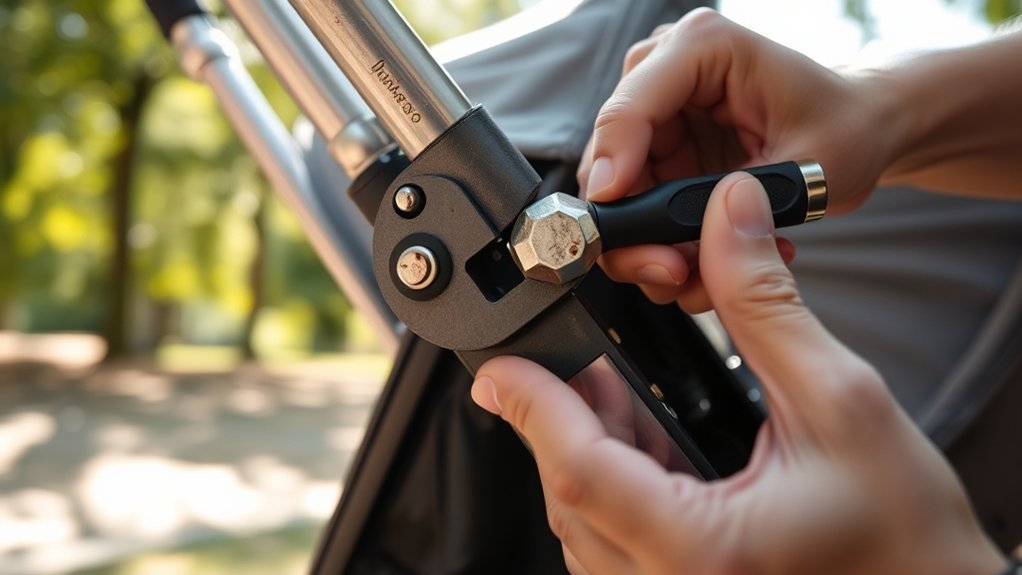
If your stroller hinge is stiff, don’t worry! Start by cleaning it with a damp cloth to remove dirt. Then, apply a silicone-based lubricant directly to the joints and work the hinge back and forth to spread it. Wipe off the excess to prevent dirt buildup. Test the hinge by opening and closing the stroller; listen for any strange noises. Keeping up with regular maintenance can really help, and there’s more to learn about stroller care!
Understanding the Causes of Hinge Stiffness
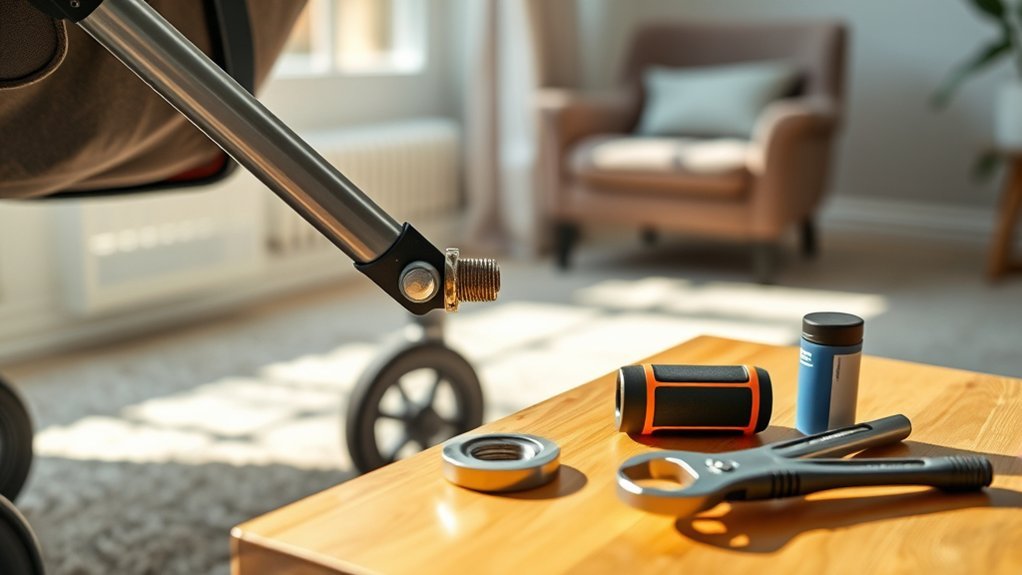
When you notice your stroller’s hinge feeling stiff, it can be frustrating, especially when you’re in a hurry to get out the door. This stiffness often stems from dirt and debris that accumulate in the hinge design over time.
A stiff stroller hinge can be a hassle, often caused by dirt buildup and debris over time.
Regular exposure to moisture can lead to rust, increasing friction and making it tough to maneuver. Improper storage, like leaving your stroller outside in damp conditions, can also affect its material durability, causing stiffness.
Plus, the mechanical wear from constant folding and unfolding can misalign the hinge, adding to the problem. You can keep your stroller in top shape by routinely inspecting and cleaning the hinge area.
A little lubrication goes a long way in maintaining that smooth operation you crave!
Cleaning Your Stroller Hinge
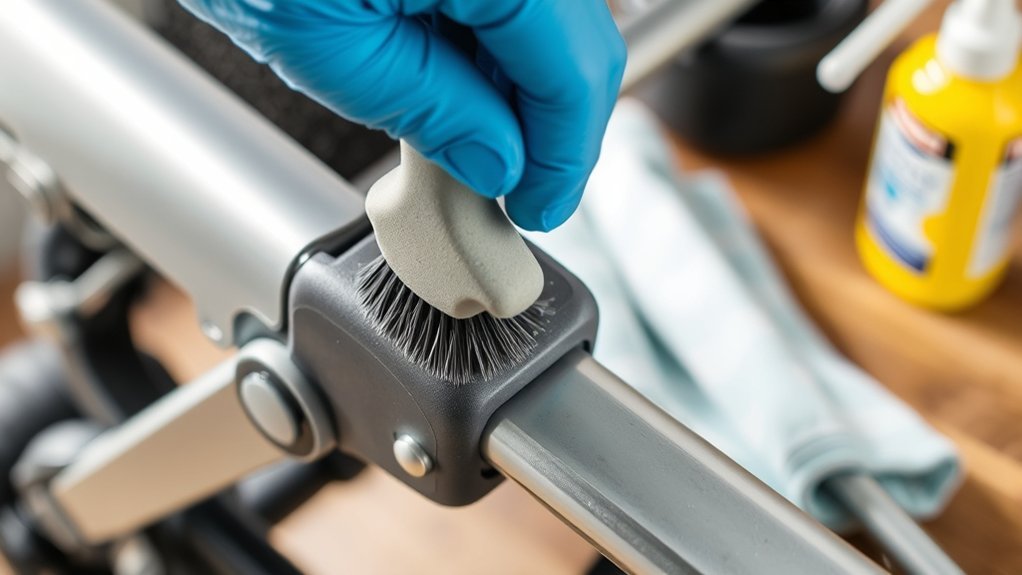
Cleaning your stroller hinge is a simple yet essential task that can make a big difference in how smoothly your stroller operates.
Regular maintenance can save you from unexpected frustrations while out with your little one. Here’s how to keep it in top shape:
- Damp Cloth: Use a soft cloth to wipe away dirt and debris from the hinge area. This prevents stiffness and promotes smooth function.
- Inspect: Check for rust or corrosion on the hinge materials. If you spot any, treat them with an appropriate rust remover.
- Dry Storage: Always store your stroller in a dry environment to avoid moisture buildup that can lead to stiffness.
With the right cleaning tools and a bit of care, your stroller will be ready for all your adventures!
Applying Lubricant: Step-by-Step
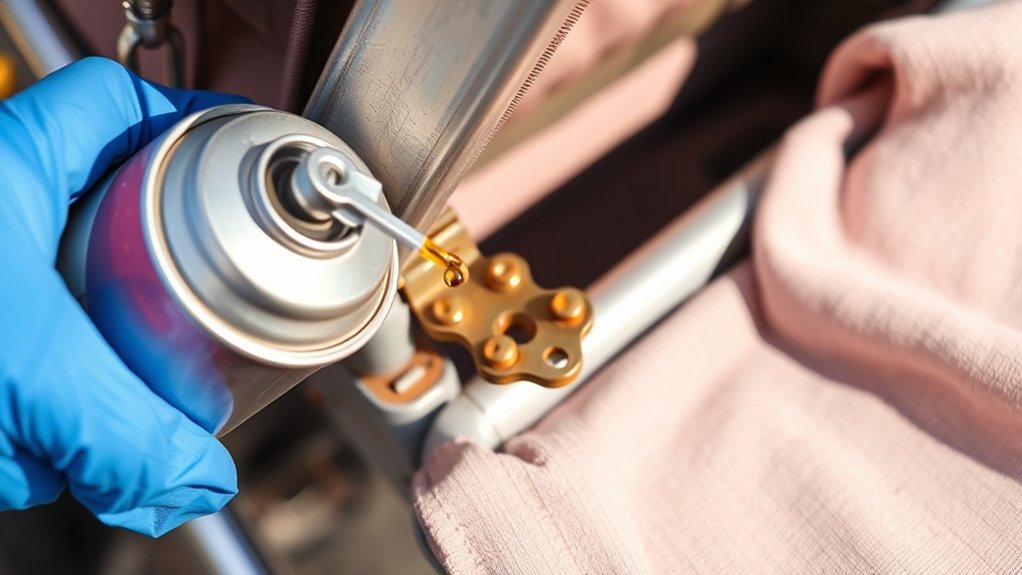
To keep your stroller operating smoothly, applying lubricant to the hinge points is a must.
First, identify those stiff hinges that need attention. Grab a silicone-based or multi-purpose lubricant safe for both plastic and metal. You don’t want to damage anything!
Apply a small amount directly to the hinge joints, ensuring it seeps into the crevices without overdoing it. Then, gently move the hinge back and forth to distribute the lubricant evenly—this part always reminds me of those classic DIY moments when I felt like a pro!
Finally, wipe away any excess with a clean cloth to prevent dirt buildup. Regular preventive maintenance like this can make all the difference in keeping your stroller functioning beautifully!
Testing the Hinge After Lubrication
Once you’ve applied the lubricant, it’s time to test the hinge’s movement.
Open and close it a few times to feel for any smoothness or stiffness, and pay attention to any strange noises.
Also, don’t forget to check that the locking mechanism is working properly—you’re aiming for a hassle-free experience every time you fold or unfold your stroller!
Check for Smooth Movement
After you’ve applied lubricant to the stroller hinge, it’s time to put it to the test. Open and close the stroller a few times to verify smooth movement.
Here’s what to check during your hinge inspection:
- Listen for Sounds: Pay attention to any grinding or creaking noises. If you hear them, more cleaning or lubrication might be needed.
- Feel the Movement: A properly lubricated hinge should move effortlessly. If it feels stiff, there might still be debris obstructing it.
- Visual Inspection: Look for any leftover dirt or grime on the hinge. Keeping it clean is essential for effective stroller maintenance.
If the hinge remains stiff, consider disassembling it for a deeper inspection. You’ve got this!
Assess Locking Mechanism Functionality
While you’re checking the hinge, don’t forget to test the locking mechanism. Engage and disengage it multiple times; you want that smooth operation!
If you notice any resistance or sticking, it’s a sign you might need more lubrication or further attention. Remember, proper alignment is key—misaligned components can lead to stiffness and affect the locking mechanism’s functionality.
So, apply lubricant directly to the hinge joints, then work the mechanism back and forth to spread it evenly. After a few minutes, revisit your locking mechanism inspection to gauge improvements.
These hinge adjustment techniques aren’t just about fixing the stroller; they’re about ensuring your freedom to navigate life with ease!
Inspect for Unusual Noises
Have you ever noticed a strange noise coming from your stroller hinge right after you’ve applied lubricant? It can be frustrating, but it’s vital to inspect for unusual noises to guarantee smooth operation.
Here’s how to tackle it:
- Test Movement: Gently move the hinge back and forth. If you hear creaking or grinding, it might need more lubrication or a hinge adjustment.
- Visual Check: Inspect the hinge for any obstructions or debris that could be causing stiffness or noise.
- Deep Clean: If noises persist, consider disassembling the hinge for a thorough cleaning.
Regular testing not only aids in noise reduction but also helps identify potential issues early, keeping your stroller in top shape for all your adventures!
Regular Maintenance for Stroller Longevity
To keep your stroller in top shape, regular maintenance is key, especially when it comes to the hinges. A little preventive care can greatly boost your stroller’s lifespan.
Make it a habit to inspect the hinges for stiffness or wear—trust me, it saves you from bigger headaches down the line. Wipe down components with a damp cloth and mild soap to eliminate dirt that can cause stiffness.
Don’t forget to lubricate those hinges every now and then with a silicone-based spray; it keeps folding and unfolding a breeze!
Finally, store your stroller in a dry place to prevent rust. Address any minor issues promptly—small fixes now can prevent major problems later. Your stroller deserves this attention!
Identifying Other Mechanical Issues
When it comes to your stroller, keeping an eye on wheel alignment is just as important as those hinges.
If you notice it pulling to one side, a quick adjustment might do the trick.
Plus, don’t forget to lubricate the folding mechanism regularly—I’ve found that a little maintenance goes a long way in making life smoother!
Inspecting Wheel Alignment
Inspecting your stroller’s wheel alignment is essential for a smooth ride, and it can make all the difference in how easily you maneuver.
Trust me, no one wants to wrestle with a stroller that veers to one side! Here are three tips to help you check for steering issues:
- Check for Misalignment: Regularly inspect the wheels for uneven wear, which can affect steering and maneuverability.
- Secure the Axles: Verify the wheel axles are tightly fastened; loose axles can lead to alignment problems.
- Clear Obstructions: Look for debris around the wheels that might hinder movement and cause misalignment.
Lubricating Folding Mechanism
After making certain your stroller’s wheels are aligned and ready for smooth rides, it’s time to turn your attention to the folding mechanism.
Regular stroller maintenance is essential, and lubricating those hinges can make a world of difference. I’ve found that a silicone-based lubricant works best since it won’t attract dirt like oil-based types.
Before you apply anything, check for any debris or obstructions that might be causing stiffness. When you do lubricate, remember, less is more; just a small amount goes a long way.
Once you’ve applied it, test the folding mechanism to confirm it’s operating smoothly. If it’s still stiff, address any lingering issues promptly to keep your stroller in top shape!
When to Seek Professional Help
If you notice that your stroller’s hinge remains stiff even after applying lubricant and making adjustments, it’s time to contemplate getting some professional help. Ignoring the issue could lead to bigger headaches down the line.
Here are three signs that signal you should reach out to an expert:
- You see signs of wear and tear that regular maintenance can’t fix.
- Unusual noises or resistance during operation are present, pointing to potential issues.
- If your stroller’s warranty is still valid, getting a professional diagnosis can guarantee repairs are covered.
Addressing these problems early helps avoid safety risks.
I once waited too long to seek help, and it ended up costing me more in repairs. Don’t make that mistake!
Tips for Storing Your Stroller Properly
When you’re not using your stroller, storing it properly can make a big difference in its longevity and performance.
First, always keep your stroller folded to save space and protect those hinges from getting stiff. Find a dry spot for stroller storage to prevent rust or mold. I’ve learned the hard way; a damp garage can be a nightmare!
Always store your stroller folded in a dry area to avoid rust and keep those hinges happy!
Use a protective cover to shield it from dust and dirt, which can clog mechanisms over time. And don’t stack heavy items on top—trust me, it can lead to deformation.
Before tucking it away, take a moment to check and clean it. This way, you’ll guarantee everything’s in top shape for your next adventure.
Happy strolling!
Frequently Asked Questions
Can I Use WD-40 Instead of Silicone-Based Lubricant?
You shouldn’t use WD-40 as a lubricant; it can attract dirt. Instead, try silicone-based alternatives for smoother operation. I’ve found that proper lubrication tips really make a difference when maintaining your gear!
How Often Should I Clean My Stroller Hinge?
You should clean your stroller hinge every few months as part of your stroller maintenance tips. Regular hinge lubrication frequency helps it function smoothly, making outings enjoyable instead of a hassle. Trust me, it’s worth it!
What Is the Best Way to Store My Stroller Long-Term?
For long-term stroller storage, clean it thoroughly, collapse it, and keep it in a dry, cool place. I once stored mine in the garage, but it got dusty—now, I use a breathable cover!
Are There Any Specific Brands of Lubricant Recommended?
For lubricating your stroller, silicone spray or lithium grease works wonders. Brands like WD-40 and DuPont offer great options. Personally, I’ve found them easy to use, keeping my stroller smooth and ready for adventures!
How Do I Know if My Stroller Hinge Is Beyond Repair?
If your stroller hinge shows signs of rust, cracks, or won’t budge after regular maintenance and inspection, it’s likely beyond repair. Trust your instincts—safety first, and sometimes it’s better to let go.
Conclusion
Fixing a stiff stroller hinge isn’t rocket science; with a little cleaning and some lubricant, you can have it gliding smoothly again in no time. Think of it as giving your stroller a mini spa day! Just remember to keep up with regular maintenance, and you’ll be cruising with ease. If things still don’t feel right, don’t hesitate to call in the pros. Happy strolling!






Leave a Reply