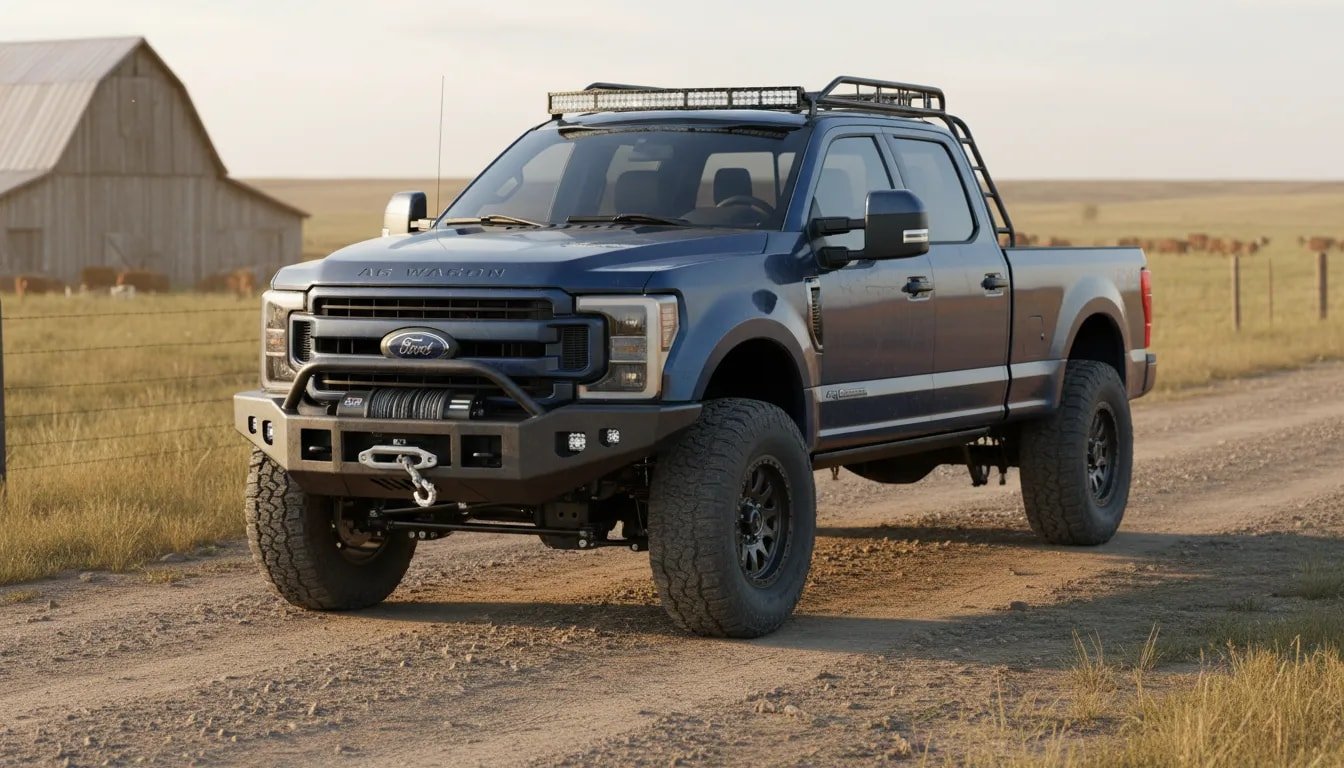
The AG Wagon Ford F-250 is aimed at buyers who want a heavy-duty ranch truck with diesel power, recovery equipment, towing preparation, an off-road stance, and a comfortable cabin in one finished build. This review examines the specific truck shown here, including its equipment, driving character, payload limits, pricing, and the checks you should make before buying an upfitted Super Duty.
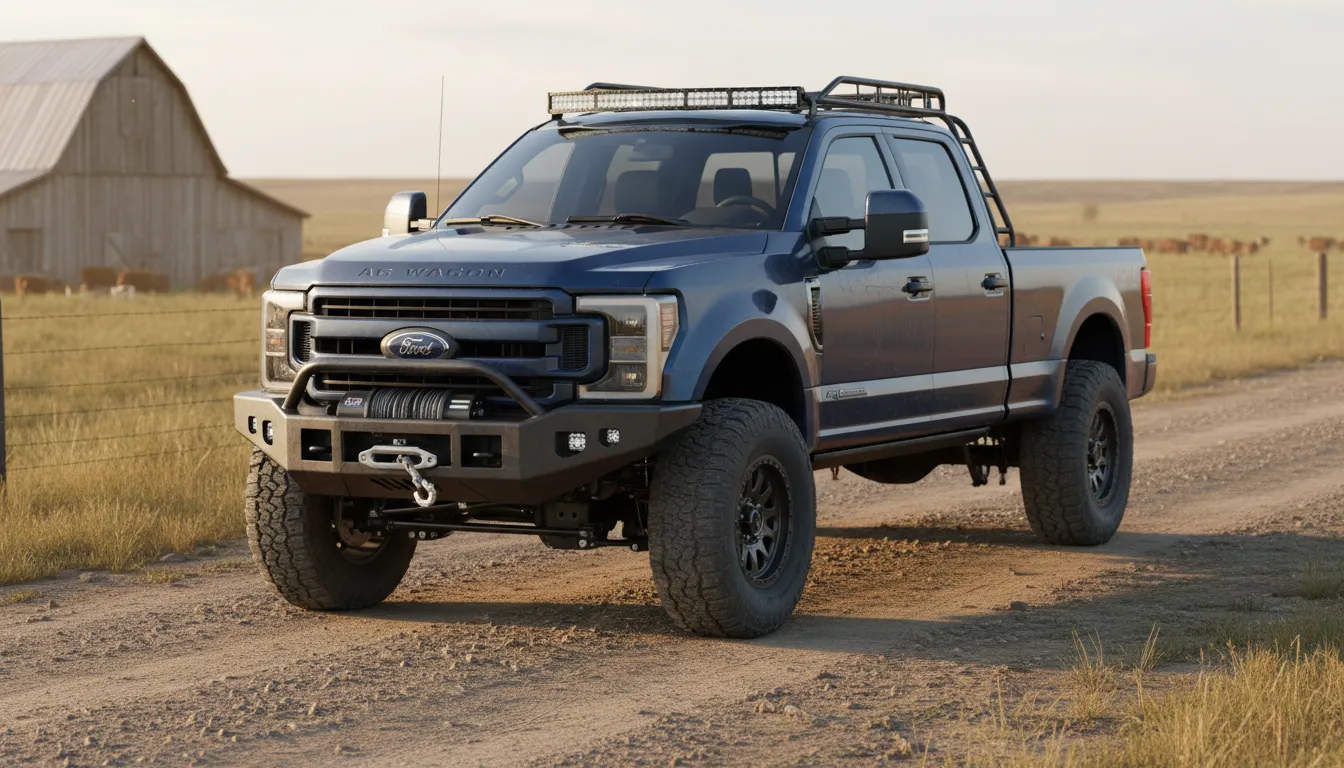
This is not a basic F-250 with a few cosmetic add-ons. The featured truck combines the available high-output Power Stroke diesel with a front winch, 35-inch tires, Fox remote-reservoir shocks, rear air springs, auxiliary lighting, bed equipment, and factory towing provisions. That integration is its main appeal, but it also makes configuration-specific documents more important than broad model claims.
Quick Answer
The AG Wagon Ford F-250 makes the most sense for ranch owners, contractors, and frequent trailer users who want a completed premium build instead of managing separate upgrades. Its diesel output and integrated equipment are strong points, but the featured truck’s payload, hitch hardware, warranty coverage, and roughly $141,505 presented price must be verified individually.
Key Takeaways
- Ford rates the available 6.7-liter high-output Power Stroke at 500 horsepower and 1,200 lb-ft of torque.
- The featured upfit adds a 15,000-pound winch, 35-inch tires, Fox shocks, rear air springs, auxiliary lights, and bed equipment.
- Fifth-wheel and gooseneck prep provides towing provisions, but you still need compatible coupling hardware and a configuration-specific tow-rating check.
- Rear air springs can help level the truck under load, but they do not increase the payload rating on the certification label.
- The truck is easier to maneuver than a dually, although a dual-rear-wheel model may suit buyers with higher pin weights or maximum payload needs.
- The premium price is easiest to justify when you value coordinated installation, a finished appearance, and one-stop convenience.
At a Glance
| Best For | Ranch owners, contractors, frequent trailer users, and buyers who want a completed premium heavy-duty build. |
| Main Strength | Strong diesel output paired with coordinated recovery, towing, suspension, lighting, and bed upgrades. |
| Main Drawback | High purchase cost and added complexity from modifications, configuration limits, and upfit-specific warranty questions. |
| Featured Price | About $141,505 as presented for the truck reviewed; confirm the current buyer’s order and window sticker. |
Key Specs of the Featured AG Wagon F-250
These figures describe the truck reviewed here. Some are Ford powertrain ratings, while others are specific to the featured upfit and should not be applied to every F-250.
- Engine: 6.7-liter high-output Power Stroke turbo-diesel V8
- Power: 500 horsepower at 2,600 rpm
- Torque: 1,200 lb-ft at 1,600 rpm
- Transmission: 10-speed automatic
- Wheels and tires: 35-inch tires on 18-inch wheels on the featured build
- Suspension: Lifted setup with Fox remote-reservoir shocks and rear air springs
- Recovery equipment: 15,000-pound-rated front winch with an integrated bumper and brush-guard structure
- Towing equipment: Fifth-wheel/gooseneck prep, trailer controls, and load-leveling support; compatible hitch hardware is still required
- Trim: Lariat-based cabin with custom upholstery and accessory controls
- Displayed payload: 2,814 pounds for the featured truck, subject to its certification label and installed equipment
- Presented price: About $141,505, including the base truck and upfit described in the source review
Note: Payload, towing capacity, curb weight, final price, and equipment vary by cab, bed, axle ratio, engine, tires, options, passengers, cargo, and installed accessories. Use the driver’s-door certification and tire-loading labels, current Ford towing data, and the final buyer’s order for the exact truck.
What the AG Wagon Package Changes
The safest way to evaluate this vehicle is as one specific upfitted F-250, not as a separate factory Ford trim with universal specifications. The Ford chassis, engine, transmission, safety systems, and factory ratings form the base. The bumper, winch, lighting, wheel-and-tire package, suspension parts, rear air springs, upholstery, and other accessories come from the completed build.
That distinction matters because added equipment changes curb weight and remaining payload. It can also affect alignment, speedometer accuracy, ride height, hitch geometry, parking clearance, service procedures, and which company covers a particular component. Ask for an itemized build sheet with manufacturer names, part numbers, installation dates, and warranty terms.
Exterior: Ranch-Ready and Unapologetic
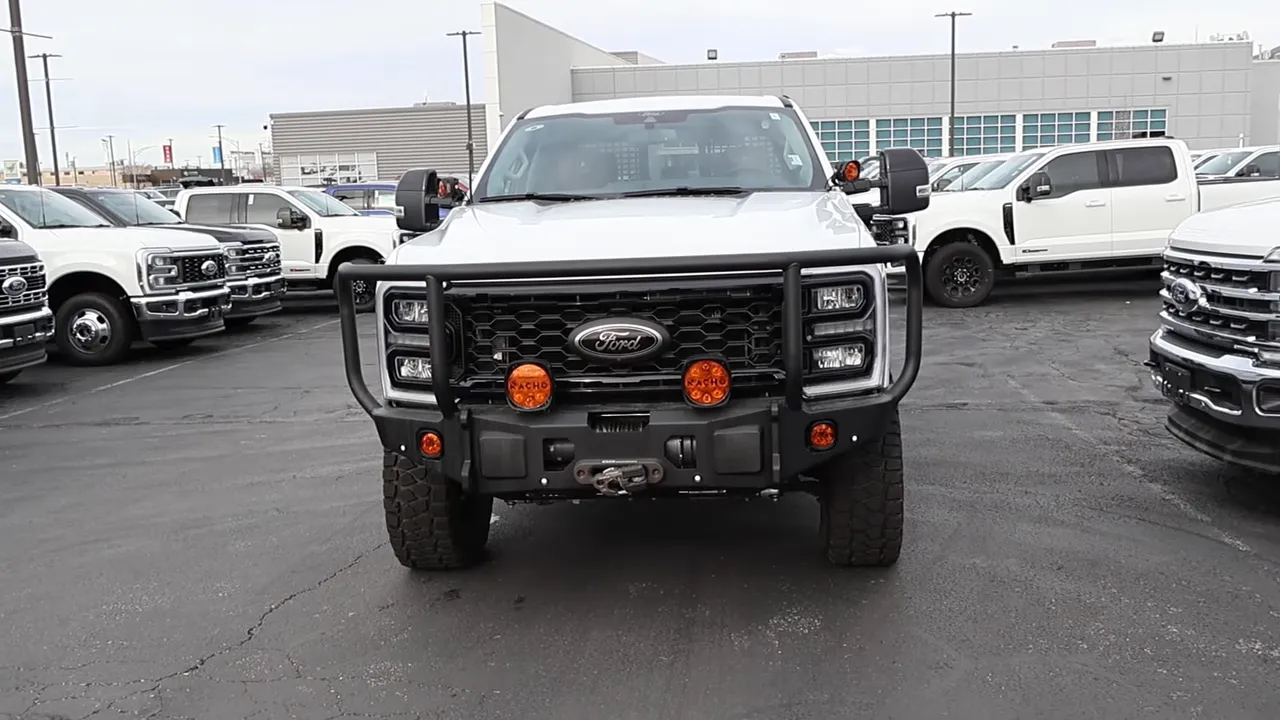
The AG Wagon is designed to look functional rather than subtle. Its front bumper and brush-guard structure frame a large winch, while auxiliary lights support early starts, late finishes, and work in poorly lit areas. The equipment creates a purposeful appearance, but the bumper, winch, and lighting also add front-end weight that counts against available payload.
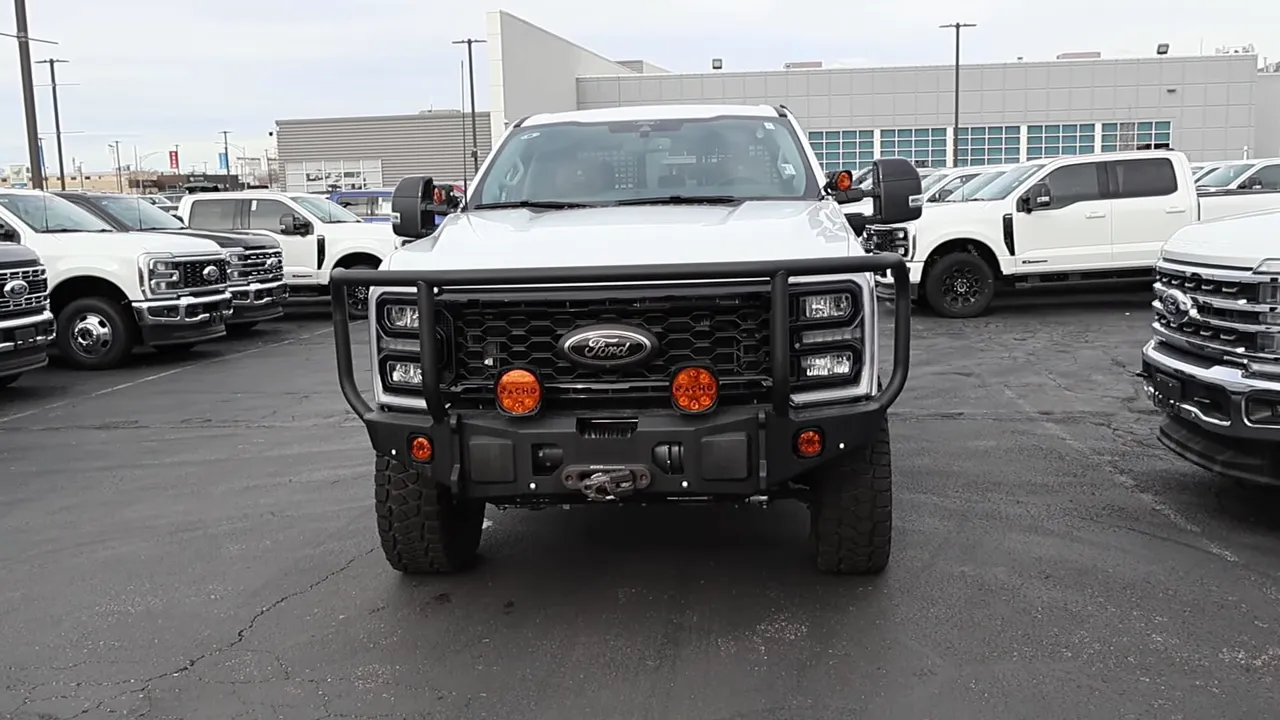
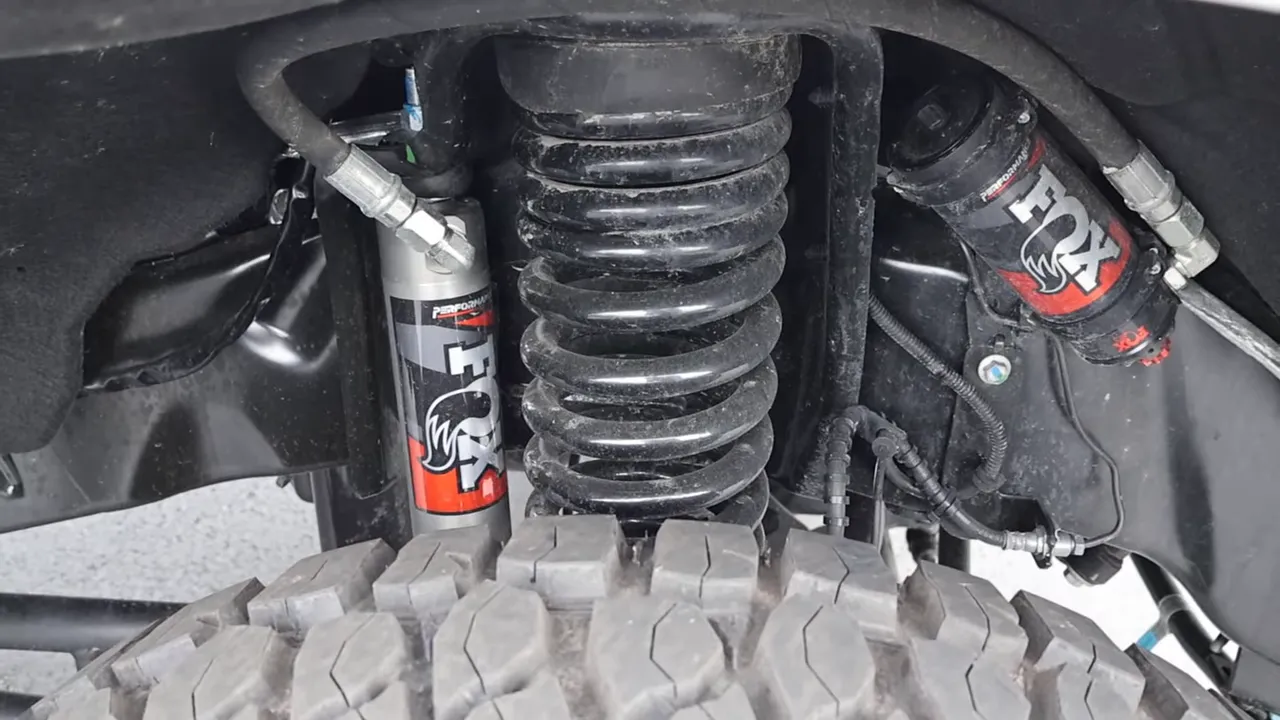
Underneath, the featured truck uses a steering stabilizer, a lifted ride height, and Fox remote-reservoir shocks. Those changes can improve control on rough property roads when properly selected and tuned. They can also change steering feel, suspension geometry, braking response, and hitch height, so installation quality matters as much as the brand name on the parts.
The 35-inch tires on 18-inch wheels leave useful sidewall for uneven surfaces and give the truck its broad stance. Before purchase, confirm each tire’s load index, cold-pressure requirement, age, replacement availability, and clearance at full steering lock and suspension compression.
The extra height and width can help on open ranch roads, yet they demand more care around garages, low branches, narrow gates, parking structures, drive-through lanes, and loading ramps. Measure the completed truck rather than relying on stock F-250 dimensions.
Warning: A lifted heavy-duty truck on larger tires may steer, brake, park, and tow differently from a stock truck. Confirm tire load ratings, wheel torque, alignment, suspension fasteners, driveshaft angles, brake condition, hitch height, and electronic recalibration before heavy towing.
Bed, Towing Setup, and Work Gear
The bed is configured for changing workdays. The featured truck shows a spray-in liner, tie-down access, towing provisions, and a gooseneck mounting area. Factory preparation can simplify installation and keep the towing connection tied into the truck’s intended mounting points and wiring.
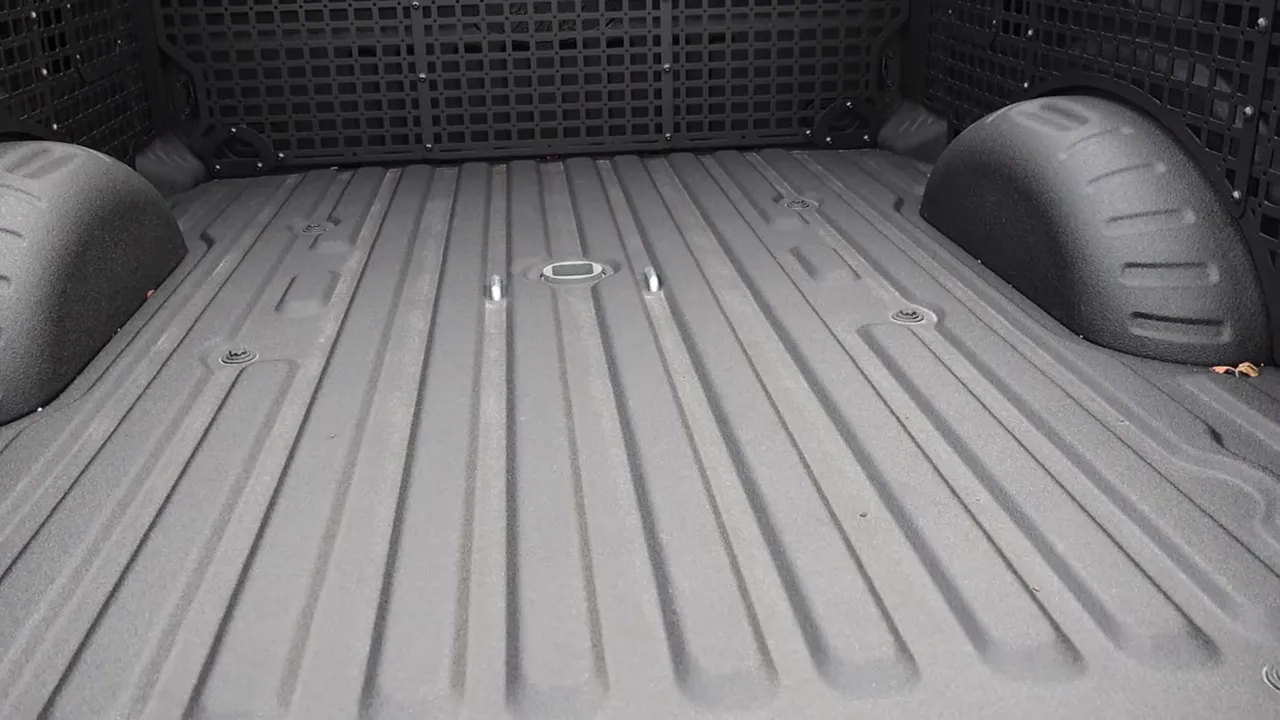
However, preparation is not the same as a complete coupling. A fifth-wheel trailer requires a compatible fifth-wheel hitch, while a gooseneck trailer requires the correct ball and safety-chain attachments. The hitch, ball, trailer, axle ratio, cab and bed configuration, tire ratings, payload, gross combined weight rating, and pin or tongue weight must all work together.
The featured build also includes an onboard air source, rear air springs, an upgraded rear bumper, and work lighting. These features can make trailer hookup, tire-pressure adjustments, and nighttime loading easier. They do not override the truck’s weight ratings or replace a properly adjusted weight-carrying or weight-distributing setup where required.
Five Numbers to Verify Before Towing
- Truck payload: Use the label on the exact completed vehicle and account for passengers, tools, hitch hardware, accessories, and cargo.
- Rear-axle rating: Compare the loaded rear-axle weight with the rear GAWR on the certification label.
- Trailer rating: Match the exact engine, axle ratio, drive type, cab, wheelbase, bed, and hitch type to Ford’s current towing table.
- Pin or tongue weight: Include the real loaded trailer condition, not only the empty published weight.
- Gross combined weight: Weigh the complete truck-and-trailer combination and remain within the applicable GCWR and legal limits.
Pro Tip: List your three heaviest regular trailers with loaded weights and estimated pin or tongue weights. Then compare those figures with the exact truck’s payload, rear-axle rating, and Ford towing table before deciding between this single-rear-wheel F-250 and a dually.
Interior: Lariat Comfort With Custom Touches
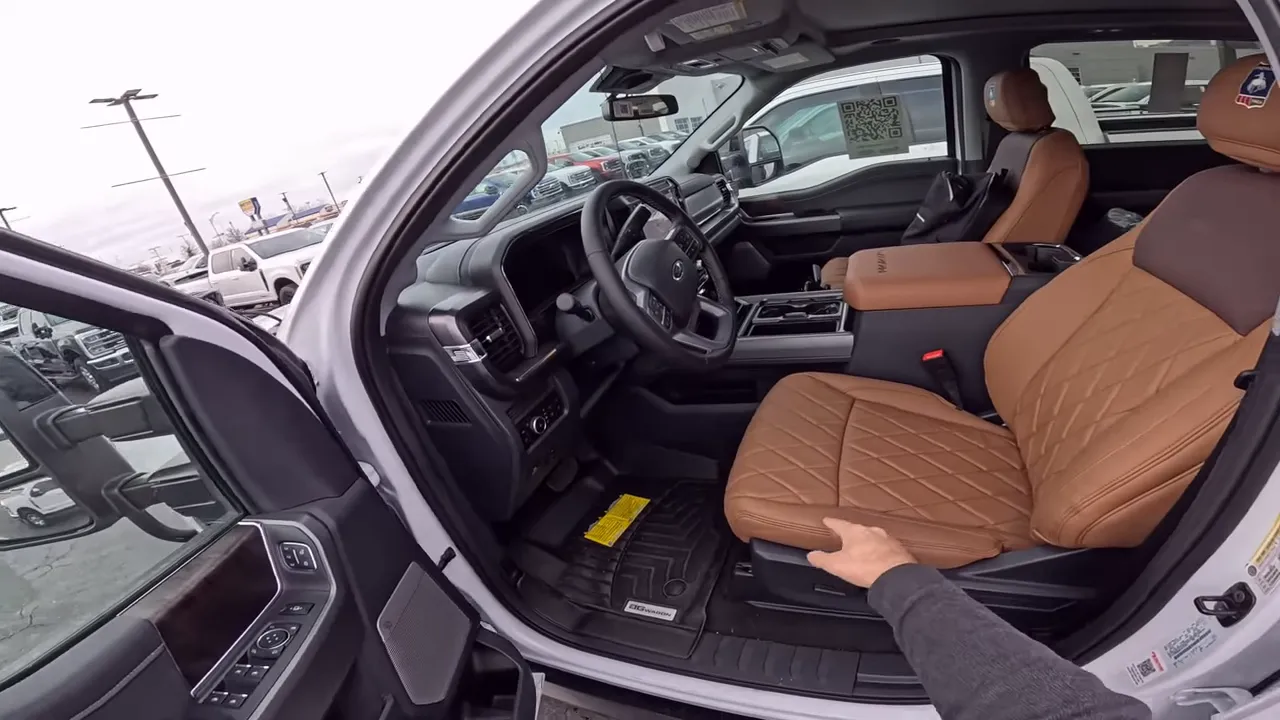
The cabin combines the F-250 Lariat layout with custom trim. Ford lists ActiveX-trimmed power front seats for the 2026 F-250 Lariat, while the featured truck appears to add distinctive brown quilted upholstery. A large center console and auxiliary controls make the space practical for paperwork, small tools, charging equipment, and accessory operation.
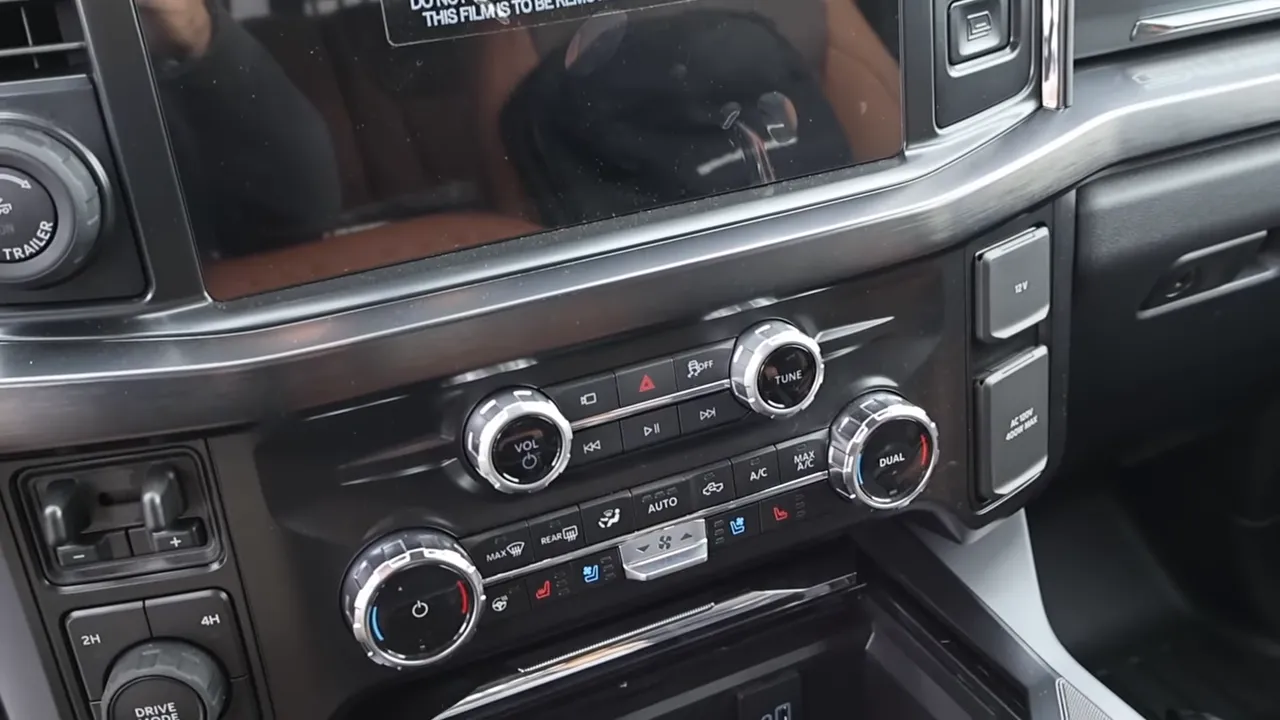
Several features are especially useful during long workdays:
- Large center storage keeps documents, gloves, cables, and small equipment organized.
- Auxiliary controls provide a cleaner way to operate approved lighting, compressors, and other accessories than scattered aftermarket switches.
- Trailer controls and camera features can reduce effort during hookup and low-speed maneuvering when the truck is properly configured.
- Custom seat trim gives the cabin a more finished appearance, though its material and warranty should be confirmed on the build sheet.
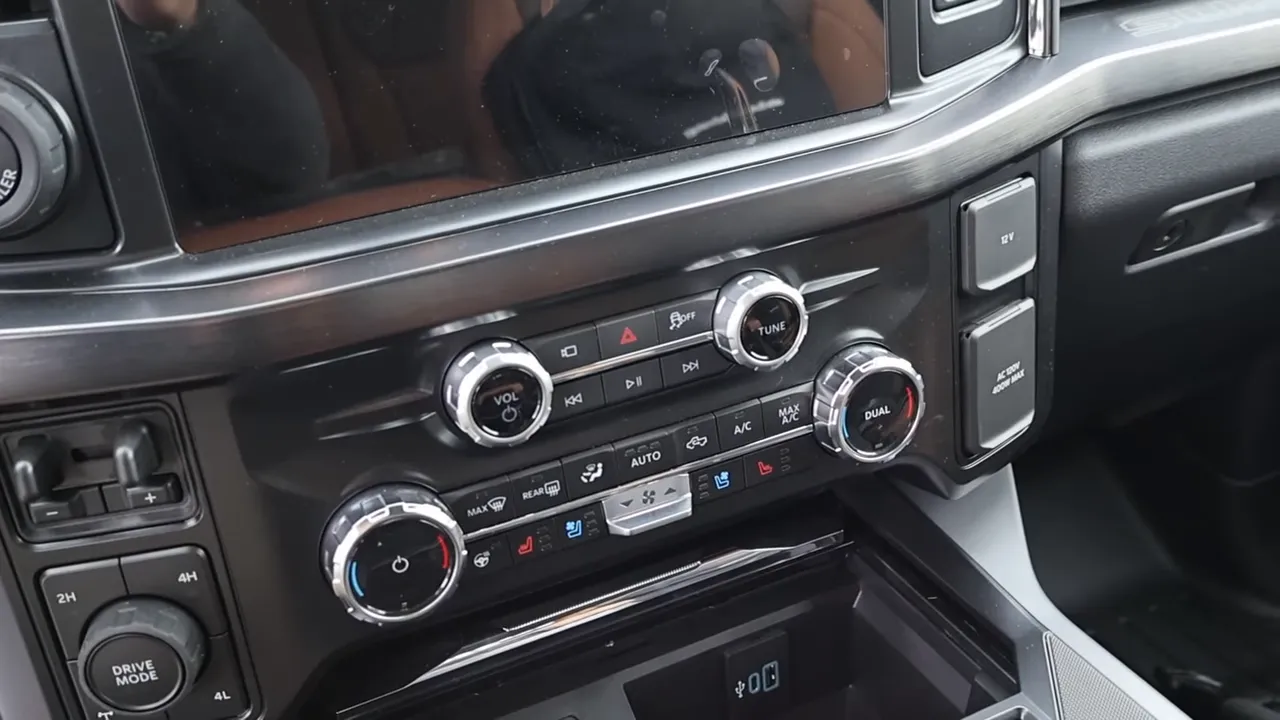
The source drive suggests that the cabin controls diesel noise well, but the original claim about double-pane front windows could not be confirmed from Ford’s current 2026 Lariat specifications. Treat the quietness as a driving impression unless the window glass marking or build documentation confirms a specific acoustic-glass feature.
Drivetrain and Real-World Performance
The available high-output 6.7-liter Power Stroke is the clearest verified specification. Ford rates it at 500 horsepower at 2,600 rpm and 1,200 lb-ft of torque at 1,600 rpm. A 10-speed automatic distributes that output across a broad range of road speeds and gives the truck strong low-speed response without requiring frequent high engine speeds.
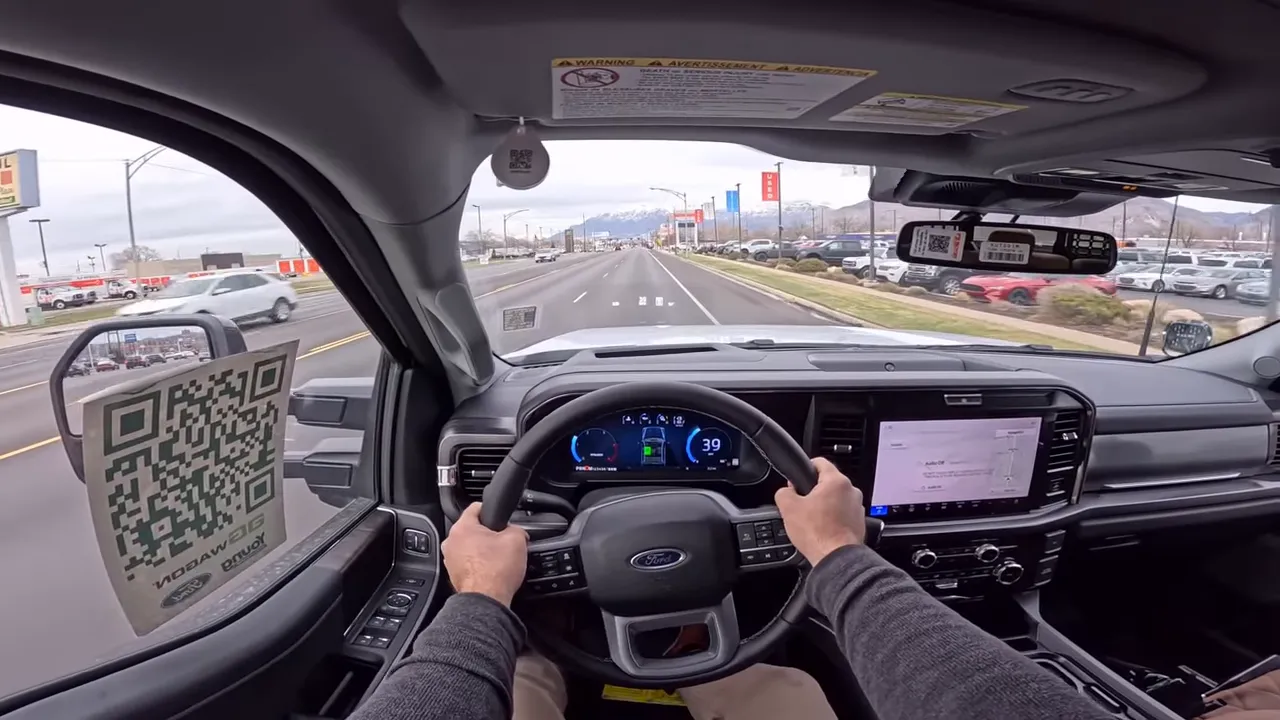
On the road, the featured truck appears composed for its size and ride height. The engine moves the larger tires with little strain, and the transmission has enough ratios to keep the diesel near its useful torque range. That does not guarantee identical behavior when towing because trailer weight, hitch setup, tire pressure, shock adjustment, and cargo distribution can change the result significantly.
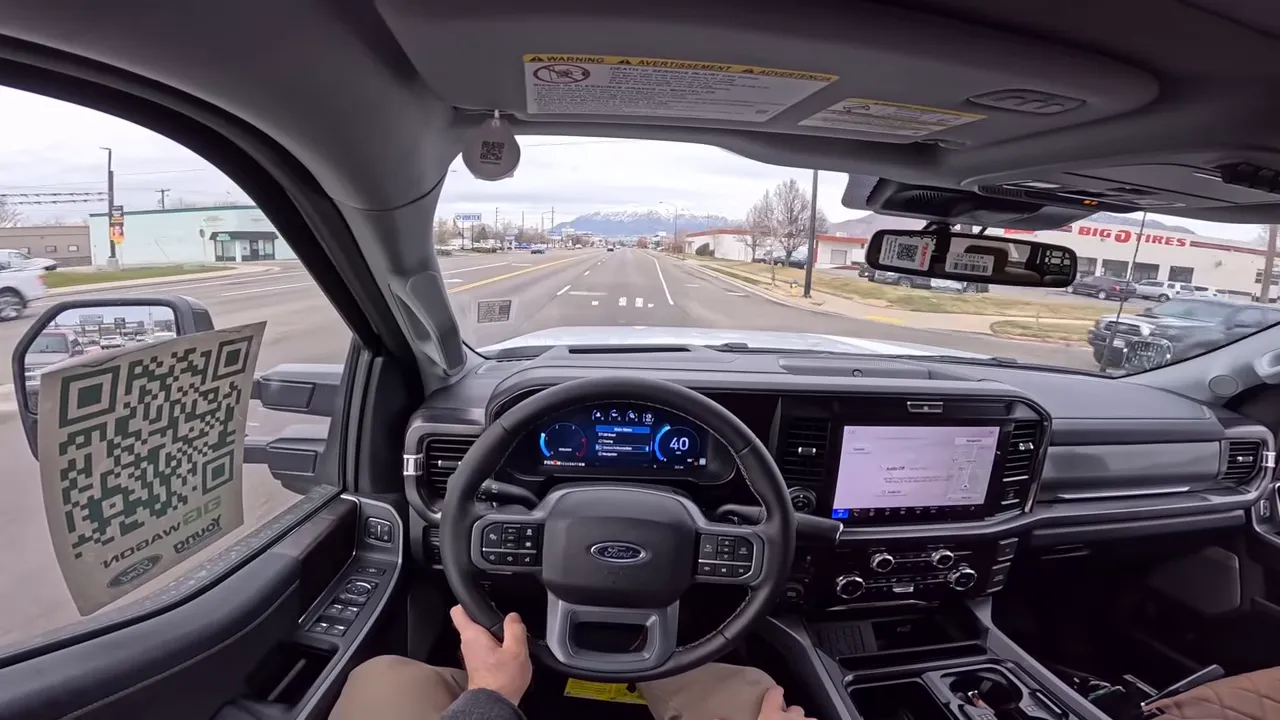
Brake-pedal feel was described as softer than a passenger vehicle but predictable during the source drive. Buyers should treat that as a brief impression, not a loaded braking test. A pre-purchase inspection should check pad and rotor condition, brake-fluid service, tire condition, trailer-brake operation, and whether the larger tire size has been properly accounted for.
The drivetrain’s main advantage is reserve output. The engine should not need to work near its limit during ordinary driving, although capability still depends on weight ratings, cooling, axle ratio, road grade, weather, and trailer setup rather than engine torque alone.
Suspension and Off-Road Hardware
The featured suspension combines a lifted front end, Fox remote-reservoir shocks, rear leaf springs, rear air springs, a steering stabilizer, an electronic rear differential lock, and 35-inch tires. This mix is intended to balance rough-road control, load support, and daily comfort.
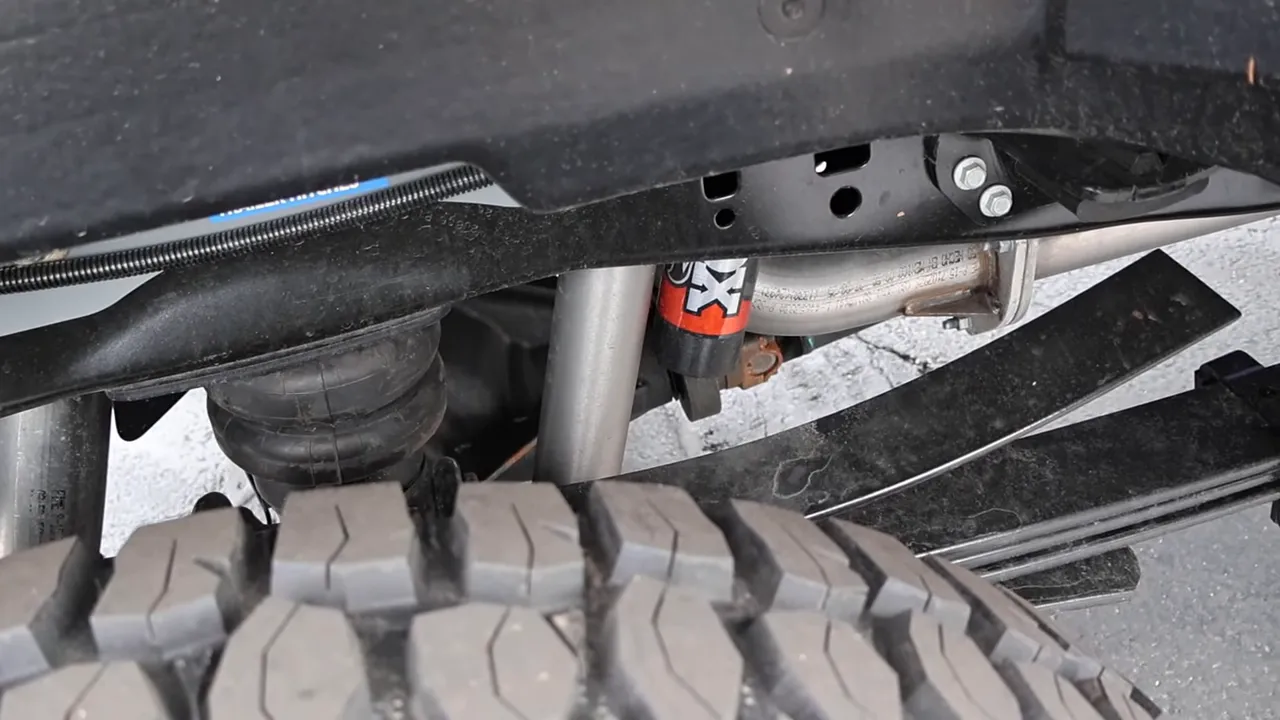
Remote-reservoir shocks can provide additional fluid capacity and heat management during repeated suspension movement, but the exact model, valving, adjustment range, and service schedule should be confirmed. A well-known brand does not guarantee that the spring rates, shock settings, and ride height are correct for your trailer and cargo use.
Rear air springs can reduce visible sag and help restore a level stance when properly inflated. They may improve headlight aim and suspension control under load, yet they cannot raise the legal payload, rear-axle, tire, wheel, frame, or hitch rating.
Note: Set rear-air-spring pressure according to the air-spring manufacturer’s instructions and the actual load. Do not use extra pressure to justify carrying more than the truck’s certification label, axle ratings, tire ratings, or hitch limits allow.
Ownership Checks Before You Buy
A premium upfit deserves a more detailed inspection than a stock truck because several companies may be responsible for different systems. Request the original Ford window sticker, the final buyer’s order, the upfitter invoice, an itemized parts list, installation documentation, alignment results, and warranty terms for every major added component.
- Weight documentation: Confirm whether the displayed payload reflects all installed accessories and obtain a current scale weight when possible.
- Tire and wheel compatibility: Verify load ratings, offset, clearance, lug torque, pressure requirements, and speedometer recalibration.
- Suspension installation: Inspect steering geometry, track-bar position, brake lines, driveshaft angles, bump stops, shock mounts, and fastener torque.
- Towing hardware: Identify the exact fifth-wheel hitch or gooseneck ball needed and confirm bed clearance, hitch height, and loaded pin weight.
- Electrical work: Check fusing, relays, wire routing, waterproofing, switch labels, and current draw for the winch, lights, and compressor.
- Warranty and service: Get written confirmation of which items Ford, the dealer, the upfitter, and each component manufacturer cover.
- Daily clearance: Measure total height, width, bumper length, turning clearance, and garage fit with the completed equipment installed.
Pricing, Value, and the Right Buyer
The featured truck was presented at about $141,505, with roughly $93,000 attributed to the base vehicle and about $47,000 to the package and added equipment. That figure could not be independently matched to a public window sticker or current sales listing, so treat it as the source review’s build-specific price rather than a standard AG Wagon price.
The price premium buys convenience and coordination. A buyer does not need to source a bumper, winch, lighting, wheels, tires, shocks, air springs, upholstery, and installation separately. The trade-off is that you may pay more than a carefully planned do-it-yourself or specialist-built package, and you must understand how each modification affects service and ratings.
A single-rear-wheel F-250 remains narrower and easier to place than a dual-rear-wheel truck. Ford also notes that dual-rear-wheel models generally provide greater stability, payload, and weight distribution for heavy towing. The correct choice depends on actual loaded trailer and axle weights, not appearance or engine output.
The AG Wagon is most convincing when you value a coordinated, finished ranch-truck package and can verify that its remaining payload and towing ratings match your real trailers.
Driving Impressions: What Stands Out
The source drive highlights four clear traits:
- Strong low-speed response: The high-output Power Stroke has enough torque to move the truck and 35-inch tires without feeling strained.
- Composed ride for the format: The suspension appears controlled for a lifted heavy-duty pickup, although adjustment and load can change the result.
- Clean accessory integration: The winch, lighting, bed equipment, air system, and interior controls follow one work-focused theme.
- Size remains part of the experience: The height, bumper length, tire width, and turning space demand planning in tighter environments.
- Price is the dividing line: Buyers who want only capability can spend less, while buyers who want a completed package may value the saved coordination effort.

The truck’s strongest quality is consistency. Its recovery gear, off-road stance, towing preparation, bed tools, and cabin controls support the same ranch-and-trailer use case instead of feeling like unrelated accessories. The remaining question is whether that package matches your actual weight, clearance, warranty, and budget requirements.
Who Should Consider the AG Wagon?
This truck suits a buyer who regularly travels on unpaved property roads, carries tools or supplies, tows substantial trailers, and wants recovery and lighting equipment already installed. It also suits someone who values a premium interior and a finished visual theme instead of a basic fleet-style work truck.
A less expensive or more stock Super Duty may be better when towing is occasional, city driving is common, garage clearance is tight, or you prefer to select every accessory yourself. A dual-rear-wheel F-350 or F-450 deserves consideration when high pin weight, repeated maximum-load towing, or rear stability matters more than width and maneuverability.
The AG Wagon also requires a buyer who will maintain modified equipment. Larger tires, adjustable shocks, air springs, winch wiring, auxiliary lights, and custom suspension hardware add inspection and service points that a stock truck does not have.
Visual Highlights
The build’s most useful visible details include:
- A front-mounted winch and protective bumper structure for controlled recovery work.
- Roof and bumper lighting for low-light property access and trailer hookup.
- Factory-style bed towing provisions, a spray-in liner, and tie-down access.
- An onboard air source and rear air springs for pressure adjustment and load leveling.
- A lifted stance with 35-inch tires and visible remote-reservoir shocks.
- Organized interior controls that reduce the need for scattered accessory switches.
Final Thoughts
The AG Wagon Ford F-250 is a focused premium build rather than the cheapest route to Super Duty capability. Its verified high-output diesel ratings, large winch, towing preparation, suspension equipment, bed tools, and custom cabin create a convincing package for ranch and contractor use.
Its value depends on documentation. Confirm the exact payload after accessories, the compatible hitch hardware, configuration-specific tow rating, tire and wheel ratings, suspension installation, electrical work, warranty responsibility, current price, and daily clearance before purchase.
Choose it when you want one completed truck and its single-rear-wheel format safely covers your loaded trailers. Choose a simpler F-250 when you need fewer upgrades, or compare an F-350 or F-450 dually when higher rear-axle capacity, pin weight, and trailer stability are the priorities.
Frequently Asked Questions
Is the AG Wagon F-250 suitable for serious ranch work?
It can be. The featured truck combines strong diesel output with a winch, larger tires, upgraded shocks, rear air springs, lighting, bed protection, and towing provisions. Suitability still depends on the exact truck’s remaining payload, trailer ratings, clearance, service support, and the terrain and loads you handle.
What are the towing and payload ratings?
The featured truck displayed a 2,814-pound payload figure, but the driver’s-door label controls for that vehicle. Towing varies by engine, axle ratio, cab, bed, drive type, hitch type, options, and trailer. Match the exact configuration to Ford’s current towing table and account for passengers, cargo, hitch hardware, and pin or tongue weight.
Does fifth-wheel and gooseneck prep include the hitch?
Not necessarily. Prep generally provides factory-designed mounting and connection provisions. A fifth-wheel trailer still needs a compatible fifth-wheel hitch, while a gooseneck trailer needs the correct ball and safety-chain hardware. Confirm exactly what is installed on the truck before planning a tow.
Do the rear air springs increase payload capacity?
No. Rear air springs can help level the truck and support suspension control under load, but they do not increase the payload, axle, tire, wheel, frame, or hitch ratings. Stay within the certification label and component limits.
Why does the cabin seem quiet for a diesel?
The source drive describes controlled cabin noise, but the original double-pane-window claim was not confirmed in Ford’s current 2026 Lariat specifications. Cabin sealing, insulation, engine calibration, tire choice, road surface, and speed can all affect perceived noise.
How do modifications affect the warranty?
Coverage can differ by component and by the cause of a failure. Ask for written warranty terms from Ford, the selling dealer, the upfitter, and each accessory manufacturer. Keep the itemized build sheet and installation records so responsibility is clear if service is needed.
Is the AG Wagon worth the money?
It may be worth it when you want a coordinated premium build and would otherwise pay separate shops for recovery, suspension, tire, lighting, bed, air, and interior work. It is harder to justify when a stock or lightly modified Super Duty can meet your needs for substantially less.
Should I choose this F-250 or a dually?
Choose the single-rear-wheel F-250 when its real payload and towing ratings cover your loads and you value narrower width and easier maneuvering. Compare a dual-rear-wheel F-350 or F-450 when you regularly carry high pin weight, need greater rear stability, or want more payload and towing headroom.
Sources
- Ford 2026 Super Duty specifications and towing data — supports engine output, trim equipment, configuration-dependent payload, and towing comparisons.
- Ford towing-capacity guidance — explains where owners should find configuration-specific towing information.
- WARN Full Line Catalog 2025 — supports the 15,000-pound rated line pull for the M15 and M15-S winches.
- Air Lift air-spring information — explains load-leveling support and the role of supplemental rear air springs.