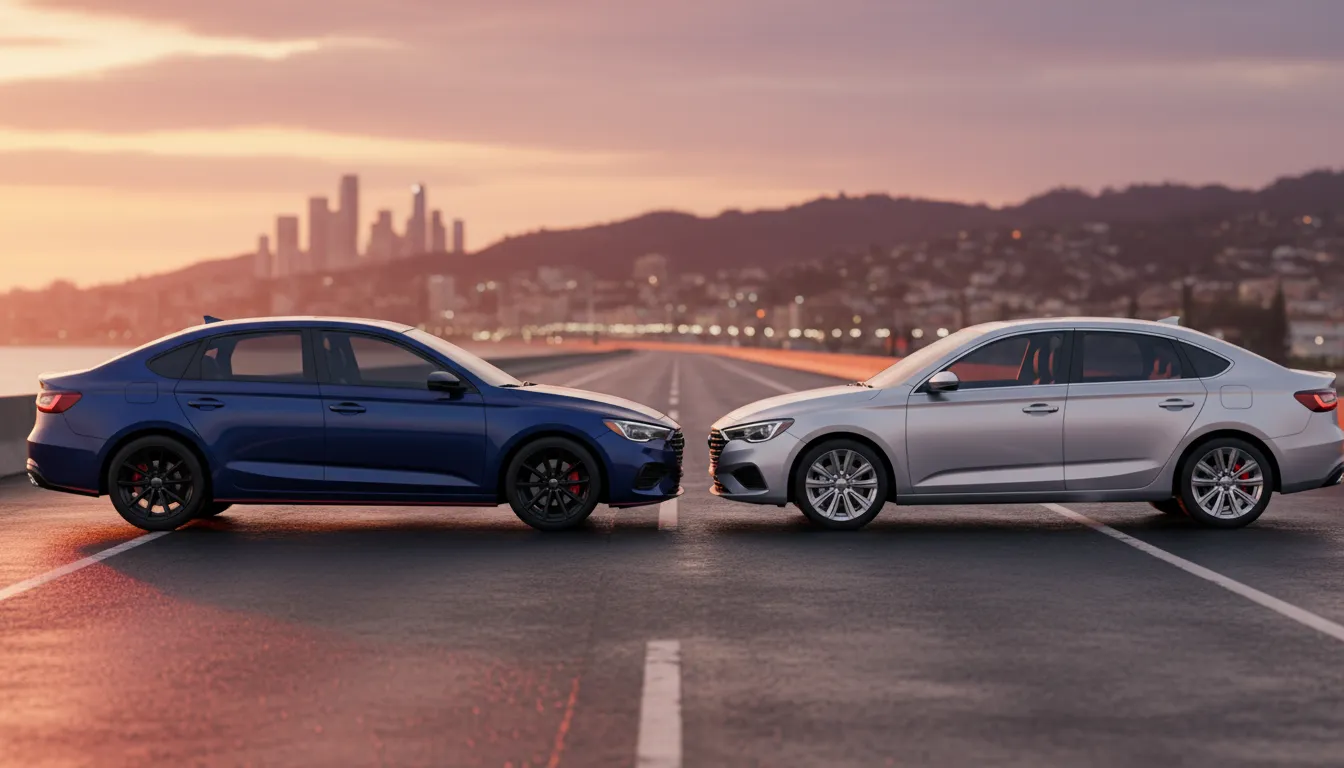
🚗 Where these two compact contenders line up
Compact sedans and hatchbacks keep getting smarter, sharper, and frankly more enjoyable to drive. The 2026 Toyota Corolla and the 2026 Nissan Sentra both arrive with confident styling and modern tech, but they aim at slightly different types of buyers. One leans into sporty looks and a zippy attitude. The other leans into comfort and a more upscale cabin experience.
Below I break down what matters most: powertrains and fuel economy, packaging and practicality, interior experience and tech, on-road personality, and the practical trade-offs that will influence a purchase decision.
🔧 Under the hood: engines, transmissions, and fuel economy
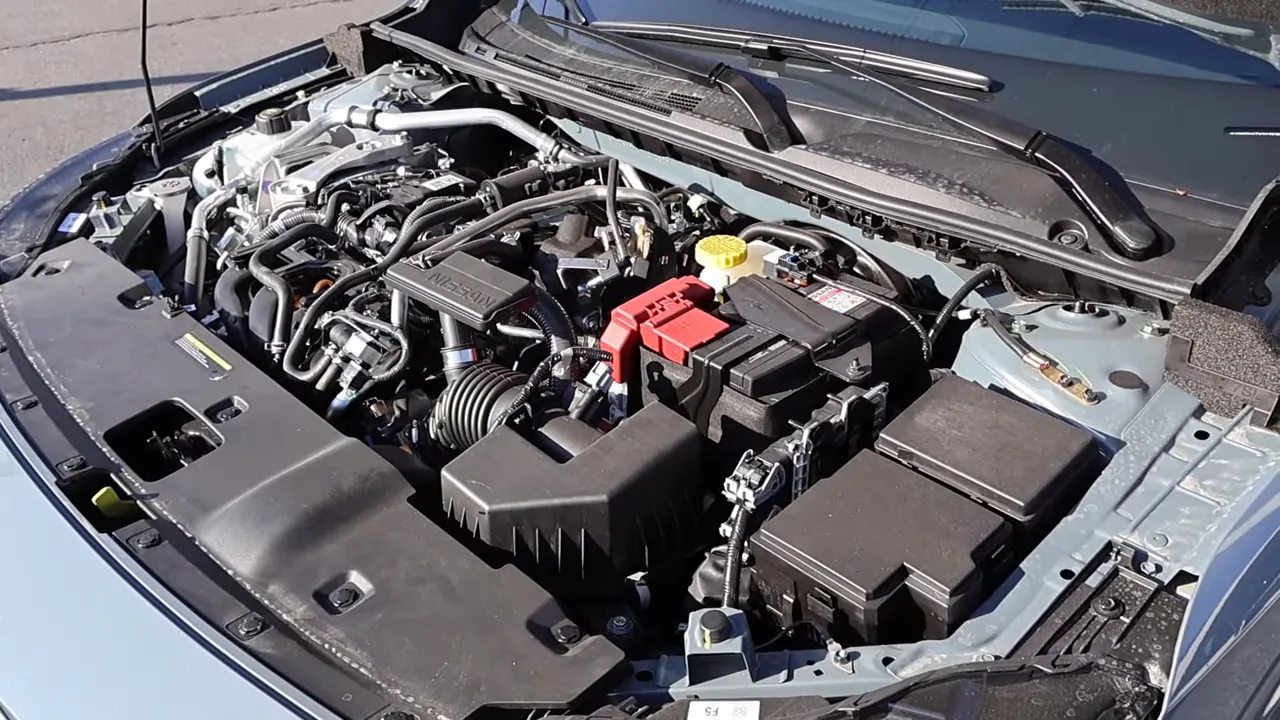
Both cars use naturally aspirated 2.0-liter four-cylinder engines paired with continuously variable transmissions, but the tuning and outputs differ enough to affect driving character and fuel range.
- Toyota Corolla: 2.0-liter 4-cylinder, CVT, 169 horsepower, 151 lb-ft of torque. EPA-ish consumption: ~30 mpg city / 38 mpg highway. Fuel tank: 13.2 gallons.
- Nissan Sentra: 2.0-liter 4-cylinder, Xtronic CVT, 149 horsepower, 146 lb-ft of torque. EPA-ish consumption: ~29 mpg city / 36 mpg highway. Fuel tank: 12.4 gallons.
The Corolla has a clear advantage on paper for horsepower and highway fuel economy, and the slightly larger tank means a longer driving range between fill-ups. The Sentra trades a few ponies for a slightly more relaxed delivery and marginally lower range.
🎨 Design and wheels: sporty cues vs restrained elegance
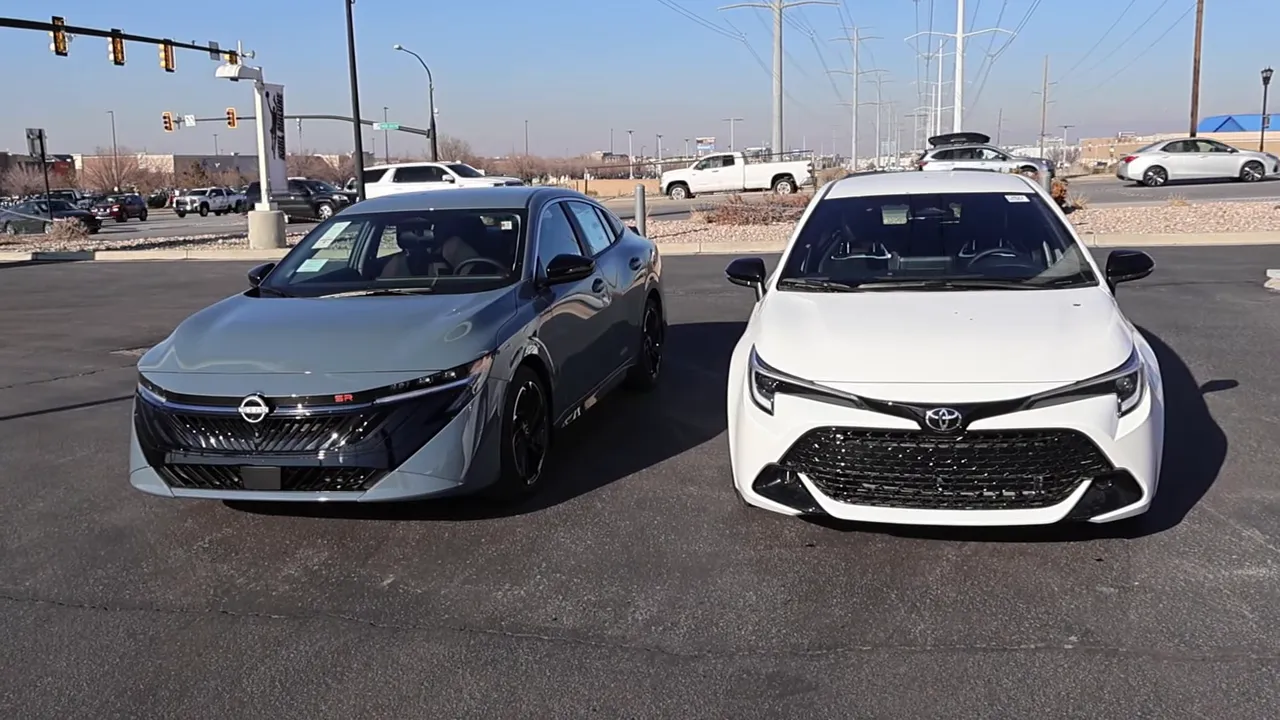
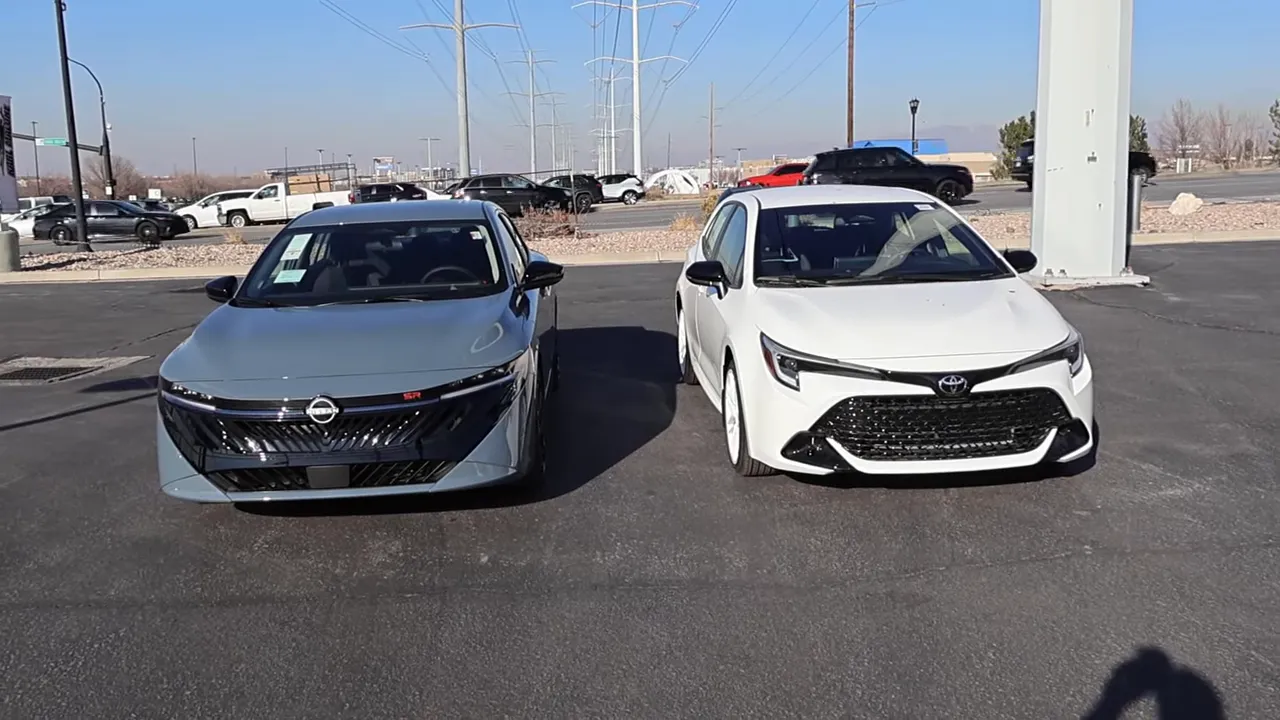
Both cars in this comparison were wearing sportier aesthetic packages. The Corolla in this configuration pushes a blacked-out theme with a large rear spoiler (particularly striking on the hatchback) and aggressive styling cues that shout sporty intent.
The Sentra, meanwhile, embraces a more measured sporty-luxe approach. It also features dark trim and a low-profile spoiler, but the overall look is more composed and a touch more upscale rather than in-your-face. Wheel sizes and finishes play up the personalities: the Corolla runs 225/40R18 wheels while the Sentra wears 215/45R18s.
📦 Cargo, packaging, and practicality
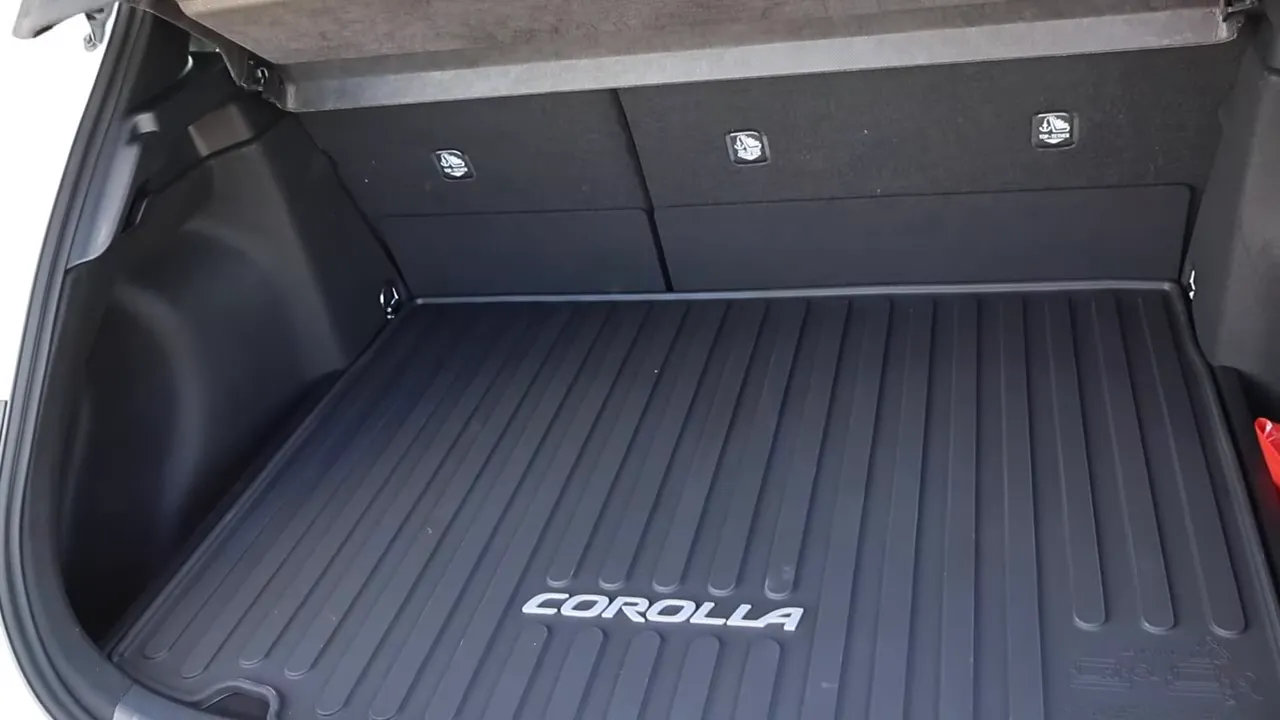
Packaging choices significantly affect usefulness. The Corolla in this comparison is a hatchback, which gives it a distinct advantage for carrying bulkier items and making the most of interior space flexibility.
Hatchbacks typically feel shorter overall than their sedan counterparts, but they reward buyers with tall, accessible cargo space and flat-folding rear seats. The Corolla hatchback here has a built-in cargo cover and seats that fold flat for easy loading.
The Sentra remains a sedan-only offering, which delivers a bit more trunk length and a more traditional rear deck but loses the vertical cargo advantages of a hatch. If loading tall gear or maximizing flexible cargo space is a priority, the hatchback Corolla is the more useful choice.
💺 Interior comfort and rear-seat space
Size and seat design make the Sentra feel roomier. Rear legroom and headroom are noticeably better in the Sentra — it reads as a slightly larger car from the inside. The Sentra’s seats use comfortable cloth trim and offer a pleasant, airy cabin ambiance with soft-touch door panels and decorative stitching that lift the perceived quality.
The Corolla’s rear area on the hatchback is a touch more compact. The sport-oriented seats fit the car’s theme — they look and feel sporty, with suede-like centers and leather-like bolsters — but that carving down of space affects how roomy the back seat feels. Still, both cars provide respectable space for adults on shorter trips, and you get USB ports in the rear of both cars for connectivity.

🖥️ Tech, infotainment, and driver aids
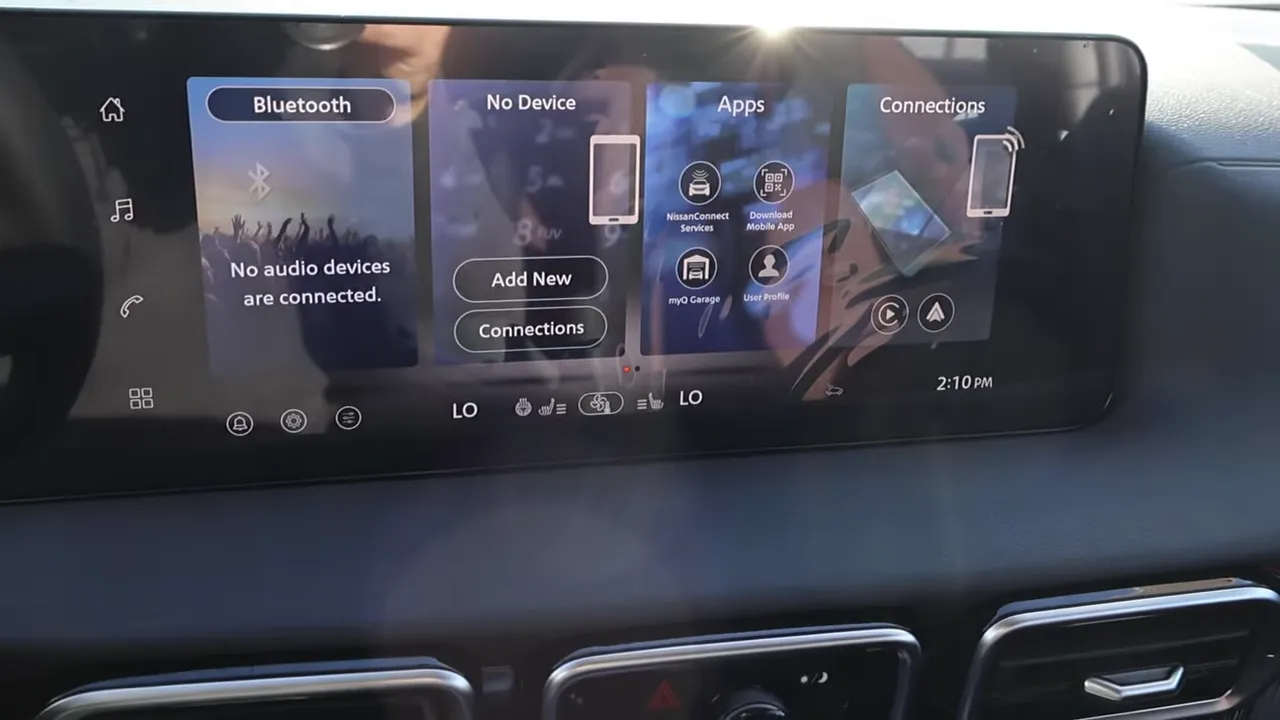
Nissan’s recent interior strategy leans into big screens. The Sentra features a broad digital gauge cluster and a large central display that dominates the dash. The infotainment system is responsive and includes physicalized tap-style buttons around the screen, which helps with usability on the move.
Toyota keeps the gauge cluster separate from the infotainment system, giving the Corolla a more conventional, driver-focused layout. Both cars offer phone charging pads and heated front seats — nice convenience features in this segment.
One consistent weakness in both cars is the backup camera image quality. Both cars display low-resolution rear camera feeds that fall short of what modern camera systems should deliver. On the plus side, the touchscreens are quick to respond, and key safety systems like blind spot monitoring and adaptive cruise control are available on both.
🛣️ Driving personality: sporty Corolla vs composed Sentra
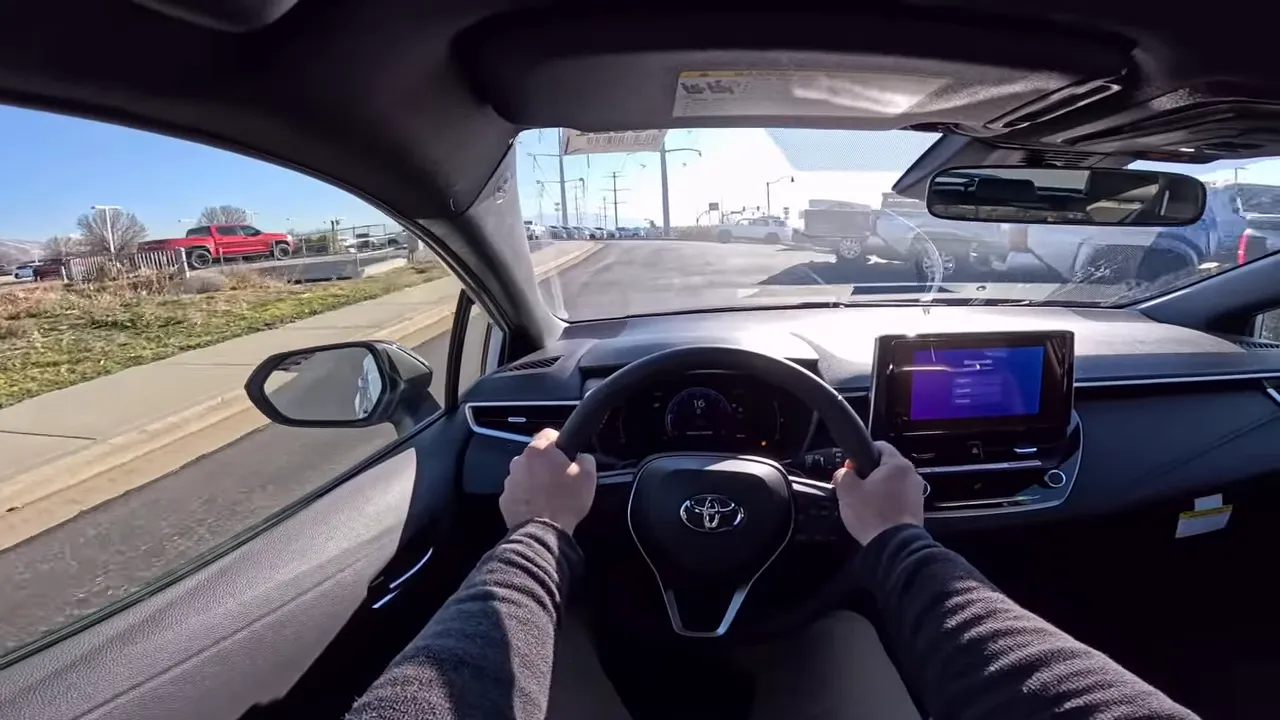
The driving experiences are where the two cars’ philosophies become obvious. The Corolla in this sporty setup feels lively and eager. The engine and CVT deliver power without lag and the car’s suspension and steering appear tuned for an engaging drive. It’s a short-wheelbase, zippy package that invites you to hustle it through corners.
The seats in the Corolla are supportive but snug, reinforcing the sporty vibe. That compact wheelbase means the ride can be a bit firm and bumpy over rough surfaces, but that trade-off helps the car feel agile and responsive.
The Sentra, in contrast, aims for a more luxe, relaxed groove. It’s slightly larger and that helps it feel more composed and comfortable at highway speeds. Throttle response is smooth and consistent, and the Sentra prioritizes a comfortable cruising experience over edge-of-the-seat excitement.
Both cars handle corners well for their class, but they do it with different flavors: Corolla for the driver who wants to play, Sentra for the buyer who wants confidence and calm. Choose based on whether you prefer to be entertained or unbothered on daily drives.
💰 Pricing and value
Sticker prices for these well-equipped examples sit in the same neighborhood. Expect both to start around the high twenties in base MSRP for similarly equipped models. The Corolla in the sporty hatchback trim can run a few hundred dollars higher depending on options, but overall the two are direct competitors on price.
Value comes down to what you prioritize. The Corolla gives you sportier styling and slightly more power. The Sentra gives you a more upscale-feeling cabin and more rear-seat space. Neither car dramatically undercuts the other, so personal preference, expected use, and resale considerations will drive the decision more than raw price alone.
🔍 Practical considerations you should weigh
- All-wheel drive availability: The Corolla offers all-wheel drive only in some hybrid variants, and even then it is not mechanical AWD but a front-wheel biased system with an electric motor assisting the rear. If you want true mechanical all-wheel drive in this segment, choices are limited.
- Body style: If you want the utility of a hatchback, the Corolla is the natural choice here. The Sentra is sedan-only, which may be a deal breaker if you often load bulky cargo.
- Driving priorities: If you want a car that’s fun and feels sporty, the Corolla leans that way. If you want a relaxed, slightly more premium-feeling commuter, the Sentra will satisfy.
- Tech taste: Nissan doubled down on bigger screens and a bolder digital presence. Toyota keeps things more traditional with mature ergonomics and tactile controls.
🎯 Verdict: which one should you pick?
There is no unilateral winner. Both the 2026 Sentra and the 2026 Corolla are strong entries in the compact segment, but they serve slightly different emotional needs.
Choose the Corolla if:
- You want a sportier look and sharper, more playful handling.
- You value the flexibility of a hatchback for cargo and utility.
- You prefer slightly punchier power and a longer fuel range.
Choose the Sentra if:
- You want a more spacious, comfortable rear seat and a slightly more upscale interior.
- You prefer a calmer, smoother driving experience over a sporty one.
- You like a modern, screen-forward cabin and a broad digital gauge cluster.
Ultimately, the decision comes down to what tickles your fancy more: the Corolla’s sporty, show-ready presence or the Sentra’s composed, luxe approach. Both are good cars; the right one is the one that fits your daily life and taste.
❓ Frequently asked questions
Which car has better fuel economy?
Is the Sentra more luxurious than the Corolla?
Does the Corolla come in all-wheel drive?
Which one is better for cargo and hauling stuff?
Are the infotainment systems easy to use?
💡 Final thoughts
If you want a compact car that’s a little bit of an enthusiast’s toy without breaking the bank, the Corolla in sportier trims delivers a lot of personality. If you want a comfortable, refined daily driver that feels a step up in cabin quality and offers a calmer driving experience, the Sentra makes a compelling case.
Either way, both models prove that this segment no longer accepts bland compromises. Nissan has closed the gap in areas that used to be Toyota strongholds, and that competition is a win for buyers. Pick the one that matches how you spend your time in a car — running errands, hauling gear, or enjoying the twisty backroads — and you’ll be happy with your choice.