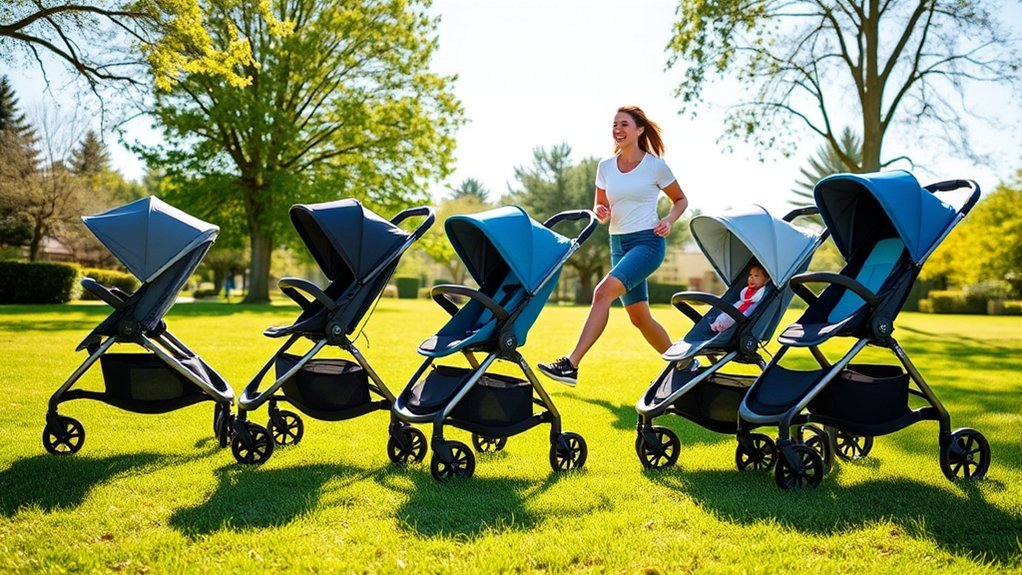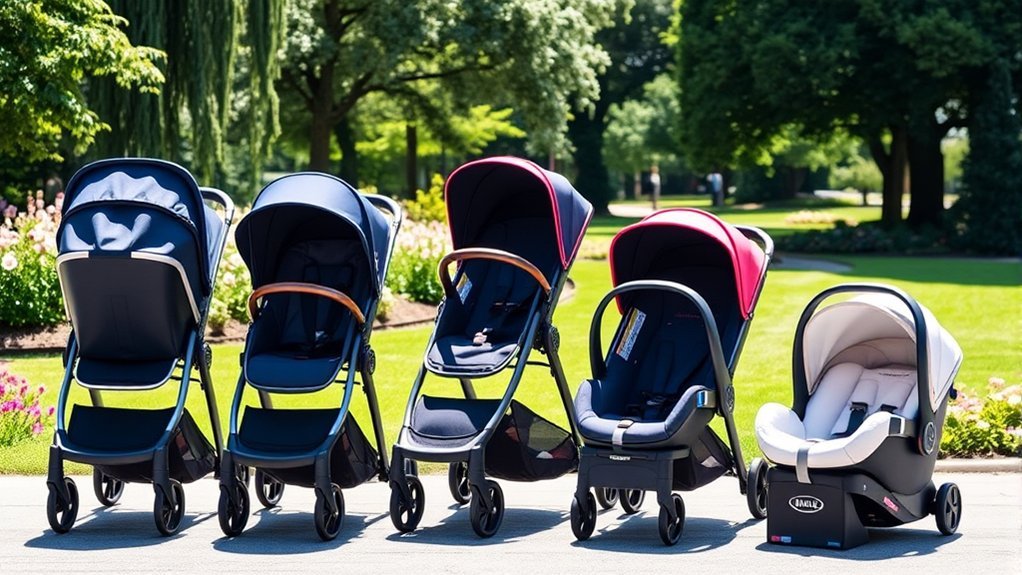
We’ll call it multitasking with a stroller — because balancing workouts and childcare deserves a softer label. We’ve tested lightweight, jogging-ready options that blend speed, comfort, and practicality for active parents, and we’re sharing picks that make runs, errands, and travel easier. Keep going to see which models stood out for foldability, ride quality, and real-world usability.
Graco FastAction Jogger LX Stroller (Drive)
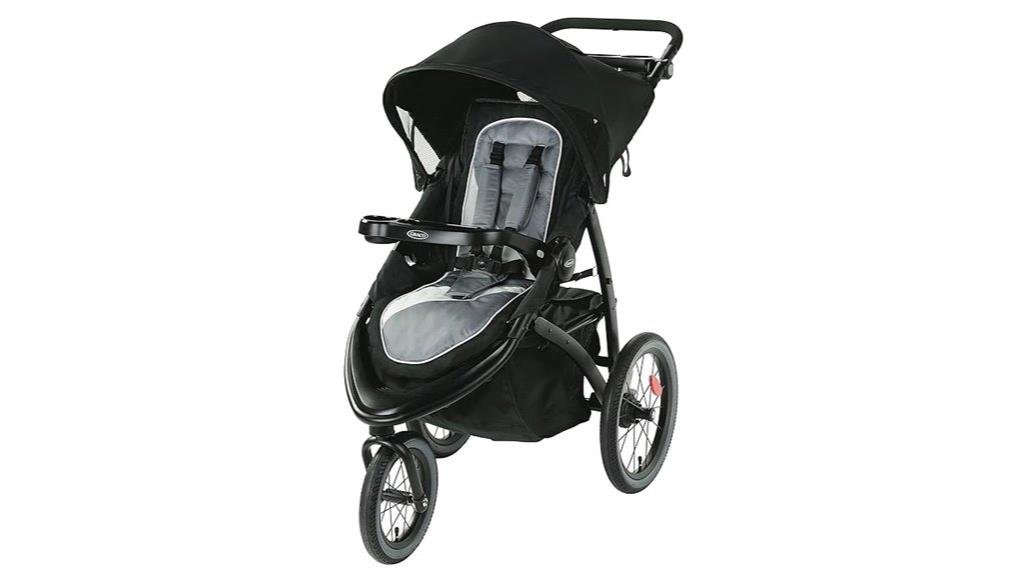
If you want a jogging-ready stroller that still folds in seconds, the Graco FastAction Jogger LX (Drive) is a great pick — it combines a one-hand FastAction fold and Click Connect car seat compatibility with durable rubber tires and a roomy reclining seat, so you can hit varied terrain without sacrificing convenience or comfort. You’ll appreciate the adjustable three-position handle, large canopy with peekaboo window, and child tray with cup holder. The ICS-compatible carrier, 5-point harness, and 50-pound capacity keep kids secure. It’s made of durable polyester, weighs 28.2 pounds, stores essentials in a large basket, and wipes clean easily.
Best For: Active parents who want a jogging-ready stroller with quick one-hand folding and car seat compatibility for varied-terrain use.
Pros:
- FastAction one-second one-hand fold and Click Connect car seat compatibility for easy transitions.
- Durable rubber tires, multi-position reclining seat, and large canopy with peekaboo window for comfortable all-terrain rides.
- Adjustable 5-point harness, 50-pound capacity, and roomy storage basket for safety and convenience.
Cons:
- Heavier than many lightweight strollers at 28.2 pounds, which can make carrying or lifting more difficult.
- Folded dimensions may still take significant trunk or storage space (23.5L x 35.5W x 17.5H inches).
- Limited 1-year manufacturer warranty and care requires spot/wipe cleaning rather than machine wash.
Chicco TRE Jogging Stroller (Galaxy/Black)

The Chicco TRE Jogging Stroller is ideal for active parents who want a reliable, all-terrain jogger with smooth ride performance thanks to its FlexCore rear suspension and air-filled treaded tires. You’ll appreciate the lightweight aluminum 3-wheel frame, multi-position recline, UPF 50+ extendable canopy with peek-a-boo windows, and five-point harness for secure comfort. The stroller pairs with Chicco infant car seats to create a travel system, and its detachable seat/canopy plus three one-hand fold options make storage simple. You also get a large basket, padded arm bar, hand brake, water-resistant fabrics, and a one-year limited warranty for peace of mind.
Best For: Active parents and caregivers who want a rugged, all-terrain jogging stroller that balances smooth ride performance with easy storage and travel-system compatibility.
Pros:
- Lightweight aluminum 3-wheel frame with FlexCore rear suspension and air-filled treaded tires for a smooth ride on varied terrain.
- Multi-position reclining seat, UPF 50+ extendable canopy with peek-a-boo windows, and five-point harness for comfort and safety.
- Detachable seat/canopy and three one-hand fold options plus large storage basket make storage and travel convenient.
Cons:
- Relatively heavy at 28.5 pounds compared with some urban lightweight strollers.
- Maximum weight recommendation of 50 pounds limits long-term use as a child grows.
- Infant car seat sold separately to create a travel system, adding extra cost.
Jeep Cross-Country Sport Plus Jogging Stroller by Delta Children

For parents who want a rugged, run-ready stroller, the Jeep Cross-Country Sport Plus delivers with large air-spoke wheels and a sturdy steel frame that keep rides smooth over varied terrain. You’ll appreciate the 16-inch rear and 12-inch swivel front air-spoke wheels, quick-release tires for compact folding, and a multi-position reclining seat with padded five-point harness for comfort and safety. The extendable quilted canopy, swing-away child tray, detachable parent organizer with cup holders, and generous undercarriage storage make errands easy. It fits several popular infant car seats with an adapter, carries up to 45 lbs, and carries JPMA certification.
Best For: Parents who want a rugged, run-ready stroller with large air-spoke wheels and a sturdy steel frame for smooth rides over varied terrain and plenty of storage for errands.
Pros:
- Smooth off-road performance with 16″ rear and 12″ swivel front metal air-spoke wheels and ball bearings.
- Comfortable and secure for children with multi-position recline and padded five-point harness plus extendable quilted canopy.
- Practical features for caregivers: quick-release back tires for compact folding, detachable parent organizer with cup holders, and generous undercarriage storage.
Cons:
- Relatively heavy at 27 pounds, which may be cumbersome for lifting or frequent vehicle transport.
- Limited warranty (90 days parts only) and return relying on Amazon’s 30-day voluntary guarantee.
- Requires separate adapters for many infant car seats, adding extra cost and setup.
Factors to Consider When Choosing Stroller Active Parents
Let’s walk through the key factors that active parents should weigh when picking a stroller. We’ll look at terrain and wheel type, suspension, weight and portability, safety features, and seat comfort options so you can match a model to your routine. Keeping these elements in mind helps us choose a stroller that’s safe, smooth, and easy to use.
Terrain and Wheels
Because we want strollers that handle our routes reliably, wheel type, size, material, suspension and front-wheel locking are the first things to check when choosing for active use. Larger air-filled tires give us better traction and a smoother ride on uneven trails, while rubber wheels outperform plastic for durability and shock absorption. For jogging or mixed-terrain outings, three-wheel models deliver improved maneuverability and stable handling at speed. We should prioritize frames that allow front-wheel locking to maintain control during faster runs or gravel paths. Though suspension details are important, we’ll cover those next; here, focus on wheel construction and compatibility with your typical surfaces. Match tire type and wheel size to your routes for predictable performance and less effort pushing.
Suspension System
Wheels set the stage, but suspension is what keeps the ride comfortable once you leave smooth pavement. We want a jogging stroller with a responsive suspension system to absorb shocks on trails, curbs, and uneven sidewalks so our child—and our shoulders—feel less jolt. Look for adjustable setups like Chicco TRE’s FlexCore rear suspension so we can tune shock absorption to the terrain. Air-filled tires add cushioning and work with suspension to smooth bumps more than solid tires. Don’t forget wheel size and material: larger rubber tires with good tread pair with suspension to improve stability and maneuverability. When evaluating models, test them over mixed surfaces to confirm the suspension actually reduces impact during jogging.
Weight and Portability
Portability matters as much as performance for active parents, so we prioritize strollers that stay light without sacrificing durability. We look for models in the 27 to 28.5-pound range — light enough to carry yet substantial enough to feel stable on trails. A compact, one-hand fold makes transfers from stroller to car or bus far easier, and quick-release wheels shrink folded dimensions for tighter storage. We favor strollers that fold down to footprints like 23.5L x 17.5H inches so they fit trunk corners and apartment closets. Capacity matters too: a roughly 50-pound max lets a stroller carry a growing child without forcing a heavier chassis. Combined, these features keep our outings simple, efficient, and truly portable.
Safety Features
When we pick a stroller for active outings, safety comes first: a five-point harness, a sturdy frame certified to JPMA or ASTM standards, and a reliable deceleration hand brake give us confidence on trails and hills. We always verify the harness fits snugly and resists slipping as our child shifts. A deceleration hand brake helps us stop quickly on inclines or unexpected terrain. We prefer frames with proven certifications and robust construction to handle regular jogging stress. Adjustable handles and safety tethers improve control and reduce wrist strain, letting us maintain a secure grip. Finally, a locking front swivel wheel is essential — it stabilizes the stroller at speed and on uneven surfaces, minimizing tip risk.
Seat Comfort Options
Safety features keep us in control, but our child also needs to be comfortable for long outings and quick naps. We look for multi-position reclining seats so kids can sit up or nap without jostling. A padded five-point harness keeps them secure and comfy during bumpy runs or city walks. Adjustable handle height matters for us, too — pushing feels much better when the stroller matches our height and stride. Child-friendly trays with cup holders add convenience and reduce spills while keeping snacks within reach. Finally, we prefer water-resistant, easy-to-clean fabrics that hold up after muddy trails or snack-time messes. Together, these seat comfort options make every active outing smoother and more enjoyable for family and child.
Storage and Organizers
Because we often carry snacks, water, and gear for both child and parent, storage and organizers become a top priority when choosing a stroller for active outings. We look first at basket size and accessibility—a roomy, easy-to-reach basket holds diaper bags, layers, and groceries without blocking folding. We prefer parent organizers with cup holders and zip pockets so phones, keys, and bottles stay handy. A child tray with compartments for snacks and a cup makes breaks smoother and reduces stops. Detachable storage options add flexibility: grab a smaller bag for short runs or snap on a larger tote for long hikes. Finally, consider how storage affects folding and transport—a compact fold or quick-release tires keeps gear from turning the stroller into unwieldy cargo.
Car Seat Compatibility
A reliable travel system makes outings smoother, so we’ll prioritize strollers that work with our existing or planned car seat. We should verify compatibility before buying — that saves returns and keeps changes seamless between car and stroller. Look for named attachment systems, like Click Connect, so seats snap on securely and quickly. Some models have detachable seats or lightweight frames designed specifically to accept infant carriers, which adds versatility for short trips or jogs. Always check the stroller’s weight limit and confirmed car seat models to guarantee a proper, safe fit for our child. Finally, prefer strollers with adjustable harnesses and easy‑to‑clean fabrics; they make installation safer and maintenance simpler after daily use.
Fold and Storage Size
While we’re choosing a stroller for our lifestyle, folded size and storage matter as much as ride quality: compact dimensions make it easier to stash the stroller in tight closets, trunks, or overhead compartments, and lighter frames cut the hassle when we lift it in and out of vehicles. We check folded dimensions—like the Graco FastAction Jogger LX at 23.5L x 35.5W x 17.5H inches—to confirm it fits our car or closet. Weight matters too; the Jeep Cross-Country Sport Plus at 27 pounds shows how lighter models ease travel. We favor quick-release wheels or one-hand folds (Chicco TRE’s three compact configurations are a great example) and ample undercarriage storage so essentials fit without ruining foldability. Finally, we verify max weight and folded size against our real storage constraints.
Frequently Asked Questions
Can These Strollers Fit Through Airplane Cabin Doors?
Usually yes, but it depends on the model and airline; we recommend checking dimensions against the carrier’s cabin limits and folding the stroller before boarding. We’ll gate-check if needed to avoid surprises at the gate.
Are Replacement Parts Easy to Find Years Later?
Yes — we usually can find replacement parts years later, especially for popular brands; we’ll check manufacturer stores, authorized dealers, and aftermarket suppliers, and we’ll keep original model numbers to speed searches and guarantee correct fits.
Do Any Models Convert to Travel Systems With Car Seats?
Yes — many jogging strollers convert to travel systems with compatible infant car seats; we’ll point out models with adapters, verify brand compatibility, and remind you to check weight limits, recline, and adapter availability before buying for safe, seamless use.
What Warranty Covers Damage From Running on Trails?
About 60% of warranties exclude trail damage, so no — most manufacturers don’t cover running-on-trail wear. We’ll recommend checking specific terms, buying extended or accidental-damage plans, and registering the stroller to maximize protection.
Are There Hands-Free Braking or Steering Accessories Available?
Yes — we can find hands-free braking and steering accessories, like foot-activated parking brakes, wrist or chest-mounted tether systems, and handlebar steering extensions; we’ll recommend ones compatible with your stroller and test fit before trusting them on trails.
Conclusion
We’ve tested these three and keep coming back to how they turn weekend runs into little adventures. Remember when a single jogger handled our muddy trail like a mountain bike, and our pace stayed steady? That’s the Graco, Chicco, and Jeep for you: nimble, cushioned, and ready. With 70–80% of our runs needing quick folds or car-seat swaps, pick the one that matches your route, rhythm, and storage needs.