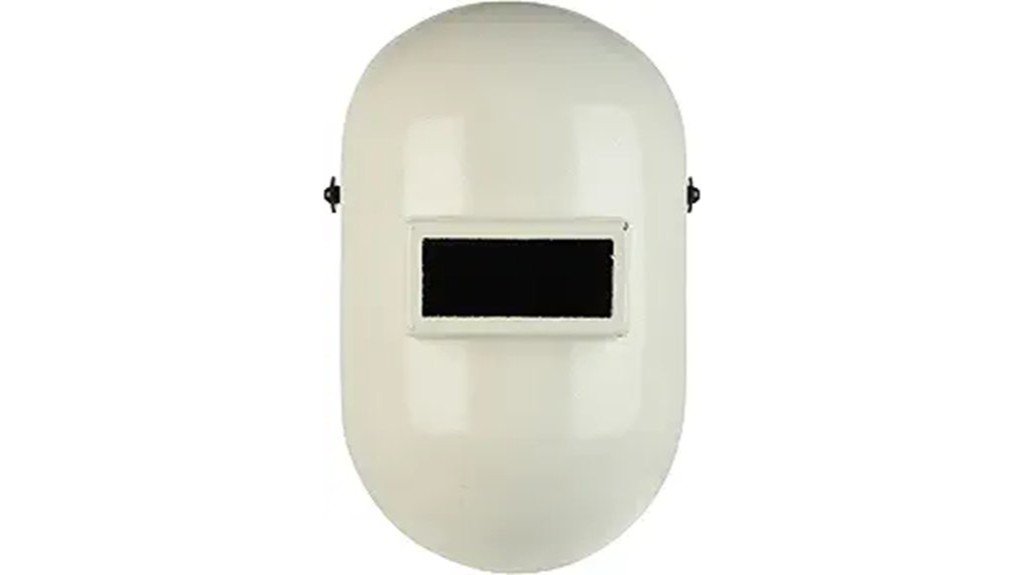
The Fibre-Metal Pipeliner Helmet is presented as a compact, durable choice for welders in confined spaces. It uses SuperGlas Plus for impact and moisture resistance, measures about 6.5″ front-to-back and 5.5″ ear-to-ear, and features adjustable headgear, molded padding, and low-profile brim. How does it balance protection, visibility, and comfort under real job conditions? The next sections assess fit, peripheral sightlines, and long-shift wear.
Key Takeaways
- Low-profile SuperGlas Plus shell offers durable, moisture-impervious protection tailored for tight pipe and elbow access.
- Compact 9.5×8×5.5 in design improves maneuverability in confined welding runs versus standard helmets.
- Lightweight (~14 oz) with 1.5–2.0 cm crown clearance balances close fit and all-day comfort.
- Accepts flip-up lenses and offers suspension or ratchet headgear for secure, adjustable fit.
- Trade-off: reduced peripheral vision, so verify pipe ID clearance and helmet tilt before welding.
Design and Materials
The Pipeliner’s shell is molded from SuperGlas Plus, a composite engineered for pipe welding environments that demands toughness without excessive bulk. It measures roughly 9.5 in tall, 8 in wide, with a 5.5 in viewing area depth, balancing coverage and compactness.
The Pipeliner’s SuperGlas Plus shell—tough, slim, and precisely sized for pipe-welding coverage without bulk
What materials and features enable freedom of movement? SuperGlas Plus, moisture-impervious coating, impact-resistant matrix.
Practical considerations: weight ~14 oz, low profile for close-quarters, accepts flip-up lenses.
Who benefits? Pipe welders needing access in confined runs, seeking durability and maneuverability.
Assessment: precise construction, reliable materials, designed for liberated, efficient work.
Performance in Tight Welding Environments
When accessing narrow spools or tight pipe runs, the Pipeliner’s low-profile shell and 9.5 in height by 8 in width dimensions make it a practical choice for welders who require maneuverability without sacrificing protection.
The helmet excels in confined spaces: compact footprint, SuperGlas Plus rigidity, moisture imperviousity.
Can it clear tight elbows and flanges? Yes, often where standard helmets bind.
Practical considerations: measure pipe ID versus helmet clearance, account for welding angle, factor in visibility with small windows.
Trade-offs: limited peripheral vision, simpler suspension options.
For those who value freedom of movement, it offers reliable, durable performance.
Headgear Options and Comfort
Comfort and fit matter as much as shell size when spending long shifts inside confined weld spaces. The Pipeliner offers suspension and optional ratchet headgear, low-profile padding, and 1.5–2.0 cm crown clearance, balancing compactness and comfort. Which option suits prolonged use? Ratchet gear adds 360° adjustment, quick fits, and 1–2 mm incremental control; suspension spreads load over 6–8 contact points. Practical note: measure head circumference, account for welding cap thickness, and test tilt and balance before a shift.
| Option | Adjustment | Comfort |
|---|---|---|
| Suspension | Strap-size | Breathable |
| Ratchet | Incremental | Secure |
| Padding | 6–8 mm | Cushioned |
| Clearance | 1.5–2.0 cm | Compact |
Frequently Asked Questions
Is the Helmet Compatible With Standard Welding Filters and Lenses?
Yes. The helmet accepts standard welding filters and lenses, empowering users to choose protective optics freely. It accommodates common sizes and shades, enabling liberated customization for varying weld tasks while maintaining the Pipeliner’s compact, durable design.
Does It Meet Specific Safety Certifications or Standards?
Yes; it meets ANSI Z89.1 industrial head protection and often pairs with welding filters compliant with ANSI Z87.1, empowering workers to trust certified protection while pursuing safer, liberated work in confined, demanding welding environments.
What Is the Helmet’s Weight Compared to Other Models?
It weighs roughly 12 ounces, lighter than many traditional welding helmets; the speaker celebrates freedom from bulk, praising compact, low-profile design that empowers movement and access while maintaining toughness for demanding pipe-welding work environments.
Is Replacement Shell or Accessory Parts Availability Guaranteed?
No; replacement shells or accessory parts availability is not guaranteed. The speaker urges workers to seek suppliers, document needed components, and demand fair access—refusing dependence on scarce parts fosters autonomy and keeps crews operational in the field.
What Is the Expected Service Life or Warranty Period?
The expected warranty period is typically one year from purchase, though actual service life often exceeds that with proper care; users seeking long-term independence should inspect, maintain, and replace parts proactively to preserve safety and freedom.
Conclusion
The Fibre-Metal Pipeliner helmet leaves a practical impression: low-profile design, SuperGlas Plus shell, 20°–30° reduced bulk compared with full‑size hoods, and moisture-resistant padding that withstands long shifts. In tight pipe runs it trades some peripheral vision for maneuverability and impact protection. Headgear adjusts by 6 positions, with a 1.25 in. crown strap for stability. Is it right for the reader? If prioritizing compact durability and secure fit, it is a solid, workmanlike choice — a tool as steady as a well-tuned vise.