Disclosure: As an Amazon Associate, we earn from qualifying purchases. If you click a link on this page and make a purchase, we may receive a small commission at no extra cost to you.
A compact stick welder can save you from dragging a heavy transformer machine around the garage or farm, but portability matters only if the arc is controllable and the machine works with the electrodes you actually use. The S7 250A Stick Welder combines 110V/220V input, IGBT inverter technology, a digital display, and support for common E6010, E6011, E6013, and E7018 rods. Its biggest strengths are simple controls and a body weighing about 9.13 pounds, while its main limitation is that the 250A figure should be treated as the product’s listed size designation rather than a guarantee of full output in every power and welding condition. This review explains where the S7 makes sense, where it does not, and what you should check before buying.
Quick Verdict
Rating: 8/10, Recommended with caveats
Best For: DIY steel repairs, farm maintenance, garage projects, gates, brackets, fences, trailer parts, and occasional workshop use.
Bottom Line: The S7 gives you useful dual-voltage flexibility, broad stick-electrode support, and a portable inverter design. It is less convincing if you need documented industrial-duty performance, long continuous welds, TIG or MIG capability, or highly detailed published electrical specifications.
Key Features and Specifications
| Specification | Detail |
|---|---|
| Brand | S7 |
| Model | S7 |
| Manufacturer | winwin |
| Product type | Portable DC stick/ARC inverter welder |
| Listed size | 250A |
| Input voltage | 110V / 220V |
| Inverter technology | IGBT |
| Electrode compatibility | E6010, E6011, E6013, E7018, and other common stick electrodes |
| Arc assistance | Hot Start, Arc Force, Anti-Stick |
| Controls | Digital display with current adjustment |
| Listed weight | 9.13 lb |
| Package dimensions | 12.5 x 10 x 9.5 in |
| Color | Blue |
| Best use | Home, garage, farm, repair, maintenance, and small workshop steel projects |
What Is the S7 250A Stick Welder?
The S7 is a compact inverter-based stick welding machine designed around straightforward ARC welding rather than a long list of secondary processes. It accepts both 110V and 220V input, so you can use standard household-type power for lighter work and move to 220V when your project calls for stronger welding performance and your electrical setup supports it.
Its IGBT inverter design helps keep the machine compact and light. At about 9.13 pounds, the welder is practical to carry between a garage, farm building, trailer, gate, or repair area. The digital display gives you a visible current setting, while Hot Start, Arc Force, and Anti-Stick are intended to make rod starts and arc control more manageable.
Key Takeaways
- Dual 110V/220V input gives you more flexibility than a 110V-only stick welder.
- The IGBT inverter design keeps the machine relatively compact at about 9.13 pounds.
- E6010, E6011, E6013, and E7018 electrode support covers several common steel repair jobs.
- Hot Start, Arc Force, and Anti-Stick help with arc ignition, stability, and rod sticking.
- The digital display makes current settings easier to read than a basic unmarked dial.
- The listed 250A designation should not be treated as a promise of identical maximum output under every input-voltage, circuit, electrode, and duty-cycle condition.
Who Should Buy It?
Best For
- DIY users repairing gates, brackets, fences, mower decks, or similar steel parts.
- Farm and garage users who want a portable stick machine that can work from 110V or 220V power.
- Occasional welders who value simple digital controls and support for common stick electrodes.
Skip If
- You need MIG, flux-core, or dedicated TIG capability from one machine.
- You need documented industrial output and duty-cycle specifications for continuous production work.
- Aluminum welding is one of your main priorities.
Before You Buy: Match the welder to your available electrical circuit and intended rod size. Higher-output welding on 220V can place substantially more demand on your electrical setup than light repair work on 110V. Follow the supplied manual and local electrical requirements.
Design, Portability, and Controls
Portability is one of the S7’s clearest practical advantages. A listed weight of 9.13 pounds makes it easier to move than a traditional transformer-based welder, especially when your work is spread across a garage, farm, yard, or small workshop.
The front-panel digital display also helps when you want to return to a previous current setting. You still need to choose amperage based on the electrode type, electrode diameter, material thickness, joint, and welding position, but a visible numerical display reduces some of the guesswork associated with basic analog controls.
Welding Performance and Electrode Versatility
The S7 supports E6010, E6011, E6013, and E7018 electrodes. That range gives you options for common repair, maintenance, and fabrication jobs involving steel. The correct rod still depends on the material condition, joint requirements, polarity, and project, so electrode compatibility should not be confused with one universal setting for every weld.
Hot Start assists during initial arc ignition, Arc Force helps support arc stability when the arc becomes short, and Anti-Stick is intended to reduce the tendency of the electrode to remain stuck to the workpiece. These features can make the machine less frustrating when you are still building consistent stick-welding technique.
The dual-voltage design is especially useful because the same machine can serve two different working environments. You can use 110V for lighter repairs when appropriate, then use a suitable 220V supply when more output is required.
Pro Tip: Do not select amperage from the welder’s maximum rating alone. Start with the electrode manufacturer’s recommended range for your rod diameter, then adjust for the joint, material thickness, position, and arc behavior.
How It Performs in Real Use
Garage and DIY Repairs
For brackets, small steel repairs, gates, fences, and similar projects, the compact body is convenient because you can bring the machine closer to the job rather than moving heavy work to a fixed welding station. The digital control also makes it easier to repeat a setting once you find one that works well with your rod and material.
Farm and Equipment Maintenance
Farm repairs often happen away from a dedicated fabrication shop. The S7’s small size is useful for moving between work areas, while E6010, E6011, E6013, and E7018 support gives you several electrode choices for common maintenance tasks. Your actual setup still depends on suitable power, safe grounding, material preparation, and the repair requirements.
Heavier Work on 220V
The manufacturer positions 220V operation for stronger, more stable output on heavier tasks. This is where a proper electrical circuit becomes especially important. Do not assume that simply connecting 220V means every rod diameter or prolonged high-current weld is automatically suitable.
Occasional and Portable Use
At roughly nine pounds, the S7 is attractive when you weld only when a repair comes up and want a machine that is easy to store. Buyers running long production welds every day may prefer a machine with more detailed published duty-cycle, output, and service specifications.
Setup Tips Before First Use
Start by checking the machine, cables, connectors, electrode holder, work lead, and power cord for visible damage. Connect the welding leads securely, attach the work clamp to clean conductive metal, and make sure the selected input power matches the machine’s requirements.
Choose an electrode that suits the job, confirm the rod manufacturer’s recommended current range, and begin conservatively. Clean rust, paint, oil, scale, and contamination from the weld area when practical. Good preparation improves arc consistency and makes it easier to judge the welder’s performance rather than fighting poor electrical contact or dirty metal.
During longer welding sessions, allow the machine to cool as needed. Do not block its ventilation openings, and do not keep increasing current to compensate for poor preparation, an unsuitable electrode, a weak electrical circuit, or incorrect technique.
Safety and User Experience
Stick welding involves electrical shock, ultraviolet radiation, hot metal, sparks, fumes, and fire hazards. Use a proper welding helmet with an appropriate shade, flame-resistant clothing, welding gloves, suitable footwear, and eye protection when chipping or grinding slag.
Work in a dry area with appropriate ventilation and keep flammable materials away from sparks and hot metal. Do not weld closed containers, unknown tanks, or materials that may release hazardous fumes. Make sure your power source is correctly grounded and capable of supporting the machine.
The S7 listing also advises using a suitable circuit and allowing normal cooling intervals during higher-output or extended welding. That is important because a compact inverter should not be treated as an unlimited continuous-duty industrial power source.
Pros and Cons
Pros
- 110V/220V input gives you useful flexibility between lighter and heavier jobs.
- Supports E6010, E6011, E6013, and E7018 stick electrodes.
- Hot Start, Arc Force, and Anti-Stick help make stick welding easier to manage.
- Digital display provides a clear view of your selected current.
- About 9.13 pounds, making it practical to carry and store.
Cons
- Published specifications are less detailed than those of some higher-priced welding brands.
- The 250A listing designation does not guarantee identical output under every real-world power condition.
- It is primarily a stick welder, so buyers wanting broader welding processes may need a different machine.
Is It Worth the Price?
The S7 makes the most sense as a value-focused portable stick welder. You are getting dual-voltage input, digital current adjustment, IGBT construction, several arc-assistance functions, and compatibility with common electrode families in a small machine.
Its value is strongest if your jobs involve occasional home, garage, farm, or maintenance work rather than daily production welding. Buyers who need documented duty cycles, precise tested output ranges, extensive manufacturer support, or several welding processes may get more value from spending more on a better-documented machine.
How It Compares to Alternatives
The YESWELDER ARC-205DS PRO is worth comparing if you want a dual-voltage portable machine with published output ranges, duty-cycle information, adjustable arc controls, and Lift TIG capability. It costs more than many basic stick-only machines, but its specifications are documented in greater detail.
If you want MIG, flux-core, Lift TIG, and stick welding from one unit, a multiprocess option such as the YESWELDER MIG-205DS PRO is a more logical comparison. The S7 remains simpler and more compact in purpose, making it more appropriate when stick welding is the main job.
Frequently Asked Questions
Can the S7 250A Stick Welder run on both 110V and 220V?
Yes. The S7 listing specifies dual 110V/220V input. Use a power source and circuit that meet the machine’s requirements, especially when moving to higher-output welding on 220V.
Which welding rods does it support?
The current listing specifically names E6010, E6011, E6013, and E7018 electrodes. Your usable rod diameter and amperage still depend on the available input power, material, joint, and electrode manufacturer’s recommendations.
Is the S7 a good welder for beginners?
Its digital display, Hot Start, Arc Force, and Anti-Stick functions can make setup and arc control easier to understand. You still need proper safety equipment, practice, correct electrode selection, and basic knowledge of stick-welding technique.
Can this welder be used for aluminum?
This model is primarily positioned for stick welding and common steel repair applications. If aluminum is one of your main materials, a suitable MIG or AC TIG setup designed for aluminum is generally a better buying direction.
Does the welder really produce 250 amps?
The product is sold with a 250A size designation, but you should not assume that the same maximum welding output is available under every input-voltage and electrical condition. Available output is affected by input power, circuit capacity, electrode choice, and operating conditions.
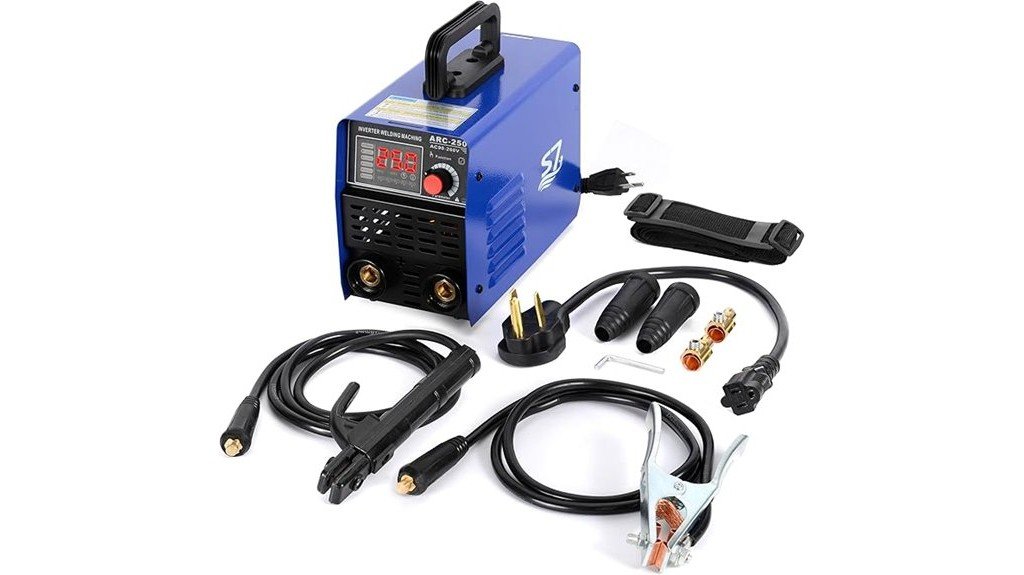
What accessories come with the S7 welder?
Package contents can change by seller or listing revision, and the current Amazon quick-view information does not clearly document every included accessory. Check the current product photos and package-content section before ordering instead of assuming a helmet, gloves, or other safety equipment is included.
What warranty does the S7 250A Stick Welder have?
A specific warranty period could not be confirmed from the current product information reviewed for this article. Check the current Amazon seller information, manufacturer documentation, and return terms before buying if warranty coverage is important to you.
The Bottom Line
The S7 250A Stick Welder is a practical choice when you want an inexpensive, portable stick machine with dual-voltage input, digital controls, useful arc-assistance features, and support for common electrodes. It fits DIY repairs, farm maintenance, gates, fences, brackets, trailer parts, and occasional workshop jobs better than continuous industrial production.
Buy it for portability and straightforward stick welding. Skip it if you need highly documented industrial output, multiple welding processes, aluminum-focused capability, or detailed professional-duty specifications.
Ready to Buy?
Check the latest price, seller, package contents, and product details before you decide.