If you own a 2010 Toyota Corolla, you know the right oil keeps that 1.8L running smoothly. You’ll want options that match Toyota’s specs, balance protection with fuel economy, and suit your mileage. I’ll recommend three top oils, plus essential filters and tools, so you can pick what fits your car and budget — and avoid costly mistakes down the road.
Oil Filter Wrench Cup-Style Removal Tool for Toyota 1.8L Engines (64mm, 14-Flute)
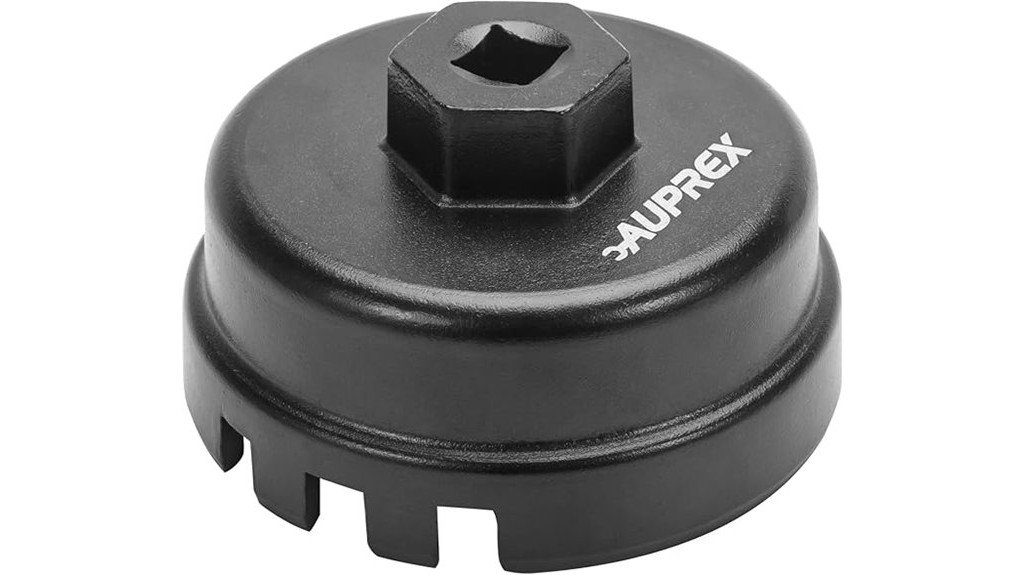
If you work on a 2010 Toyota Corolla (or another Toyota with the 1.8L engine), this AUPEX 64mm, 14-flute oil filter wrench is a must-have: it’s built to fit the Corolla’s oil filter housing cap precisely, uses 6 anti-slip slots for secure engagement, and attaches to a 27mm spanner or 3/8″ ratchet for quick, damage-free removal and installation. You’ll appreciate the precise fit for models like Prius, Matrix, CT200h, and Scion variants listed, and the 6061 T5 aluminum construction resists wear while protecting the housing. It simplifies oil changes and reduces the risk of rounded caps.
Best For: DIY owners and independent mechanics who service Toyota 1.8L vehicles (Corolla, Prius family, Matrix, CT200h, Scion models) and need a precise, non-damaging tool for oil filter housing cap removal and installation.
Pros:
- Precisely sized 64mm, 14-flute design with 6 anti-slip slots for secure, damage-free engagement with OEM oil filter caps.
- Fits common drive tools (27mm spanner or 3/8″ ratchet), making it easy to use with standard shop or home toolsets.
- Durable 6061 T5 aluminum construction resists wear while protecting the housing from rounded edges.
Cons:
- Specialized fit limits usefulness to specific Toyota/Scion 1.8L models and won’t work on many other vehicles or different filter cap sizes.
- Aluminum, while protective, may be less durable than hardened steel if subjected to extreme torque or misuse.
- Requires correct drive tool access; tight or obstructed engine bays may still make removal difficult even with the cup wrench.
12 Pack Oil Drain Plug Gaskets Compatible with Toyota Vehicles
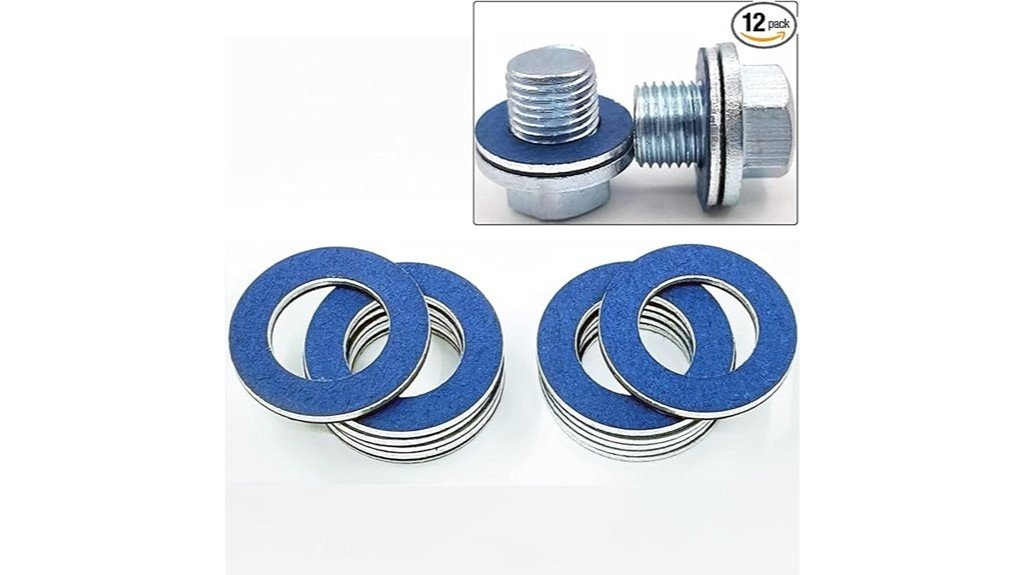
For Toyota owners who do their own oil changes and want a reliable, OEM-quality seal, this 12-pack of 90430-12031 drain plug gaskets gives you the right size and fit for Corollas (as well as Tacomas, Camrys, Avalons, and several Lexus/Scion models), so you can replace the crush washer every service without hunting for the correct part. These Danbojit gaskets match OEM dimensions (0.48″ ID, 0.82″ OD, 0.07″ thick) and replace part numbers 90430-1203/9043012031. They’re single-use crush washers that prevent oil leaks, come in a handy 12-pack, carry a 3-year quality support window, and have strong user ratings.
Best For: Toyota and Lexus owners who perform their own oil changes and need OEM‑fit, single‑use drain plug gaskets in a convenient multi‑pack.
Pros:
- OEM dimensions (0.48″ ID, 0.82″ OD, 0.07″ thick) ensure proper fit for many Toyota/Lexus/Scion models.
- 12‑pack provides enough crush washers for multiple oil changes, saving time and repeat purchasing.
- High user rating (4.7/5) and 3‑year quality support offer confidence in product reliability.
Cons:
- Single‑use design requires replacement each oil change, creating recurring consumption.
- Compatibility limited to specific Toyota/Lexus/Scion models—may not fit all vehicles.
- Small parts can be easy to lose and packaging provides minimal protection.
Genuine Toyota Oil Filter
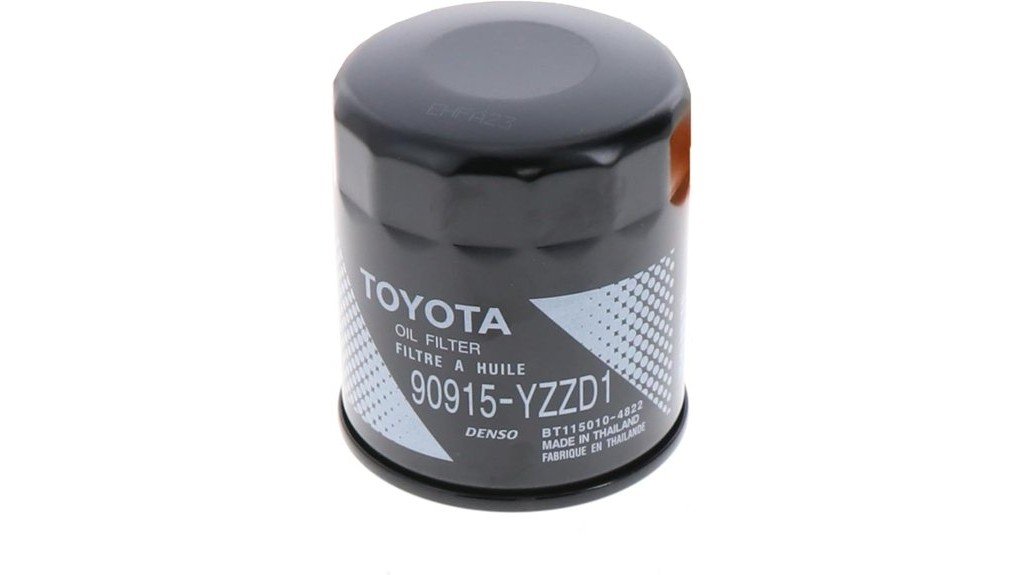
The Genuine Toyota Oil Filter is the go-to choice when you want a direct-fit, OEM replacement that preserves factory performance and pairs perfectly with the recommended oils for your 2010 Corolla. You’ll get a Toyota-branded, aluminum performance part (OEM 90915YZZD1) sized for vehicle-specific fit: 64.16 mm outside diameter, 17 mm thread, and about 0.5 lbs. It’s designed to work with Toyota motor oils and maintain engine effectiveness. Highly rated (4.7/5 from 2,209 reviews) and ranked among top replacement filters, it’s been available since 2010 and carries standard seller return options and price-reporting details.
Best For: car owners of compatible Toyota models (e.g., 2010 Corolla) seeking a direct-fit OEM oil filter that preserves factory performance.
Pros:
- Genuine Toyota OEM fit (90915YZZD1) ensures compatibility and reliable sealing.
- Durable aluminum construction and performance-grade quality for effective engine protection.
- Highly rated by users (4.7/5 from 2,209 reviews) and long availability/support.
Cons:
- OEM parts typically cost more than generic aftermarket filters.
- Vehicle-specific fit means you must confirm compatibility before purchase.
- Limited information on advanced filtration media compared with some premium aftermarket options.
Factors to Consider When Choosing Engine Oil For Toyota Corolla 2010
When picking oil for your 2010 Corolla, you’ll want to focus on the right viscosity grades, whether synthetic or conventional fits your needs, and strict compliance with Toyota’s specifications. Consider how the oil handles cold starts and whether high-mileage formulations might benefit an older engine. These factors will help you balance protection, fuel economy, and long-term engine health.
Recommended Viscosity Grades
1 good rule is to stick with 0W-20 for your 2010 Corolla, since it delivers the best cold-start flow and high-temp protection for fuel-efficient, long-lasting operation. You can also use 5W-20 if you drive primarily in consistently warmer climates; it gives slightly higher viscosity at cold starts while still protecting at operating temperatures. Remember the first number (before the W) shows cold-flow performance and the second number shows viscosity at high temps, so lower first numbers aid cold starts. Always choose oils that meet API certification to guarantee compatibility and protection. Check viscosity suitability during each oil change and follow Toyota’s service intervals so you keep engine wear low and maintain peak fuel economy.
Synthetic Vs Conventional
Choosing between synthetic and conventional oil matters as much as picking the right viscosity for your 2010 Corolla. You’ll get stronger high-temperature protection with synthetic, which resists breakdown and oxidation better than conventional oil. That means fewer deposits, more consistent lubrication, and potential fuel-efficiency gains. Synthetics also last longer — typically 7,500–10,000 miles between changes — so you’ll change oil less often despite higher upfront cost. Conventional oil costs less initially but usually needs changes every 3,000–5,000 miles to keep the engine healthy. For a modern Corolla, synthetic’s performance and longevity make it the smarter choice if you want reduced wear and longer intervals. If budget’s the priority and you’ll change oil frequently, conventional remains acceptable.
Manufacturer Specifications Compliance
Although it’s tempting to pick oil based on price or brand alone, you should prioritize oils that meet Toyota’s and industry specs—specifically API certification, ILSAC GF-5, and the recommended 0W-20 or 5W-20 viscosity—so your Corolla gets the right protection, fuel economy, and warranty coverage. Check the bottle for API service symbols and GF-5 approval before buying; these confirm adequate wear protection, deposits control, and emissions-system compatibility. Prefer OEM-recommended synthetic or synthetic-blend formulations to improve longevity and thermal stability. Keep receipts and note oil type when you change it, and follow Toyota’s maintenance intervals to maintain warranty compliance. If you’re unsure, consult the owner’s manual or a dealer to match spec and viscosity for your driving conditions.
Cold-Start Performance
When temperatures drop, your Corolla’s engine depends on oil that flows quickly at start-up to cut wear and friction, so pick a low-temperature-friendly viscosity like 0W-20 or 5W-20 and look for formulations with cold-flow additives that boost initial fluidity and reduce start-up metal contact. Cold-start performance means how fast oil circulates and lubricates when the engine first turns over in low temps. Choose a lower SAE “W” rating to guarantee rapid flow; multi-viscosity oils like 5W-20 give winter-time fluidity while protecting at operating temp. Additives further improve cold flow and lower friction during those critical seconds. Proper selection reduces wear and can improve fuel efficiency right after start-up, protecting your Corolla over time.
High-Mileage Considerations
If your 2010 Corolla has crossed about 75,000 miles, switch to a high-mileage oil that contains higher viscosity and seal conditioners to reduce wear, cut oil consumption, and help stop leaks. You’ll want a formulation that protects worn bearings and piston rings by maintaining a thicker lubricating film at operating temperatures. Look for products marketed for high-mileage engines that list seal conditioners or rejuvenators — they restore elasticity to gaskets and seals, lowering leak risk. Stick to the viscosity recommended for your engine but err toward the higher end of that range if you’ve observed oil burning or increased clearances. Finally, keep to a strict oil-change interval; regular fresh high-mileage oil preserves performance and extends the life of aging Corolla components.
Fuel Economy Impact
Fuel economy is one of the practical benefits you’ll see from choosing the right oil for your 2010 Corolla: lower-viscosity and synthetic oils reduce internal friction and help the engine run more efficiently, often improving miles per gallon compared with thicker or conventional oils. You should favor the manufacturer-recommended viscosity (commonly 0W-20 for many Corollas) because it balances protection and economy. Synthetic formulations flow better at startup and stay stable at temperature, so they usually yield measurable mpg gains versus conventional oils. Keep to regular oil-change intervals with the correct spec to avoid wear that saps efficiency. Also check the oil’s API service rating—higher-rated oils typically maintain performance standards that support better fuel consumption over time.
Additives and Detergents
Because the right additives and detergents keep a 2010 Corolla’s engine running cleaner and longer, you should pay attention to them when choosing oil. Additives improve lubrication, reduce friction, and can boost fuel efficiency, so pick oils with proven additive packages. Look for anti-wear additives like ZDDP to protect camshafts and lifters, especially in older engines. Viscosity modifiers matter too: they maintain the oil’s thickness across cold starts and high operating temperatures, ensuring consistent film strength. Detergents prevent sludge and varnish buildup that accelerates wear, while dispersants keep soot and contaminants suspended so they don’t settle on critical parts. Choose oil formulations that balance these components for cleaner internals, reliable protection, and smoother operation.
Oil Change Intervals
Additives and detergents keep your Corolla’s internals cleaner, but they don’t erase the need for regular oil changes; choosing the right oil also means picking an appropriate change interval. For a 2010 Toyota Corolla, you’ll generally follow 5,000–7,500 miles with synthetic oil and 3,000–5,000 miles with conventional oil. Stick to these ranges to prevent wear, preserve fuel efficiency, and extend engine life. Adjust intervals if you drive in severe conditions—frequent short trips, heavy traffic, towing, or extreme temperatures require more frequent changes. Always consult and follow Toyota’s recommendations to stay within warranty terms and guarantee peak operation. Monitor oil condition between changes and be ready to shorten intervals based on usage and climate.
Frequently Asked Questions
Can I Use Synthetic Oil in a High-Mileage 2010 Corolla?
Yes — you can use synthetic oil in a high-mileage 2010 Corolla. You’ll often get better protection and stability; just choose a high-mileage or compatible synthetic, stick to proper viscosity, and watch for leaks or seal issues.
How Often Should I Change Oil in Severe Driving Conditions?
Want to avoid engine wear? You should change oil every 3,000 to 5,000 miles or every three months in severe driving. You’ll check more often if towing, idling, short trips, heavy dust, or extreme temperatures.
Will Diesel Oil Work in My Gasoline Corolla Engine?
No, you shouldn’t use diesel oil in your gasoline Corolla; it’s formulated differently, can harm emissions equipment and spark plugs, and won’t meet gasoline-engine specs. Use oils meeting Toyota/API SN or newer recommendations for safe performance.
Does Oil Type Affect Fuel Economy Significantly?
Yes — oil type can affect fuel economy noticeably; you’ll see small gains using the correct viscosity and quality synthetic oils, since they reduce friction and pump losses, improving mileage slightly, especially in older or high-mileage engines.
Can I Mix Different Oil Brands or Viscosities?
Yes — you can mix brands or viscosities sparingly, but it’s like blending paints: results vary. You’ll want compatible oils and a recommended viscosity; otherwise you risk reduced protection, warranty issues, and unpredictable performance.
Conclusion
You’ve seen top picks—Mobil 1 0W-20, Castrol Edge 0W-20, and Valvoline High Mileage 5W-20—and the parts that help the job: cup-style wrench, drain plug gaskets, and the genuine Toyota filter. Pick a synthetic if you want longer life and better protection; go Valvoline if your Corolla’s over 75k miles. For example, a friend switched to Mobil 1 and cut oil consumption and visits to the shop—so choose what fits your car and driving.