
The best engine oil for a 2010 Toyota Corolla should protect its aging engine while meeting Toyota’s viscosity requirements. For the common 1.8L engine, Toyota recommends SAE 0W-20 or 5W-20, with 0W-20 preferred for fuel economy and cold starts.
My top choice is Mobil 1 Advanced Fuel Economy 0W-20 for everyday driving. Castrol EDGE 0W-20 is another strong full-synthetic option, while Valvoline offers a formula designed for higher-mileage engines.
I’ve compared their published specifications, Toyota’s maintenance requirements, viscosity, and intended use to help you choose the right oil without paying for features your Corolla doesn’t need.
Best Engine Oils for a 2010 Toyota Corolla Compared
| Product | Best for | Viscosity | Oil type |
|---|---|---|---|
| Best overall; everyday driving and cold starts | SAE 0W-20 | Full synthetic | |
| High-temperature stability and demanding driving | SAE 0W-20 | Advanced full synthetic | |
| Higher-mileage engines and seal conditioning | SAE 5W-20 | Full synthetic high mileage |
Best Engine Oil for a 2010 Toyota Corolla: My Top Picks
1. Mobil 1 Advanced Fuel Economy 0W-20
Bottom line: Mobil 1 Advanced Fuel Economy 0W-20 is my first choice for a 2010 Corolla with the 1.8L engine. It uses Toyota’s preferred viscosity and offers full-synthetic protection for normal commuting, highway driving, and cold starts.
- SAE grade: 0W-20, Toyota’s preferred viscosity.
- Oil type: Full synthetic, designed for consistent lubrication.
- Pack size: 5 US quarts, sufficient for a standard 1.8L oil change.
- Standard: API SQ and ILSAC GF-7A, meeting modern gasoline-engine requirements.
Mobil 1 Advanced Fuel Economy uses a low-viscosity synthetic formula designed to reduce internal friction. Its 0W cold rating helps it circulate readily during cold starts, while its SAE 20 operating-temperature grade matches Toyota’s specification.
The manufacturer also highlights deposit control and oxidation resistance. These are useful qualities in an older Corolla, especially one driven on short trips or in stop-and-go traffic.
One advantage is simplicity. You don’t need a special racing oil or an unusually thick formula for a healthy Corolla. A correctly specified full synthetic is a practical starting point.
- Matches Toyota’s preferred 0W-20 viscosity.
- Full-synthetic formulation supports cold starts and high-temperature stability.
- Modern API and ILSAC gasoline-engine specifications.
- Five-quart container covers the normal 1.8L refill quantity.
- Not specifically marketed as a high-mileage seal-conditioning formula.
- Costs more than some conventional oil alternatives.
- Long advertised oil-life claims do not replace Toyota’s maintenance schedule.
2. Castrol EDGE 0W-20
Bottom line: Castrol EDGE 0W-20 is an excellent alternative if you want full-synthetic oil with a strong focus on wear protection and viscosity stability. It offers the same Toyota-preferred viscosity as Mobil 1 while emphasizing protection under demanding operating conditions.
- SAE grade: 0W-20, Toyota’s preferred viscosity.
- Oil type: Advanced full synthetic, designed for thermal stability.
- Pack size: 5 US quarts, sufficient for a standard 1.8L oil change.
- Standard: API SQ and ILSAC GF-7, meeting modern gasoline-engine requirements.
Castrol EDGE is formulated to resist viscosity breakdown and control engine deposits. These qualities matter because motor oil must maintain a protective film between moving parts as engine temperatures rise.
For a Corolla used in hot weather, extended highway driving, or regular stop-and-go traffic, this is a sensible option. However, no published specification reviewed here establishes that it will outperform Mobil 1 in your particular engine.
Castrol advertises extended protection for this product. You should still follow the 2010 Corolla’s vehicle-specific oil-change schedule rather than treating an oil manufacturer’s maximum interval as permission to extend servicing.
- Correct 0W-20 viscosity for the Corolla 1.8L.
- Full-synthetic formula focused on wear and deposit protection.
- Designed to maintain viscosity under demanding operating conditions.
- Available in a practical five-quart container.
- No proven Corolla-specific advantage over other compliant full synthetics.
- Premium formulation may cost more than basic oils.
- Does not specifically target aging engine seals.
3. Valvoline MaxLife Full Synthetic High Mileage 5W-20
Bottom line: Valvoline MaxLife Full Synthetic High Mileage 5W-20 is worth considering if your 2010 Corolla has more than 75,000 miles and you want oil designed for older engines. Its seal-conditioning additives distinguish it from the two regular full-synthetic options.
- SAE grade: 5W-20, an approved viscosity for the 2010 Corolla.
- Oil type: Full synthetic high mileage, formulated for aging engines.
- Pack size: 5 US quarts, sufficient for a standard 1.8L oil change.
- Standard: API SQ and ILSAC GF-7A, meeting modern gasoline-engine requirements.
Valvoline developed the MaxLife range for engines that have accumulated significant mileage. This full-synthetic version includes seal conditioners intended to help maintain seal flexibility and reduce minor leakage associated with aging seals.
The formula also targets wear, sludge, and high-temperature deposits. Those features can be attractive if your Corolla has spent years commuting or driving in heavy traffic.
High-mileage oil is not an engine repair. It cannot reliably fix damaged piston rings, serious external leaks, or excessive wear. If your Corolla is burning large amounts of oil, diagnose the cause rather than depending on additives alone.
- Designed for engines with more than 75,000 miles.
- Contains seal conditioners for aging engine seals.
- Uses Toyota-approved SAE 5W-20 viscosity.
- Full-synthetic formulation with modern gasoline-engine specifications.
- Its 5W cold rating is less favorable for very cold starts than 0W-20.
- Seal conditioners cannot repair serious mechanical problems.
- High-mileage additives may offer limited added benefit in a healthy engine.
Mobil 1 Advanced Fuel Economy vs Castrol EDGE: Which Should You Get?
Both oils meet Toyota’s preferred SAE 0W-20 viscosity and offer full-synthetic protection. The practical differences are their formulations and the specific performance qualities each manufacturer emphasizes.
- Everyday driving: Mobil 1 is my first recommendation for routine commuting and cold-start performance.
- Demanding conditions: Castrol EDGE places particular emphasis on viscosity stability and protection under high stress.
- Compatibility: Both are suitable options when their current bottles meet the required viscosity and gasoline-engine standards.
- Service life: Neither changes Toyota’s recommended oil-change interval for this vehicle.
Which Motor Oil Should You Buy for Your Corolla?
- For normal commuting: Get Mobil 1 Advanced Fuel Economy 0W-20.
- For an alternative full-synthetic formula: Get Castrol EDGE 0W-20.
- For an older engine needing seal conditioning: Consider Valvoline MaxLife Full Synthetic High Mileage 5W-20.
- For cold-weather use: Choose either of the recommended 0W-20 full synthetics because Toyota identifies this grade as preferable for cold starts.
- For an engine with heavy oil consumption: Check for mechanical or sealing problems before expecting a different oil to solve them.
How I Chose These Motor Oils
I focused on published technical information rather than claiming hands-on testing. The main selection criteria were Toyota compatibility, viscosity, gasoline-engine certifications, and features relevant to an older vehicle.
- Toyota requirements: I checked the recommended viscosity, refill quantity, and maintenance guidance for the 2010 Corolla.
- Manufacturer specifications: I reviewed the published information for Mobil 1, Castrol EDGE, and Valvoline MaxLife.
- Product identification: I matched the selected Amazon listings to the oil type, viscosity, and container size.
- Engine age: I considered when a high-mileage formulation may provide benefits beyond standard full synthetic.
- Oil-change requirements: I used Toyota’s vehicle-specific maintenance guidance rather than relying on maximum service-life claims printed on oil containers.
How to Choose Engine Oil for a 2010 Toyota Corolla
The correct viscosity and oil specification matter more than choosing the most expensive brand. For a healthy 2010 Corolla 1.8L, a quality 0W-20 full synthetic is a strong starting point.
Recommended Viscosity Grades
Toyota recommends SAE 0W-20 or SAE 5W-20 for the 2010 Corolla’s 1.8L engine. Its owner’s manual specifically identifies 0W-20 as the better choice for fuel economy and cold-weather starting.
The first number, followed by W, describes the oil’s cold-temperature viscosity performance. The second number describes its viscosity grade at operating temperature.
That means 0W-20 and 5W-20 belong to the same SAE 20 high-temperature grade. The main distinction is their cold-temperature behavior, not that 5W-20 necessarily provides a thicker protective film once the engine is warm.
Avoid automatically changing to 5W-30 or 10W-30 because your Corolla has high mileage. A different viscosity should be a considered decision based on engine condition and appropriate service guidance.
Synthetic vs Conventional Oil
Full-synthetic oil generally offers better oxidation resistance and low-temperature flow than conventional oil. It can also help control deposits under demanding operating conditions.
Conventional or synthetic-blend oil can still be suitable when it meets Toyota’s required viscosity and performance standards. However, full synthetic is often an attractive choice for an older engine that experiences temperature changes and frequent short trips.
The important limit is servicing: synthetic oil does not automatically extend your 2010 Corolla’s factory maintenance interval.
Manufacturer Specifications Compliance
Look for the correct SAE viscosity and a recognized gasoline-engine certification on the oil container. The 2010 Corolla originally specified an ILSAC multigrade engine oil.
Modern specifications have replaced the older standards. The American Petroleum Institute explains that newer gasoline-engine categories provide backward compatibility with earlier categories. Its motor oil classifications help you understand the labels.
Current compatible products may show API SQ and ILSAC GF-7A. Do not confuse GF-7A with GF-7B, which is intended for SAE 0W-16 oils.
You do not need Toyota-branded oil exclusively. A properly specified equivalent can meet the vehicle’s lubrication requirements.
Cold-Start Performance
Cold starts are a major reason Toyota favors 0W-20. Oil must circulate quickly after startup while maintaining suitable lubrication once the engine reaches normal operating temperature.
Lower winter-viscosity ratings are especially useful in freezing weather. Even in a warm climate, following Toyota’s preferred viscosity remains a sensible way to maintain the intended balance of engine protection and fuel economy.
High-Mileage Considerations
High-mileage motor oils are generally marketed toward engines with 75,000 miles or more. They may include seal conditioners and additive packages designed around the needs of aging engines.
But reaching that mileage does not mean you must switch. A well-maintained Corolla can continue using standard full-synthetic oil as long as it meets the correct specifications.
If you notice oil consumption, first check the dipstick regularly and inspect for leaks. An oil formulated for older engines may help with minor seal-related issues, but it cannot reverse serious engine wear.
A friend mentioned in the original article reported lower oil consumption after switching to Mobil 1. That is an individual observation, not proof that changing brands can repair an oil-burning engine.
Fuel Economy Impact
Engine oil affects fuel economy because moving engine parts and the oil pump consume energy. An appropriately specified lower-viscosity oil can reduce these losses.
Still, the difference between two good oils of the same viscosity may be small. Tire pressure, driving habits, maintenance condition, and traffic can have a greater effect on your Corolla’s real-world fuel economy.
Use Toyota’s recommended viscosity rather than selecting an unusually thin or thick oil based only on marketing claims.
Additives and Detergents
Motor oil contains more than base oil. A balanced additive package helps control wear, sludge, oxidation, corrosion, and deposits.
- Detergents: Help keep engine surfaces clean and reduce deposit formation.
- Dispersants: Hold small contaminants in suspension until the oil is changed.
- Anti-wear additives: Protect engine surfaces under conditions where the oil film becomes thin.
- Viscosity modifiers: Help multigrade oils maintain suitable viscosity across temperature changes.
- Seal conditioners: Used in some high-mileage formulas to help maintain aging elastomer seals.
A quality certified oil already contains a formulated additive package. Adding separate aftermarket oil treatments is generally unnecessary unless there is a specific, well-supported reason.
Oil Change Intervals
For the 2010 Toyota Corolla, the factory maintenance guide specifies replacing the engine oil and oil filter every 5,000 miles or six months, whichever comes first.
This is particularly important because some modern Toyota vehicles allow longer intervals with 0W-20 synthetic oil, but those extended schedules do not automatically apply to the 2010 Corolla. Toyota explains the distinction in its synthetic oil service interval guidance.
Short trips, heavy idling, dusty roads, and severe operating conditions make timely servicing especially important. Check the oil level between changes, particularly in an engine with higher mileage.
For the 1.8L 2ZR-FE engine, Toyota lists a reference refill capacity of 4.4 US quarts (4.2 liters) with a filter change. The 2.4L engine has a different reference capacity of 4.0 US quarts (3.8 liters) with its filter changed.
These are reference quantities, not instructions to pour in a measured amount without checking. Refill carefully, allow the oil to settle, and confirm the final level with the dipstick on level ground.
Mistakes to Avoid When Buying Engine Oil
- Using the wrong viscosity: Choose 0W-20 or 5W-20 as specified for the U.S.-market 2010 Corolla engines discussed here.
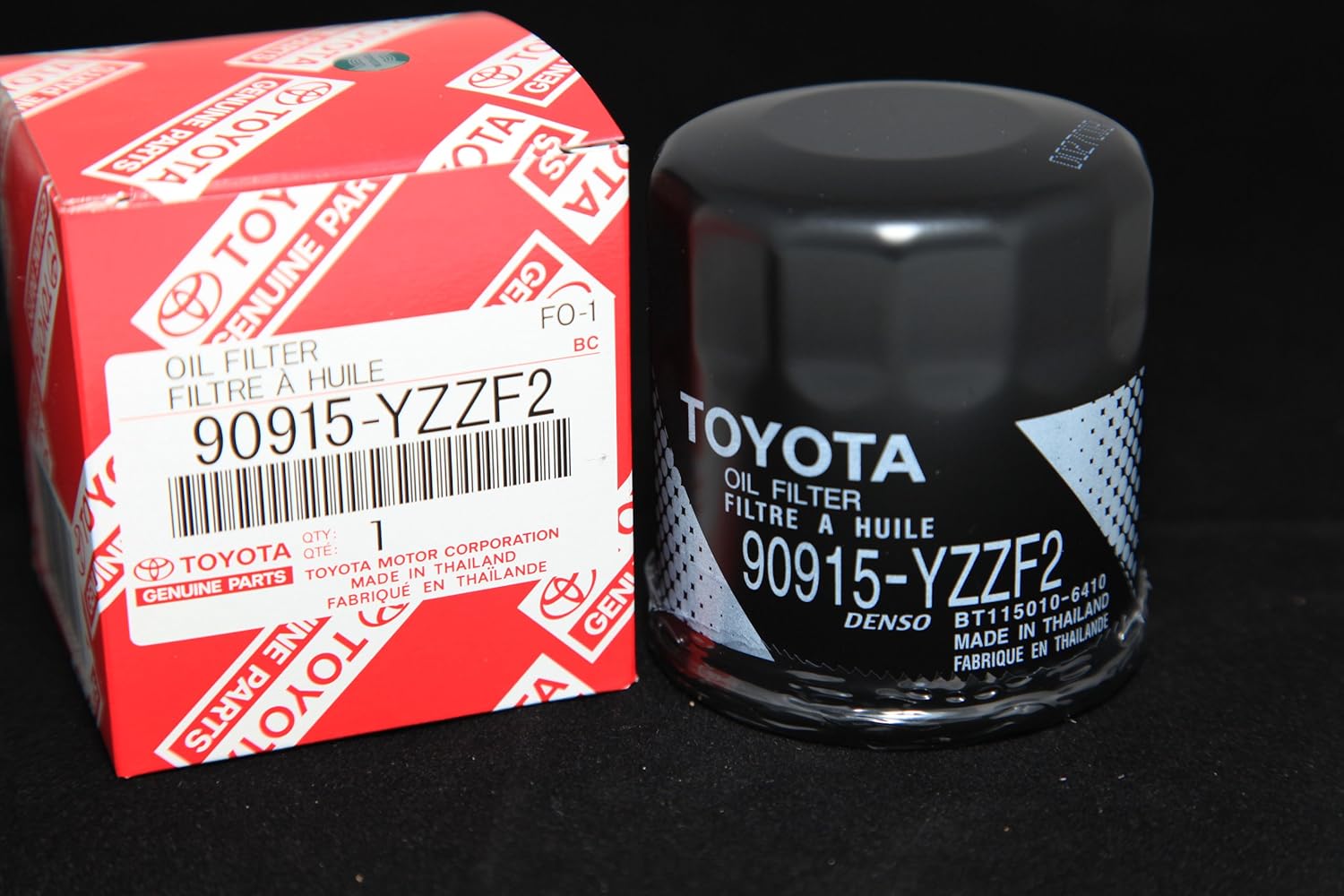
- Assuming all Corollas use the same filter: The 2010 1.8L uses a replaceable cartridge element, while the 2.4L uses a different filter arrangement. Toyota’s oil filter application chart identifies part 04152-YZZA6 for the 1.8L engine. Confirm parts by VIN and engine.
- Overfilling the engine: Use Toyota’s reference capacity and verify the final dipstick level.
- Extending oil changes too far: Follow the vehicle’s maintenance guide instead of a motor oil’s maximum advertised interval.
- Expecting oil to repair engine damage: Investigate persistent leaks, smoke, or excessive oil consumption.
FAQs
Can I Use Synthetic Oil in a High-Mileage 2010 Corolla?
Yes. Full-synthetic oil is suitable for a high-mileage 2010 Corolla when it meets the correct viscosity and gasoline-engine specifications. There is no need to avoid synthetic oil simply because the engine is old. If the engine has minor seal-related issues, a high-mileage formulation may be useful, but it is not mandatory.
How Often Should I Change Oil in Severe Driving Conditions?
Follow Toyota’s 5,000-mile or six-month oil and filter replacement schedule, whichever comes first. Severe use makes sticking to that schedule especially important. Check oil levels more often if you make frequent short trips, drive in heavy traffic, operate on dusty roads, or notice increased oil consumption.
Will Diesel Oil Work in My Gasoline Corolla Engine?
Do not choose an oil merely because it is labeled for diesel engines. Some oils carry both gasoline and diesel service classifications, but they must still meet the Corolla’s gasoline-engine requirements and recommended viscosity. A properly specified gasoline-engine oil is the simplest and safest choice for normal service.
Does Oil Type Affect Fuel Economy Significantly?
Oil choice can affect fuel economy, but the improvement between two suitable oils is usually modest. Toyota prefers 0W-20 partly because it can reduce pumping and friction losses, especially during cold operation. You are unlikely to see a dramatic change in fuel consumption simply by switching between two compliant full-synthetic brands.
Can I Mix Different Oil Brands or Viscosities?
You can generally mix compatible automotive engine oils when topping off, especially if the alternative is running the engine with too little oil. For routine changes, use one oil that meets Toyota’s specification. Mixing different viscosity grades can change the final blend’s characteristics, so it should not be your normal maintenance plan.
What Oil Does a 2010 Toyota Corolla 1.8L Take?
The 2010 Toyota Corolla 1.8L takes SAE 0W-20 or SAE 5W-20 engine oil meeting the appropriate gasoline-engine standards. Toyota identifies 0W-20 as the preferred choice for cold-weather starting and fuel economy. Modern oils meeting API SQ and ILSAC GF-7A are suitable replacements for older compatible gasoline-engine specifications.
How Much Engine Oil Does a 2010 Toyota Corolla Need?
The 2010 Corolla 1.8L has a reference refill capacity of 4.4 US quarts, or 4.2 liters, when changing the oil filter. The 2.4L engine uses approximately 4.0 US quarts, or 3.8 liters, with a filter change. These quantities are guides; always finish by checking the dipstick.
Is 0W-20 Better Than 5W-20 for a 2010 Toyota Corolla?
0W-20 is Toyota’s preferred grade for the 2010 Corolla because of its cold-start characteristics and potential fuel-economy benefits. Both 0W-20 and 5W-20 are permitted and have the same SAE 20 operating-temperature grade. For a healthy engine, 0W-20 is the straightforward choice unless a qualified technician identifies a specific reason otherwise.
Final Verdict
For most 2010 Toyota Corolla 1.8L owners, I recommend a properly certified full-synthetic 0W-20 oil. Mobil 1 Advanced Fuel Economy is my first choice because it matches Toyota’s preferred viscosity and offers a practical balance of cold-start performance, fuel efficiency, and engine protection.
If you prefer another full synthetic, consider Castrol EDGE 0W-20. For a higher-mileage engine where seal conditioning is a priority, Valvoline MaxLife Full Synthetic High Mileage 5W-20 is another reasonable choice. Whichever oil you select, the correct viscosity, proper fill level, and timely filter changes matter most.