Disclosure: As an Amazon Associate, we earn from qualifying purchases. If you click a link on this page and make a purchase, we may receive a small commission at no extra cost to you.
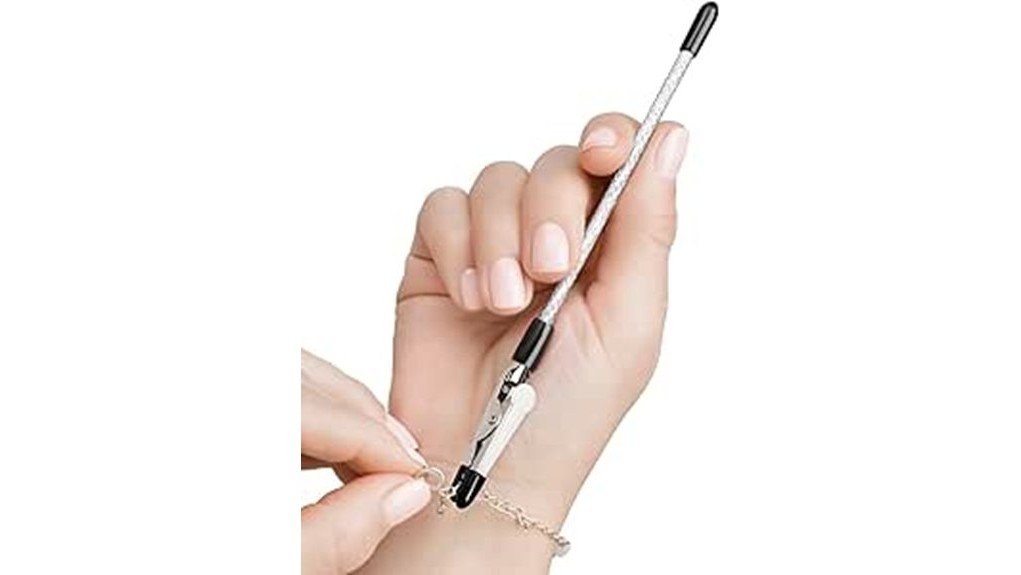
Fastening a bracelet with one hand can become frustrating when the chain slides away or the clasp is difficult to control. The Mission Gallery Bracelet Helper Tool is designed to hold one end of your jewelry steady while you operate the clasp with your free hand. Its compact metal body is easy to store, and the stated compatibility covers several common clasp styles. However, you still need to position the tool correctly, so it may take a few attempts before the motion feels natural.
Quick Verdict
Rating: 8/10, recommended with caveats
Best For: People who regularly struggle to fasten bracelets, charm bracelets, clasped watch bands, or some delicate necklaces without assistance.
Bottom Line: This is a simple, portable tool that can give you better control over a moving bracelet end. It does not close the clasp automatically, and very small, stiff, or unusual closures may still require patience.
| Specification | Detail |
|---|---|
| Brand | Mission Gallery |
| Model | Not stated |
| Product type | Handheld jewelry clasp-fastening aid |
| Finish | Silver-colored finish |
| Material | Metal construction; exact alloy not stated |
| Dimensions | 6.21 x 1.65 x 0.31 inches |
| Listed weight | 0.01 kilograms |
| Stated clasp compatibility | Lobster, magnetic, and toggle clasps |
| Suggested uses | Bracelets, charm bracelets, some clasped watch bands, and selected necklaces |
| Storage | Jewelry box, drawer, handbag, or travel pouch |
| Care | Wipe gently with a damp cloth and mild soap, dry fully, and store away from moisture |
What Is the Mission Gallery Bracelet Helper Tool?
The Mission Gallery Bracelet Helper Tool is a small handheld aid for fastening jewelry with one hand. You use it to secure one end of a bracelet near your wrist, leaving your other hand free to operate the clasp.
This design addresses a specific problem. When you wrap a loose bracelet around your wrist, gravity can pull the free end away before you close it. The helper tool gives that end a more stable position, reducing the amount of chasing and repositioning required.
At 6.21 inches long and 1.65 inches wide, the tool should provide enough reach for common bracelet-fastening positions without taking up much storage space. The stated 0.31-inch thickness also keeps the body relatively compact for a drawer, jewelry box, or travel pouch.
Before You Buy: This tool holds one end of your jewelry, but it does not operate the clasp for you. Tiny spring rings, stiff chains, short bracelets, and unusual closures may still require steady hand control and several attempts.
Who Should Buy It?
Best For
- People who often struggle to hold a bracelet end while closing the clasp.
- Jewelry wearers who use lobster, magnetic, or toggle-style closures.
- Gift buyers seeking a small, practical accessory for someone who wears clasped jewelry regularly.
Skip If
- You mainly wear bangles, cuffs, stretch bracelets, or jewelry without a clasp.
- You need a device that closes the clasp automatically.
- Your jewelry has thick, rigid, very short, or unusually shaped hardware that may not sit securely in a small holder.
Design and Build Quality
The tool uses metal construction rather than a thin plastic body. The exact metal alloy is not stated, so you should not assume that it is stainless steel, rustproof, or made from precious metal. The silver-colored finish gives it a simple appearance that fits easily beside other jewelry accessories.
Its 6.21-inch length is important because you need enough distance between your gripping hand and your wrist. A tool that is too short could force your hand into an awkward angle, while a much longer tool would take up more room in a handbag or jewelry case.
The product remains a basic mechanical aid with no battery, motor, or automatic closing system. Its performance depends on how securely you hold the bracelet end and how well the clasp matches the tool’s gripping area.
Ease of Use and Hand Control
The main benefit is separation of tasks. One hand controls the tool and holds the jewelry end, while the other hand focuses on opening or connecting the clasp. This setup can feel easier than trying to trap a bracelet against your wrist with a finger.
You may still need practice during the first few uses. The bracelet can twist if you hold it too far from the clasp, and a loose grip may let the chain slide out of position. Starting with a larger, familiar clasp can help you learn the motion before trying smaller jewelry.
A flat surface can also improve control. Resting your forearm on a table or dresser reduces wrist movement and gives you a clearer view of the clasp. This is especially useful with charm bracelets because the added weight can pull the chain sideways.
Clasp Compatibility and Jewelry Types
The stated compatibility includes lobster, magnetic, and toggle clasps. The tool’s real job is to hold the opposite end of the jewelry, so the shape and size of that end matter as much as the clasp itself.
Lobster clasps often require you to pull a small lever while guiding the clasp toward a ring. Holding the ring end steady can make that process more controlled. Toggle closures usually have larger parts, but a heavy bracelet may still move before the bar reaches the loop.
Magnetic clasps normally require less closing force, yet the bracelet ends can still move apart while you position them. The helper may provide stability, although people who already find their magnetic clasp easy to close may gain less from the tool.
You may also use it with some necklace clasps or clasped watch bands when the hardware fits securely. Results will vary with chain length, clasp location, stiffness, and the size of the end being held.
Pro Tip: Test the tool over a table or soft towel before using it over a hard floor. You can learn the correct grip while reducing the chance of dropping or scratching delicate jewelry.
How to Use It Correctly
- Inspect the jewelry first. Check that the clasp opens normally and that the chain, ring, or loop is not damaged.
- Hold the receiving end. Secure the bracelet end that normally moves away while you operate the clasp.
- Rest your forearm. Place your arm on a table, dresser, or another stable surface when possible.
- Wrap the bracelet around your wrist. Keep the chain flat so it does not twist underneath your wrist.
- Close the clasp with your free hand. Guide the clasp toward the held end without pulling hard on the chain.
- Check the connection. Release the tool only after confirming that the clasp is fully closed.
Start with a bracelet that has a visible clasp and enough extra length to move comfortably around your wrist. A very tight bracelet gives you less room to align the ends, regardless of the tool you use.
Common Mistakes to Avoid
Avoid gripping a delicate chain link when a stronger end ring is available. Do not pull the jewelry tightly enough to bend the hardware, and do not force a thick component into a holder that is too small.
You should also avoid releasing the tool before the clasp has fully engaged. With a lobster clasp, confirm that the spring-loaded arm has returned to its closed position before letting go.
Material Safety and Care
The stated material is metal, but the exact alloy, coating, and corrosion resistance are not specified. Keep the tool dry and avoid assuming that it can tolerate soaking, jewelry cleaner, alcohol, or harsh household chemicals.
For routine care, wipe the surface gently with a damp cloth and a small amount of mild soap when needed. Remove any soap residue, dry the tool fully, and store it away from humid areas.
Perfume, lotion, hairspray, and other beauty products can leave residue on both the tool and your jewelry. Apply those products before handling your bracelet, then allow them to dry so the gripping area stays cleaner.
Inspect the tool occasionally for rough edges, looseness, corrosion, or surface damage. Stop using it if any damaged area could catch a fine chain, scratch a finish, or interfere with the clasp.
How It Performs in Real Use
For Daily Bracelet Wear
The tool makes the most sense when you wear clasped bracelets frequently. Once you learn where to position the held end, it can reduce repeated attempts and help you fasten familiar jewelry without balancing it against your wrist.
For Charm Bracelets
Charms add weight and can pull a bracelet away from the clasping position. Holding one end with the tool gives you a fixed point, but resting your wrist on a stable surface remains helpful because the charms may still rotate the chain.
For Delicate Necklaces
The tool may help with a necklace when you can bring both ends in front of your body. It is less practical when the clasp must remain behind your neck or when the chain is too short to reposition safely.
For Travel and Storage
The listed dimensions make the tool compact enough for many travel pouches and jewelry cases. Store it in a separate sleeve or compartment so the metal body does not rub against polished jewelry during transport.
Gift Appeal and Practicality
This tool can be a practical small gift for someone who regularly wears clasped bracelets. It addresses a clear daily inconvenience without requiring the recipient to modify existing jewelry.
Before giving it, consider the person’s usual jewelry style. Someone who mainly wears bangles, cuffs, elastic bracelets, or slip-on pieces may have little use for it. It is more relevant for a person who owns several chain bracelets, charm bracelets, or clasped watch bands.
The compact size also makes it suitable as part of a jewelry-care set. However, the exact packaging and included accessories are not stated, so check the current product page when presentation matters.
What to Check in Current Customer Feedback
Star ratings and review totals can change, so focus on recent comments that describe the same clasp and jewelry style you use. A review about a large toggle clasp may not predict performance with a tiny spring ring or a stiff watch-band closure.
Look for specific feedback about grip security, clip tension, durability, and the learning curve. Comments that explain wrist position, jewelry thickness, or clasp type provide more useful buying context than short statements saying only that the tool worked or did not work.
You should also check whether recent buyers received the same size and design described on the current listing. This is especially useful when a product has existed for a long time or may be sold by more than one marketplace seller.
Pros and Cons
Pros
- Holds one jewelry end steady while your free hand operates the clasp.
- Stated compatibility includes lobster, magnetic, and toggle closures.
- Compact 6.21 x 1.65 x 0.31-inch body is easy to store or pack.
- Metal construction should feel more substantial than a thin plastic aid.
- Works as an add-on tool without permanently changing your bracelet.
Cons
- Requires correct positioning and may involve trial and error.
- Does not automatically open, align, or close the clasp.
- Very small, rigid, thick, or unusual jewelry ends may not fit securely.
Is It Worth the Price?
The Mission Gallery Bracelet Helper Tool is worth considering when clasped bracelets are part of your regular routine and fastening them without help is a recurring problem. Its value comes from simple mechanical control rather than advanced features.
You are likely to get the most value when you own several bracelets with compatible ends and can reuse the tool often. It may offer less value if you wear clasped jewelry only occasionally or already use magnetic converters that solve the problem.
The biggest tradeoff is compatibility. The tool cannot guarantee an easy fit with every chain thickness, bracelet length, or clasp design, so compare the product details with the jewelry you use most often.
How It Compares to Alternatives
A magnetic clasp converter changes the bracelet itself by adding a magnetic connection. That option may make daily closing faster, but it adds hardware and may alter the bracelet’s length or appearance. The Mission Gallery tool leaves the original clasp unchanged and can be used with more than one piece of jewelry.
Improvised methods such as tape or balancing the bracelet against a surface may cost nothing, but they can be less controlled and may leave residue. Larger bracelet-fastening wands may provide a broader grip, while this compact tool is better suited to buyers who prioritize storage and portability.
Frequently Asked Questions
How does the Mission Gallery Bracelet Helper Tool work?
You use the tool to hold one end of the bracelet near your wrist. Your other hand remains free to open, align, and close the clasp.
Does it work with lobster clasps?
Lobster clasps are among the stated compatible clasp styles. The tool holds the receiving end steady while you operate the small clasp lever with your free hand.
Can it be used with toggle or magnetic clasps?
Toggle and magnetic clasps are also listed as compatible. Actual performance depends on the size, shape, and stiffness of the jewelry end that the tool must hold.
Does wrist size affect how well it works?
The bracelet’s length and available fastening space matter more than wrist size alone. A bracelet that fits very tightly may remain difficult to align because you have less room to bring the ends together.
Can the tool help fasten necklaces?
It may help with selected necklaces when you can bring the clasp area in front of you. It will be less useful when a short necklace must be closed behind your neck.
What is the most common mistake when using it?
A common mistake is holding the bracelet too far from its end ring or clasp connection. This allows the jewelry to twist and can make alignment harder.
How should you clean and store the tool?
Wipe it gently with a damp cloth and mild soap, then dry it fully. Store it away from moisture, harsh cleaners, perfumes, and loose jewelry that could rub against its metal surface.
Who should skip this bracelet helper?
Skip it if you mainly wear bangles, cuffs, elastic bracelets, or other jewelry without clasps. It may also be unsuitable for thick, rigid, damaged, or unusually shaped hardware that cannot sit securely in the holder.
The Bottom Line
The Mission Gallery Bracelet Helper Tool is a practical choice when you want better control over common bracelet clasps without permanently modifying your jewelry. Its compact metal design and reusable format are the main strengths, while the need for correct positioning and limited compatibility are the main tradeoffs.
Buy it if you regularly wear clasped bracelets and do not mind practicing the technique. Skip it if most of your jewelry slips on without a clasp or you need an automatic fastening device.
Ready to Buy?
Check the latest price, seller details, and current product information before you decide.