Disclosure: As an Amazon Associate, we earn from qualifying purchases. If you click a link on this page and make a purchase, we may receive a small commission at no extra cost to you.
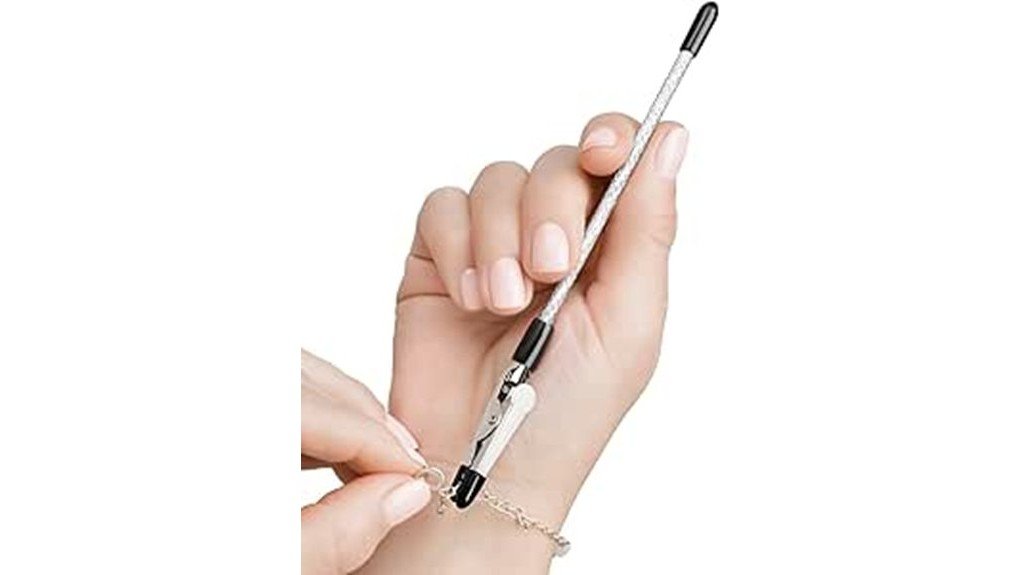
A loose bracelet can slip off your wrist before you get its clasp closed. The Mission Gallery Bracelet Helper Tool holds one jewelry end in place so your other hand can fasten it. It is small enough to keep with your jewelry and is advertised for several common clasp styles. This review explains where the tool may help, which jewelry may still be awkward, and what to check before buying.
Quick Verdict
Editorial rating: 8/10, recommended with caveats (an editorial assessment, not an Amazon customer score or hands-on test).
Best For: People who frequently wear chain bracelets or charm bracelets with lobster, toggle, or magnetic clasps and want to fasten them without another person.
Bottom Line: The tool holds the loose jewelry end so you can focus on the clasp. You must still operate the closure yourself, and a tight bracelet or delicate end fitting can make the process harder.
| Specification | Detail |
|---|---|
| Brand | Mission Gallery |
| Model | DS002C appears in retailer records; confirm on the current Amazon listing |
| Product type | Handheld jewelry clasp-fastening aid |
| Finish | Silver-colored finish |
| Material | Metal body; some retailer descriptions mention a grip covering. Exact alloy and grip material are not confirmed |
| Dimensions | 6.21 x 1.65 x 0.31 inches |
| Listed weight | 0.01 kg (approximately 10 g) |
| Stated clasp compatibility | Lobster, magnetic, and toggle clasps |
| Suggested uses | Chain bracelets, charm bracelets, selected clasped watch bands and necklaces |
| Storage | Jewelry box, drawer, handbag, or travel pouch |
| ASIN | B009HIJEC6 |
| Quantity | One fastening tool is indicated in retailer records; check the selected offer |
| Operation | Manual clasp aid; no motor or battery |
| Branding note | Mission Gallery appears in current reseller listings, while some older references use Miles Kimball |
| Care | Wipe gently with a damp cloth and mild soap, dry fully, and store away from moisture |
What Is the Mission Gallery Bracelet Helper Tool?
The Mission Gallery Bracelet Helper Tool is a manual jewelry-fastening aid. It uses a holding end to keep a bracelet ring or clasp attachment in reach while you close the opposite end with your free hand. Retailer records associate ASIN B009HIJEC6 with model identifier DS002C, although you should confirm the current offer.
This design addresses a specific problem. When you wrap a loose bracelet around your wrist, gravity can pull the free end away before you close it. The helper tool gives that end a more stable position, reducing the amount of chasing and repositioning required.
The listed dimensions are 6.21 × 1.65 × 0.31 inches, with a stated weight of about 10 grams. That size should fit in many jewelry cases, drawers, and travel pouches. The tool is not wearable jewelry and does not stay attached after you finish fastening the bracelet.
Before You Buy: The tool does not close clasps automatically. Tight bracelets, tiny rings, rigid ends, or oddly shaped hardware may not hold well. Branding and model details also differ between some third-party listings for this ASIN, so compare the product photos and seller details before ordering.
Who Should Buy It?
Best For
- People who often struggle to hold a bracelet end while closing the clasp.
- Jewelry wearers who use lobster, magnetic, or toggle-style closures.
- Gift buyers seeking a small, practical accessory for someone who wears clasped jewelry regularly.
Skip If
- You mainly wear bangles, cuffs, stretch bracelets, or jewelry without a clasp.
- You need a device that closes the clasp automatically.
- Your jewelry has thick, rigid, very short, or unusually shaped hardware that may not sit securely in a small holder.
Design and Build Quality
The tool is sold with a silver-colored metal body. Some retailer descriptions also mention a non-slip or rubber-coated grip, but the exact alloy and covering material are not consistently documented. Do not assume it is stainless steel, rustproof, or safe for every jewelry finish.
The listed 6.21-inch length creates space between the hand holding the tool and the wrist wearing the bracelet. You can steady the loose end without trying to pin it with your thumb. You may still need to change your grip if your bracelet is especially short.
This is a basic hand-operated tool, with no battery or powered closing action. Its usefulness depends on whether the receiving ring sits securely in the holding end and whether you can operate your clasp with your free hand.
Ease of Use and Hand Control
The key benefit is separating two jobs: one hand stabilizes the bracelet end with the tool, while the other opens and closes the clasp. That can be easier than pressing a chain against your wrist with a fingertip. It does not remove the need for fine control when using a small lobster-clasp lever.
You may still need practice during the first few uses. The bracelet can twist if you hold it too far from the clasp, and a loose grip may let the chain slide out of position. Starting with a larger, familiar clasp can help you learn the motion before trying smaller jewelry.
Try resting your forearm on a table with a soft towel under the bracelet. The stable surface helps you keep the receiving ring in view, and the towel may protect delicate jewelry if you drop it. This is especially useful for charm bracelets, where the charms can pull the chain sideways.
Clasp Compatibility and Jewelry Types
Retailer descriptions name lobster, magnetic, and toggle clasps. That does not mean every bracelet with those clasps will fit. The important test is whether the end opposite the closure has a ring or fitting that the tool can hold without sliding or bending.
Lobster clasps often require you to pull a small lever while guiding the clasp toward a ring. Holding the ring end steady can make that process more controlled. Toggle closures usually have larger parts, but a heavy bracelet may still move before the bar reaches the loop.
Magnetic clasps normally require less closing force, yet the bracelet ends can still move apart while you position them. The helper may provide stability, although people who already find their magnetic clasp easy to close may gain less from the tool.
Some necklace clasps and clasped watch bands may also work when you can safely reach the joining ends. Results depend on chain length, clasp location, end-fitting shape, and stiffness. Do not force a rigid watch-band link or a fragile necklace into the holder.
Pro Tip: Start with a familiar bracelet that has a larger end ring. Practice above a towel, and hold the ring close to the clasping point rather than gripping a delicate chain link farther away.
How to Use It Correctly
- Inspect the jewelry first. Check that the clasp opens normally and that the chain, ring, or loop is not damaged.
- Hold the receiving end. Secure the bracelet end that normally moves away while you operate the clasp.
- Rest your forearm. Place your arm on a table, dresser, or another stable surface when possible.
- Wrap the bracelet around your wrist. Keep the chain flat so it does not twist underneath your wrist.
- Close the clasp with your free hand. Guide the clasp toward the held end without pulling hard on the chain.
- Check the connection. Release the tool only after confirming that the clasp is fully closed.
Before your first attempt, check that the bracelet has enough length to wrap around your wrist without pulling tight. A tool can stabilize one end, but it cannot create extra length or make a damaged clasp work.
Common Mistakes to Avoid
Avoid gripping a delicate chain link when a stronger end ring is available. Do not pull the jewelry tightly enough to bend the hardware, and do not force a thick component into a holder that is too small.
You should also avoid releasing the tool before the clasp has fully engaged. With a lobster clasp, confirm that the spring-loaded arm has returned to its closed position before letting go.
Material Safety and Care
Metal construction is reported, but the alloy, surface coating, and exact grip material are not consistently specified across listings. Avoid prolonged skin contact if the finish causes irritation, and keep the tool away from moisture and strong jewelry-cleaning chemicals.
For routine care, wipe the surface gently with a damp cloth and a small amount of mild soap when needed. Remove any soap residue, dry the tool fully, and store it away from humid areas.
Perfume, lotion, hairspray, and other beauty products can leave residue on both the tool and your jewelry. Apply those products before handling your bracelet, then allow them to dry so the gripping area stays cleaner.
Inspect the tool occasionally for rough edges, looseness, corrosion, or surface damage. Stop using it if any damaged area could catch a fine chain, scratch a finish, or interfere with the clasp.
How It Performs in Real Use
For Daily Bracelet Wear
For a bracelet you wear often, the tool may reduce the time spent catching a moving end ring. Keep the holder close to the ring so the chain cannot rotate as freely. The result still depends on your clasp size and how much slack the bracelet gives you.
For Charm Bracelets
Charm bracelets are often heavier on one side, so the loose chain can turn while you line up the clasp. The helper provides a fixed holding point, but resting your wrist on a surface remains useful. If the charms catch on the tool, reposition the end instead of pulling harder.
For Delicate Necklaces
A necklace may be easier when its clasp can be moved to the front of your body. If the necklace is too short to rotate or must be clasped behind your neck, this tool may offer little benefit. Do not strain the chain just to reach the holder.
For Travel and Storage
At just over six inches long, the helper should fit in many travel organizers. Store it in its own sleeve or section so its metal edge does not rub against softer jewelry. Check the tool after travel for any bend or rough edge before using it on a fine chain.
Gift Appeal and Practicality
This tool can be a practical small gift for someone who regularly wears clasped bracelets. It addresses a clear daily inconvenience without requiring the recipient to modify existing jewelry.
Before giving it, consider the person’s usual jewelry style. Someone who mainly wears bangles, cuffs, elastic bracelets, or slip-on pieces may have little use for it. It is more relevant for a person who owns several chain bracelets, charm bracelets, or clasped watch bands.
The compact size makes it a possible addition to a jewelry-care gift, but packaging and bundled accessories have not been verified. Check the current seller listing if you need a gift-ready box or an exact item count.
What to Check in Current Customer Feedback
Ratings and review totals can change, so compare recent feedback for bracelets similar to yours. A buyer fastening a large toggle clasp may have a different experience from someone using a tiny lobster clasp. This editorial assessment is based on published product details and practical use considerations, not a claimed hands-on test.
Look for comments about how securely the clip holds an end ring, whether the grip slips, and how the tool handles fine chains. Reviews that mention bracelet length and clasp shape will help you judge fit more than general praise.
Confirm that buyer photos show the same silver tool as the selected offer. Some records for ASIN B009HIJEC6 use different brand or manufacturer names, so check the model, seller, and included quantity before you purchase.
Pros and Cons
Pros
- Holds one jewelry end steady while your free hand operates the clasp.
- Stated compatibility includes lobster, magnetic, and toggle closures.
- Compact 6.21 x 1.65 x 0.31-inch body is easy to store or pack.
- Metal body with a compact, silver-colored design.
- Works as an add-on tool without permanently changing your bracelet.
Cons
- Requires correct positioning and may involve trial and error.
- Does not automatically open, align, or close the clasp.
- Tiny, rigid, thick, or unusual fittings may not sit securely in the holder.
Is It Worth the Price?
The Mission Gallery Bracelet Helper Tool is a low-complexity accessory rather than a replacement clasp. It may be worth the cost if fastening chain bracelets is a regular hassle and you want to keep your original jewelry hardware. No verified current price is used in this review.
You will get more value if you own several bracelets with end rings the tool can hold. Its appeal is repeat use across different pieces, without adding a converter to every bracelet. If you already fasten your jewelry easily, you may not need another accessory.
Compatibility is the main tradeoff. The tool cannot fix a damaged clasp, make a very tight bracelet longer, or guarantee a firm hold on every small or rigid fitting. Check the current seller details and return terms before you order.
How It Compares to Alternatives
A magnetic clasp converter adds a new closure to the bracelet or necklace. It may speed up fastening, but it also changes the jewelry length, appearance, and connection points. The Mission Gallery tool keeps the original clasp in place and can move from one piece of jewelry to another.
You can also use a piece of tape to hold a bracelet end briefly, though adhesive may leave residue. A longer fastening wand may offer a different handle position. Choose this compact helper when you prefer a separate tool rather than a permanent clasp change.
Frequently Asked Questions
How does the Mission Gallery Bracelet Helper Tool work?
The tool holds one bracelet end while you bring the other end around your wrist and fasten the clasp yourself. It does not open or close the clasp automatically.
Does it work with lobster clasps?
Lobster clasps are a stated compatible style. Position the tool on the receiving ring, then use your free hand to pull the small clasp lever and connect it. Tiny rings may still take practice.
Can it be used with toggle or magnetic clasps?
Retailer descriptions also mention toggle and magnetic closures. The receiving fitting must still sit securely in the holder, and stiff or heavy pieces can slip or rotate.
Does wrist size affect how well it works?
Bracelet length and available slack matter more than wrist size alone. If the chain fits very tightly, the tool will not create the extra room you need to align both ends.
Can the tool help fasten necklaces?
It may help with necklaces when both ends can be brought to the front. Short necklaces that must be clasped behind your neck may be awkward or unsuitable.
What is the most common mistake when using it?
Holding a fine chain link too far from its end ring can let the jewelry twist or pull loose. Secure a sturdier receiving fitting where possible and never force the holder closed on delicate links.
How should you clean and store the tool?
Wipe gently with a lightly damp cloth and mild soap, then remove residue and dry it. Keep it away from soaking, harsh cleaners, and polished jewelry that could rub against it.
Who should skip this bracelet helper?
Skip it for bangles, cuffs, stretch bracelets, and pieces without clasps. It may also be unsuitable for damaged, rigid, very thick, or unusually shaped hardware that the tool cannot safely grip.
The Bottom Line
The Mission Gallery Bracelet Helper Tool is worth considering if you wear clasped bracelets often and want a steady handhold without changing the jewelry. Its manual design is portable and reusable, but small or tight fastenings may still take practice.
Choose it for compatible chain bracelets and charm bracelets. Skip it if your jewelry has no clasp, needs a repair, or you require a tool that closes the clasp for you.
Ready to Buy?
Check the latest price, seller details, and current product information before you decide.